Mountain Project Logo

Belaying the second climber

Harumpfster Boondoggle · · Between yesterday and today. · Joined Apr 2018 · Points: 148

Personally, I think you need about 5 more lockers, a cordellette or two, plaquette guide mode device, pre-sewn friction hitch sling at the ready, munter mule skillz and a specific biner to fit your lowering nose and basic AMGA #woofuckery certification to really belay the second in an approved manner these days...Progress:
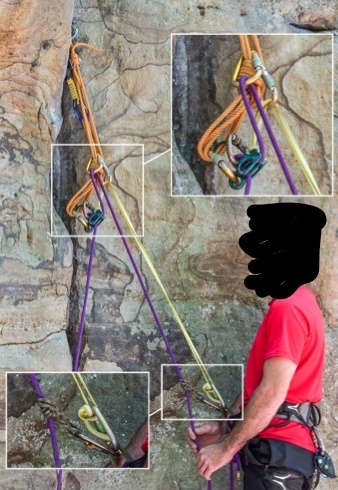

Probably about a $1000 in lessons and shiny gear should make you certified to pass the belay lowering test and get your card if you can find some staff not busy with a birthday party...
Fernando Cal · · SLC, UT · Joined Dec 2015 · Points: 30
Bill Lawry wrote: I wish they’d take the Munter hitch off the market. ;)

where can i get one?!

rgold · · Poughkeepsie, NY · Joined Feb 2008 · Points: 526
Ron O wrote: A year ago I was following a millennial slacker when I got crossed up in the crux, so I tried to climb down to rearrange the order I grabbed stuff.

I called for slack but none was forthcoming. I screamed "SLAAAAAACK"!

The reply; "I can't. .... It won't let me."

Sheesh! Climbers who don't understand what a good belay is vs a shitty job.

See Item 3 in my post above!  The crappy belay provided by---as far as I can tell---most plaquette users is so pervasive that I suspect a generation of climbers simply expects to be subjected to alternating occurrences of rachet-hauling and excessive slack.  It is certainly possible to give a decent belay with plaquette, but as with most everything else, you have to be paying close attention to your second, a concept that has been replaced by the purported advantages of "multitasking."

Kyle Tarry · · Portland, OR · Joined Mar 2015 · Points: 448

OP, in case you're interested in reading other opinions about auto-blocking belay devices (from guys who seem to be out climbing instead of arguing with people online), here are some links:

https://kellycordes.com/2011/05/30/multi-pitch-efficiency-the-auto-blocking-belay-plate/
http://willgadd.com/auto-block-belay-devices-and-other-winter-thoughts/
https://www.mountainproject.com/forum/topic/115170933/why-is-the-camp-ovo-so-difficult-to-top-belay-with?page=3#ForumMessage-115193926
https://cascadeclimbers.com/elbow-saving-belays/

Edit: Grigri on the anchor is another good (in appropriate scenarios) and popular option, some info on that:
https://www.petzl.com/US/en/Sport/Belaying-a-second-directly-off-a-fixed-anchor-at-the-belay-station?ProductName=GRIGRI 
https://cascadeclimbers.com/alpine-belay-by-blake-herrington/​​​

(In no way am I telling you what type of device you should or shouldn't use, simply recommending that you be aware of both sides of the argument and the possible pros and cons before coming to your own decision)

Jeffrey Constine · · Los Angeles, CA · Joined May 2009 · Points: 674

Simple and effective minimal gear needed all this other stuff above not necessary

Eli 0 · · northeast · Joined May 2016 · Points: 5
Jeffrey Constine wrote:
Simple and effective minimal gear needed all this other stuff above not necessary

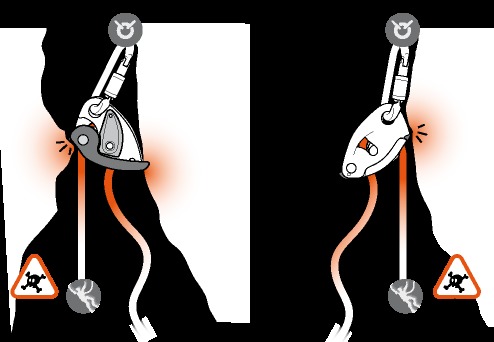
Is there any concern that the GriGri will get slammed against the wall in a big fall and that the cam will get jammed?

Harumpfster Boondoggle · · Between yesterday and today. · Joined Apr 2018 · Points: 148
Eli W wrote:

Is there any concern that the GriGri will get slammed against the wall in a big fall and that the cam will get jammed?

Seconds never have "big" falls. You simply need to be aware of a couple of easily preventable pitfalls.
Jeffrey Constine · · Los Angeles, CA · Joined May 2009 · Points: 674
Eli W wrote:

Is there any concern that the GriGri will get slammed against the wall in a big fall and that the cam will get jammed?


Been doing it this way for over 28 years never had an issue.

Eli 0 · · northeast · Joined May 2016 · Points: 5
Harumpfster Boondoggle wrote:

Seconds never have "big" falls. You simply need to be aware of a couple of easily preventable pitfalls.

oh I was assuming they belay the leader direct as well.

Derek DeBruin · · Unknown Hometown · Joined Jul 2010 · Points: 1,129
Eli W wrote:

oh I was assuming they belay the leader direct as well.

Don't belay the leader direct with a GriGri; you need something that allows rope to slip. A munter seems to be the current best choice for single ropes.

Ted Pinson · · Chicago, IL · Joined Jul 2014 · Points: 252
Chad Silva wrote: YGD, 100%.

Really though - why not use an ATC with guide mode? I know the ones without guide mode are bundled with intro gear some times... but that's the kind of mistake you can move past for $20.

More like “TGD,” as in “they’re (your second) gunna die.”

rgold · · Poughkeepsie, NY · Joined Feb 2008 · Points: 526
Kyle Tarry wrote: OP, in case you're interested in reading other opinions about auto-blocking belay devices (from guys who seem to be out climbing instead of arguing with people online), here are some links:

https://kellycordes.com/2011/05/30/multi-pitch-efficiency-the-auto-blocking-belay-plate/
http://willgadd.com/auto-block-belay-devices-and-other-winter-thoughts/
https://www.mountainproject.com/forum/topic/115170933/why-is-the-camp-ovo-so-difficult-to-top-belay-with?page=3#ForumMessage-115193926
https://cascadeclimbers.com/elbow-saving-belays/

Edit: Grigri on the anchor is another good (in appropriate scenarios) and popular option, some info on that:
https://www.petzl.com/US/en/Sport/Belaying-a-second-directly-off-a-fixed-anchor-at-the-belay-station?ProductName=GRIGRI 
https://cascadeclimbers.com/alpine-belay-by-blake-herrington/

(In no way am I telling you what type of device you should or shouldn't use, simply recommending that you be aware of both sides of the argument and the possible pros and cons before coming to your own decision)

Haha, those guys devote far more time to the internet than most of us via their blogs and instagram feeds.  And although I have great respect and admiration for both of them, that doesn't mean we should swallow every proclamation as gospel. But by all means read what they have to say, their general expertise is beyond question.

Neither KC nor WG address the shitty belays that result from plaquettes, perhaps because their focus is alpinism where ratcheting the second makes more sense, while at the same time climbing with a nice loop of multitasking slack is no big deal for alpine climbers used to all kind of unbelayed and semi-belayed climbing.  Nor do either of them address the situations I described (or others) in which a plaquette belay just doesn't work very well and may be subject to jamming. And there is no mention of the "elbow and shoulder problems" endemic in the plaquette community and referenced at length in the last reference above.  Moreover, nowadays the type of harness belay I described can be done with an assisted-braking device, so that the plaquette belay is not the only system that can function by itself in an emergency, as WG seems to be suggesting.  But please note that I didn't unequivocally condemn plaquette belays, I just said your quiver of belay strategies ought to have more than one arrow in it, and gave explanations for each point so that the reader can decide for themselves.

The international popularity of plaquette belays is probably a byproduct of the profusion of bolted belays in Europe.  As that tendency spreads to the US, the plaquette belay will become increasingly viable here as well.  My comments apply mostly to the variety of trad anchors still found, if in decreasing numbers, on US climbs.  I think if you go to the UK, where trad belay anchors are commonplace, you'll find the plaquettes have made much smaller inroads.

Mark Gommers · · Townsville, Queensland · Joined May 2019 · Points: 0

Hello Eagle Mount,

Has your original question been answered to your satisfaction?
Ultimately, in a top-managed belay context, the belay persons hand grip on the climbing rope is really a single point of failure (in the sense that if the belay person lets go - it could have catastrophic consequences). There are ways to mitigate this...eg by using a 'self-locking' type device or, by adding a hitch to the standing part (eg a 'French prusik').

In lead climbing (and top rope climbing), in many instances it all comes down to the belay persons hand grip on the rope and their due diligence (you trust them not to let go).
You sometimes have to put absolute trust in your belay person... the belay person does have a duty not to arbitrarily let go!
Belaying from a position above the climber is technically more difficult than belaying from a position below the climber - and so using a 'self-locking' type device might be worth considering if you want to boost your safety levels. If cost (and weight) is an issue - adding a simple hitch such as a 'French prusik' (derived from #1762) to the SPart would boost security - but it needs to be properly attached.

Fran M · · Germany · Joined Feb 2019 · Points: 0
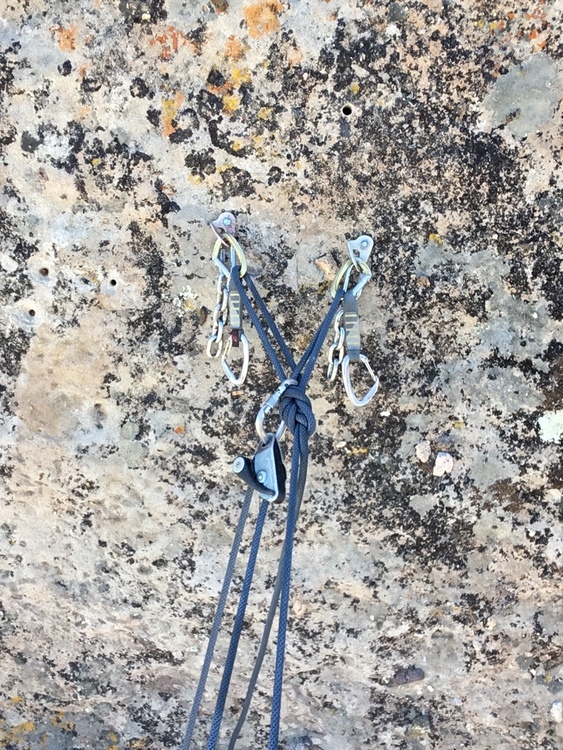
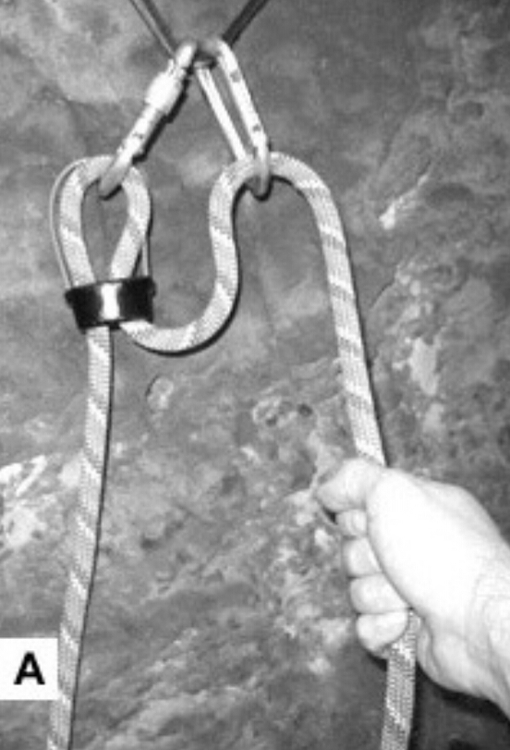
Eagle Mount wrote: Hi guys. What do you think about this way to belay from the top? is it safe or not?

do you have the source for this image?

this is indeed a legitimate belaying configuration, but for a leader not a follower.
when belaying off the anchor the redirect carabiner allows thw belayer to catch the leader even if she has not placed any pieces yet.
the setup allows slippage in a similar way to a munter.
Management is not the best both give and tske slack in.
i would use s locker for the redirect as there could be some crazy jerk during the fall.

FrankPS · · Atascadero, CA · Joined Nov 2009 · Points: 276
Fran M wrote:

do you have the source for this image?

this is indeed a legitimate belaying configuration, but for a leader not a follower.
when belaying off the anchor the redirect carabiner allows thw belayer to catch the leader even if she has not placed any pieces yet.
the setup allows slippage in a similar way to a munter.
Management is not the best both give and tske slack in.
i would use s locker for the redirect as there could be some crazy jerk during the fall.

Can you provide the name of a single book or guiding school that advocates belaying this way? Hard to believe anyone would belay a leader through a redirect.

Derek DeBruin · · Unknown Hometown · Joined Jul 2010 · Points: 1,129
FrankPS wrote:

Can you provide the name of a single book or guiding school that advocates belaying this way? Hard to believe anyone would belay a leader through a redirect.

This is a legitimate lead belay technique for fixed point aka direct anchor belaying. The CAI, DAV, ENSA, ACMG, and AMGA all approve and endorse in appropriate contexts. As noted, a locker instead of the pictured non-locker is often recommended. It's not without caveats, but it's also been tested a fair amount. 

These slides provide some info about the technique with a number of example rigging options toward the end:

http://staff.weber.edu/derekdebruin/fixedpointbelay/Fixed%20Point%20Belaying%20Slides.pdf

FrankPS · · Atascadero, CA · Joined Nov 2009 · Points: 276
Derek DeBruin wrote:

This is a legitimate lead belay technique for fixed point aka direct anchor belaying. The CAI, DAV, ENSA, ACMG, and AMGA all approve and endorse in appropriate contexts. As noted, a locker instead of the pictured non-locker is often recommended. It's not without caveats, but it's also been tested a fair amount. 

These slides provide some info about the technique with a number of example rigging options toward the end:

http://staff.weber.edu/derekdebruin/fixedpointbelay/Fixed%20Point%20Belaying%20Slides.pdf

Thanks, Derek. Seems like it would be difficult, or nearly impossible, to pay out slack through the redirect. Does this method work through an ATC like that? Or just a Munter?

L Kap · · Boulder, CO · Joined Apr 2014 · Points: 224
Harumpfster Boondoggle wrote: 

This is someone releasing the load from an ATC guide to lower a second who has fallen and can't get back on the climb, yes? The world would be a better place if everyone who belays in guide mode was prepared to do this safely. Like the example upthread, too many people use guide mode and don't know how to safely release it. And many probably aren't carrying appropriate cordage or slings to use the little hole on the ATC guide even if they knew how. 

Noah R · · Burlington, VT · Joined Nov 2018 · Points: 0
L Kap wrote:

This is someone releasing the load from an ATC guide to lower a second who has fallen and can't get back on the climb, yes? The world would be a better place if everyone who belays in guide mode was prepared to do this safely. Like the example upthread, too many people use guide mode and don't know how to safely release it. And many probably aren't carrying appropriate cordage or slings to use the little hole on the ATC guide even if they knew how. 

Pivot for the win. I just do not understand why deal with all the extra faff. Super easy to lower in guide mode with a pivot. I would certainly back it up the first few times until you get the feel for it. (Should probably always back it up anyway)

rgold · · Poughkeepsie, NY · Joined Feb 2008 · Points: 526

What I've understood about the Euro methods with plates is that the extra carabiner is only deployed while there is no intermediate pro, in other words while a factor 2 fall is possible.  Once the leader clips some pro, a plate on the anchor will brake the same way it does on the harness; the extra biner isn't needed.  That said, handling seems to me to be inferior in all configurations and it is hard to discern any advantages over a Munter.  The only time I can imagine a plate on the anchor being better would be in handling half ropes (not twins).

Guideline #1: Don't be a jerk.

General Climbing
Post a Reply to "Belaying the second climber"

Log In to Reply
Welcome

Join the Community! It's FREE

Already have an account? Login to close this notice.