Mountain Project Logo

Supplements / Nutrition?

Noah Yetter · · Lakewood, CO · Joined Jul 2015 · Points: 105

I weigh ~190, and the difference between "no creatine for weeks" and "been steadily taking 5g daily" is at most 3 pounds of water weight. If you're a person who obsesses over every gram then feel free to skip it. I'm a lifter first and climber second so there's no doubt it's worth it to me.

Edit to add: the cause of DOMS is pretty well understood to be high volume eccentric contractions. This is why concentric-only work like pushing or pulling a sled doesn't cause soreness. Climbing itself has very little eccentric component, but if you are doing pull-ups and such in your training you will get sore from that.

J P · · Portland, OR · Joined Jan 2016 · Points: 555

Since we are peddling in anecdotes - I found creatine to cause me to pump out VERY quickly. This is in line with Eric Horst’s criticism with creatine as well: one of its side effects being cell voluminization, it would understandably occlude nerves, veins and arteries, creating a pump much faster.

https://trainingforclimbing.com/the-truth-about-creatine-for-climbers/

skik2000 · · Boulder · Joined Jun 2013 · Points: 5
J P wrote: Since we are peddling in anecdotes - I found creatine to cause me to pump out VERY quickly. This is in line with Eric Horst’s criticism with creatine as well: one of its side effects being cell voluminization, it would understandably occlude nerves, veins and arteries, creating a pump much faster.

https://trainingforclimbing.com/the-truth-about-creatine-for-climbers/

Reading the article, I have never heard of loading 20+ grams/day.  Not saying it doesn’t happen but I’m under the impression that most people who supplement with it take up to 5g/day which Horst says he also does.

Noah Yetter · · Lakewood, CO · Joined Jul 2015 · Points: 105

5g/day is very standard among powerlifters and bodybuilders. Higher-dose "loading" is sometimes recommended for a short time (like 2 weeks) when you first start taking it, but that's not necessary at all. If you're taking 20g/day all the time you're definitely doing it wrong.

Jasen McVansen · · Long Beach, CA · Joined Jan 2019 · Points: 0

Rhodiola rosea is great a great adaptogenic herb great herb for anyone putting high levels of physical/emotional stress on their bodies. Amidst the multitude of benefits, the most pertinent for climbing is increased physical endurance/decreased recovery time between high-intensity work and also its ability to help the body adapt to altitude.

Took me probably a week to start feeling the anti-fatigue effects and noticed increased mood and concentration within a few days. I really like the New Chapter Rhodiola 300, though some can be a little overwhelming for some and would probably do better with 100mg.  amazon has it for $22, definitely worth trying a bottle out
https://www.gaiaherbs.com/uploads/A_Research_Review_of_Rhodiola_Rosea-1327938082.pdf

Donald Letts · · Golden, CO · Joined Jun 2013 · Points: 149
Long Ranger wrote: Vitamins don't work well and collagen is worthless. It would be better to get both (as well as protein) from real food.

Hey Lone Ranger, here is an update from the author on the article you linked. 

"The recent research basically shows that amino acids from dietary collagen are used for collagen protein synthesis by the body when dietary collagen is consumed prior to exercise. It’s an interesting line of research because we still don’t really know how collagen protein synthesis is triggered (at least not as well as muscle protein synthesis), but I think it still falls short of convincing proof that dietary collagen is worthwhile. The main problem—and not a new problem, but the same problem I see in literally every study on dietary collagen—is that the authors compared dietary collagen (and vitamin C) to maltodextrin, a carbohydrate. Collagen is a protein and composed of amino acids, and as such I would expect it to have at least some effect on physiological protein synthesis whether collagen, muscle, or globular (or whatever) compared to a no protein control. In real life, though, we’re not choosing between collagen protein and no protein, though—we’re choosing between collagen and another protein. It could be that large doses of the specific amino acids found in collagen (the majority of which are unessential) do selectively increase collagen protein synthesis compared to any other protein source, but there’s no study to suggest this yet and so I maintain in the meantime that simply getting adequate protein from high-quality sources is as good or better.
I hope that helps!"

Michael Lagueux · · San Diego, CA · Joined Mar 2012 · Points: 412

CoQ10 is worth looking into, it's used by a lot of endurance athletes.  Hammer Nutrition has a few products that incorporate it, such as this one:   hammernutrition.com/product…

I think it's probably worth trying/using, and seems to be often overlooked.  The only downside seems to be the cost...

Chad Miller · · Grand Junction, CO · Joined Nov 2006 · Points: 150
Rocket Alchemy wrote: Superfoods

No such thing. 

Michael Lagueux · · San Diego, CA · Joined Mar 2012 · Points: 412
Dana Bartlett wrote:

Yes. You can buy a bottle of any common micronutrient like B12 and the cost is minimal. Buy some dingbat supplement - no quality control, no proof that it contains the advertised active ingredient, no testing, no proof of efficacy, and it works for everyone regardless of whatever pre-existing medical conditions one might have - and get ready to pay big time. 

These companies have locked on the dim and gullible.

True, but CoQ10 has been studied quite a bit and is widely used!  It’s just expensive, but I’m not sure why. I forgot to mention that the Ubiquinol form is probably better absorbed/utilized.  Check it out!

Rocket Alchemy · · Louisville, CO · Joined Oct 2018 · Points: 0

Anyone take mushrooms? Reishi, chaga or even cordyceps?

Dan Cooksey · · Pink Ford Thunderbird · Joined Jan 2014 · Points: 365
Rocket Alchemy wrote: Anyone take mushrooms? Reishi, chaga or even cordyceps?

I’ve switched from MCT oil to Four Sigmatic Lions Mane and chaga extract.  I put this in my coffee in the morning.  Not sure about physical performance but it has all but removed and brain fog, and has increased my level of clarity and productivity.  Lasts throughout the day where I was getting an afternoon crash before.

Math Bert · · Minneapolis, MN · Joined Aug 2018 · Points: 90

I dropped about 40 lbs by reducing consumption of C2H6O by 90% - would recommend. 

Long Ranger · · Boulder, CO · Joined Jan 2014 · Points: 669
D L wrote:

Hey Lone Ranger, here is an update from the author on the article you linked. 

"The recent research basically shows that amino acids from dietary collagen are used for collagen protein synthesis by the body when dietary collagen is consumed prior to exercise. It’s an interesting line of research because we still don’t really know how collagen protein synthesis is triggered (at least not as well as muscle protein synthesis), but I think it still falls short of convincing proof that dietary collagen is worthwhile. The main problem—and not a new problem, but the same problem I see in literally every study on dietary collagen—is that the authors compared dietary collagen (and vitamin C) to maltodextrin, a carbohydrate. Collagen is a protein and composed of amino acids, and as such I would expect it to have at least some effect on physiological protein synthesis whether collagen, muscle, or globular (or whatever) compared to a no protein control. In real life, though, we’re not choosing between collagen protein and no protein, though—we’re choosing between collagen and another protein. It could be that large doses of the specific amino acids found in collagen (the majority of which are unessential) do selectively increase collagen protein synthesis compared to any other protein source, but there’s no study to suggest this yet and so I maintain in the meantime that simply getting adequate protein from high-quality sources is as good or better.
I hope that helps!"

Thanks. Kind of in my line of thinking. 


I guess the basic question is, why would supplementing non-essential amino acids have any effect what so ever? I'm hearing this: "we’re choosing between collagen and another protein", but I think it would be beneficial to look at the amino acid profile of various foods within a meal - and then collagen. I bet we'd see an overlap. Still it would make sense that if there's free non-essential amino acids floating around, the body doesn't have to produce its own (which it's happy to do). That's... that's how food works.


I find the whole "health/supplements" industry really interesting. They promise benefits with little to no evidence, then you charge quite a bit for them. They're praying on people's lack of self-confidence in their own bodies to heal and grow - without their specific gimmicky whatever, you just aren't going to be able to do the thing you want to do, so you better just spend the money - cause what's the real risk?

Lena chita · · OH · Joined Mar 2011 · Points: 1,842
Rocket Alchemy wrote: Anyone take mushrooms? Reishi, chaga or even cordyceps?

No. But I had, by accident, acquired a sample packet of this: 
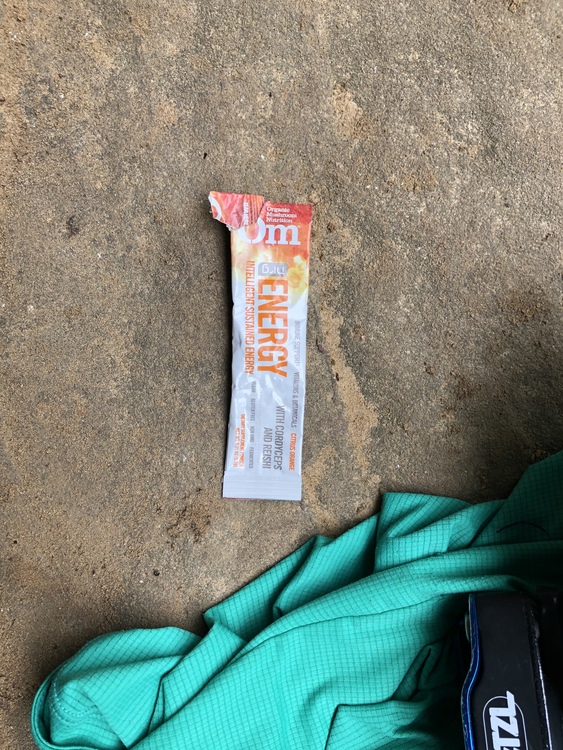

And it was the most vile concoction that I have ever tasted in my life. Ruined half of my drinking water supply for the day!

How bad can it be, you are thinking? If you are thirsty enough, you’d drink it...

Well, I clearly wasn’t thirsty enough. A few brave souls tried a taste of it, too, just to see what it was... And promptly spit it out. 

Dylan Pereira · · Unknown Hometown · Joined Sep 2019 · Points: 0

Supplements can be a great addition to your climbing and training, but it all depends on what you want the supplement for (strength, power, recovery, general health) and where you are buying it from. 

If you are looking for something to support your health then a good multivitamin is always a good starting point and eating more vitamin rich vegetables.

If you are more interested in developing more power and strength then I recommend creatine monohydrate, beta alanine, amino acids like L-Arginine and easy digesting carbohydrates. I use all these regularely and have friends that use a similar stack, we have seen the best results power and strength wise.

I've experimented with L-citriuline and collagen powder and was not satisfied with the results (no noticeable benefit) and the research doesn't back these products (collagen has not been proven to strengthen tendons, only slow down the deterioration process).

If you are looking for reduced muscle soreness I recommend L-glutamine as our bodies don't create enough of it to support stress from training, high protein source (from food, whey, or pea), a natural anti-inflammatory to help with joint soreness (bromalain, cod liver oil, flaxseed oil), and simple carbohydrates to promote glycogen production after exercise (sugar, fruit).

BCAA's aren't necessary as they are found in most protein sources, amongst 6 other essential amino acids. As long as you are getting enough protein you will be getting enough BCAA's.

Also I recommend only consuming products that use natural ingredients for flavouring and colouring and looking for products manufactured in a facility approved by a governing body. I am Canadian and our supplements are regulated by the Canadian government for potency, possible contamination, heavy metals, and ensuring claims are supported. The US doesn't have this regulating body, which means many products are potentially dangerous. You can order most supplements from Canada online and some might be cheaper because our dollar sucks right now haha!

Whatever you decide, please do your research and don't trust everything you read right off the bat. Your performance and health should always be a priority! I hope this helps! 

Dana Walters 1 · · Pacific Northwest · Joined Jan 2014 · Points: 213
Will Bland wrote:

Interested in the evidence on collagen supplementation. 


Currently I just supplement with protein shakes 1-2 times / day, and have 5g creatine monohydrate daily as well. 

the evidence for collagen supplementation being actually beneficial is pretty poor... 

https://www.nature.com/articles/nrrheum.2015.26

I would put more stock into this review than a random case study in an open access journal... 

Mike Climberson · · Earth · Joined Oct 2018 · Points: 155

I used to take lots of whey protein powder years back when I was into bodybuilding. It gave me intense flatulence. I’d feel bad for my climbing partners if I kept ripping ass every 10 seconds 

Carolina · · Front Range NC · Joined Nov 2010 · Points: 20

What about bone in soups/stews and similar dishes where you cook meat with the bone attached? Ain’t no nutritional expert but isn’t there abunch of good stuff inside the bones?

 I prefer goat meat the most prepared this way.  Feels like my joints and muscles are replenished and recover fast.
Jordan Whitley · · NC · Joined Mar 2017 · Points: 240

I like the beta alanine + arginine combo, which is basically just a pre-workout shake without all the other stuff in it.

Long Ranger · · Boulder, CO · Joined Jan 2014 · Points: 669
Carolina wrote: What about bone in soups/stews and similar dishes where you cook meat with the bone attached? Ain’t no nutritional expert but isn’t there abunch of good stuff inside the bones?

I think food is a good thing, so thumbs up if you eat it. I myself love me a Pho bowl with tendon + tripe. Mmmm Hmm.

I don't think it's a miracle worker though.

Guideline #1: Don't be a jerk.

General Climbing
Post a Reply to "Supplements / Nutrition?"

Log In to Reply
Welcome

Join the Community! It's FREE

Already have an account? Login to close this notice.


