Mountain Project Logo

Lowering from top w/ grigri

Original Post
Vic Davalos · · Rhode Island · Joined Aug 2017 · Points: 5

Hey Folks,

I tend to spend most of my time climbing with people who don't lead / are inexperienced, meaning I'm usually the one setting up anchors and managing our climbing site.  Sometimes when cragging I like to manage our top ropes from the top, and I lower my partners back to the ground after they finish the pitch.  I've done this with a variety of techniques, but the one that gives me trouble is lowering with the grigri (from the anchor).

I like belaying from the top with the grigri for all the obvious reasons, but I find lowering can be a huge pain, literally.  I find it cumbersome to try and push the lever upwards to release the cam, often causing the whole device to rotate upwards before the cam opens up, and lowering with this method often causes my wrist and hand to hurt as I hold the lever up.  Considering how often people praise the grigri for it's ease of use when belaying from the top, maybe I'm missing something that would make thiae whole process smoother and more ergonomic.

Maybe I'm doing something wrong here, but do others find lowering from the top with a grigri to be as cumbersome as I do?  Any advice on how to go about this better?  Belay from the harness and redirect through the anchor, maybe? 

PatMas · · Las Vegas, NV · Joined Jan 2017 · Points: 40

My method for this is bring them up on an guide, then when they are at the top (or done climbing halfway up) put the grigri (or another tuber) on the brake of the guide device, then defeat the guide device and lower on a redirect without ever taking the guide device out of the system.

curt86iroc · · Lakewood, CO · Joined Dec 2014 · Points: 274
Vic Davalos wrote: 
Belay from the harness and redirect through the anchor, maybe? 

Yup. This works well for a top managed top rope site.

Drew Nevius · · Tulsa, OK · Joined Jun 2012 · Points: 2,699

I think people are usually referring to bring up followers on a multipitch, rather than belaying and lowering a climber, when they say the like top belaying off the anchor win a grigri. Guide mode ATCs aren’t great either. A Munter hitch is probably the only thing I’d enjoy for lowering someone directly off the anchor, but it’ll add twists to the rope. I’d recommend grigri belaying off the harness with a redirect

Drew Nevius · · Tulsa, OK · Joined Jun 2012 · Points: 2,699
PatMas wrote: My method for this is bring them up on an guide, then when they are at the top (or done climbing halfway up) put the grigri (or another tuber) on the brake of the guide device, then defeat the guide device and lower on a redirect without ever taking the guide device out of the system.

That sounds like a good option. What’s your go-to method for counter acting the guide mode?

eli poss · · Durango, CO · Joined May 2014 · Points: 525
Vic Davalos wrote: Hey Folks,

I tend to spend most of my time climbing with people who don't lead / are inexperienced, meaning I'm usually the one setting up anchors and managing our climbing site.  Sometimes when cragging I like to manage our top ropes from the top, and I lower my partners back to the ground after they finish the pitch.  I've done this with a variety of techniques, but the one that gives me trouble is lowering with the grigri (from the anchor).

I like belaying from the top with the grigri for all the obvious reasons, but I find lowering can be a huge pain, literally.  I find it cumbersome to try and push the lever upwards to release the cam, often causing the whole device to rotate upwards before the cam opens up, and lowering with this method often causes my wrist and hand to hurt as I hold the lever up.  Considering how often people praise the grigri for it's ease of use when belaying from the top, maybe I'm missing something that would make thiae whole process smoother and more ergonomic.

Maybe I'm doing something wrong here, but do others find lowering from the top with a grigri to be as cumbersome as I do?  Any advice on how to go about this better?  Belay from the harness and redirect through the anchor, maybe? 

I've never had this problem with it. The issues I have found is that sometimes it can be tricky to find the sweet spot on how much to pull back the lever. What I do is have the gri directly on the anchor and then redirect the brake strand through a piece or the shelf. When doing this, I've found that it can be uncomfortable if I'm not pulling the lever enough and that it works better if I just pull the lever more and provide more braking power with my brake hand. 


Which grigri version are you using and with what diameter and stiffness for rope? 

Harumpfster Boondoggle · · Between yesterday and today. · Joined Apr 2018 · Points: 148

Clip the gg to the loop formed by your tie in with the rope. The anchor takes the load and lowering the second is no different than rappelling yourself with a gg.

Vic Davalos · · Rhode Island · Joined Aug 2017 · Points: 5
eli poss wrote:
Which grigri version are you using and with what diameter and stiffness for rope? 

Oh, interesting.  I hadn't considered these points, but they are probably contributing to the difficulty I've had.


I use a grigri 2 and fatty ropes.  Relatedly, my partners are often under 150lbs, so their light weight coupled with my materials is probably making it harder to lower them with this setup.

wes calkins · · Unknown Hometown · Joined Sep 2011 · Points: 491

Try standing above the grigri when lowering and in that way your are pulling the handle towards your body like you would do if the device was on your harness. Pushing the handle up from below is hard to accomplish and does not provide a smooth lower. 

PatMas · · Las Vegas, NV · Joined Jan 2017 · Points: 40
Drew Nevius wrote:

That sounds like a good option. What’s your go-to method for counter acting the guide mode?

If they can unweight the rope, I’ll just lift the HMS that’s the ‘locking biner’ in the guide up to one of the carabiners direct on the bolt. If they can’t I’ll sling the B-hole with a redirect up and then use my body weight to defeat the guide. Only had to do that once though.  


All of this done with a second device already on the brake strand, and never un-clipping/un-locking the carabiner that is the A-hole of the guide device. 
eli poss · · Durango, CO · Joined May 2014 · Points: 525
PatMas wrote:

If they can unweight the rope, I’ll just lift the HMS that’s the ‘locking biner’ in the guide up to one of the carabiners direct on the bolt. If they can’t I’ll sling the B-hole with a redirect up and then use my body weight to defeat the guide. Only had to do that once though.  


All of this done with a second device already on the brake strand, and never un-clipping/un-locking the carabiner that is the A-hole of the guide device. 

Out of curiosity, where do the terms "B-hole" and "A-hole" come from. I've always wondered if there was a term for the "B-hole" I could use instead of saying the smaller narrow hole. 

Vic Davalos · · Rhode Island · Joined Aug 2017 · Points: 5
eli poss wrote:

Out of curiosity, where do the terms "B-hole" and "A-hole" come from. I've always wondered if there was a term for the "B-hole" I could use instead of saying the smaller narrow hole. 


I can't read this post without giggling like an idiot.

Andrew Rice · · Los Angeles, CA · Joined Jan 2016 · Points: 11

Simple answer is to get the grigri off the anchor in the first place if you're going to belaying and lowering a bunch of top rope climbers. Just go off your harness and redirect the rope through your anchor Nothing lowers super well off an anchor. Even a Grigri. 

eli poss · · Durango, CO · Joined May 2014 · Points: 525
Tim Meehan wrote: Sorry if I am misunderstanding, but would a redirect help, like in this video?  https://www.youtube.com/watch?v=F_f61vUEXTo

Yes, absolutely. May or may not be mandatory depending on who you ask but it really helps a lot with controlling the friction on the brake strand. Unlike in the video, I like to have my redirect point on a flexible sling when possible so that the biner is more free to rotate, which helps mitigate some of the inevitable rope twisting that comes with lowering on a grigri. 

a d · · Los Angeles, CA · Joined Mar 2010 · Points: 5

Why do you like to belay from the top while toproping?  Are you climbing at a spot where the approach leads you to the top of the crag and then you rap to start climbing?

PatMas · · Las Vegas, NV · Joined Jan 2017 · Points: 40
Vic Davalos wrote:
I can't read this post without giggling like an idiot.

https://www.youtube.com/watch?v=2hk9iK64EQ8


I've heard KP call is this a few times, heres a video of him saying it. Even he gets a kick out of it.

eli poss · · Durango, CO · Joined May 2014 · Points: 525
PatMas wrote:

https://www.youtube.com/watch?v=2hk9iK64EQ8


I've heard KP call is this a few times, heres a video of him saying it. Even he gets a kick out of it.

Gotta love those hand gestures too while he's talking about the ovalized a hole at 30 sec. He's definitely getting a kick out of it. Now here's another question, is it still called an a hole on the reverso or can I only call it the a hole when it's BD's device?

PatMas · · Las Vegas, NV · Joined Jan 2017 · Points: 40
eli poss wrote:

Gotta love those hand gestures too while he's talking about the ovalized a hole at 30 sec. He's definitely getting a kick out of it. Now here's another question, is it still called an a hole on the reverso or can I only call it the a hole when it's BD's device?

The reverso’s A-hole is much larger. Must be a French thing.   

Vic Davalos · · Rhode Island · Joined Aug 2017 · Points: 5
a d wrote: Why do you like to belay from the top while toproping?  Are you climbing at a spot where the approach leads you to the top of the crag and then you rap to start climbing?

If I'm belaying from the top, it's usually because I led the route and my partners are going to TR it.  I'll manage the site from the top in instances where maybe there isn't a convenient walk-off and my partners are not comfortable cleaning an anchor/rapping.  This way I can clean things up when they are all done.  

Also, if the view is nice and there is no need for me to be on the ground I may opt to hang out up top and enjoy the scenery/breeze/sun.  Belaying from the top also let's me snap sweet pics of my partners climbing, and sometimes I'll belay from the top just to rehearse various skills and keep them fresh in my brain.

Justin P · · Unknown Hometown · Joined May 2005 · Points: 364
Vic Davalos wrote:

If I'm belaying from the top, it's usually because I led the route and my partners are going to TR it.  I'll manage the site from the top in instances where maybe there isn't a convenient walk-off and my partners are not comfortable cleaning an anchor/rapping.  This way I can clean things up when they are all done.  

Also, if the view is nice and there is no need for me to be on the ground I may opt to hang out up top and enjoy the scenery/breeze/sun.  Belaying from the top also let's me snap sweet pics of my partners climbing, and sometimes I'll belay from the top just to rehearse various skills and keep them fresh in my brain.

Vic, you should definitely redirect the brake strand when lowering. Increasing the friction lets you open the cam farther and with more ease, so you can control the pressure with your brake hand more readily. If you're doing this a bunch, consider investing in a Petzl Freino biner which makes this really slick. You can see it in action on lower here: https://www.youtube.com/watch?v=F_f61vUEXTo

Also, consider belay gloves if you're not already using them, especially for your brake hand. It can really help smooth things out on the lower.

Belaying off your harness on a redirect is always an option, but I think it's a pretty rare case where the upsides outweigh the advantages of belaying off the anchor. Holding people when they fall/hang and getting sucked into the anchor is less fun than simply standing there relaxed, enjoying nature and watching and coaching your climber. There could certainly be situations where going off your harness is better, but it's so situation-dependent. If you haven't done it much, possibly endure some uncomfortable belays, and you'll quickly learn to identify those situations and setups before they happen.

Any method for lowering off the anchor besides the Grigri requires some sort of transition, via defeating/flipping a plaquette or switching to a new configuration. This is all doable, but adds time, complexity and opportunities for error. Dialing in the Grigri friction with what you're doing now is by far the safest and simplest way to go.

Someone upthread asked about rope diameter vs. Grigri generation. This is a huge variable and worthy of attention.

John Godino · · Bend, OR · Joined Jul 2016 · Points: 0

Petzl says: With a Grigri, belay your second off of your harness, with the redirect to the anchor.
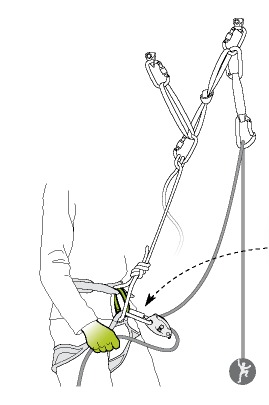
If you are using the Gregory direct from the anchor, running the lowering strand to a higher point on the anchor, such as the shelf on a cordelette, should give you an easier Loehr.

 https://www.petzl.com/US/en/Sport/Belaying-a-second-from-a-belay-station-with-the-GRIGRI-on-the-harness--using-a-redirect


Guideline #1: Don't be a jerk.

General Climbing
Post a Reply to "Lowering from top w/ grigri"

Log In to Reply
Welcome

Join the Community! It's FREE

Already have an account? Login to close this notice.


