
 Continue with onX Maps
 Sign in with Facebook






The Diet of A Champion



|
. Mobes wrote: I eat Wheaties 10x a day and will be a champion one day, just like Kaitlyn Jenner. Speaking of which, have we figured out how hard Jordan Peterson climbs yet? |

|
Derek Field wrote: According to this Wikipedia he was so strong he made a movie or two https://en.m.wikipedia.org/wiki/Pee-wee_Herman |
|
|
Derek Field wrote: If you go back a page i i already told you he climbs 5.16 |
|
|
If the diet of champions is synthesized from oil, natural gas, and coal... I’ll be climbing like Ondra in no time. |
|
|
Try Cam wrote: Cris, it’s no secret that the best sending diet consists exclusively of tamales and churros washed down with 2L margs from Sendero. And no more than 125ml of water for every 23 pitches you climb, because being optimally hydrated is aid. Oh, and gotta have those reverse Mexican oreos we got at the bodega. Yeah, i think I wanted to make it more complicated than it needs to be. I think like you said sourcing where things are coming from is and honestly always has been an important factor to me. Stoke is high so I guess it’s seeping into wanting to be knowledgeable with my nutrition! I found some awesome statistics by Dr. Rhonda Patric talking about circadian rhythm and some wild statistics about how eating on a 9-10 hour scale as opposed to a 12+ hour scale(most US citizens eat on a 15 hour time frame) increases lean muscle mass by %40(fucking wild)! She has some awesome podcasts talking further in depth about that, that I’d highly recommend. Anyways like you’re saying I’ll enjoy the churros and keep in mind that proper water hydration is aid ;) |
|
|
Jim Turner wrote: If the diet of champions is synthesized from oil, natural gas, and coal... I’ll be climbing like Ondra in no time. I have full confidence in 1 years time this synthesized diet will have you onsighting 5.16 |
|
|
Nivel Egres wrote: There was some pilot studies done on rats which is where the stat comes from and then it was turned into a long term study on humans with extremely similar results. Let me see if i can find it real quick |
|
|
Cris Garcia wrote: Unless I missed something, that paper is just identifying genes related to regulating circadian rhythm, turning them off in mice, and seeing what the effects are on metabolism and usage of glycogen, which is stored in skeletal muscle. I didn't see anything in there about muscle recovery. On top of that, any research based on this would appear to be relevant only to reducing the impact of muscle loss due to a genetic defect, not increasing lean muscle growth in healthy animals. That's the difference between finding a therapy that slows hair loss by 40% in balding men and claiming that it can cause healthy people's hair to grow 40% thicker. It just doesn't carry over that way. This may be an effective therapy for animals with defective circadian rhythms, but it's not a lifehack for healthy humans. |
|
|
Gerrit Verbeek wrote: I first heard her talking about it in a podcast and to be honest there was no way I was gonna read through the 23 page pier reviewed so my apologies if it wasn’t there let me see if I can site it back to what she was specifically talking about. Edit:https://podcastnotes.org/2016/07/11/time-restricted-feeding-and-its-effects-on-obesity-muscle-mass-heart-health/Not that this is a peer reviewed article but it’s some quick notes about Dr.Panda and his research on circadian cycle. If you want to see his research I’m sure you’d be able to find somewhere that would satisfy your criteria. As for me, I’m happy enough listening to him and his peers like Dr.Rhonda explain their research and I guess choose to believe them. |
|
|
Zeb Martin wrote: No, in fact I would say it is far cheaper and considerably better for the environment if you consider purchasing foods from local markets as compared to purchasing beef from Japan, Spain, Argentina or even the Central Valley California. These goods wont add to additional air pollution at the same rate as typical commodities that you find in the local supermarket. Growing and forging your own food is a great way to train Zone 1 too. And if you consider the concept of "you are what you eat," you will be a happier person theoretically, as you will not be consuming the anxiety that industrial prepackaged meats are tainted with. So you save on therapy charges too. |
|
|
sean burke wrote: Unless you are consuming industrial prepackaged vegetarian products. |
|
|
You forgot to mention Tom Brady. If I recall, he has never tasted coffee or eaten a strawberry. No nightshades either (that's tomato, pepper, eggplant, etc.). Ice cream is OK but only the avocado version. Electrolyte water only. It's hard to argue with the results, at least for him. |
|
|
plantmandan wrote: You forgot to mention Tom Brady. If I recall, he has never tasted coffee or eaten a strawberry. No nightshades either (that's tomato, pepper, eggplant, etc.). Ice cream is OK but only the avocado version. Electrolyte water only. It's hard to argue with the results, at least for him. 20 years from now there will be a tell all memoir released showing how Tom Brady was able to perform at such a high level with the latest in scientific technology, how he was able to pass all drug screens, etc. Sort of like Lance Armstrong..... JK, but it still wouldn't surprise me. |
|
|
sean burke wrote: This actually isn't true. Often times purchasing crops locally means increased transport costs and emissions per item since they are not shipped in as high of quantities, items are often grown out of season and require more water and fertilization, and there is not guarantee that good land management practices are followed. It's a multivariate argument with only 1 variable being proximity. Moreover, what is being purchased matters more than where it came from as specific products (red meat especially) have a much larger greenhouse footprint than even shipping spinach across the entire planet by the most expensive/inefficient method. |
|
|
My climbing diet mainly consists of: funions, kettle chips, cheese, coffee, beer & cookies. It must be working well since I can crush hard 9s and send A3. |
|
|
Mickey Guziak wrote: My climbing diet mainly consists of: funions, kettle chips, cheese, coffee, beer & cookies. It must be working well since I can crush hard 9s and send A3. I can vouch for Guziak. I’ve seen him onsight 5.9c on real rock on his third try. |
|
|
IMO unless you are a pro, life is too short to eat like one. Eat clean, less processed foods, keep the greasy, junky things to a minimum. Indulge in sugar only occasionally. Dont gorge before bed. Tighten the reigns for a couple months when you want to shed some flab. |
|
|
A lot of you probably know this already but, I would like to mention that dieting is vital for professional climbers, like in any other sport. It needs to contain a lot of proteins, but it also includes carbs to have a source of energy. In my opinion, diet is a very individual thing. I used to be an active person, but after I fell down and broke my arm on a climbing wall, I gained a lot of weight. Firstly, I had to recover and couldn’t do any exercise, so I gained a couple of extra pounds. After that, I wanted to return to my favorite hobby, but it was hard. I could feel every single extra pound I gained in my fingers. I decided to lose some weight by doing more cardio and dieting. Also, my friend recommended me to try الصيام المتقطع. After I stopped eating at specific times, I finally started to lose weight. |
|
|
I just ordered this book, it seems pretty relevant. 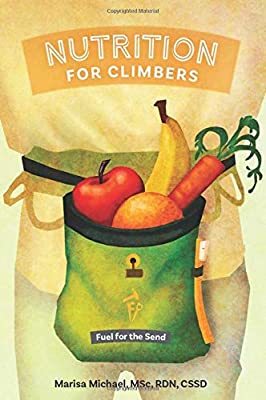 https://www.amazon.com/Nutrition-Climbers-Fuel-Marisa-Michael/dp/0999280317/ref=asc_df_0999280317/?tag=hyprod-20&linkCode=df0&hvadid=459549136475&hvpos=&hvnetw=g&hvrand=9136195758468536620&hvpone=&hvptwo=&hvqmt=&hvdev=c&hvdvcmdl=&hvlocint=&hvlocphy=9029012&hvtargid=pla-945398446245&psc=1 |
|
|
Read Nutrition For Climbers. |


