
 Continue with onX Maps
 Sign in with Facebook






Belaying the second


|
|
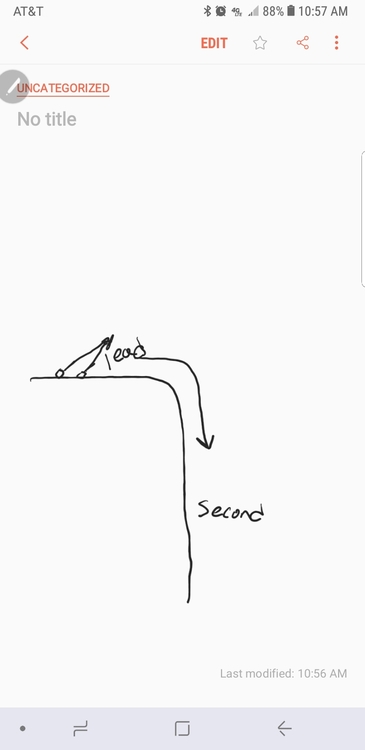 Sorry for the crude drawing, best I could do to better illustrate my problem. |


|
I am not an expert, but if the anchor is quite a ways back my intuition says "extend yourself to the edge of the cliff with a clove hitch and belay from your harness." |
|
|
Extend yourself to the lip with a clove and belay off of the rope loop formed by your tie in. That way the anchor takes the weight if the second falls. |
|
|
Taylor Lapeyre wrote: I am not an expert, but if the anchor is quite a ways back my intuition says "extend yourself to the edge of the cliff with a clove hitch and belay from your harness." That's how i'd do it, and after I had the hitch positioned where I like it, I'd backup the clove hitch with a stopper knot of some sort - fisherman's knot, overhand, etc. then belay away. |
|
|
Simple enough. Thanks for the responses |
|
|
Meh... unless the edge is abnormally sharp I'd just belay and not worry about it. |
|
|
Todd Ra wrote: Meh... unless the edge is abnormally sharp I'd just belay and not worry about it. Yea I hear ya. In my particular situation that made me think about it, we were at Joshua Tree so I didn't want it to rub through my rope |
|
|
Harumpfster Boondoggle wrote: Extend yourself to the lip and belay off of the rope loop formed by your tie in. That way the anchor takes the weight if the second falls. As somewhat illustrated (slightly different belay point, I think) in this video (starting at about 8:00 minute in). https://www.epictv.com/media/podcast/how-to-build-and-equalise-a-trad-climbing-anchor-%7C-climbing-daily-ep1174/607062 |
|
|
Tim Schafstall wrote: Too much rope is used up particularly for multi-pitch, imo, but you can't argue it doesn't work. Just extend one clove and close that knot with another clove into a second piece on the anchor. With experience you dial it in fast. |
|
|
Harumpfster Boondoggle wrote: Yup. Especially with the rope-stretching 70 meter + pitches of today. I suspect using that much rope in an anchor works fine in the Peak District. ;) |
|
|
Tim Schafstall wrote: Awesome, that's a great example. I suspect it'll work the same way if my anchor was on the ground |
|
|
Classic example of when a harness belay is ideal. |
|
|
Ted Pinson wrote: Classic example of when a harness belay is ideal. Better to belay off of the rope loop formed by your tie into the harness. Let the anchor take the weight of a falling second. |
|
|
When extending to the cliff edge using your rope from a pre-equalized anchor master point, or from the first piece of gear like in the video, I have found it helpful to munter into the locker instead of simply running the rope through it. The added friction of the munter gives more control while walking back to the cliff edge. Close the loop the same way with a clove and then belay the second up off your tie in loop like others have mentioned. |
|
|
I would use the rope (if you have enough) as the anchor material ( youtube.com/watch?v=kJQwCcI…) and extend the master point almost to the edge by leaving a large loop in between the pieces (around 2:09 in the video) and tying a BFK in the middle. You can clove in directly to the extended master point and belay your second comfortably from that same loop while avoiding drag and avoiding having your second on your own tie in point. OR if too much rope is used here, extend yourself away from the anchor with a clove, keep a grigri on the master point away from the edge and just keep the rope of the lip with your hands as you belay. Good luck! |
|
|
Harumpfster Boondoggle wrote: Good advice. Definitely the way to do it |
|
|
Holly Thomas wrote: I would use the rope (if you have enough) as the anchor material ( youtube.com/watch?v=kJQwCcI…) and extend the master point almost to the edge by leaving a large loop in between the pieces (around 2:09 in the video) and tying a BFK in the middle. You can clove in directly to the extended master point and belay your second comfortably from that same loop while avoiding drag and avoiding having your second on your own tie in point. OR if too much rope is used here, extend yourself away from the anchor with a clove, keep a grigri on the master point away from the edge and just keep the rope of the lip with your hands as you belay. Good luck! Could you elaborate on that first part? In the video (around 2:09) she doesn't have a master point. Just the two tied off pieces and then she cloves into a 3rd piece. Do you just take the climbers end rope, walk to the edge, then tie a figure 8 on a bight as the master point? Tie in and belay from there? |
|
|
|
|
|
Andrew F wrote: In the solutions provided here, in event of a fall the rope will still be stretched over the edge, but you would be able to be standing near the edge. Maybe if you belayed off your belay loop you could keep the rope off the edge, but you also might get sucked down to the edge. To truly avoid the rope over edge, you would need to build the anchor below the ledge or extend the anchor redundantly, create master point below the ledge. |
|
|
Standing up for a cliff edge belay from harness can add instability when the second falls, assuming the anchor is horizontally back a ways from the cliff edge. Belaying off the anchor can allow rope to abraid on edge if second falls. |
|
|
This last responce is as good as any. From near the edge seated you can use the feet to fiddle the rope and nothing is better than watching your f second flail and thrash trying to remove your pro.Just be DARN certain of your tie-in. Its not like you are gonna have a second dropping high loads on you. Body weight is nothing if you pay attention. But one thing about tying in to the belay funny ways... always consider what you might have to do to escape the belay if something wanky happens, especially on multipitch. Give yourself something you can tie the second off to and get help if you kick a rock off onto his head while you are messing around with your clove hitches.... |


