
 Continue with onX Maps
 Sign in with Facebook






How to Lieback without ending up on next week’s Weekend Whipper?



|
Or is it layback? Anyways, when I first learned to jam I convinced myself that I could just do this and avoid liebacking entirely. This worked fine up until around 5.8, but I’m starting to realize that there are some climbs (quite a few lately) where it’s unavoidable, and this has been the biggest thing that has been spanking me lately. Like many people, I find liebacks insecure, pumpy as hell, and really just downright terrifying when on lead, especially when you end up having to place blindly. The worst part is that I often find, after getting sucked into the “lieback vortex,” I find myself way above the last piece, unable to place gear, and also unable to get OUT of the lieback and back into the safety and security of the crack, because any release of tension will send me careening back to whatever bullshit I tentatively placed a few miles back. Total type 2 fun. 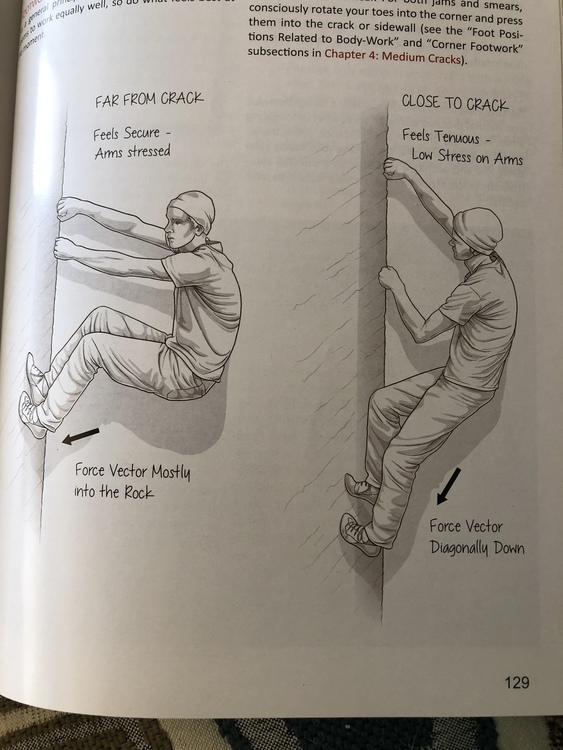 |
|
|
I find myself in the left position because I usually can't get my feet to stick in the right position.. |
|
|
From that position depicted in the book, to transition to straight it, I put my right toe in the crack which allows me to put more downward pressure on my foot. |
|
|
Ted, do you have long legs relative to your upper body? And is the rock somewhat featured or is it really smooth? |
|
|
Yep. I’m 6’3, and it’s all in the legs (size 34). |
|
|
Marc H wrote: From that position depicted in the book, to transition to straight it, I put my right toe in the crack which allows me to put more downward pressure on my foot. Yep spot on. Also looking for any nub or edge to get a foot on on either wall is a great way to get a stance for gear placing. If it’s out from the crack far enough you can smear the other foot and you’re in a semi-restful stem position. Feels a little more secure and allows you to twist at the hips a bit more to see what you’re placing. Sometimes, especially in corners, if you can get a foothold in the direction your facing you can get the opposite foot tight under your hips and basically sit on your heel. Watch Dean Potter’s old tombstone video as an example. Good luck. |
|
|
One thing that helps me is shoulder tension versus arm tension. If I hold my weight in my arms then I get pumped pretty quickly. If, instead, I hold the tension in my shoulders (shoulders down away from ears) this engages the back (lats?), this allows me to relax arms a bit, and I don't get pumped as quickly. A version of the "hang on the frame" advice. |
|
|
You have to find the grey areas between a layback and jamming, with both your hands and feet. Sometimes you may be leading with a jam on one hand and laying back with the lower one. Sometimes you'll sway back and forth from jamming to layback move-by-move. Sometimes you'll even find that going into a layback after 40 feet of strenuous off fingers can give you a bit of a rest. |
|
|
Ted Pinson wrote: Yep. I’m 6’3, and it’s all in the legs (size 34). Oh, you're just f*%ked then. Just kidding! I certainly wouldn't call myself a liebacking expert but my personal experience leads me to reiterate what the people above have said. Using the photos you posted as an example, I usually do not have my inside leg up near my outside leg as much. It's usually either hip against wall and inside foot in the crack (lower than other foot), or knee bent and back of the shoe scummed against some feature on the crack, or hip of the inside leg rotated out and the right foot (in your picture) placed on some edge or divot on the right hand wall. In those photos you posted, my body memory is telling me that my inside (right) leg would be doing the most maneuvering But I have an advantage in all that movement, having shorter legs and wider, probably more flexible hips than you do. My husband has long legs like your and trying to rotate his inside leg from a hip in to hip out positions is very unstable for him. |
|
|
Definitely be strategic with high feet vs low feet, trying to stay low feet when able and then going higher feet for harder sections and then returning to lower feet. I also sometimes have my lower foot in the crack, tho not necessarily in a jam. its in the layback position but using maybe a constriction or just the friction on the top to keep it on and save some energy while adding security. |
|
|
Practice makes perfect!!! |
|
|
I tend to be a bit of an indecisive faffy climber, particularly when I'm scared (which is a lot of the time). If left unchecked, this can lead to lots of time spent hanging out in the left diagram position wondering if I should place gear or move up another 6 inches. To avoid this, as much as possible when I find a stance to place gear, I try to identify the stance for my next placement while still in the comfortable stance. Then I move quickly to that next stance, while not thinking about anything other than getting to the next stance. If the next stance is far away, I may place two pieces, and then identify an arbitrary point where I will place my next piece. What I want to avoid at all costs is to start laybacking without a plan, because once I do that, then I have to think and climb at the same time. Since I'm not very good at either thinking or climbing, trying to combine the two is a recipe for disaster. |
|
|
It appears that the key is to wear a woolen hat even when conditions are too warm to warrant long sleeves. I assume that this is so you can keep a doob tucked in there and blaze up when things start getting thin and runout. I mean, homie looks effin relaxed! |
|
|
Ted Pinson wrote: Or is it layback? Anyways, when I first learned to jam I convinced myself that I could just do this and avoid liebacking entirely. This worked fine up until around 5.8, but I’m starting to realize that there are some climbs (quite a few lately) where it’s unavoidable, and this has been the biggest thing that has been spanking me lately. Like many people, I find liebacks insecure, pumpy as hell, and really just downright terrifying when on lead, especially when you end up having to place blindly. The worst part is that I often find, after getting sucked into the “lieback vortex,” I find myself way above the last piece, unable to place gear, and also unable to get OUT of the lieback and back into the safety and security of the crack, because any release of tension will send me careening back to whatever bullshit I tentatively placed a few miles back. Total type 2 fun. Dude. This is about footwork and there is only one way to get better at it, go rock climbing. Different climbs require different techniques and even more so different people require different techniques. |
|
|
Short Fall Sean wrote: It appears that the key is to wear a woolen hat even when conditions are too warm to warrant long sleeves. I assume that this is so you can keep a doob tucked in there and blaze up when things start getting thin and runout. I mean, homie looks effin relaxed! Worked for this guy :) 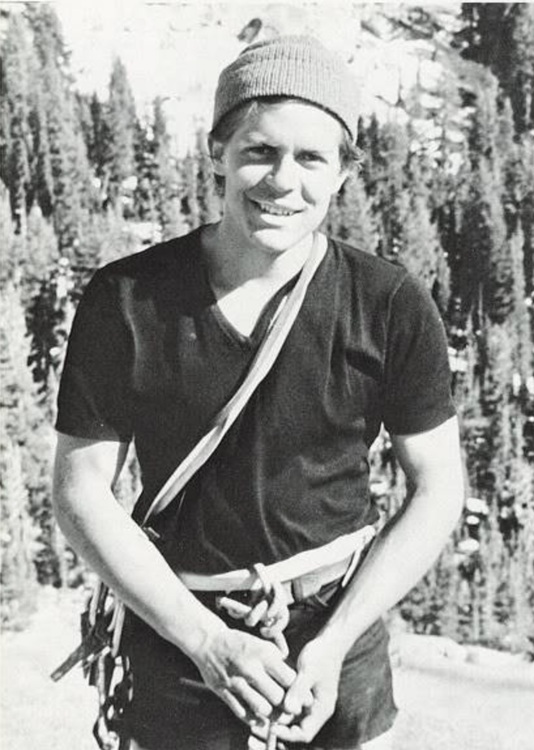 |
|
|
It depends on the wall. I will do the right side if the crack is good for jamming the toe in and keep it from sliding or if it isn't a smooth surface and feet stick. The left picture is what I do for a true lieback, where the feet have to be 100% flat and smooth surface and smeared to avoid sliding down the wall. If you are using the right picture you aren't doing a full lieback. |
|
|
Tradiban wrote: I tried doing this once, now I just watch YouTube climbing vids of other people climbing until I feel perfection approaching. Recognizing the mindset is a great start to learning though, I can remember people saying to jam everything. Fuck that pain! |
|
|
Learn how to crack climb and be aware of your surroundings, edges, features that you can utilize for footholds. I can crank up to 10a, and so far I’ve maybe encountered once of twice that I had to lieback in corners, and even then for short sections so I could establish myself better and place gear. UI think what to illustrations in the book are trying to portray are the situations where the footholds are few and the crack is off size, so pretty much 5.11 and up range. For us mortals, people that climb up to 5.10a, if you’re in a corner and you’re liebacking getting pumped, you’re most likely doing it wrong, as this guy |
|
|
Long Ranger wrote: Isn't that Pat Ament? Whatever happened to him? |
|
|
Fehim Hasecic wrote: Learn how to crack climb and be aware of your surroundings, edges, features that you can utilize for footholds. I can crank up to 10a, and so far I’ve maybe encountered once of twice that I had to lieback in corners, and even then for short sections so I could establish myself better and place gear. UI think what to illustrations in the book are trying to portray are the situations where the footholds are few and the crack is off size, so pretty much 5.11 and up range. For us mortals, people that climb up to 5.10a, if you’re in a corner and you’re liebacking getting pumped, you’re most likely doing it wrong, as this guy Hahaha that guy was the inspiration behind the title. I can at least say that I did not layback a single move on Roadside and it was one of the most cruiser crack climbs I’ve done. Usually it’s when there is a giant flake or corner that really doesn’t lend itself to jamming; as I said, my first instinct is to try to jam. A few climbs that it’s come up on recently: Great Red Book (Red Rock): pretty much no other way to do the second pitch.Autumn (Red River Gorge) jam through the roof of the crux, but eventually you have to commit to the layback for the upper section. Cheaper Than a Movie (RRG): I really tried to avoid laybacking this thing and jam, but it’s thin hands .75-1 and the right Wall makes it super cramped. Ended up being more of a “jamback.” |
|
|
Long Ranger wrote: Damn, I think of myself as being reasonably well-versed in climbing history, but I don't know who that is! Who is this beanied crusher? |


