|
|
mattm
 ·
May 9, 2018
·
TX
· Joined Jun 2006
· Points: 1,885
·
May 9, 2018
·
TX
· Joined Jun 2006
· Points: 1,885
Jordan Tamborine wrote: I'm curious about your hanging belay comment with small gear. What would you be doing in this situation? In that case, I'd get a solid 1st piece in, tether in quickly and weight it but REMAIN on belay. Weighting the piece allows me to go hands free and doesn't put my belayer to "Work" holding me. I'll then continue to build my anchor as needed either with the rope or alternate option (belay sling, etc). As noted above, another distinct advantage of the tether is, if using the rope building the anchor, you have more options on how you'll join the pieces since you're not committed to the clove-hitch-weighted-first piece issue.
|
|
|
H Lue
·
May 9, 2018
·
Leavenworth, WA
· Joined Nov 2015
· Points: 15
jason.cre wrote: clove into whatever your anchor is with the rope on a locker and get rid of your thong. How do you anchor yourself in when setting up a rappel?
|
|
|
Jason Kim
·
May 9, 2018
·
Encinitas, CA
· Joined Apr 2012
· Points: 255
Marc H wrote: That is an insanely long explanation of how to use a completely unnecessary piece of equipment. I will never understand criticism like this. Whether you use a PAS or not, that is a very good post. OP, I've been climbing for about 15 years and I still go back and forth on this topic. I used a PAS for a few years because it seemed like a handy piece of gear, then I decided it was a waste of money (ironic since I had already paid for it) and that only "noobs" use them so I ditched it, and I recently dug it out of the bin and started using it again (Rgold's well-thought-out post played a role there). I'll walk you through my thought process and what I like and don't like, if it helps you.
One point that really has nothing to do with the PAS itself: I prefer to climb with a system that is consistent, as much as possible. I don't like having to think about what gear I am going to bring or not bring on every other climb, and I get a warm fuzzy feeling of safety knowing that there are a few pieces of gear that I always have available. The knife in my chalk bag and the piece of cord I use to tie it around my waist. Another piece of cord and a locker for my rap backup. I always wear a double length sling over my shoulder, just in case I need it. That stuff weighs nothing and has come in handy, at times. So in that sense, and maybe it's because I'm a bit OCD about these things, I either want to always have the PAS or never have it.
I haven't found a good way of storing the damn thing. I honestly think this is the main reason why people gripe so much about the PAS. The cost issue is silly, for all but the dirtiest of dirt bags. If you store a bunch of loops on a locker, it takes up a lot of room right at the front of your gear loop, which is annoying. If you wear it as a thong, it looks stupid and feels weird. Depending on the size of your waist, it might be possible to wrap it around and wear it like a belt, but that can be uncomfortable. I just haven't found a good way to store it, and that's what keeps me from being totally sold on this piece of gear. Clearly, there are some benefits to carrying this thing with you at all times. It weighs nothing and costs the same as a couple of six packs of good beer.
It's handy if you're climbing a route that involves a lot of raps at the end, and it's also nice if you extend your rap and use a backup. It would be handy if you ever found yourself in a self rescue situation. Yes, you can accomplish the same thing with a sling, but one of the things that annoys me about using a sling is having to loosen a tight knot after the end of every climb. There is another thread about using a clove to attach your rap device and I'm going to try that this weekend - it seems to be a brilliant solution to that problem, and might allow me to ditch the PAS forever, which I would secretly like to do. The other list of benefits that Rgold mentions are all worth considering, but I am of the opinion that most of those situations are fairly rare, and can be easily solved with other gear that you are carrying, so it doesn't outweigh the annoying storage issue.
|
|
|
Dustin Stotser
·
May 9, 2018
·
Unknown Hometown
· Joined May 2014
· Points: 371
Hector Luevano wrote: How do you anchor yourself in when setting up a rappel? I usually just use one of my long slings in this situation.
|
|
|
NegativeK
·
May 9, 2018
·
Nevada
· Joined Jul 2016
· Points: 40
Marc H wrote: That is an insanely long explanation of how to use a completely unnecessary piece of equipment. Climbing is unnecessary. Some people are just unnecessary in different ways.
|
|
|
Anonymous
·
May 9, 2018
·
Unknown Hometown
· Joined unknown
· Points: 0
http://rockandice.com/climb-safe/climb-safe-the-dangers-of-short-static-falls/ Any fall directly onto a draw, sling or daisy chain creates a very high fall factor—much higher than if you took the same short fall onto the rope. In some cases, the fall factor is 2, the highest (worst) attainable, and one large enough to have serious repercussions. I know what they are trying to say here but the way they said it is wrong. If you fall on rope, or sling, or daisy chain hooked directly from you to an anchor it doesn't change the fall factor. However if the rope is not going directly to the anchor and you fall on it the fall factor would be less... so you aren't taking the same short fall on the rope vs the sling etc.
|
|
|
NegativeK
·
May 9, 2018
·
Nevada
· Joined Jul 2016
· Points: 40
ViperScale . wrote:
I know what they are trying to say here but the way they said it is wrong. If you fall on rope, or sling, or daisy chain hooked directly from you to an anchor it doesn't change the fall factor. However if the rope is not going directly to the anchor and you fall on it the fall factor would be less... so you aren't taking the same short fall on the rope vs the sling etc. "Fall factor" in casual speech can be used to refer to measured force. As you pointed out, it's pretty clear what writers mean when they say that.
|
|
|
Big B
·
May 9, 2018
·
Reno, NV
· Joined Mar 2015
· Points: 1
Jason Kim wrote: I will never understand criticism like this. Whether you use a PAS or not, that is a very good post. OP, I've been climbing for about 15 years and I still go back and forth on this topic. I used a PAS for a few years because it seemed like a handy piece of gear, then I decided it was a waste of money (ironic since I had already paid for it) and that only "noobs" use them so I ditched it, and I recently dug it out of the bin and started using it again (Rgold's well-thought-out post played a role there). I'll walk you through my thought process and what I like and don't like, if it helps you.
One point that really has nothing to do with the PAS itself: I prefer to climb with a system that is consistent, as much as possible. I don't like having to think about what gear I am going to bring or not bring on every other climb, and I get a warm fuzzy feeling of safety knowing that there are a few pieces of gear that I always have available. The knife in my chalk bag and the piece of cord I use to tie it around my waist. Another piece of cord and a locker for my rap backup. I always wear a double length sling over my shoulder, just in case I need it. That stuff weighs nothing and has come in handy, at times. So in that sense, and maybe it's because I'm a bit OCD about these things, I either want to always have the PAS or never have it.
I haven't found a good way of storing the damn thing. I honestly think this is the main reason why people gripe so much about the PAS. The cost issue is silly, for all but the dirtiest of dirt bags. If you store a bunch of loops on a locker, it takes up a lot of room right at the front of your gear loop, which is annoying. If you wear it as a thong, it looks stupid and feels weird. Depending on the size of your waist, it might be possible to wrap it around and wear it like a belt, but that can be uncomfortable. I just haven't found a good way to store it, and that's what keeps me from being totally sold on this piece of gear. Clearly, there are some benefits to carrying this thing with you at all times. It weighs nothing and costs the same as a couple of six packs of good beer.
It's handy if you're climbing a route that involves a lot of raps at the end, and it's also nice if you extend your rap and use a backup. It would be handy if you ever found yourself in a self rescue situation. Yes, you can accomplish the same thing with a sling, but one of the things that annoys me about using a sling is having to loosen a tight knot after the end of every climb. There is another thread about using a clove to attach your rap device and I'm going to try that this weekend - it seems to be a brilliant solution to that problem, and might allow me to ditch the PAS forever, which I would secretly like to do. The other list of benefits that Rgold mentions are all worth considering, but I am of the opinion that most of those situations are fairly rare, and can be easily solved with other gear that you are carrying, so it doesn't outweigh the annoying storage issue.
clip the locker on the first loop to the last loop, then clip to your gear loop, it'll hang like a draw
|
|
|
Jeffrey Constine
·
May 9, 2018
·
Los Angeles, CA
· Joined May 2009
· Points: 674
I bring my ledge with me, hanging belays are a thing of the past. A PAS is junk. Girth hitching crap to your harness tie-in point is a no go. The ledge is made by John Deucey Middendorf former A5 gear maker, now called D4 equipment.
|
|
|
Rob D
·
May 9, 2018
·
Queens, NY
· Joined May 2011
· Points: 30
Seems like the original question has been answered, but I would add that a huge pet peeve of mine is saying "secure" or "in direct" or any version of those. If you want me to take you off belay, tell me to take you off belay. "Off Belay" is a command. "In Direct"/"Tethered" is a status update.
|
|
|
Ashort
·
May 9, 2018
·
Las Vegas, NV
· Joined Apr 2014
· Points: 56
I never have my second anchor in, just leave them on guide mode, grab their device and put them on lead belay. When they are ready to go they can take themself off the guide mode and take that device up.
|
|
|
Gunkiemike
·
May 9, 2018
·
Unknown Hometown
· Joined Jul 2009
· Points: 3,762
Everett wrote: "Fall factor" in casual speech can be used to refer to measured force. As you pointed out, it's pretty clear what writers mean when they say that. You seem to be OK with that, but I will call out the mis-use of the term every chance I get. It inevitably muddles what should be a clear discussion, and quite frankly, it's NOT THAT DIFFICULT A CONCEPT to get straight. It's one of several FACTORS that go into determining the applied load. Other factors include climber weight, slope angle, friction, squishiness, rope modulus and so on.
|
|
|
Anonymous
·
May 9, 2018
·
Unknown Hometown
· Joined unknown
· Points: 0
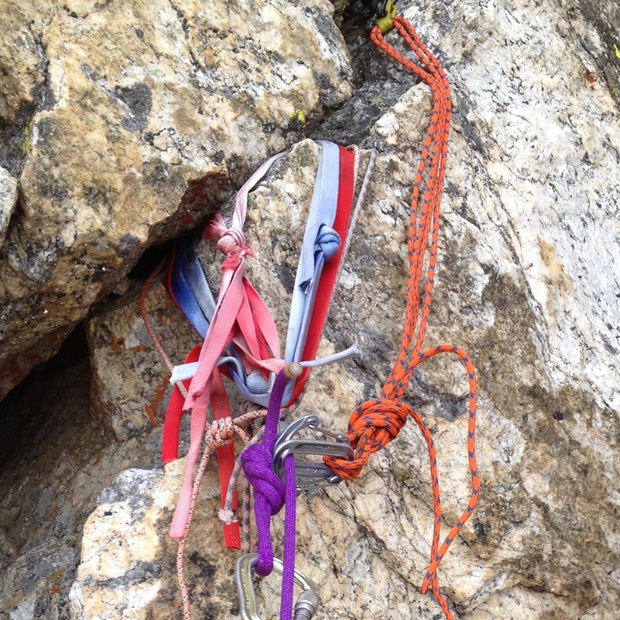
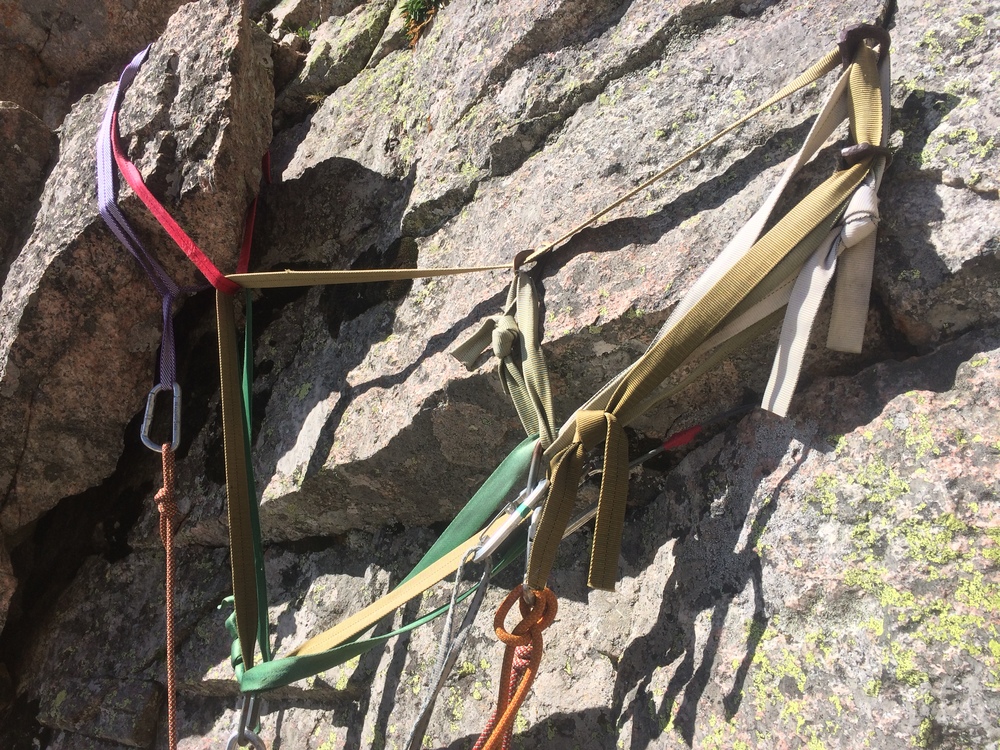
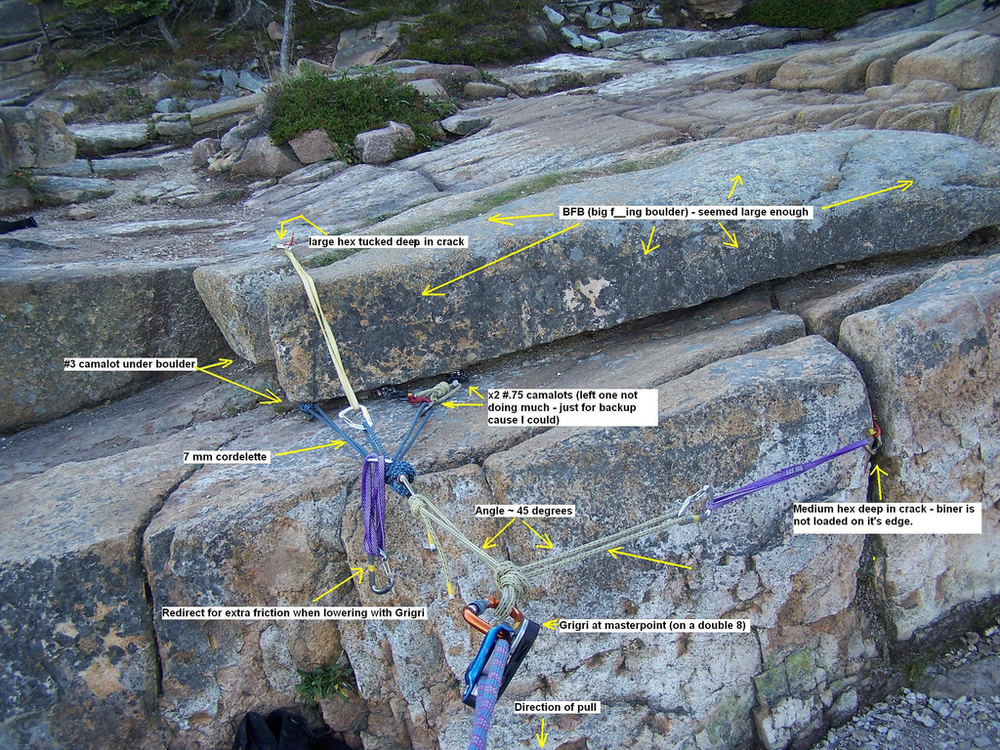
Just make sure your anchor is good and you will be ok. Here are a few anchors you should model yours after.
|
|
|
Jason Kim
·
May 9, 2018
·
Encinitas, CA
· Joined Apr 2012
· Points: 255
Tried that, Big B. Don't like having a bunch of loops hanging there at the front of my harness, getting in the way of everything else. Takes up way more space than a regular draw would, and obstructs my reach for that black totem when I most desperately need it.
|
|
|
Michael Parker
·
May 9, 2018
·
Belgrade, MT
· Joined Nov 2015
· Points: 5,978
Ashort wrote: I never have my second anchor in, just leave them on guide mode, grab their device and put them on lead belay. When they are ready to go they can take themself off the guide mode and take that device up. This is also my preferred method for swapping leads. I highly recommend giving this a try. I started doing this as a way to minimize time spent transitioning at belay stations.
|
|
|
Paul Deger
·
May 9, 2018
·
Colorado
· Joined Sep 2015
· Points: 36
At the risk of a tangent - I usually first clip in with a sling for immediate security, then create anchor and clip into the anchor. What is the advantage of PAS over a sling that has many applications?
|
|
|
FrankPS
·
May 9, 2018
·
Atascadero, CA
· Joined Nov 2009
· Points: 276
Paul Deger wrote: At the risk of a tangent - I usually first clip in with a sling for immediate security, then create anchor and clip into the anchor. What is the advantage of PAS over a sling that has many applications? Adjustability.
|
|
|
Dustin Stotser
·
May 9, 2018
·
Unknown Hometown
· Joined May 2014
· Points: 371
Rob D. wrote: Seems like the original question has been answered, but I would add that a huge pet peeve of mine is saying "secure" or "in direct" or any version of those. If you want me to take you off belay, tell me to take you off belay. "Off Belay" is a command. "In Direct"/"Tethered" is a status update. People use other commands so as no to confuse "On belay" and "Off belay". I understand that the flow of a climb dictates that you will rarely yell "On belay" at the end of the pitch, but in my opinion it's best to avoid the possibility. It's the same line of though as to why the military uses the NATO phonetic alphabet (alpha, bravo, Charlie...), no two letters/commands sound the same. The last syllable is especially susceptible to confusion as it's most often accented while yelling.
Edit: In this sense "secure" or "In direct" most certainly are commands to and not just a status updates. They are commands with extra thought given so as not to confuse them with other common commands.
|
|
|
Jason Kim
·
May 9, 2018
·
Encinitas, CA
· Joined Apr 2012
· Points: 255
Dustin, it's the use of these other commands that ends up resulting in the confusion. Other than "on belay" and "off belay" there really isn't anything else that needs to be said, barring some sort of emergency/weird situation. Yell out your partner's name and then the command, that is it.
Go to any popular area on a weekend and listen to all the screaming and yelling, as people try and hold conversations with each other up and down the cliff. It gets crazy. The problem with using all these other terms/phrases is that they aren't universal, and can quickly become confusing if you climb with anyone new. I guess I see your point if you and all your partners are 100% on the same page about the meaning of these words, but it seems like it could lead to a potential accident.
|
|
|
eli poss
·
May 9, 2018
·
Durango, CO
· Joined May 2014
· Points: 525
Dustin Stotser wrote:
People use other commands so as no to confuse "On belay" and "Off belay". I understand that the flow of a climb dictates that you will rarely yell "On belay" at the end of the pitch, but in my opinion it's best to avoid the possibility. It's the same line of though as to why the military uses the NATO phonetic alphabet (alpha, bravo, Charlie...), no two letters/commands sound the same. The last syllable is especially susceptible to confusion as it's most often accented while yelling. People will off say something like "safe" when they are clipped in direct, which sounds very similar to "take". Imagine what would happen if the climber yelled take and belayer took them off belay because they thought they heard "safe". I have seen this exact thing happen in real life, and yelled at the belayer to put them back on belay. Thankfully nobody went splat and the only damage was a bruised ego but it could have easily been a hell of a lot worse. Also, your belayer doesn't need to know that you're clipped in direct. There are two reasonable actions the belayer might take if given this information (giving you slack or taking you off belay) and they both have their own command. Why gamble by saying There are 4 basic commands that are essential for climbing and adding more only adds complexity and room for error: - Take in slack (Take, tension, up rope)
- Feed out slack (Slack)
- Take me off belay (Off belay [insert name])
- Put me on belay (On belay [insert name])
Additional communication only adds more chances for miscommunication and usually don't have any positive effect on the belay except for possibly alerting an inattentive belayer. Keep it simple
|

 Continue with onX Maps
 Sign in with Facebook