Continue with onX Maps
 Sign in with Facebook






Dangers of hanging on gear



|
Well then you probably wouldn't like Instagram Peter. :) |
|
|
Jeff constine wrote: A place I am developing that will stay off the radar for a long time, gotta have some places to get away from the crowds. sorry. Thanks for the compliment! Lame spray. |
|
|
Jeff constine wrote: A place I am developing that will stay off the radar for a long time, gotta have some places to get away from the crowds. sorry. Thanks for the compliment! Posting the pick then pulling this makes you seem like a fuckin douchebag. |
|
|
LOL!!!! Haters Bwahaha! Off the Radar climbs rock! Heres another one for ya! 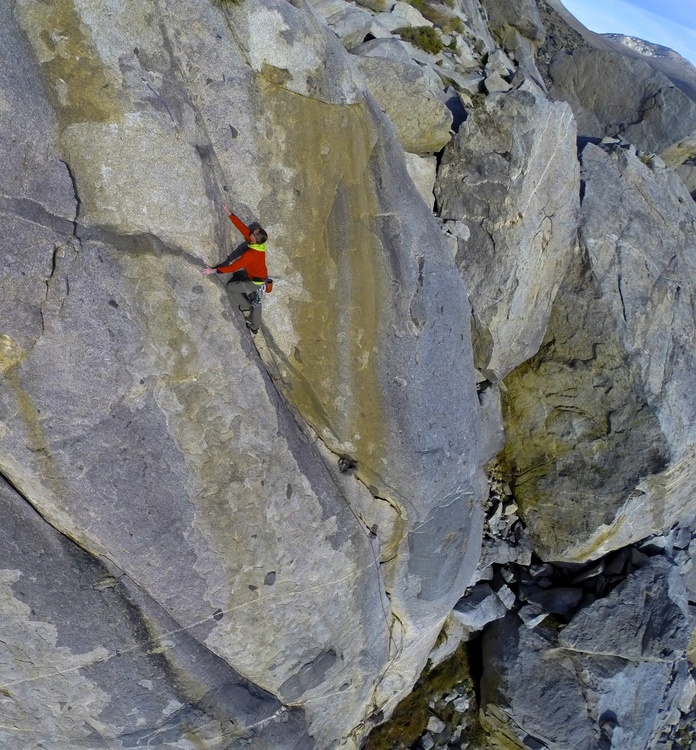 |
|
|
Tylerpratt wrote: Confirmed above. |
|
|
|
|
|
gerrr.. |
|
|
Tylerpratt wrote: Whos what now?
Edit; T Roper, suggests - "some scale in your pics would probably raise the psyche level a notch or two. Maybe put a pack or a pole or even a human in the pics, that way we all know how big or small these rocks are." Thanks T Roper. The 1st stuff, below, is short, 30 feet, somewhat dicey high ball balling, - Shitballing,- as you called it. -No landing-. As you You pointed out, its not just going splat,theres are Levels! Beyond, hopefully missing or landing on a back breaking rock, There is the chance, resulting, rag-doll tumble off ledges& down steep, loose rocky slopes. Answers to eternal Questions?
Whos' Who now?  i could post a face a day, 
for 2 years. . .
Does Size matter? Only if you let go,-Big Enough! Not once you get to that angle! -Size has nothing to do with it- "It's the Caliber' - Toker Villian psyche level or stoked attitude? 40+/- feet? (I always try to include a pic. to show scale,Click On The Top Picture 189, 32 inch tall/ long, 28L, blue/blk, Day Pack, right of center)
  `  you were so right  nothing to climb prove me wrong, & get on one of these, |

|
Michael Schneider wrote: Hey gnome, some scale in your pics would probably raise the psyche level a notch or two. Maybe put a pack or a pole or even a human in the pics, that way we all know how big or small these rocks are. |
|
|
AaronJ wrote: I thought the discussion of hanging on gear in the "double up protection" thread was interesting, and possibly worth dedicating a new thread to. The gear pulls, and you get injured or die. That's the danger.
Not if you pay close attention to A) your placement and B) the need to extend it to keep it from doing that. If you're not actively seeking placements that can't walk or wiggle out, and extending the ones that have potential to do that, you're doing it wrong.
Nope. It's not. Of course you check your gear after you fall on it or hang on it. That's 101 entry level knowledge. If you're not doing that, start. That's not a good argument against hanging on it.
Perhaps, or you can be a climber and determine when it's ok to hang, and when it's not, and not get stuck in some kind of tunnel vision dogma that every other "hardcore traddie" seems to want to develop and pigeonhole others into as well.
Yeah, and plenty of people suggest aid climbing to gain confidence in gear for beginners too. Isn't that really what aid climbing is? Hanging on gear? lol But if the tactic is used judiciously, in concert with a well-developed decision-making process based on knowledge and experience, is it really foolish and bound to end in tragedy? If so, why? It depends on the climber. If someone gets used to aiding everything, then yeah, they never really practice climbing to and placing from stances above gear. Tragedy is a bit hyperbolic.
Nope. If you place solid gear and expect it not to walk out or turn to shit as you climb past it, there's no reason not to hang on it if you want. If you're so worried that hanging on gear is a death sentence or could injure you, then don't do it. Everyone makes up their own mind. Those that deem it's bad style to hang on gear as one would a bolt have valid reasons for not doing it. Practically speaking though, I have climbed gear lines and projected them like sport routes. **Queue old crusty shitting pants with rage** Some routes are conducive to that. Some are not. Learn the difference. Know when your gear is solid, and know when it isni't. Know what your limits are. It's that simple. "Categorically" making "rules" for anything is dumb except for the most basic fundamentals like keeping a brake hand on, etc. There are no fall zones and there certainly are times when hanging on gear isn't a good idea. Then there are times when it's fine.
I understand why you don't want a debate on this. However, style is one of the things that determines when people hang on gear and when they don't. Personally, IDGAF what any of the strict style nazis say. There are plenty of people out there, Matt Wilder, Matt Segal, Pat Goodman, Ethan Pringle, etc etc etc that climb way harder shit than any of the style nazis in here and they project gear lines like sport routes all the time. I guess they're gonna die lol. The rules and restrictions people place on themselves and try to impose on others are stupid. Unless it's keeping the FA of a climb the way it is and not retrobolting, which I'm totally on board with, the differences in style don't matter. You place good gear and want to dog your way up a hard gear line, have at it. You wanna go strict crusty and ground up FA everything and lower off and start again if you fall and give yourself 50 lashes because you didn't onsight, go for it. But restricting yourself to one style and saying "categorically" that hanging on gear is a bad idea is f*&^ing nonsense. |
|
|
don'tchuffonme wrote: And yet pulling gear is the main risk beginning and intermediate crossovers face. I spent yesterday mentoring yet another great young crossover who sport climbs at a high level, has a rack and a number of trad leads under his belt. He didn't know about:
...or any number of nuances such as it often mattering which side the outside cam lobes go on or the drawbacks of stiff sport dogbones in quickdraws for trad climbing. In other words, and when rolled together, a typical lack of knowledge and understanding which can easily setup situations where resting can resulting in pulled gear. In other words, he's entirely typical of beginning and intermediate sport crossovers I spend time with. And resting on gear without a solid understanding of those things and the ability to construct a safe bottom-to-top system is patently stupid, gambling and an accident waiting to happen. don'tchuffonme wrote: No, it's not 101 entry-level knowledge, resting is such a strongly ingrained 'what-climbing-is' behavior in crossovers that they actually seldom even think about the possibility there might be consequences to resting on gear and commonly do so without the slightest awareness there might be a need to recheck gear after resting/falling on a piece. So far from being 101 entry knowledge, it usually doesn't even get on the radar of most beginning and intermediate crossovers. don'tchuffonme wrote: Perhaps? The odds are really good that sooner or later that assuming you can always rest will bite you exactly because of a 'tunnelvision' belief you'll always be able to rest your way out of a situation and so not develop the judgment necessary to know when not to climb on, when to retreat, an eye for less than obvious fall hazards. Again, the various immediate rope-system level of hazards of resting in trad are the least of the problems with the behavior. don'tchuffonme wrote: Aid is a way of learning to determine the quality and variety of placements and the distinction between solid and marginal pro, but has nothing to do with "resting" on gear relative to free climbing as you are never off the gear let alone repeatedly on and off the same piece. Also, it's worth noting that lots of aid falls are a result of moving over gear and trying to get back on a piece you've started to move off of. don'tchuffonme wrote: "Aiding everything" is essentially what sport climbing is and defines its dominant characteristic/tactic: repeatedly resting your way up climbs until you can do a clean ascent. The reasons listed prior in this post are why pulled gear is the accident du jour of beginning and intermediate crossovers with whatever degree of 'tragedy" results. don'tchuffonme wrote: Again, there are endless reasons why you shouldn't and the fact the single piece in front of your face may be 'solid' ignores the stress and risks resting poses to all the pieces below that one if you haven't properly constructed your system of pro up to that piece and even if you have. Sure there's no reason not to hang on it - if you're already a highly experienced trad leader who knows there shit inside and out and is working on a really hard route where the probability of climbing it without sport tactics is essentially nil. don'tchuffonme wrote: Yeah, and if it were really that simple pulled gear wouldn't be the issue it is for crossovers. The reality, however, is crossovers knowing and having a solid grasp of those three things is far, far from the simple proposition you make it out to be. don'tchuffonme wrote: Lol is right. All of them are highly knowledgeable and widely experienced climbers with the hard-earned judgment necessary to know how to use safely use sport tactics with gear - all things which 99.9% of beginning and intermediate crossovers lack and hence the reason why it's a bad and risky habit and behavior to engage in. |
|
|
Healyje wrote: And yet pulling gear is the main risk beginning and intermediate crossovers face. I spent yesterday mentoring yet another great young crossover who sport climbs at a high level, has a rack and a number of trad leads under his belt. He didn't know about: Holy shit dude. The title of the thread is "dangers of hanging on gear" not "dangers of hanging on gear for gumbies that don't know how to read or accept risk in accordance with knowledge". You have such a raging hard on for the "crossover" thing. We get it man. Christ. |
|
|
Holy shit nothing. Get a fucking grip, it isn't a discussion of style for advanced trad climbers and the OP isn't isn't asking as an advanced trad climber or because he's too stupid to recognize what you consider stupid simple. He's asking because of the other thread and the fact most crossovers don't think this shit through and in most cases aren't even aware of the dangers inherent with the practice. And I'm all about crossovers because that's what 99% of new trad climbers are - crossovers from sport and pulled gear is the major risk they face and the cause of most accidents I see and read about for people making that transition. |
|
|
don'tchuffonme wrote: Well, if he didn't make absurd assumptions about people who DON'T CLIMB REAL TRAD, how would he get the immense amount of respect he deserves for his craft? I mean, of course anyone who ever hangs on gear assumes that they always can, doesn't understand forces, shifting, etc., etc. The sooner you just respect him, no matter how full of shit he continues to be, the more of a pure climber you will be. |
|
|
Healyje wrote: Holy shit nothing. Get a fucking grip, it isn't a discussion of style for advanced trad climbers and the OP isn't isn't asking as an advanced trad climber or because he's too stupid to recognize what you consider stupid simple. He's asking because of the other thread and the fact most crossovers don't think this shit through and in most cases aren't even aware of the dangers inherent with the practice. And I'm all about crossovers because that's what 99% of new trad climbers are - crossovers from sport and pulled gear is the major risk they face and the cause of most accidents I see and read about for people making that transition. Yeah, it is the major risk they face. It doesn't mean the act is inherently dangerous, just the incompetence. The same could be said for new sport climbers with their huge loops of slack out when their climber is shaking like a leaf just below the third bolt and a huge ledge. It is any discussion one wants to have. I'm saying I do it, and have been doing it for years and so I know it can be done. And it ain't rocket science. It doesn't take a physics degree to figure it out. And if you don't have a healthy respect for the activity in which you're engaging when that activity can kill you, then you're just stupid and probably as likely to get hit by a bus crossing the street as you are from cratering because your gear ripped. You don't get to dictate the discussion that's being had. And it's not "advanced" knowledge either. Any beginner placing gear should know that gear isn't a bolt. Common sense dictates that if the gear can be removed, it needs to be solid so that it can't come out on its own. It's cool that you want to save all the gymbies from themselves, but honestly, if one doesn't have the wherewithal and the logical progression of thought that: gear is removable > gear can come out > need to learn to place gear so it can't > need to learn how gear comes out > need to practice in a controlled environment whether that be top rope, routes well below one's level or whatever, then maybe your precious crossovers need to bounce. So fine, blather on about "crossovers" and "99% of this or that" like you always do- but make sure you add the caveat of "inherently dangerous most likely because they can't wipe their own asses, let alone figure out what solid rock is, and what good placements are"- which, I'm sorry, ain't that goddamned hard. It just isn't. Neither is belaying a sport climber or leading a closely bolted route. It doesn't mean it's just soooooo dangerous. It means that the dummies that get mangled doing it are too dumb to assess and accept risk appropriately. |
|
|
don'tchuffonme wrote: You could have stopped there. don'tchuffonme wrote: It doesn't mean the act is inherently dangerous, just the incompetence. It does unless you're an advanced trad climber. don'tchuffonme wrote: I'm saying I do it, and have been doing it for years and so I know it can be done. And you are lucky you didn't get hurt in the process when you were first making the transition to trad. don'tchuffonme wrote: And it ain't rocket science. It doesn't take a physics degree to figure it out. And if you don't have a healthy respect for the activity in which you're engaging when that activity can kill you, then you're just stupid and probably as likely to get hit by a bus crossing the street as you are from cratering because your gear ripped. Well if it was as obvious and simple as you claim then there wouldn't be all the incidences of gear pulling. The reality is none of the overall system risks of the practice are obvious to folks first crossing over and that's why you see a majority of them obliviously treating gear like bolts. don'tchuffonme wrote: And it's not "advanced" knowledge either. Any beginner placing gear should know that gear isn't a bolt. Common sense dictates that if the gear can be removed, it needs to be solid so that it can't come out on its own. Again, knowing all that goes building a bottom-up system of pro and being able to assess how secure it is relative to resting on your current piece is, in fact, advanced knowledge and skill. And for about the nth time, it isn't just about the piece in front of your face which is how you seem to continually want to scope it. don'tchuffonme wrote: It's always refreshing to get a frank assessment from some as experienced as yourself. Yeah, how could anyone think crossing over to trad isn't dead simple and everything about it completely obvious - I mean anyone who rips gear while making the transition is clearly a frigging idiot. |
|
|
"It's always refreshing to get a frank assessment from some as experienced as yourself. Yeah, how could anyone think crossing over to trad isn't dead simple and everything about it completely obvious - I mean anyone who rips gear while making the transition is clearly a frigging idiot. " |
|
|
Healyje wrote: You could have stopped there. But I didn't. Again, you don't get to dictate what's said or the manner in which it is.
Sorry man, knowing that it's dangerous and that you should develop skills and accept risk commensurate with your level of knowledge isn't advanced. Never has been. Never will be.
Nope. Wrong again. First, I started climbing on gear, and didn't climb bolts until a couple years later. So, nice "crossover" assumption. Also, it wasn't luck. I simply had the common sense to realize what I was doing was extremely dangerous and I accepted risk slowly as I gained knowledge and skill. What a concept! And I'm not a genius either. Just average intelligence. Know what that means? That means people that can't do that are dumb.
Wrong again chief. The problem is not the gear. The problem is the incompetence. And it is obvious. People are just dumber these days. Look who we elected. See any correlation? The reality is none of the overall system risks of the practice are obvious to folks first crossing over and that's why you see a majority of them obliviously treating gear like bolts. Again, it should be obvious. One system is fixed and very strong or at least should be (and is 99% of the time) and one is entirely dependent on the dope on the rope. It doesn't take a Pulitzer Prize to figure that out. IT. IS. OBVIOUS. If folks can't grasp that, they should stick to lawn darts. That's how obvious it is.
Again, no it isn't. It's a skill that should be learned slowly over time, but it isn't like going from simple addition to solving quadratic equations. Maybe long division. Maybe. And for about the nth time, it isn't just about the piece in front of your face which is how you seem to continually want to scope it. Please show me where I did that, fallacy man. You're like a super hero. Fallacy Man!!
No one said it was dead simple fallacy man. I said it wasn't rocket science and risk should be assessed and accepted slowly. And nice to end on a fallacy too. You're on a roll! |
|
|
For all those that believe resting on trad gear is a safe or simple practice, the Philly street kids say it best. |
|
|
Healyje wrote: For all those that believe resting on trad gear is a safe or simple practice, the Philly street kids say it best. Do you always have to be such a pompous asshole? You are not the world's expert on safety, in fact, as many on here say, you are full of shit. |