
 Continue with onX Maps
 Sign in with Facebook






Beal Escaper.. thoughts?



|
|
|
|
dperry427 wrote: Interesting. It looks like the retrieval mechanism is repeatedly loading it. Sounds like accidental retrieval could be incredibly easy to do, which worries me. |
|
|
Bowens wrote: I was concerned about accidental retrieval as well, but after thinking about it, I don't think I've ever been on a rappel where I unloaded the rope more than once before reaching the end of the rappel. I was also thinking that maybe a jerky/bouncy rappel would cause an accidental retrieval, but even then, I don't think the rope ever gets fully unweighted. |
|
|
This thing is freaking genius! |
|
|
I both want one and am terrified for anyone else who might use one |
|
|
It appears that the system must be able to lift the rope up to unweight the 'lock' and inchworm its way to releasing. My concern would be making a 60-70 meter single strand rappel, then finding that the elastic portion of this gadget is too weak to lift my rope weight against friction on the rock, being jammed in a crack, looped under a flake, etc. When this happens, I'm stranded 60-70M below my "anchored" rope. Do I commence jugging this thing?! What if it did get 80% towards releasing and then I started jugging it!! Sketch situation to be in if you ask me. I'll carry a tag line or a second rope. Also, how well will it grip on a wet climbing rope?? Two stranded rappels involve enough rope to touble/shoot stuck ropes/etc. Single strand rappels leave you with few or no options. Edit to add: watched video again: rope treatments ETC are moot point since the device "grips" on itself; your rappel line is tied in direct to the loop and has nothing to do with the friction mechanism. |
|
|
Brian Abram wrote: +1 |
|
|
|
|
|
rgold wrote: Points taken but, unless I am missing something, I don't think the part I put in bold above is an issue since the rope being grabbed is a permanent part of the Beal Escaper system, which is also the rope that runs through the anchor. You then fix your rappel rope into a loop at the bottom of the Escaper. |
|
|
clever idea, but i probably won't be lining up to buy one. |
|
|
There are so many unanswered question it's really had to say anything, does it work for like a full 60-70m rappel with a dynamic rope? What if it was on a half rope that's even stretchier? The stretch looks fairly easy to engage but things could definitely be more difficult. Couldn't this freeze up horribly in winter conditions? Could the elastic get just snap or get brittle in extreme cold? It looks like a good idea and could be fucking amazing, or it could be only be suitable for general use, I really think they just haven't given us as the consumer enough useful data to make a decision to buy one or not. I think i will be buying one though as it looks like it could be good for sea cliffs. |
|
|
Xam wrote: Yup, good point. Cancel that one, but in its place add the concern about unweighting the rappel during the descent, thereby initiating the release procedure. So probably not a good option for a rappel with many intermediate ledges. |
|
|
Deja vue. Long ago. https://www.lagrimpe.com/abc/pierre-allain/ http://www.outdoorgearcoach.co.uk/innovation-history/pierre-allain-innovator-extraordinaire/ Best, E PS: Pierre Allain invented a very similar system than Keylock way before it got the market. For some reasons, he never patented it. |
|
|
The Decrocheur Allain would release with a single unweighting. At least the Escaper requires multiple unweightings. Moreover, when the Decrocheur Allain sprung loose, you had a substantial piece of metal trying to fall on your head. The Escaper is all softgoods so less likely to knock you out. So same goal, a single-rope rappel, but a very different take on how to accomplish it. |
|
|
This is a really cool idea, but I'd be too scared to use it. |
|
|
I'm working on a teleportation machine here at JPL which will render this device obsolete. Looking for volunteers to transmit organics - slight risk of having a fly's head, etc... |
|
|
Anonymous wrote: You could potentially use it with a tree or other wider object by using it like shown in the following diagram. The left image is the standard usage for reference. 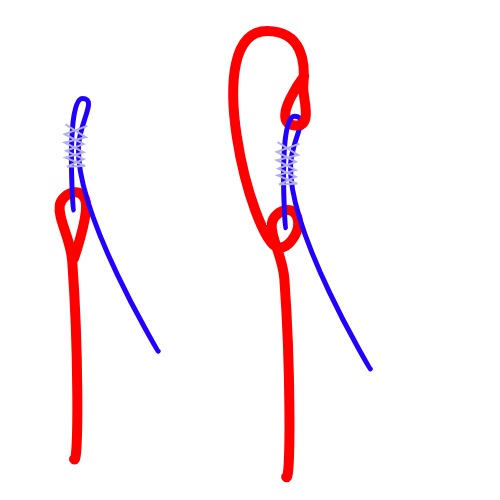 Note that only half of the load goes through the escaper, so if you were already worried about the weight of the rope preventing the system from disengaging, this set up could be even worse. |
|
|
Cool device but it kind of screams future mandatory recall. The thing releases with a few tugs of an unweighted rope, so what happens when someone is rappelling down slab, constantly weighting and unweighting the rope as they stop to untangle their rope? I'd view this more as a specialty item for experienced climbers and occasional use rather than a replacement for all things rappelling related and ready for the masses. |
|
|
As seen in one of the videos, it looks like the recommended best practice is going to be to put a stopper knot in it, effectively locking up the device, until the last rappeller comes down. This would mean that it cannot come undone while untangling ropes or searching for the next rap station, but it does introduce one extra step for the last rappeller to potentially forget. |
|
|
All knots and hitches rely on friction, even the beloved figure of 8. In the videos, there are appoximately 5 friction hitches plus one additional finishing hitch. Most climbers have no problem going hands free during a rappel with only the friction of an ATC and 3 or 4 raps of a friction hitch backup. Something to think about. And, in the videos, it takes about 13 tugs to release. Is it impossible for our brains to know, in this situation, this emergency rappel, weighting and unweighting the rope is very hazardous? Even when landing on intermediate ledges during a rappel, it is still quite easy to keep weight on the rope, especially if your life depends on it. |
|
|
Greg D wrote: You're assuming the gumbies who use this thing thinking it will save them the need to trail a second rope will have considered the engineering principles behind how it works. Half the gumbies out there dont even understand that you need to keep a hand on the brake side of the ATC, you really think they are going to understand that keeping the rope weighted is critical in the use of this device? If so, you have far more faith in the blind than you should. |


