
 Continue with onX Maps
 Sign in with Facebook






Ice assessment flowchart



|
In the last several years, I've been aware of at least one serious incident each season involving major ice fall or ice failure in my home zone of the Wasatch. I'm sure there are more elsewhere. Especially as new folks continue to enter ice climbing, I think it's helpful to have a framework for evaluating whether the ice is safe to climb, so I'm sharing this flowchart I made. This is an attempt to represent all the variables I typically consider before climbing ice. A lot of it depends on decent telemetric temperature data. The availability of such data gets better all the time, but if there's not a reliable weather station nearby, short-term point forecasts (check the elevation!) can be a reasonable substitute, not to mention vehicle ambient temperature sensors for the trailhead, or even bringing a lightweight thermometer along to the climb.This is only meant as a decision aid, so it almost certainly won't match everyone's personal risk tolerance. It's also important to actually look at the ice out in the field, plus consider the other human factors--how are you feeling today? What about your partner? Is today the day to go big, or select more conservative options? Anyway you slice it, ice climbing still has inherent hazards, so use this tool at your own risk, and remember it's only one tool.If you've got questions, suggestions, or feedback, happy to discuss. Feel free to share if you found it helpful. There's a full resolution version available for free to download here:https://staff.weber.edu/derekdebruin/research/iceflowchart.pdf 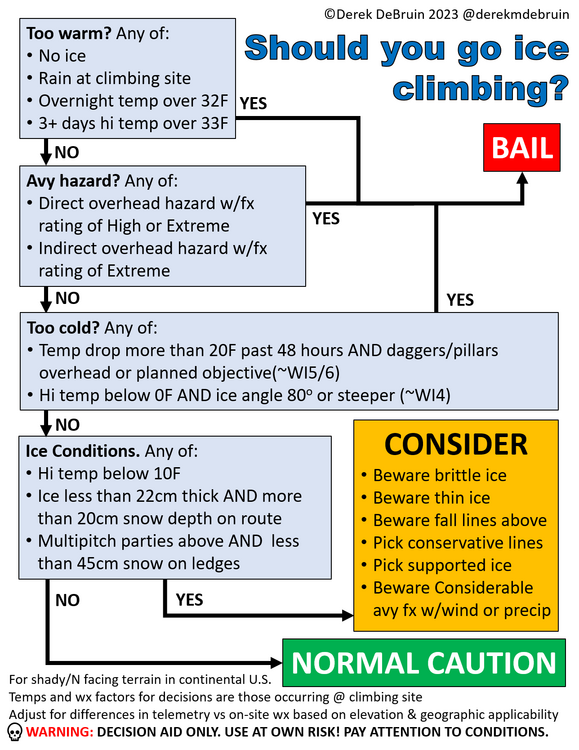 |

|
I like it, but too much thinking for me. I employ a much simpler one 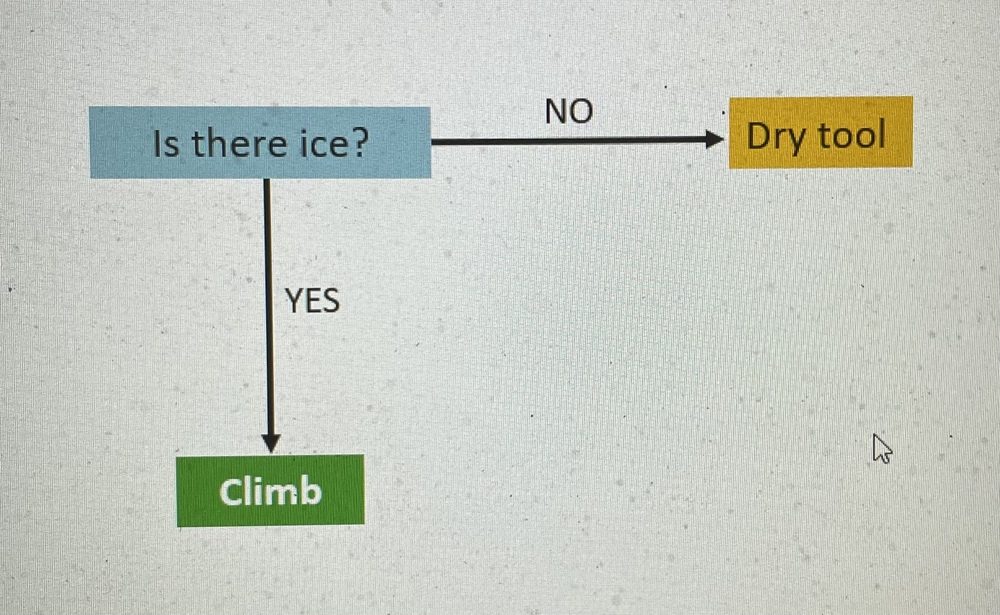 |
|
|
Mark Pilatewrote: Hahaha. Fair enough. I learned to ice climb in North Carolina of all places, so I'm used to similar logic. But I've noticed as I age I'm getting much more caught up in the whole "will this delaminating mess fall down while I'm climbing it" part of the equation. |
|
|
Interesting. I know here in the Northeast sun exposure often plays a role. I don't want to climb at Lake Willoughby on a warm, sunny day, especially later in the season. Conversely, maybe Dracula is OK even if it was slightly above freezing for one night? |
|
|
The single most important factor in any ice route description should be the aspect. Warm sunny day means that north facing gully is going to be hero ice while the SW faceing cliff with big ice and black rock will be a death trap. Other factors are how steep? are there hangers above you? Is there a snow gully above the ice climb? what types of conditions does that gully typically avalanche in? does the climb support itself on the ground and the cliff at the same time? is it free standing? is it free hanging? how much water pressure is behind it? What does history tell you about this climb? If you are serious about climbing ice and staying alive you know the answer to every one of those questions and a whole lot more before you swing a tool. |
|
|
Interesting chart but as has been mentioned I think aspect should play a way bigger role. Also just my personal opinion but cold and warm temps are necessarily a no go. For instance I have climbed a lot in Cody when it gets to 35F or even 40F every day for a few hours but freezes each night. When the aspect is right or it is cloudy that is actually great ice making temps. I definitely wouldn't put that into any greater than normal risks. Also many trips in Canada where the highs never reached 0F for the day. And while that is unpleasantly cold, the 2 big things to look out for are fracturing ice when swinging and unsupported columns/hanging daggers. A large steep WI5 that is super fat and well supported isn't going to be an issue when it is -10F. On the flip side I also tend to be more cautious when it comes to avy danger. There are multiple climbs I have wanted to do but refuse to get on when the avy rating is only "considerable" because of overhead hazard. I think all the nuances just reinforce how important it is to go with people with people who are more experienced when you are a beginner. Ice mentoring and mileage is WAY more important than rock in my opinion. |
|
|
Here is mine: Shitty snow - go ice climbing Good Pow - go skiing Today I went skiing. |
|
|
Allen Sandersonwrote: wow, twas almost a haiku. : - ) |
|
|
Plenty of good points raised here. @nick and dave: for aspect specifically, in the fine print it mentions this is for north facing/shady terrain. I agree there's a host of other considerations for sunny climbs, and wanted to limit complexity with this. @nick: all those questions and their attendant criteria are addressed in the flowchart (maybe I missed one?). As marlin suggests, a mentor is a really great way to learn to assess those things, but as the ratio of new climbers to potential mentors grows, I thought a decision aid might be helpful. @marlin: for warm temps, I'm with you that it can be okay with a good refreeze overnight, but at some point it's not. I needed to put a number on that. If you were writing it, what would you suggest? With cold temps, I agree. I used grade of the climb as a proxy for whether it was supported or not (and offer some clarification in the details), but I know it's not perfect. For me, fracture while swinging is actually a big concern. The only fall I've taken ice climbing was a day with a high around -5F and when I swung my tool, it fractured sufficiently to blow out my other tool beneath it (with good staggered spacing). As for avy hazard, if I'm actually in that snow on a considerable day, I'm with you and I'm gonna not actually be in that snow. But a bottomline hazard of considerable may not actually apply to the place where the climbing is, so I kept that in the "consider" box. |
|
|
Great discussion! Many thanks to Derek for starting it. I think the biggest thing this thread demonstrates is just how complex these assessments can be. All the more so when there's often little information available (especially about things like water pressure behind the ice). While it may be somewhat simplistic, I find this Petzl resource to be worth a look when guesstimating what to expect on a climb: https://www.petzl.com/INT/en/Sport/Waterfall-ice-study?ActivityName=Ice-climbing. |
|
|
Hey Derek! Great idea and thanks for the conversation; I get asked about this by newer partners all the time and something somewhat formalized could be a great help. In general I have much of the same feedback as others:
I wonder if it makes sense to restructure the flow chart to split after avy evaluation to use different criteria for well-supported ice vs not. I think that matches my internal thought process at least. |
|
|
While I agree with the general sentiment that most of your flow chart describes Derek, I disagree with the notion of putting quantifiable benchmarks and specific processes on the activity. Flow charts work really well for either repeatable processes (ex a production line), or big picture framing (ex the OODA loop). I think that in environments as complex, dynamic, and nuanced as the mountains, having quantified pathways instills an expectation of both performance and decisions. For example, look at the number of forum topics on MP that start with (generally): "I've been following this training plan and I'm not where I expected to be..." The introduction of the plan leads to the expectation of performance if you follow the plan, when we all know that climbing performance is highly variable on factors far beyond just what training plan you're following. Similarly, while staying out of avalanche terrain in the couple days following a storm is generally good practice, there's a number of accidents that have occurred because people assumed that waiting a couple days after a storm was enough time for avalanche activity to settle and then punch it, when in fact the new snow was sitting on a hair trigger and basic observation would have shown continuing signs of instability. That's a case where the old version of forecasting relied on the number, but we all know that there's a whole lot more at play than a number, and the decision-making is correspondingly more complex. And while I think you've done a good job in all the fine print of reminding that your flowchart is a single tool and there's far more factors at play, it's human nature to latch onto the simplest decision-making tool available. People will see a decision-making flowchart and start to follow it, without fully understanding the additional factors that affect each step of the way. Also, a thought on the specific wording on the flowchart. The main question is, "Should I go ice climbing?" but at each step of the way, the red flags to bail are indicated as "Yes," and the reasons to consider going are, "No." That's confusing and it'd be clearer if the language were reversed. For example rather than starting with "Too warm?" and then benchmarks, start with, "Is it cold enough? Is there ice; Was any precipitation frozen?; Was the overnight high less than 32F..." and then then ultimately the answer becomes, "Yes, I should go ice climbing." |
|
|
If you need this flow chart your not ready to go out ice climbing on your own. that favorite temp of 40f is fine for north facing gully but a death wish on a SW facing WI5. this shit is way too nuanced for a flow chart. best thing is to just get most of the new ice climbers to quit and take up video games. leave the ice for the folks who don't need flow charts. |
|
|
Derek, don't be dismayed by those that balk. Every new idea will ruffle a few feathers. Refine, understand, repeat... and you will get there. My guess is more people will benefit from this than it will harm. If nothing more... than starting them on the path of understanding ice. Kudos. |
|
|
Derek DeBruinwrote: Warm temps. For me there isn't a number I could assign to the days. If the climb is getting sun effect then in my experience as little as 2-3 days of highs in the upper 30s with marginal freeze at night can really make it pretty unclimbable. But on the flip side I have climbed routes in the shade where it was 35-40F every day for the past 10 days. And there was absolutely no issues. I think this is why in my post I mentioned how it is so important for beginners to go with experienced climbers/mentors. But to answer your question, if I were designing a flow chart I would start off with a question like "Is the ice on a south aspect that gets sun?" To me this is way more deciding of a factor than temps. Cold temps. I agree that fracturing ice can be scary. But what I have found is that after enough years of swinging tools you learn to read the ice and where you should be swinging your tools. I used to fracture a lot of ice in cold temps my first couple years but recently I have felt like that isn't so much of an issue. Even small little adjustments in placement of the pick can make a big difference in the amount of fracturing that occurs. Avy hazard is obviously an entire different discussion. Again often it has more to do with aspect and the specific problem forecasted. For example....1st day in awhile above freezing with good afternoon sun after days of clouds, and I wouldn't want to be climbing underneath any avalanche terrain that is south facing in the afternoon even under a considerable forecast. It also depends so much on the specific problem. In discussing these questions, I think for me there are 3 main questions that need to be answered for me to climb. What is the avy forecast/hazard? Is the ice bonded/will the entire climb fall down? Am I psyched to lead the pitch in its current condition? I usually choose objectives based on the 1st one. The 2nd question sometimes needs to be answered by actually being at the base of the climb. And the 3rd one is seeing if my mental and physical state matches the given conditions for the day. All the temps, aspect, sun effect, weather history, wetness, protection, etc are all data that I use to answer those 3 questions. And so much of that data can't be nailed down to a specific number because......it depends! |
|
|
Again how much sun and at what angle is more important than almost anything else. Widows walk routinely falls down on sunny days in the mid 20sf. History is important. That's the history of the weather and the climb. Some pillars are known to fall in off in very cold temps. Some climbs avalanche in predictable and repeating conditions. anyone going out in considerable avy conditions is a dead man walking. Only a matter of time. Even moderate forecast means human triggered avalanche is possible. |
|
|
Stoked to see the thoughtful comments here. I'll try to respond to individual remarks and summarize at the end. Grant Watsonwrote: There's a study or two underlying that Petzl page that provided some of the assessment criteria for the flowchart. Blue Ice also has some recommendations in the The Art of Ice Climbing. https://us.blueice.com/products/the-art-of-ice-climbing mtnmandanwrote:
Agreed more discrimination might be needed on avy hazard. Thinking of restating with high/extreme as bottom-line hazards and considerable as aspect/elevation hazard for further consideration.
Tried to address this in the "too cold" section, particularly as the person using the flowchart may or may not have know what "supported" means. I used angle and grade as proxies. I'm less concerned about fracture at the tool (though still a problem) and more concerned about fracture at larger scale (i.e. supported ice or not, pressure dams, etc.)
Noted. Maybe I'll state it at the top that this is for shady/N facing to make it more obvious. Not looking to mess with solar aspects right now.
I think high/low is likely more important than average, if only because the average needs hours of exposure at that temp, which I doubt most folks are calculating. I think it's a better assessment of the actual thermodynamics, but seems more challenging for most folks to assess, particularly since temperature isn't usually reported as an average.
This happens with some regularity. I have a few videos I could go dig up that I use in my ice climbing classes (definitely gets students' attention). The one below happened about a month ago. Not sure if it's a public post, but punchline is that an entire pitch of climbing came down spontaneously due to a big cold snap and barely missed killing 4 people. https://www.facebook.com/groups/177119862760751/posts/1616008665538523/
Nick Goldsmithwrote: Not a bad idea to add history. Maybe it becomes the footnote and the north facing applicability goes to the top. And the 3rd one is seeing if my mental and physical state matches the given conditions for the day. Fair. The human factor is definitely applicable. It's one of the reasons I went with the words "normal caution" instead of "send it" as I had in my very first draft.
This is a really good point. I'll see if I can reword. I think there will be some wordsmithing challenges; ex. "Was any precipitation frozen?" reads more confusing than, "Did it rain?" I think it will also pose some logic challenges; ex. converting the "or" condition implied by the "any of..." question to a different logic model (easy for a computer to get right, but possibly harder for a human.) Either way, good point and I'll put some thought to it.
Nick Goldsmithwrote: Matt Zwrote: Similar sentiments have been expressed elsewhere that I've shared this. Politely and respectfully, I disagree. The contention is that this is all just too complex for rule-based decision models. But I think part of this comes from being the type of person who indeed has the experience to knowledgeably opine about this particular decision aid. In other words, because you understand the potential complexity, it can be challenging not to see it as complex. When I first start putting literal pencil to paper on this idea, I immediately felt overwhelmed by complexity, until I really considered how I make the decision. It usually feels pretty intuitive due to my prior experience. But intuition is simply recognition-primed decision making, meaning there are discriminable criteria upon which to base a decision. We don't often do this sort of thing in climbing (if at all??), but we apply these ideas to other domains all the time. For example, in emergency medical care, basic life support has very simple algorithms with very few criteria, but it works. In medical diagnostics, short-circuit decision trees with perhaps only 3 key criteria can provide high levels of probability for first-pass diagnosis. Checklists are everywhere (aviation, medicine, etc.). The incident command system lays out event, emergency, disaster, and fire fighting management with pretty specific and workable criteria for communication, organization, and action. In tactical shooting, the first guy is never wrong. In perhaps the more familiar domain of avalanche education, we have tools such as alptruth and the munter 3x3 method. All of these things are dynamic and complex, but there are key criteria that can be used to manage the situation, despite inherent variability in event coupling and non-linearity. As long as the potential criteria can be enumerated, then it's an exercise in determining which ones are (most) relevant and appropriate thresholds. This thread has made it clear that while we all agree it can feel pretty complicated, we also have specific criteria we can state as part of our decision making (see Nick's first post).
Truth. That simplification is why many folks have suggested that the high temperature for the "too warm" criteria is not high enough. I selected the criteria I did with the intention of creating a conservative tool that minimizes the downside risk--the flowchart comes in low for "false positives" where you go ice climbing in explicitly dangerous conditions. You may not ice climb as often with this chart, but, hey, if you need a flowchart to tell to go ice climbing, you're not ready to go ice climbing on your own anyway, right? A similar approach is taken with avalanches all the time: keep slope angle under 30 degrees. That boils it down to one simple rule. It's conservative, but it works if you follow it. Nick Goldsmithwrote: I'm not saying you're wrong, but if all the new ice climbers went back to video games, who would we tell to get off our lawn? ;) |
|
|
|
|
|
Beware the Ides of March I know I first responded to this thread rather flippantly, but I do agree with Derek’s premise and goal. In light of a very tragic death and personally watching ice collapse as this season winds down, brings up a key aspect of ice risk analysis that is ripe for better understanding and discussion (as well as study). Specifically, are there any useful heuristics to guide decision making on whether or not to attempt climbing a column. One I’ve always used personally is “Beware the Ides of March”. Generally, I get super skeptical of any column past mid March. Here’s why…. Basically due to the interplay of environmental and mechanical factors. Generally as the days tend toward spring, the daily temp cycle delta (low to high) can expand significantly.
The bottom line is that ice columns that are rapidly cooling or warming or in transition are extremely unstable and unpredictable. Steadily Warming late season columns are the worst for all the above reasons. Extra care and precautions should be taken in case of worst case scenario - complete collapse. Some things to consider doing;
It may or may not be significant (not enough solid research to fully base opinions on) and not trying to Monday morning quarterback, but I would definitely avoid a late season column going forward if it experienced almost 30 degree temp deltas the day before 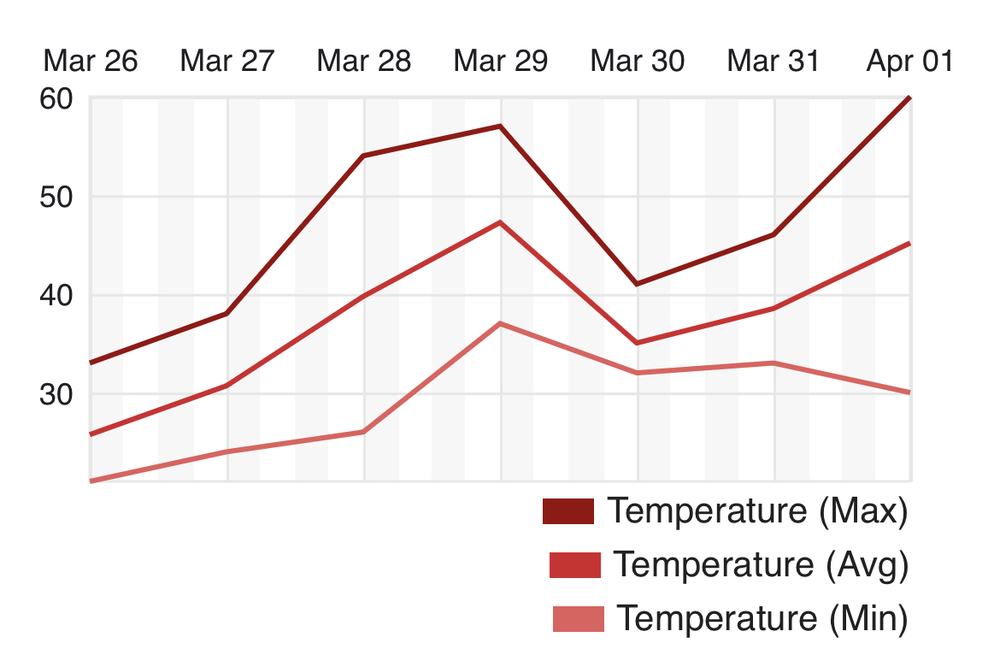 |
|
|
There was a pillar collapse in Hylaite not too long ago and watching that video it absolutely looked to me like there was a Lot of snow under the pillar and that snow settled. Effectively the snow made the pillar look like a free standing pillar which in my book is a pillar that is sitting on the ground and supported by the ground yet is separated from the wall by the overhanging nature of the wall. So while this pillar looked like it was supported by the ground it in fact was not supported by the ground because of the loose snow under it. In reality it was a free hanger or perhaps even worse it had been supported by the snow but the snow not being stable moved and the pillar was no longer supported. I suspect that the massive snowfall in Utah may have been a factor in this recent tragic pillar collapse??? I don't recommend anyone who is not a genuine master class ice climber try to be like Stas. Stas is amazing but he is living on borrowed time... you absolutely need to climb like a kitty until you are past the attachment point of the pillar but scratching is beyond the pale for most folks. If Hooking and tapping won't get it done I will pass and let a braver/ better climber go there. |
|
|
Mark Pilatewrote: Mark, I agree with much of what you say, but I question most of this ^^. As I understand it, water expands as it freezes, then, once solid, it resumes behaving like any other substance - expanding as it warms and contracting (getting denser) as it cools. That's why we see those concerning cracks when temps drop rapidly. Contraction of a pillar increases the tension on it. Maybe your reference to ice contracting as it warms was about phase change (melting), when things get all kinds of interesting, but if it's solid, it'll expand with warming. Please correct me if I'm missing something. Oh wait... this is the internet, so no need to ask. ;-) |


