
 Continue with onX Maps
 Sign in with Facebook






New Climbing Rope - Defect Sheath
|
|
Hi folks! Today I uncoiled a new rope - Mammut Crag 9.5 I bought and noticed this slight 'defect' in one place. 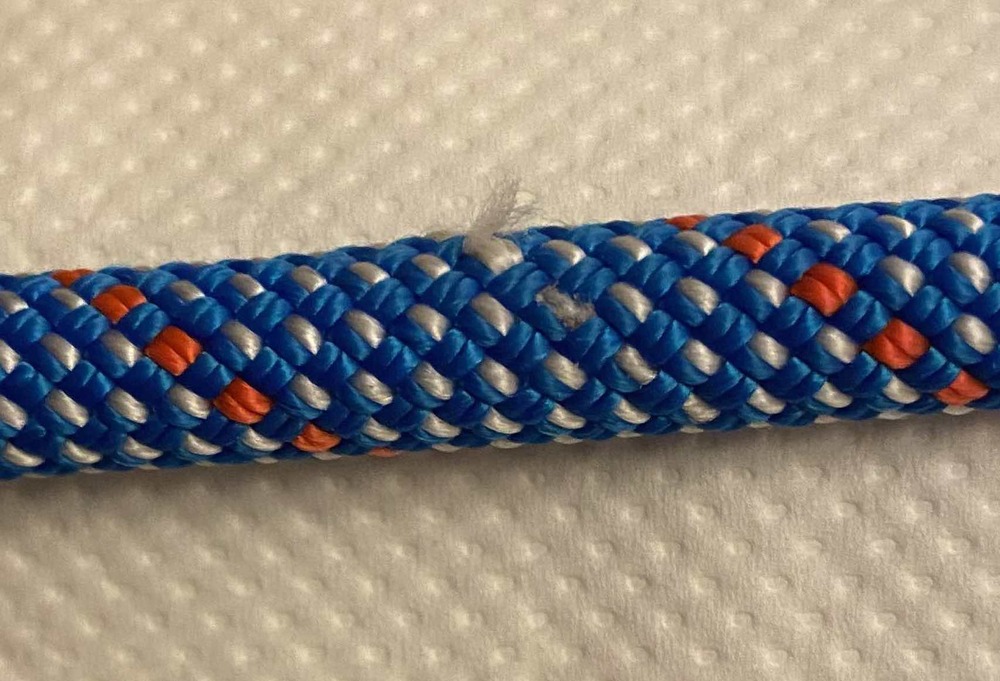 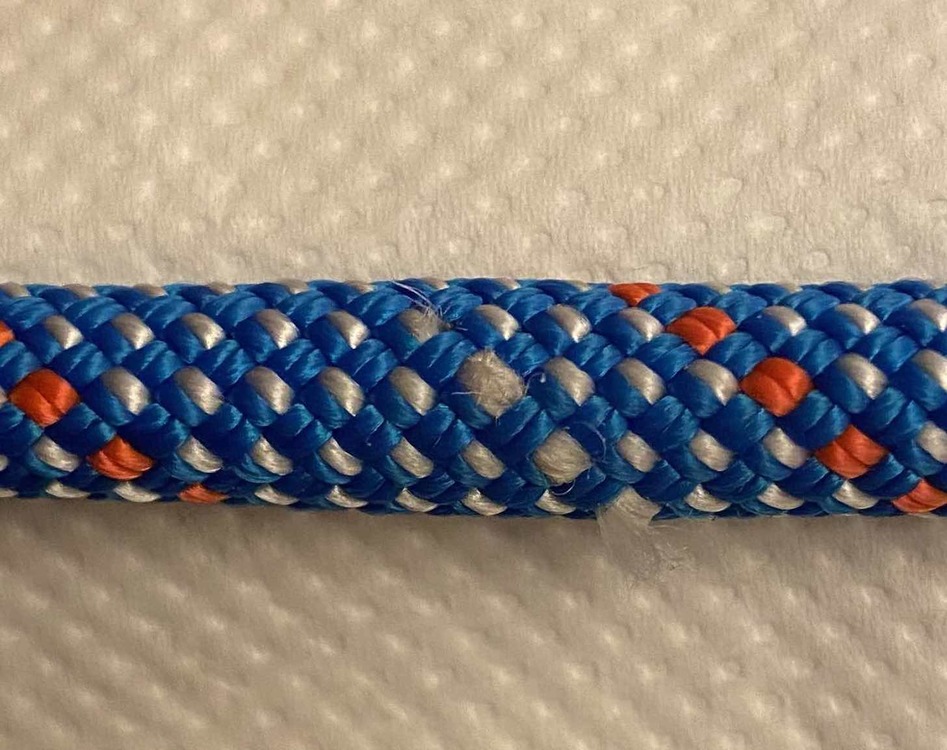 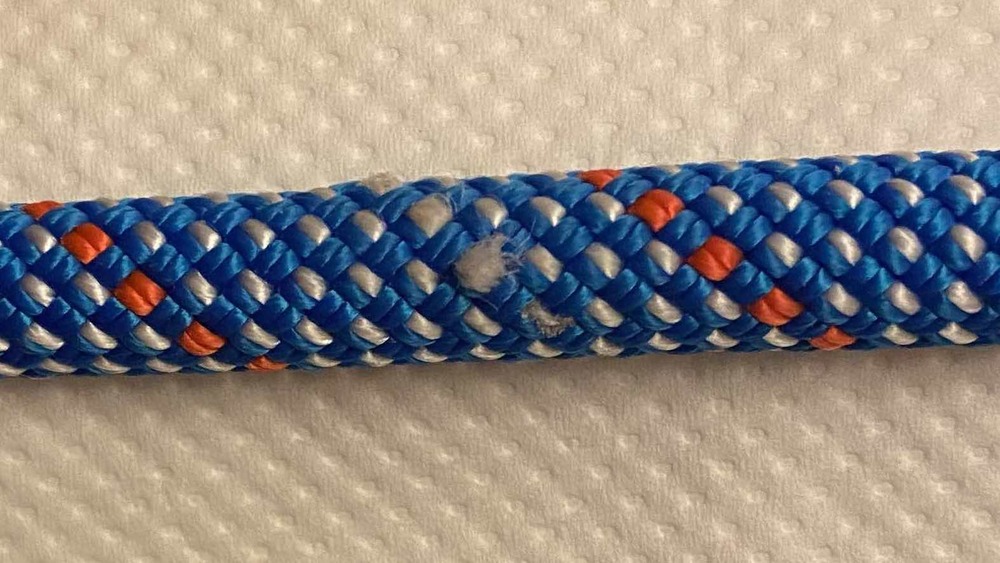 The white strand in the sheath seems in one point thicker than normal and is a bit frayed and when it continues it gets thinner than normal and darker in color. Should the rope be replaced as having a manufacturing defect? I haven't climbed on it yet but I'm worried it will wear out fast at this particular place. Thanks for your ideas! |
|
|
I’m certain it’s safe and if it were me I’d go ahead and forget about it and use it but that’s only because I’m lazy and wouldn’t want to go through the hassle of trying to get it replaced. It’s a bummer it has that slight fuzz though. I’m pretty sure Mammut will probably replace it if you make a big enough stink. |

|
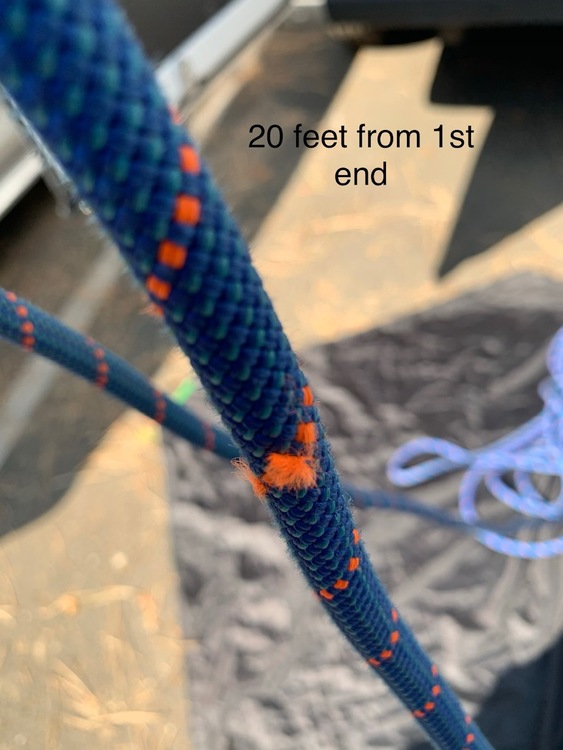
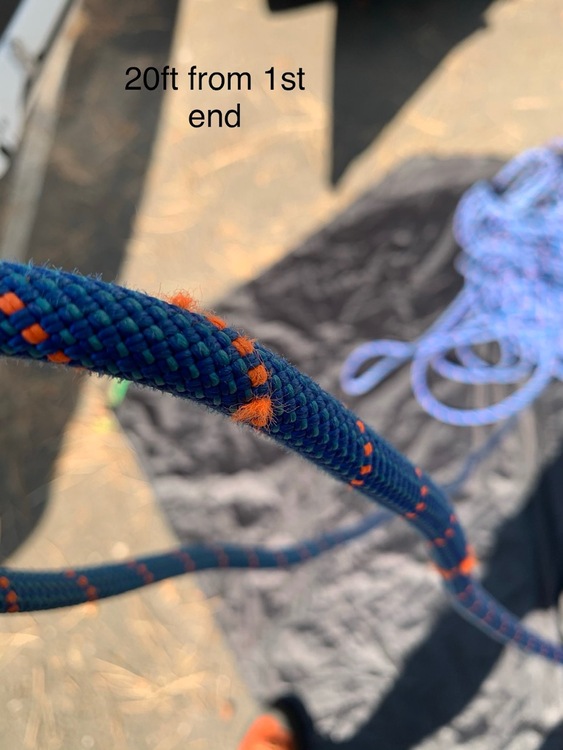
I had an issue with this rope, on mine though the orange thread was tufting out when new (just a few pitches), while the blue and white were perfect. They said it was something about an air splice, that it was perfectly safe still. Mammut sent me another one and the same thing happened again. Then they sent me a different model, which is still unused. Btw I just emailed Mammut with photos and they were super great to work with. |
|
|
Definitely looks like an air splice. Absolutely NOTHING to be concerned about; don't waste Mammut's time about it. |
|
|
My brand new BD 70m rope has a spot like that. It’s just a sheath issue and a small blemish, nothing to worry about. |

|
Air splicing is quite common, not a defect: https://sterlingrope.com/205/ |
|
|
  |
|
|
I bought a new $275 rope from a guy here who thought there was something wrong with it for $100. I told him to call bluewater and that they would tell him that it was a normal part of manufacturing and not to worry about it, but he already had his mind made up. I'm stoked, it's my favorite rope I've had. |
|
|
Thanks folks for all the replies! Very informative indeed! I was not aware of this air splicing technique and that it is commonly used in manufacturing of climbing ropes. When using a rope for projecting I notice that once the integrity of the sheath is interrupted, it only takes a couple of falls to get to the core. So, all in all, even though air splicing is probably a commonly used process atm, I'd say most people would prefer a rope without these "features". Or maybe just said which ropes have the air splices and which are "seamless" ¯\_(ツ)_/¯. What do you think? |
|
|
They only use air splices on a rope that has a pattern or color change. If it is the same (color or pattern) all the way through, it won't have any splices like that. Which is why you don't see it on all ropes. |
|
|
Patrick Lwrote: Gotcha, my rope wasn’t a bi pattern, so the orange thread in the photo above is not an air splice? |
|
|
Patrick Lwrote: I understood air splices were used anytime one yarn needs to be refreshed with a new spool. |


