
 Continue with onX Maps
 Sign in with Facebook






Shoes for achilles bursitis / haglund's deformity

|
About a month ago I started to have serious heel pain, which is suspect is achilles bursitis + haglund's deformity. I didn't realize that this was a not-unheard-of side-effect of frequently wearing very downsized shoes. I've obviously stopped downsizing, and have mostly been climbing in moccs. They allow me to climb for ~1.5 hours without any pain, but at the end of my session I can usually feel some minor discomfort. Also, I can't heel hook in them -- the heels immediately pop off. I'm searching for a shoe that won't aggravate my bursitis, and it would be nice if I could still occasionally heel. I've ruled out basically all la sportiva shoes due to their non-anatomical heel that I suspect caused my bursitis in the first place. Scarpa claims that their PAF heel system is designed to reduce pressure on the Achilles, but I don't know if that's just marketing. I'm considering the Veloce for this reason, plus general "comfort" shoes like the helix and kira. If those still cause pain I will get another pair of moccs. Old MP threads also recommend the boostic, which is notably not marketed with this feature. I know there are some old threads on this but a lot of the old shoes that were recommended are no longer sold, and a lot of the recommended models have changed a lot in their design. Would appreciate any advice on shoes, or dealing with bursitis pain more generally. Some success stories about getting rid of heel pain would also be appreciated, as I've heard that this can be a permanent condition which is pretty discouraging. I am also going to try modifying some socks (cutting the toes out) to add some padding to my heel. |
|
|
I've had the same problem. For me, the Evolv Shamans are the best aggressive shoe - I can downsize them as much as I want without putting any significant pressure on my achilles (the pressure is directed below the tendon, onto the lower part of my heel). Scarpa Instincts are good too, but put a bit more pressure higher up on my achilles. With shoes like the Helix or Moccs, I've found that it really helps to take a razor blade and cut a few slits through the band of rubber that adds tension to the heel; it lessens the tension and, if you cut enough slits through the rubber, the back of the shoe does a much better job of conforming to the actual shape of your heel. |

|
Hi Franklin, I was dealing with haglunds and inflamed bursas for about 9 months before finally getting surgery to remove the bursa and resect the haglunds about 8 weeks ago. I haven’t worn climbing shoes yet but will definitely be checking here for recommendations on good models before getting some for this summer. For a while I was using a dremel to cut holes in the back of my shoes to relieve some pressure which worked well - just not well enough for me in the long run. While not a full success story yet (hoping I’ll be able to go climbing by next week to test the ankle out), I can definitely share insights on what helped me before. I iced every day and did a lot of calf stretches and achilles stretches. Some doctors told me stretching was a bad idea cause it stretched the tendon insertion out over the prominence, but for some reason it provided me relief. I also did a lot of massage and scraping and used a cupping set directly over and around the haglunds which was surprisingly very helpful for me. With all these things I was able to climb relatively pain free for a few months, but I was still sore after a relatively mild day of sport climbing and, planning for big wall climbs and alpine routes this summer, I knew that icing every day and managing soreness all the time wasn’t a permanent solution. That’s what led to surgery. Feel free to message me if you have any questions or want to talk about the surgery! Hope you can recover soon! 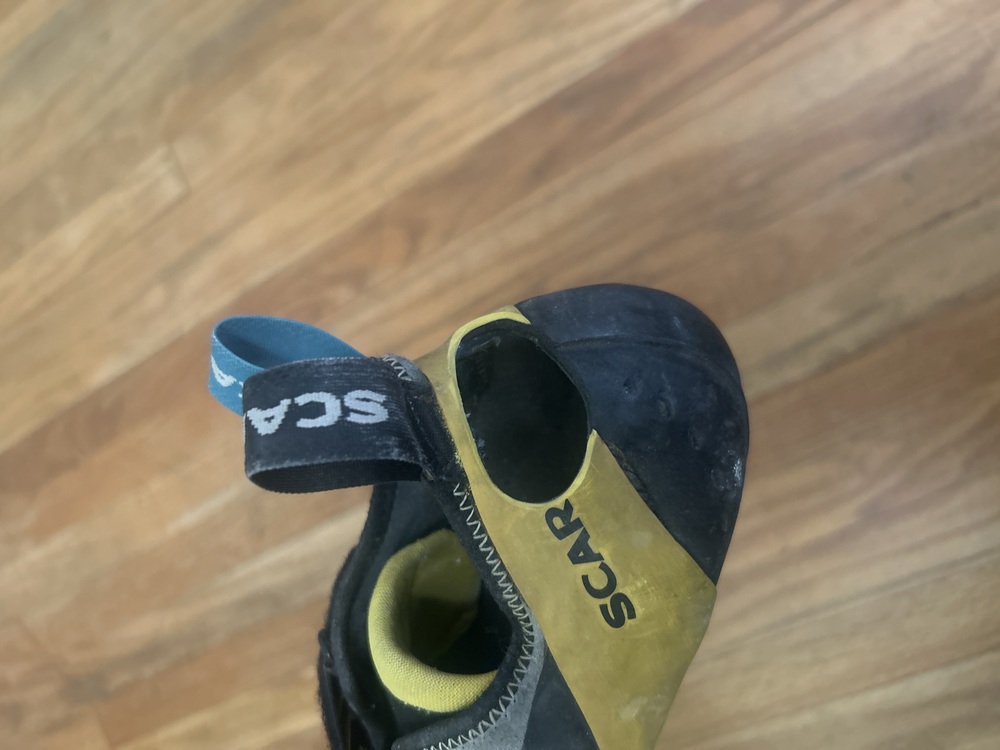 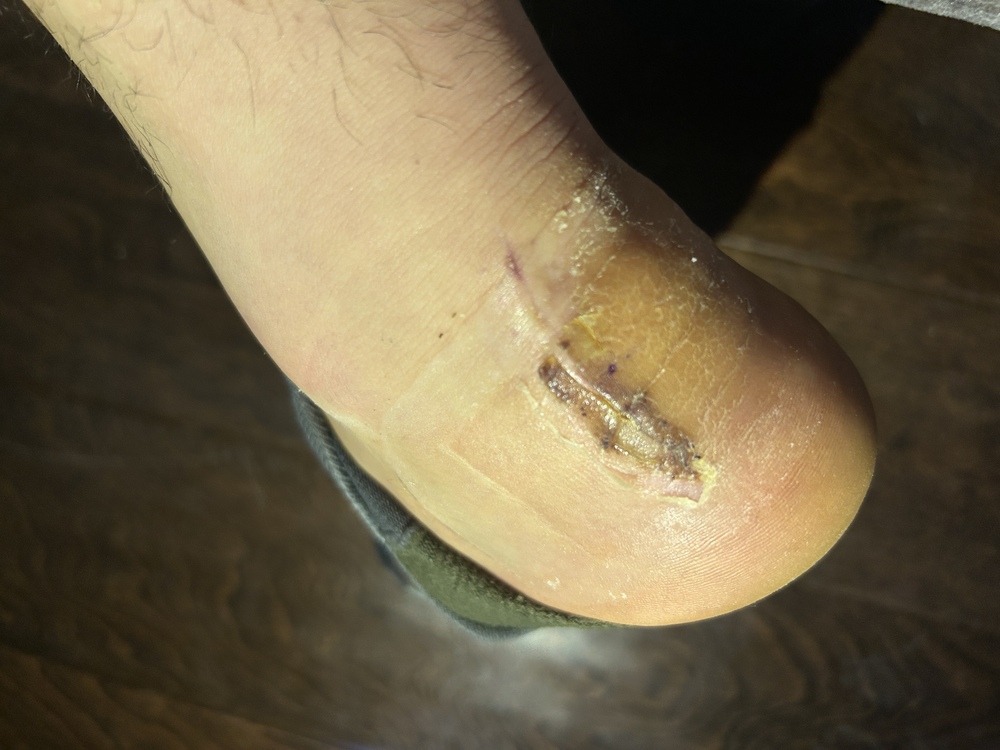 Edit: This was largely caused by wearing TC pros on long Yosemite climbs. I take my shoes off in between attempts while sport climbing and I didn’t think I was downsizing aggressively. I’ll be trying uplaces I think when I can wear climbing shoes again to see how they feel and sizing up a bit from before. |
|
|
I had past bursitis issues with La Sportiva rands (TC Pro and Katana Lace) and have used the following shoes since then, without issue: Drago LV, Generator Mid, Vapor Lace, and Skwama. The Scarpa shoes that I have used all have the Scarpa PAF rand design, which would seem to help validate Scarpa’s marketing claims. The Skwama is the only La Sportiva shoe that I have used since my bursitis issues, and I think the wider molded rubber heel (S-heel) and more compliant split sole help reduce pressure on the Achilles relative to other La Sportiva shoes that caused bursitis. However, I don’t know how much rand tension and height varies across different models. |
|
|
I had this issue about 2 years ago after downsizing a pair of Solutions. It got to the point that I couldn't wear a shoe that covered the back of my foot for about a year, even sneakers. I looked into surgery and shoe inserts, but took my chances with waiting it out. After about a year, I could get a climbing shoe on again. A lot of it is just getting the swelling down and doing rehab exercises; there's a few great videos on YouTube, and now I consider the issue completely resolved with no more pain at all. I was working in the industry and tried every climbing shoe I could. No luck with any model of Scarpa, MadRock, Tenaya, Acopa, or 5.10. I found the Moccs were the best, but I now wear Unparallel Flagships for my aggressive shoe and UP Laces for trad with no pain. I can wear both Skwamas and Miura laces without pain for maybe a half day outside, but no other model of La Sportiva works for me. BD Methods also seem to work for a short period of time. Keep in mind these are all women's models except for the Moccs. Good luck and feel free to shoot questions. |
|
|
I agree with Maddie. Mine was starting to get big and I stopped wearing the shoes/boots that aggravated it for a year and it’s basically gone. |
|
|
Thanks for all of the advice! I think it's pretty damning that multiple people are attributing this to La Sportiva shoes. I really think the heels on e.g. the solution and katana are dangerous. |
|
|
Trying to do hard boulders or thin sport routes in comfortably sized mythos' would be pretty frustrating I imagine. I wasn't downsizing for no reason, and for multi-pitches or easy sessions I was usually wearing comfortable shoes (moccs, helix). It was always relatively easy to put on my shoes -- I never had to use a plastic bag or anything. Never had any significant discomfort until now either. I was downsizing by 1-2 U.S. sizes from my street shoe for ~5 years. Of course it depends on how your heel is shaped, but it seems like for many people the la sportiva heel (in their more aggressive shoes, not the mythos) is particularly dangerous for the Achilles. Just compare the heel on a solution to how your heel is actually shaped, it's self-evident. Even Scarpa's aggressive shoes like the instinct's are much closer to a real heel shape. To not single out la sportiva, the butora acro comp, which I've also worn, also has a pretty messed up heel. At least they acknowledged this and tried to fix it (see this post: https://www.mountainproject.com/forum/topic/116685740/any-advice-for-issues-with-high-pressure-on-achilles-tendon-from-butora-acros) But yeah, you make a good point about trying to wear aggressive shoes as little as possible (taking them off between attempts). Mostly I'm frustrated that there is so little discussion of the concrete risks of wearing aggressive shoes in the climbing community -- it's usually just something people joke about. |
|
|
I developed the same problem last summer from too tight shoes. Finally figured out that cutting the rubber in an "X" pattern was the best solution that allowed me to keep wearing the same shoes without pain. The "X" is positioned directly above the bump/swelling. I have also cut the rubber in the front on my big toe pressure points for greater comfort. For the more aggressive cuts, I tape the shoe over the cut. I would recommend cutting an old pair first. Disclaimer: This might have slightly reduced the performance of the shoe, but I would rather save my feet.!! 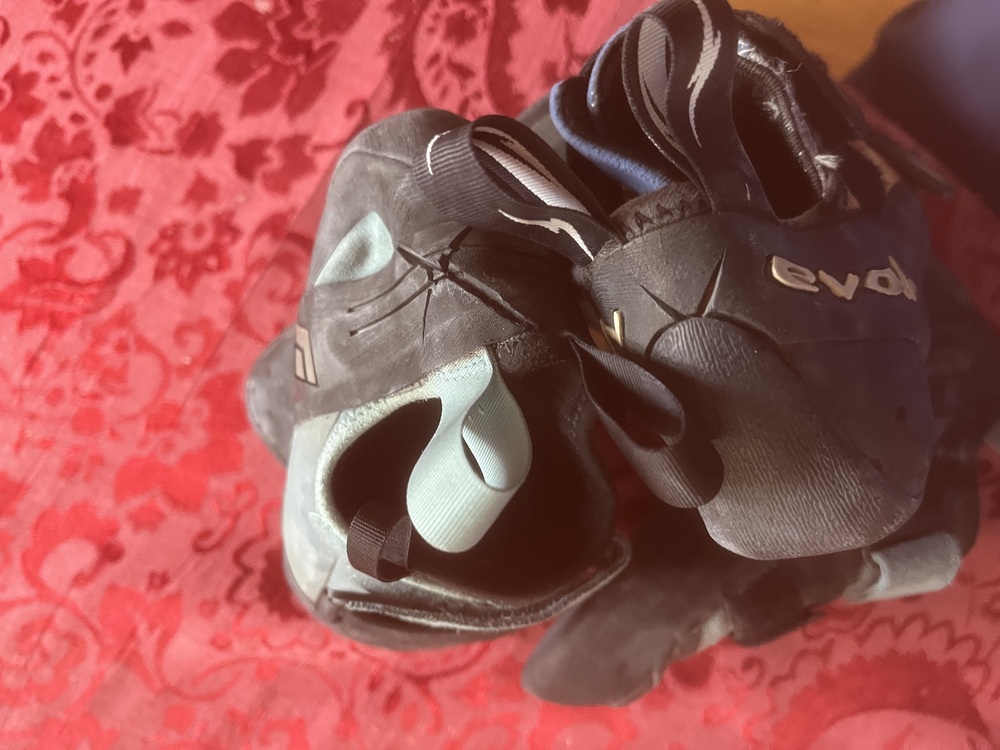 |
|
|
John Sigmonwrote: For Maddie and John, do you happen to have before and after pictures of the size reduction or a reference of how big it was to how big it is now? I feel like my Haglund's bumps are quite large on both heels and I fear needing surgery, but any hope of the amount of size reduction without surgery is welcomed! Thanks!! |
|
|
Just to update, no amount of messing with my shoes was sufficient to prevent the pain (without making the shoes basically unusable). I saw my PCP and he thought it was Achilles tendonitis. He prescribed me meloxicam (basically strong ibuprofen) to take for a week and see if the inflammation decreased. Nothing changed and I was still getting pain from (what should be) very comfortable climbing shoes. He referred me to a podiatrist. The podiatrist believes it is bursitis and told me to either apply fat multiple strips of molefoam (thicker version of moleskin) above and below the swelling before climbing OR, if I want it to heal completely as fast/well as possible, take a 4-6 week break from climbing, then try climbing with the molefoam, and then see him again if I'm still experiencing any pain at that point. I am about 3 weeks in now to completely resting it (i.e., no wearing climbing shoes at all). Interestingly he said it should be completely fine to climb barefoot. Will post an update when I try wearing climbing shoes again -- hopefully this is useful info for anyone else in this situation. |
|
|
I had a podiatrist-diagnosed bursitis because of a haglund's; for me the trigger seems to have been new running shoes that rubbed against the bump on the heel. It at first was annoying when putting climbing shoes on, until I had to take shoes off mid pitch because suddenly the pain was too much. Took two weeks of meloxicam and after week one and a half week without climbing I realized that if I got oversized finales (so the toes lay flat and there is no appreciable tension) and put a lot of gel padding (sold in the pharmacy with a picture of a high heel on it) on the shoe next to the bump (stacking a couple gel pads), preferrably on the outside of the shoe not inside, I could keep the painful bump from making any contact with the shoe surface. It was finnicky but I could wear the shoes for about an hour without pain (I didn't try at first wearing them for longer). So I did that and managed to keep climbing, just avoiding multi pitches and other high commitment stuff for another two weeks. Keeping the gels in place is a pain. In this period I also put no other shoes on (I kept running, but on sandals). After 6 weeks or so all pain is gone and I can wear whatever shoes I want (and those old running shoes that rubbed on the heel are gone). |
|
|
Hunter Descheneswrote: I cant find a before, but this one from google is about right.  Current pics 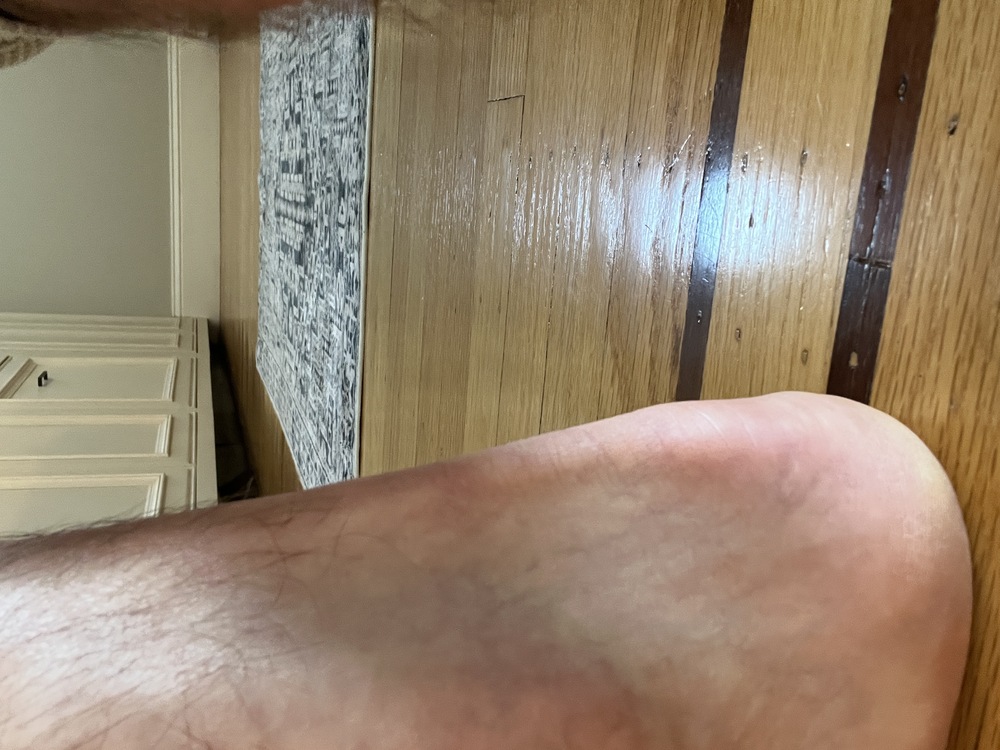 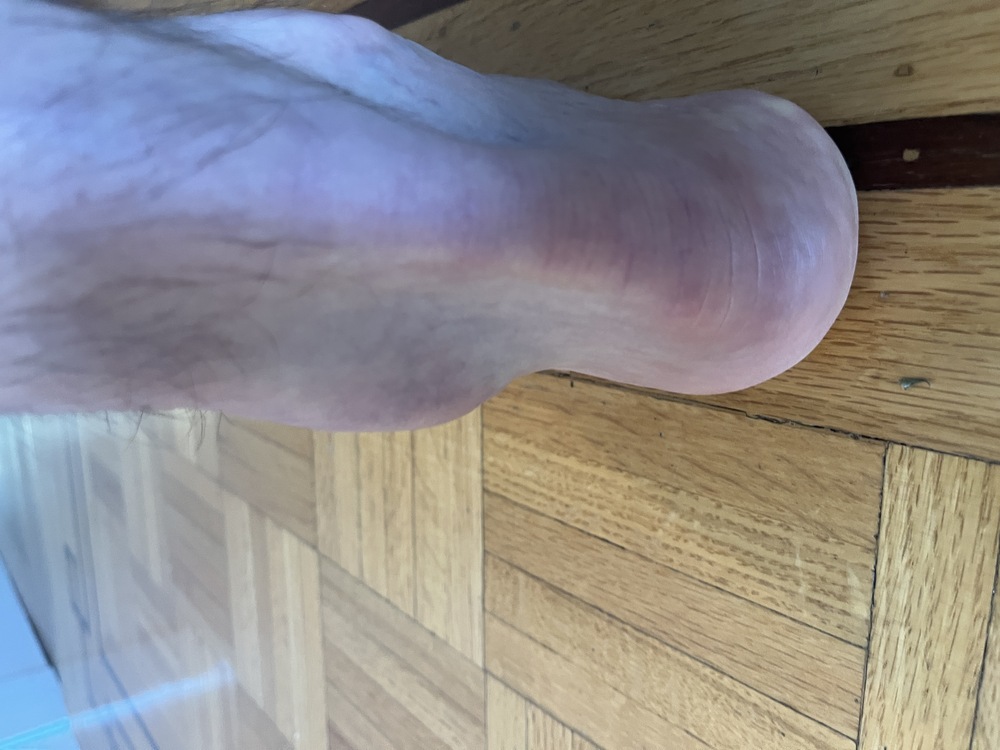 |
|
|
Just want to share some advice on this because I've been working with a podiatrist and the pain has been decreasing. I started with a ~5 week rest of no wearing climbing shoes, and then gradually started wearing them again. I found that the most comfortable shoes for me were, surprisingly, La Sportiva Finales. I think in general shoes with laces are better for this because they rely less on tension to stay on (compared to a mocc or even most velcro shoes), and obviously something leather and unlined is going to break in very well. Another thing that I've found super useful is Diclofenac gel (also sold as Voltaren) which is a topical NSAID you can get over the counter. This can be a good tool to keep the inflammation down if you know you're going to have a big day of climbing. |
|
|
Finales are also the ones that work for me. I use some gel pads I buy at cvs to take pressure off the bump when it's painful. I think the thing about finales is very little heel tension compared to say miuras or katanas. |


