
 Continue with onX Maps
 Sign in with Facebook






Broke a 1/4” threaded split shaft bolt - photos
|
|
I pulled this little guy apart today with a YABR and fairly low effort during a bolt replacement project. His two siblings were in better shape and came out whole. I’m guessing they were installed at the same time but this one deteriorated much more completely? The were installed at roughly 9500ft. 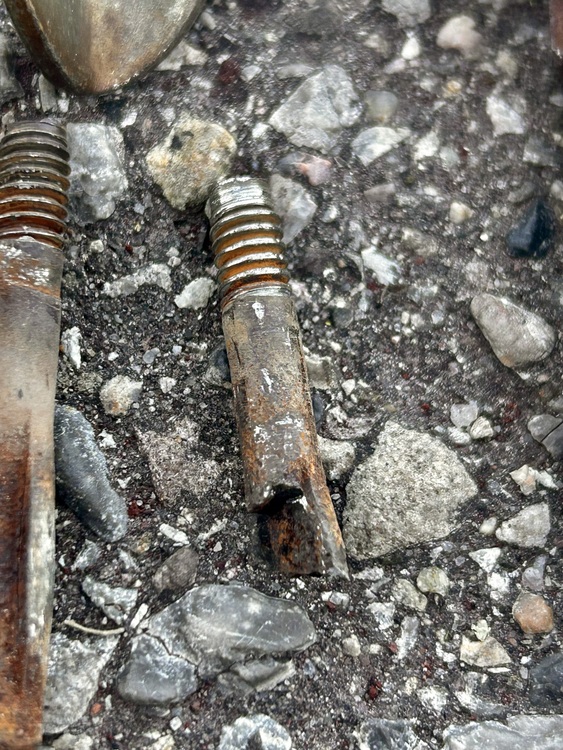 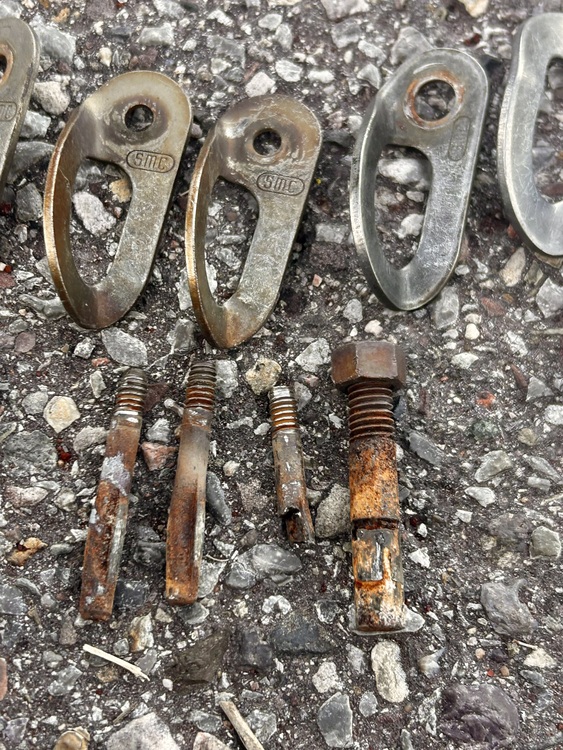 |
|
|
"I’m guessing they were installed at the same time but this one deteriorated much more completely?" The SMC hangers with the horizontal logo are of the older generation, and very susceptible to forming cracks. The SMC vertical logo is the newer generation, made of stainless steel, and quite strong. The SS SMC arrived in the 1980s, as did the Bluewater "Bendz" SS on the right edge of your photo. Two different time periods for the hangers. Though the installer could easily have had batches of bolts that overlapped those periods in time. Scary looking Rawl "Drives". Thanks for posting. To think that we were (mostly) comfortable belaying from two of those... !!! |


|
Anna Brownwrote: Fairly common. One just snapped, there's no logic to it (stress corrosion cracking maybe), and this is the same reason why 5/16" and 3/8" split-shafts can't be trusted - a few bolts just snap right off (while others would hold thousands of pounds). I had one of my 1/4" break with nearly no effort - it snapped near the head of the bolt after only 8 months or so (!!) - a single winter in Tuolumne. It was cracked 95% of the way through, only a small sliver wasn't rusted (it was in a water streak, so rusted but not a ton). One of Bryan Law's 1/4" bolts snapped like that (a leader clipped it, kept climbing, then when belaying the second, the pull of the rope popped the bolt and the draw slid down the rope...). Here's a similar bolt, every other bolt from the route pulled fine, and this one just cracked - had to drill a new hole (hand drilling). If you can power drill, it should be easy to core drill! 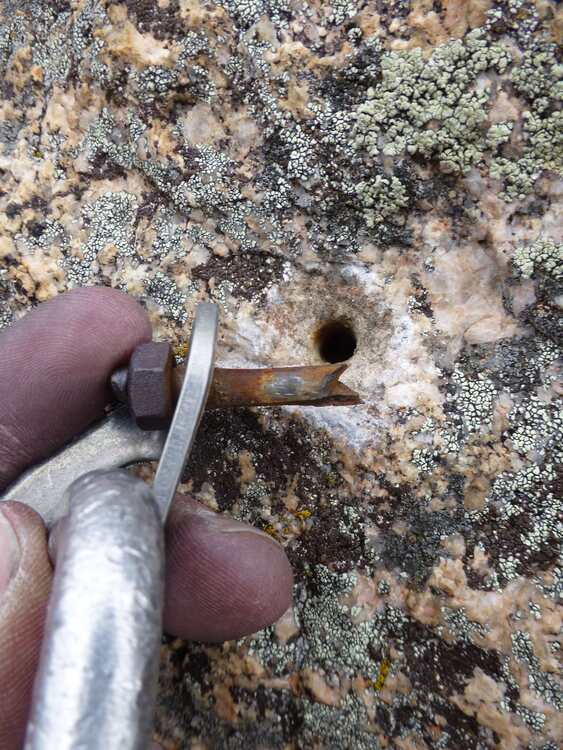 |
|
|
That break looks very similar to ours Greg! This was the first one that has broken, all the rest of the 1/4” bolts that we’ve pulled have looked decent. No power drilling where we’re replacing these bolts unfortunately. It is making these projects long and challenging but we are showing up and making good progress. The route we worked on yesterday is probably one of the most popular 10s on the mountain. The 1/4” bolt that broke was part of an anchor that had a second matching old 1/4”, plus a “newer” bolt with a Bluewater hanger. It was a hanging belay with no options for a gear backup. We moved the anchor about 4 feet higher to a much better stance with small ledges for feet which meant drilling new holes. |
|
|
Keep up the good work, Anna. Unfortunately, until you pull a bolt you just never know what it might hold. And the bad can be right next to the good. Old mank can be incredibly frustrating to pull out (and would have held a standard fall). Sometimes newish looking galvanized steel is utter shyte. The good news, afaik, is that SS bolts are holding up amazingly well in non-marine environs. Sooooo we got that going for us (and Greg Barnes helps tons too!). ps: Nice SMC Death Hangers. I believe those are the old Chro-moly ones prone to cracking and failure under low forces. Replace on sight. |
|
|
This is why your work is so important Anna. At the risk of repeating myself I have used self drives to remove broken 1/4 bits and broken 1/4 Rawl drives. No one should be bitching if you have to patch the occasional hole though. |
|
|
Perfect example of a split shaft failure! Seems to have broken right at the part where these bolts tend to suffer from stress corrosion cracking. Definitely interesting that it's counterparts came out, but that could just be due to many things. Unique biology within that hole that would increase corrosivity, or maybe just a manufacturers defect? Hard to tell exactly, but you def have a cool little teaching tool there! Edit: 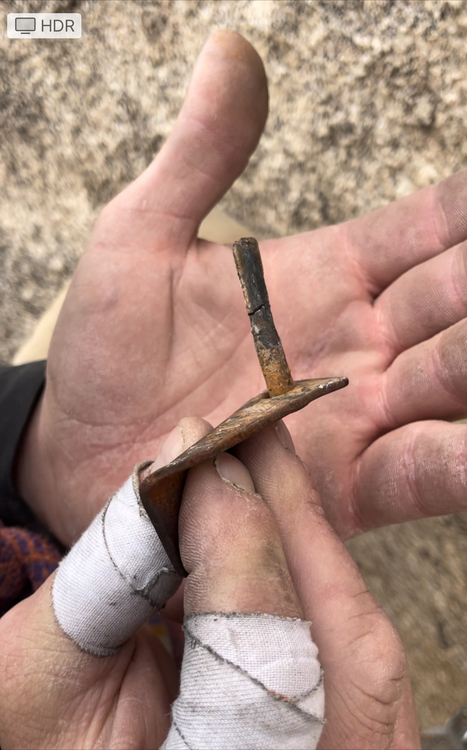 Another cracked bolt, just fully recovered. Immediately dropped this example after pulling it. |
|
|
I'm curious as to where these bolt were? |
|
|
I have encountered this many times with 1/4in split shaft bolts. It's even more common with the 5/16 and 3/8 versions. In hard Sierra granite. I used to place a lot of 1/4in bolts on lead about 10/15 years ago with the intention of going back and replacing them from the top. I didn't always get back to the projects and finish the job. A good reminder to go back out there and replace that junk. I'm curious to see how they held up. |
|
|
Leo Paikwrote: Hi Leo, |
|
|
I also just found my first cracked buttonhead. It was on an anchor and is the bottom bolt in this photo.  |
|
|
Anna, good on you for finding and replacing that Rawl "Drive" buttonhead. It's amazing how much holding power the 5/16" has. And it's scary how little strength in tension, after a crack develops! |
|
|
Finding the extra bad bolts is like a bolt Easter egg hunt! That cracked buttonhead still took some work to get out thankfully. Here’s a video of the bolt that I posted on Instagram: |
|
|
I am floating a hypothesis that what we are seeing here is cathodic hydrogen charging, and ultimate embrittlement failure, due to the stainless-steel/carbon-steel electrochemical couple. I haven't dedicated the time to researching this idea, but it would be killed stone dead if people could raise examples where the hanger and bolt are of the same material. Split-shafts are of particular interest because of the stress concentration at the split. Hydrogen migrates to, and will accumulate at points of high stress. |


