
 Continue with onX Maps
 Sign in with Facebook






The unofficial LRS Sulu Go thread


|
I don't think the Sulu is fundamentally different than the others for inverted falls. When you're upside down, the rope is feeding in the same direction as when you're climbing, so it will just keep running through. The Sulu (LOV, GG, etc) requires an angle change to lock. However, since the Sulu does seem to lock aggressively with any traverse, it might be more likely to lock than some others in an USD fall that's not perfectly vertical, but I'll be using a backup as always. Definitely test this thoroughly before you trust it without a backup! |
|
|
evan freemanwrote: It does have one further potential drawback for locking up in falls that are forward. I realize almost all falls are backwards away from the wall. However, if one falls forward into the rope which could prevent it from pivoting up like could happen with all the devices mentioned above, it also has the drawback that if there is any pressure at all (pressing forward against the rope/rock/whatever) or pinched between the legs as has already been reported on the FB TRS list , the "sled"/parallel jaws/rope channel opens slightly and friction goes to near zero. This is probably more likely to happen in TRS than LRS and a good reason to have some type of backup. |
|
|
evan freemanwrote: Yeah, I played with it some more after my initial 30 second synposis of an inverted postion....So, I think it is possible to defeat in an inverted fall for sure. I will post up some stuff around how I think it will fair better than the failure on GG based upon orientation of the device(sideways). Since rain is coming in, I'll do some testing in the garage "lab" around it sometime this week. |
|
|
@Mr Rogers: I made an invert tester out of a 2x4, perhaps you could do something similar? 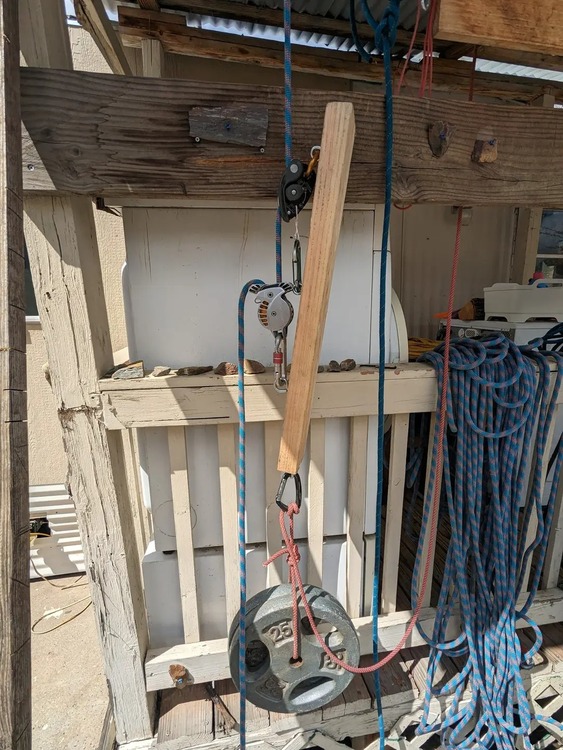 |
|
|
Mr Rogerswrote: I'm going to try doing some human testing for upside down falls at some point, might film it and post if funny. Will report back.
I'd love a dedicated pulley biner but I am far too poor for that. |
|
|
A cheaper option, with easy on and off of the rope, is a fixed plate pulley, attached directly to shoulder harness. 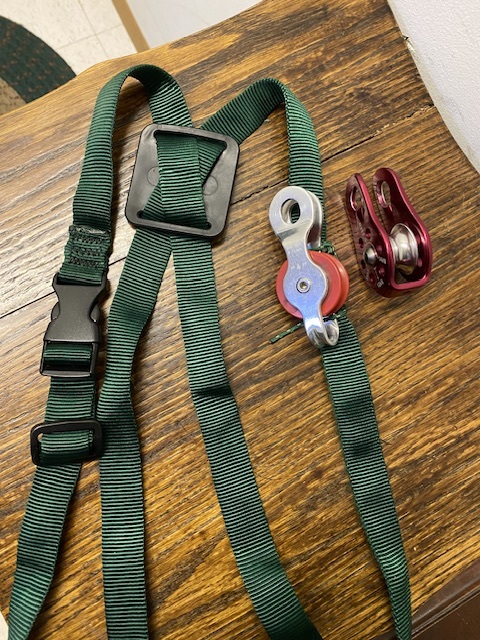 |
|
|
While far from definitive I just spent 45 minutes trying to make the sulu go fail with me as the test dummy, while some of these falls probably couldn't be considered as truly upside falls. I couldn't get anymore than a few inches of rope to travel through the device in any of these falls. https://youtube.com/shorts/_a_qCE48-O0?si=coh_TTWOKwJuqAQf 28 seconds of me failing to fall on my head. |
|
|
Personally, I think the vergo still wins out in LRS. It’s smaller, lighter, better in traverses, and just as reliable. Maybe there’s a hair more friction but that’s not necessarily a bad thing. Besides that, the vergo has all the same benefits of the sulu except the swivel cheek. That said, sulu is the clear, objective winner in TRS, and in my personal opinion a better general belay device. |
|
|
Jared Ewrote: God damnit, Jared. You're terrible for my gear acquisition syndrome, you know that? |
|
|
Ricky Harlinewrote: I too have bad GAS, Ricky |
|
|
Can people more knowledgeable explain something to me? My understanding is that with a gri-gri falling upside down is a problem since you have no weight on the brake strand (due to freefalling brake strand) and the rope is pulling through in a low friction direction so it doesn't engage the cam. With the sulu, isn't it just in trs mode with an unweighted brake strand (ie, a totally supported mode). I suspect I am missing something. |
|
|
Jared Ewrote: Your claim of "just as reliable" seems dubious at best, please expand on that. Luke you're pretty much right, I think there is a general lack of understanding as to how this device works. |
|
|
that guy named sebwrote: Excellent work! I did tests like this with a GG, El Mudo, & LOV but haven't done it yet with the Sulu. I found that I would just fall until my backup caught, but I didn't leave very much slack so maybe they would have eventually caught. Your test lends a bit of data to my suspicion that the Sulu is more likely to catch USD falls than some other devices. It's hard to tell from the video, but do you think your legs started to come down only after the Sulu had caught, or did your body rotating inititate the catch? That would be an important distinction.... |
|
|
evan freemanwrote: It is a very important distinction, they definitely came down early in the earlier clips but as the test went on I got more an more comfortable in that upside down position and they wouldn't come down until the device caught, you can see this with the big swing in the final catch. |
|
|
that guy named sebwrote: The vergo is springless and pinches the rope between two counter-rotating plates. So long as you’re not falling inverted, it would be impossible for the vergo to not catch you short of a catastrophic failure which has never occurred. |
|
|
Video of couple laps today. I switched up the set up slightly. Notable changes: |
|
|
So for those who have the device and played with it. It's clear from use that the most important aspect in this set up is the angle the live end leaves the device and the dead end of the rope has very little impact, with this in mind, does anyone have any ideas on how we could either force the angle in a fall or have the backup be on the live end? It seems to me the usual backup on the deadend would do little to achieve the all important angle change to get the device to lock. As these setups seem to be consolidating on having the device lifted up high on the chest I would think the best place for the backup would be the lower tie in point. Maybe something like the rocker? maybe a weak bungee redirect? Not sure. Any ideas? |
|
|
that guy named sebwrote: This would presumably be fatal. Having the backup on the live end wouldn’t allow the rope to force rotation of the sulu, and rope would just fly through it. It HAS to be on the dead rope side. The setup should be fairly similar to the vergo or LOV LRS setups. I’ve taken an inverted fall on a vergo-fuse and that worked |
|
|
Seb: |
|
|
So here's how I see it, this device gives literally 0 mechanical advantage if it fails to engage there is basically no friction with the rope going straight through those jaws, the device is basically on or off. If the device is off (as in it has failed to engage), the backup will have to take the full force of the fall, which with the redirect and cache loop on the dead end I think would be quite the disaster in a fall, so it makes more sense for it to just go on the live side. The device seems to function by using some preloaded hinge and a scissor mechanism to amplify the forces into the jaw, in a regular fall the rope continues to force the device open (not by much mind you) causing additional clamping, I don't see how holding the break strand would change this, what could change this would be changing the angle of the device but that's distinct. Interestingly in the way we rig our devices for LRS, we are already opening out that hinge and clamping the rope. I think this may preload the rope enough that no matter the fall, it will always engage and prevent the straight through failure mode in a upside down fall (but that's just a thought). I'm going to play around with an elastic redirect for the live end of the rope, and see how that goes. |


