Continue with onX Maps
 Sign in with Facebook






Joining two ropes with a lashing for a rappel


|
|
Yep. That and canyoneering, rapping off the end into a pool is common and safer than having a knot... and then having to disconnect your device and not drop and lose it in the pool, etc... Instead it just stays attached to your belay loop. |

|
Ben Zartman wrote: Similar beating of the horse now in a new thread...
I'm all for ideating and coming up with new techniques and methods in whatever your sport, hobby, or profession is.... so to be clear I'm not knocking the fact your applying some critical thinking, I fully applaud it. |
|
|
Hello Ben, The issue isn't your inventiveness, for me, the problem lies with our definitions. Hitches are in fact a type of 'knot'. And so the title of this topic is misleading. It claims no 'knots' are required. Secondly, the join is made using dyneema which is known to cause security issues in hand tied knots (ie slippage). Thirdly, human lives are at stake. And so a higher level of due diligence is required. There is no 'UIAA test' or certification for joining 2 ropes with hand tied dyneema. Also, UIAA has no legislative powers, their standards are subordinate to EN standards and CE conformity requirements. There are other issues with regard to spliced rope ends which others have raised. Another person discussed the idea of a type of 'stocking' to join 2 ropes. This eliminates the need for hand tied knots (and human error). Cable stockings are used to pull steel wire rope... a huge amount of testing will be required to verify/qualify the product on synthetic climbing ropes. Humans always find new ways to defeat products! |

|
Another reason you don't want a permanent loop in your rope end: when doing single rope raps, that loop is going to get stuck when pulling over terrain with lots of obstacles\cracks\pinch points where a clean rope will just snake through. |
|
|
They’re spliced, looped ends. Why not just loop them through each other and join that way? Looks like a square knot; I don’t know the name for it but it’s the same thing you’d do to two rubber bands or hair ties. Eliminates the dyneema connector, and you already have the loops right there. Would just need some rope faffing/threading. |
|
|
Ben Zartman wrote: This has to be one of the single best paragraphs I’ve ever read. A short story—nay, an entire fantasia—unto itself. Bravo. |
|
|
ClimbBaja wrote: This is basically how the Beal Escaper works. |
|
|
Climbing Weasel wrote: I don’t know if it is still technically a strop bend when done on spliced eyes, but that is what I would call it. I assume that the OP wants to avoid the loss in strength and the increase in bulk, and the hassle of pulling a potentially large amount of cord through an eye. |
|
|
Thank you all again. I find this cross-section of opinions very worthwhile. This resistance to new technologies and ideas is not new--I meet the same attitude when I try to introduce climbing techniques into sailing, where for all their advanced fibers, they're practially Neolithic when it comes to climbing masts, and let's not even start on boat tethers..... In these discussions, I try not to wave experience and certifications around, since the gear/technique/idea should stand or fall on its own merits. And for everything you've done, someone's done more, and better, or has more qualifications. But since it's been called into question whether I know anything about climbing at all, maybe a brief synopsys will persuade some that I at least have a clue. I've been climbing since 1991, with eleven years in Yosemite, five of which were as a full-time, can-collecting dirtbag. I've done seven different El Cap walls, two of them solo, and for ten years I had the third-fastest time, behind Florine and Potter, for the solo on the RNWF of Half Dome. I haven't counted how many other Valley climbs I've done--it's well into the hundreds, and of course there were side trips every year to Josh, Squamish, Indian Creek, Little Cottonwood, etc. Most of my Valley FAs are in the 5.11 range; some are unrepeated, some were uprated to 5.12. I was on the FFA of "The Chief" in Tenaya Canyon, I've done a rare ascent of Jardine and Lakey's "Odyssey" on Washington Column, and I freesoloed Steck Salathe. When Dean Potter first started messing around with high lines, I spliced some if his first Dyneema ropes for him. I remember when the Grigri first appeared, and all the uncertainty surrounding it. I know guys who backed up their sewn harnesses with a knotted sling, and who cut sewn slings off their new cams to tie on knotted webbing. So I'm not new to either the climbing scene, nor to the reluctance to believe in new things. It is because of my climbing and sailing experience (in case anyone wants to question that, I have a sailing blog at www.zartmancruising.com where you can reall all about it), as well as my work as a high-end rigger, that I believe I can bridge the gap between the climbing and sailing worlds, and make both better. As long as each industry maintains this tunnel vision, rather than looking around for new ideas, progress is going to be slow. Mr Rogers: I am looking through a climbing-specific lens: trying to bring new technology into a climbing scenario. I've done that already with my spliced Dyneema slings, quickdraws, and runners, which are appearing in mountain shops, and available for sale online. It's not haphazard: they're all field-tested: in Yosemite, in New Hampshire, in Greenland, the South Atlantic, and in Alaska. Further, they pass the EN and UIAA tests (the UIAA uses EN standards in many cases) in ISO-certified engineering labs. That the UIAA will have to catch their testing up to modern equipment is not new: they're always updating standards to keep up with new things. That's why they have so many meetings. I'm not saying that spliced rope is the answer to everything, but I do know that it has a place of usefulness in the climber's arsenal, and I think we'll be seeing it more and more as climbing gear companies catch up. For those who derire to rap off the ends of their ropes in certain instances: these ropes I propose have no stretch, so a rope-stretcher rappel wouldn't really work. You'd have to make sure the ends reached the ground without counting on stretch. But the same applies for rapping off haul lines, which don't stretch much either. For those who often rap off into a pool of water: well, I admit that one's new to me. Better bring a rope without splices for that. |
|
|
Just a suggestion: maybe dial down the ego a bit? |
|
|
You could take some methods from the highline community. Softshackles can be used to join segments of a long highline. Maybe have some kind of sleeve over top, or use climbing tape around it to prevent the button head from snagging/popping loose while pulling down? Neat concept. People don't seem to be reading/understanding your use case and are arguing the wrong points. I think a spliced eye is plenty strong to rap from and plenty of other fields of work have proven that fact already, as you've mentioned. Here's a hownot2 video timestamped where he shows the soft shackle setup. |
|
|
Getting whipped in the face from that eye splice while pulling rope would be pretty sweet |
|
|
Ben Zartman wrote: Cool? We know some of the same people. Still miffs me that you don't see the issues with much of your re inventing.
You're not bringing anything new to the table. It has been on the table, and been taken off.
....or perhaps the oodles of talented rope craft practitioners have been down the road before.
You mean you are testing them to a standard, not that you are having them tested by those certifying bodies. Correct me if I'm wrong. You say you test them is ISO certified labs, not that they are certified.
its not in general climbing. Spliced lines have been around for ages, and get used in general rigging,. sailing, and arborist work. There is no advantage to the splice at the end when you need to be able to use the rope for all kinds of different applications you may come across when climbing or descending.
Why would I bring two no stretch lengths of cord with me climbing? I already have a dynamic line and small dyneema/technora tag(if i need it, or the escaper!)..... or just double ropes. Again, I dont know how much your thinking through these scenarios. Maybe folks who just abseil. Even then I struggle.
Again. You maybe have been lucky not snagging your rope on things in your tenure. But most of us know a stopper(even in splice form) is a hazard to leave in the rope.Would that spliced eye run through rap rings....maybe, quick links, probably not. I'll say it again, your are clearly talented in rope craft, but you could use some more thought time around functionality/practicality, unless you're trying to hit a niche, in a niche, and then at least state that so the container is clear that were supposed to stay in. |
|
|
You could do a 3 (or more) rope rappel with this splice. |
|
|
Sorry, you will have to click to view full size image to have the text be readable.  
|
|
|
Once again, too many responses to quote individually without maxxing out my posting quota, so bear with me. First, It was suggested that I hadn't climbed much and so didn't know what climbers need. So I briefly gave some credentials, and am now being urged to dial back the ego....whatever, chalk that up to the fickle inconsistencies of an online forum. As for a soft shackle--it could be used in place of the lashing; I just find the lashing more low-profile, even if it takes longer to set up. Mr Rogers, I'm appreciating that your interactions are more thoughtful now. I'm having the gear tested to UIAA standards, and paying the UIAA for the priviledge of putting a safety label on my gear. I don't know what else "UIAA-rated" means when I say it. It would be immoral to place a UIAA label on my gear if they were not a certifying body for it, which they are. You can view my certificates on the UIAA website under Abednego Marine, the name of my rigging company under which I started having them test my gear. The UIAA doesn't themselves test gear: you must send it to a UIAA-approved lab, and ask them to test it to whatever UIAA standard is proper. 102 and 104 in my case, which have EN- counterparts. When the lab has tested the samples, they issue a certificate which I then forward to the UIAA with an application for a safety label for that specific gear. It's an expensive and time-consuming process, and the lab I use (SATRA UK) is also an ISO-certified facility. I'm working on a "What is the UIAA?" page for my site, I'm sorry it's not up yet--all these things take time. Let's talk about rappelling. "If you can't see the ground" then you also don't know whether a stretchy rope will make it down either, even at full stretch. Surely you'll know before you start rapping if the spliced eye fits though the link. It's pretty easy to test. If one of your ropes is a tagline, why not one with a spliced eye? And what if you bring ropes only for getting back down, like on a long freesolo or easy alpine route. Perhaps a bigwall with rappel descent, and you use spliced ropes to haul and tag (I might use an 8mm for hauling), and then rap on those rather than the lead line. Another use is when setting up several topropes when guiding a group. Bring one lead line, and a bunch of spliced skinny ropes. People can just clip into the loop with a biner. I toprope like this all the time with my own skinny rope. Or you're guiding two clients, you bring one up the heavy, stretchy lead line, and the other up the lighter skinny rope. Canyoneering, where it's all about rappelling: unless rapping off the ends into a pool is an everyday thing. Caving, where it's all about fixing, rapping, and jugging. There's really no place where weight reduction isn't desirable. I agree, you could absolutely make your own covered Dyneema slings--I even have instructions on You Tube for making them, and wrote a book about splicing that covers their manufacture. But in order to sell them to mountain shops, you have to have that UIAA or CE or EN certification, which adds cost but gives the user confidence. Desert Rock Sports: your diagrams don't really apply here: are you suggesting that a half rope rappel is always bad because a strand might break? How is that an argument in this case? And if there's little enough confidence in your climbing rope that you're afraid it'll break while rappelling, how do you survive leading? I admit that I'm suggesting a specialty rope, but a very versatile one: it can be used as a tagline. Also as a fixing line. Even for hauling. Also to rappel on by itself--especially when the correctly-sized rappel plate and ascenders I have on the drawing board are ready. Anyhow, I'm going to keep working on this, testing it, refining. If it goes nowhere beyond my own personal use, I can live with that. |
|
|
Ben Zartman wrote: When will you know? At the car when you decide which ropes to grab for the day? Or when you see that one of the rappel anchors is a bunch of fat rope through a single chain link (or other cluster) and there is only space enough for the single strand of rope, not the bight of the spliced eye? If your ropes only have the eye spliced on one end, its not mechanically impossible, just a hassle, you can still feed almost the entire 60m length of rope through, then set up to rappel. Or leave a quicklink or carabiner to save time. Ben Zartman wrote: If your connection is reliably low profile enough to pull either way through a quicklink, chain link, etc... vs a setup with a bulky knot that will block... then your setup doesn't have that baked in safety of 50% chance of not falling if one of the strands gets cut above the rappel device due to abrasion or rockfall. This is just a potential loss of safety. Safety most people don't generally think about, safety that doesn't exist in normal single rope rappels, but is present in any blocked rappels and many 2 rope rappels which are often essentially blocked too, but we may not think of them as blocked. Just something to keep in mind... I end up teaching newer climbers the benefits and drawbacks of different rappel setups frequently, so this stuff is always in my mind. Simul vs blocked vs pre-rigged, etc... |
|
|
ClimbBaja wrote: Why would you think an extremepy slippery fibre would be would be appropriate for a device that is entirely reliant on friction? |
|
|
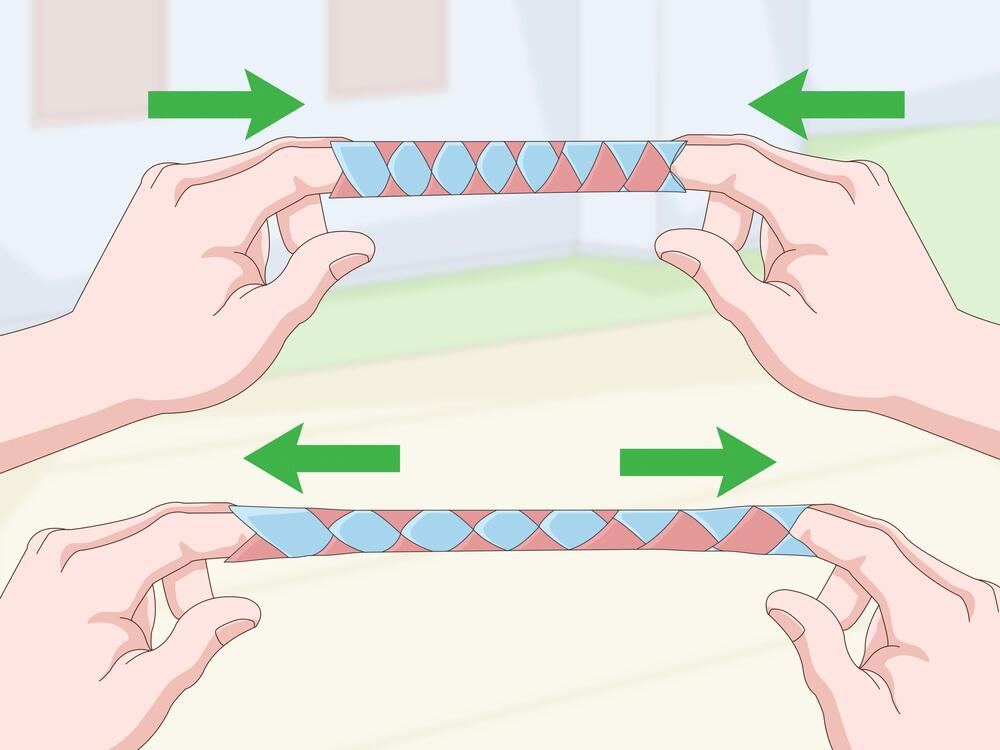
that guy named seb wrote: It was suggested to me that Technora would be the superior choice vs. Spectra. However, read my post again. It was my attempt at facetious humor. Note the first prototype woven in China from organic material, the product launch date on the first of April (April Fool's Day), and the silly illustration allegedly submitted to the US Patent Office. When I saw the original post, the Chinese finger trap (aka finger cuffs) popped into my mind. I really didn't think that anyone would take my post seriously. Apparently, my presentation was too serious...  Sorry for any undue frustration which may have occurred. |
|
|
Desert Rock Sports wrote: The thing is, the spliced eye of the skinny rope will still fit through any ring or link which a normal (8.5mm or more) climbing rope will fit. Because it's skinnier to begin with. I've tried it. So the only real danger is that of the loop snagging on a twig or protrusion, a contingency I see as rather remote: certainly more so than that a bend in two fat ropes will catch in a crotch or v-shaped crack. Also, consider that a thin non-stretchy rope will have a lot less friction on a low-angle pull than a big far stretchy one. I make gear for arborists, and for sailors, and for industrial rope access. So I'm not limiting myself to one industry here. What I am doing is trying to take the best ideas from each world and bring them together to make them all better. |