
 Continue with onX Maps
 Sign in with Facebook






Anyone into Sewing?


|
|
I just wanted to show what I've been working on. I've been sewing off and on for a while but I got a Juki HZL-NX7 almost two years ago and I've been sewing a lot since then. Nothing too complicated, stuff sacks, grocery totes, tool holders, boxy bags, zipper pouches, etc. Pretty basic. Here's some photos. Below, some roll-top bags and a stuff sack. Mostly Robic, but the red is HyperD.  Below, a tool belt and some tool holders. black Neoprene, blue X-Pac VX-21 bear spray holder, pink Neoprene, black 210D gridstop cell-phone holder. I'm pretty new to binding, so I was relieved with the results here.  Boxy bags. The yellow is EPLX200 ECOPAK.  Black lunch tote and silverware pouch. The yellow is a food-safe PUL - polyurethane laminate.  Grocery tote. I have several, using various fabrics. They are really strong and hold a lot of groceries. Adjustable straps to hand-carry or to use over-the-shoulder. This is the VX21 with blue gridstop interior.  Another large grocery tote, this one in MARPAT.  The Juki HZL-NX7 has been treating me well. My other machine is a Juki HZL-355, a basic mechanical machine, which I found a little difficult to control. I like the computerized functions on the NX7, especially being able to go forward or backward very slowly, even a stitch at a time and also ending each movement with the needle in the down position. I've occasionally used a Juki DNU-1541 at work for stage rigging. I am considering purchasing one, maybe next year. As an industrial, it moves very quickly. I've only used that machine with the older-style clutch motor which is hard to feather slowly. I'm eager to try the industrial with a newer servo motor to see if control is any easier without sacrificing power. |
|
|
My favorite quick and dirty project: turning an ikea bag into a proper rope bag. This is now my favorite rope bag by a large margin and solves the main drawback of the ikea rope bag which is its “to the crag” mobility. Now I can stuff it into a crag pack quite easily or carry it like a duffel with a bit more mobility than the huge unfolded bag 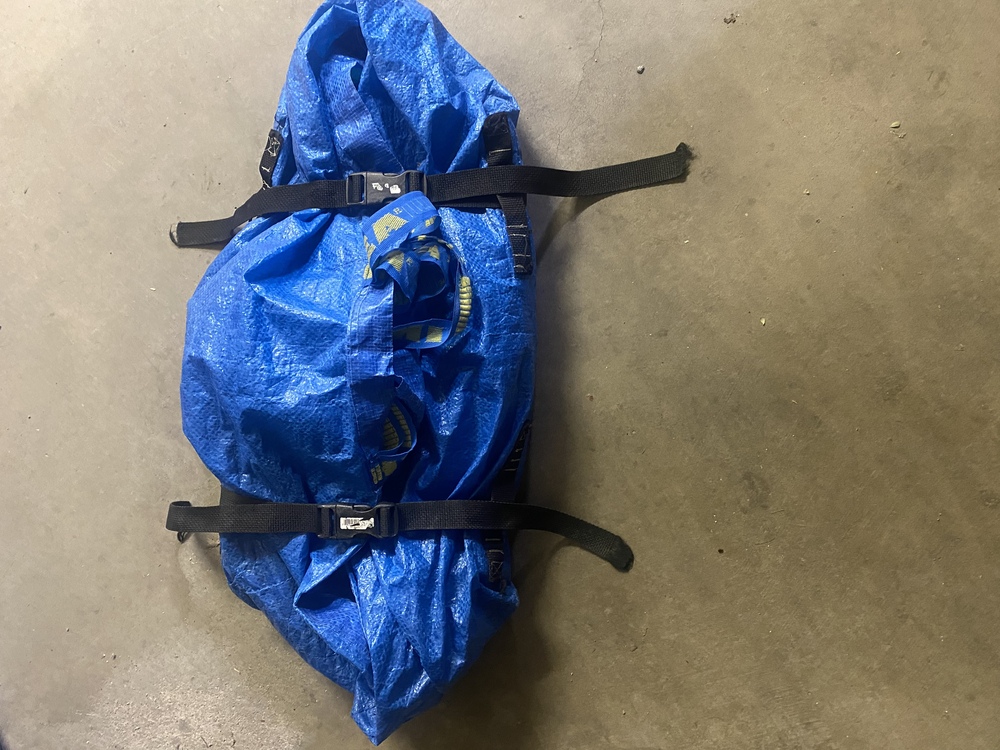 Pay no attention to my godawful bar tacks or box stitches |
|
|
Caroline Yearwoodwrote: I used barge cement |
|
|
John Hegyeswrote: Those all look great! |


|
Neoprene cement is a good alternative to the sewing machine when working with wetsuit material. I used a neoprene cap for skiing I made from neoprene scraps I got for pennies (free?) from the O’Neil factory in the’80s. It was great, especially in wet conditions. I used it a lot more for surfing of course but was surprised by how functional it was in the mountains. |
|
|
Does anybody have tips or links to tutorials on improving technique for shoulder straps? I seem to have a hard time sizing and shaping the foam to be a nice tight fit, and also struggle with getting the seams falling the right way down the whole length of the straps and it all looks super janky. |
|
|
Nick Niebuhrwrote: I haven’t watched this myself, but noticed it recently when looking at some of their online info. |
|
|
Nick Niebuhrwrote: My technique is I go to my local thrift store, buy a day pack in good condition for $3-5 and cut the straps off it. Sew them onto whatever I’m making. Voila!! Edit: Nick, looks like you are in 4CRNS. Added bonus, your purchase at Durango Humane Society helps out some wannabe crag dogs, win-win |
|
|
Nick Niebuhrwrote: You can always forgo the foam. 3D spacer mesh, a layer of fabric on top (ie 200 - 500d ish), then grosgrain around the edges can work. Particularly if the webbing is sewn along the length of the strap and the loaded pack weight wont be all that much. If its a very light full pack weight, you may be able to get away with less on the webbing. |
|
|
Anyone ever make an oven mitt into a chalk bag?  |
|
|
Desert Rock Sportswrote: Any clue if it works well? I've got an oven mitt laying around I never use so it might be worth a shot |
|
|
This thread got me hyped up to try sewing. This is my first climbing-related project, a chalk bucket made from jeans outta goodwill. My one question: how do you all have patience for all the tasks that don’t take place at the sewing machine? Planning, laying out a pattern, etc. I would like to make actually good looking bags, but I find I get burned out if I don’t think I’m making quick progress. It gets compounded by the limited time I have available to be on the machine due to student things.  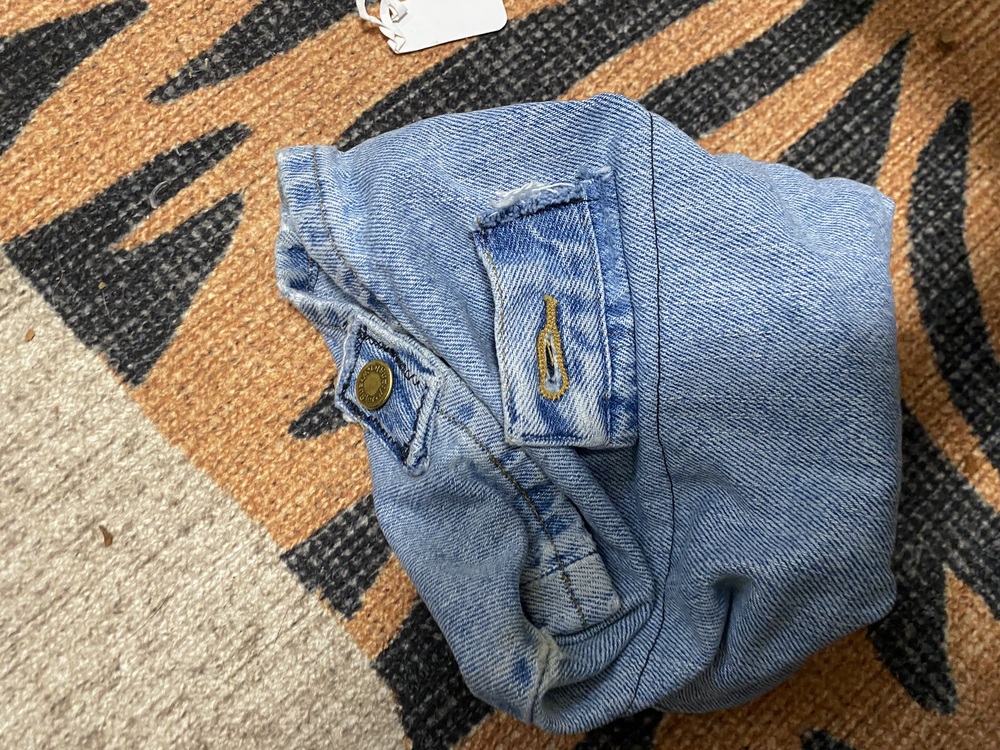 |
|
|
Isayah Bannisterwrote: I tend to YOLO it at the machine and then end up with things that are functional but ugly, or things I need to throw away (or heavily seam-rip) half-way through sewing. I also find a ton of value (if not working from a pattern) in taking scrap fabric and doing a dry run of what you want to make (maybe at a smaller scale) to wrap your head around what the process for sewing/assembly will look like. |
|
|
Isayah Bannisterwrote: Way to recycle that, looks cool! Re: patience, ymmv but I have found the more I actually have sat down to work on different projects, the more patient I have become. Also the more efficient I have become. Those things probably are related. There is a big learning curve but the whole process gets more efficient and you learn new techniques that make future projects easier. My first project was also a chalk bag; I still make the same style bag in a fraction of the time, and I can do things more “freestlye” like topstitching or add a pocket or webbing finish that I didn’t plan at the outset—something that when I started sewing a few years ago I’d need to read and reread or rewatch instructions for it like half a dozen times. And to think of how much cursing I did just trying to set up my machine and sort out a bobbin on that first project haha… |
|
|
Can anyone help me out with naming a technique, and how to do it? I'd like to know how to make the "hidden" straps that the G hook is hooked onto in this photo, and the empty one to the right of it. Is it as simple as cut a slit in your fabric, stuff the webbing though, and zigzag stitch over the join? I'd be worried about the material tearing. 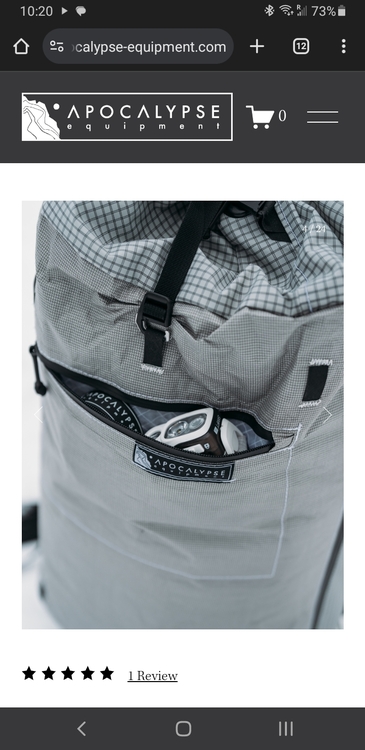 |
|
|
Erik Jwrote: I think that's about it. I believe he is using a backing on the inside for the bartack to have more fabric to grab onto. I also think he tapes them as well. |
|
|
I'm hoping this is an "anyone into adhesives" question rather than a sewing question: has anyone had success (or failure!) adding lash points onto a BD Creek 50? If so, what did you do? |
|
|
I made a few awesome pieces of gear that have held up through seasons of abuse. I’ve also sewn some junk, and made a few novelty items I never actually use. My favorites have been a ski pack and bike bag made from X-pac. The ski pack is based on a learnMYOG pattern with a few touches stolen from favorite packs. And roll-top bike bags are very forgiving so I just copied a friend’s bag. I highly recommend salvaging parts from old packs. (Lmk if you wanna sell me a mystery ranch hip belt!!). White looks like super cool hyperlite packs, but it’s hard to see the inside if you make the interior black. Also, I eventually needed to add a stiffener to the rolltop so I could close it with one hand. On the bike bag, I added the purple guard after the fact (from an old Tupperware). I make a cool kneepad too!(not pictured)! It worked pretty well but the send pads are better. When I got serious about sending my proj, I scrapped my macaroni-art and strapped on a send pad.    |
|
|
Erik Jwrote: I'd be worried about the material fraying apart under the seam and eventually failing. I would try to sear the fabric where you slice it. I have successfully used a thread burner to do delicate searing work on tears before patching. |
|
|
mbkwrote: I have sewn daisy chains and loops onto packs. I don't think the Creek presents any particular problem. Why are you thinking glue? I have a Creek 50 and 35, so if you send a sketch of what you're hoping for, I can look at the pack and figure it out. |


