Mountain Project Logo

Stainless Corrosion

Original Post
bmdhacks · · Bellingham, WA · Joined Jan 2012 · Points: 1,816

I'm rebolting an area thats 100 meters from the ocean with 316 glue ins. 

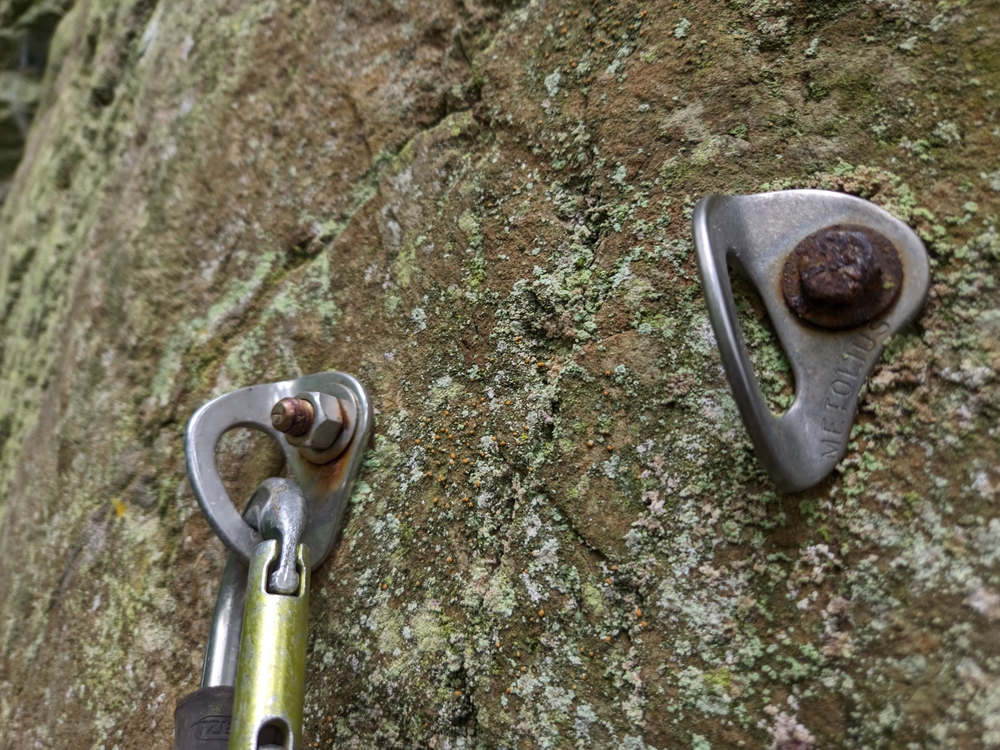
Half the old bolts are 10 year old 304 stainless wedges and half the bolts are 30 year old plated sleeves. I've been only replacing the sleeves but this stainless wedge on the left gives me pause.

Any advice on how to evaluate 304 corrosion for danger?

Kent Krauza · · Vancouver Island · Joined Dec 2018 · Points: 35

Are you certain that bolt is 304?  You could remove the hanger then test the bolt for ferromagnetism. Grade 304 is austenitic so it will be non ferromagnetic (magnet will not cling much, if at all). 

bmdhacks · · Bellingham, WA · Joined Jan 2012 · Points: 1,816

The bolt on the left is nonmagnetic

Austin Donisan · · San Mateo, CA · Joined May 2014 · Points: 723

I don't think you can evaluate them. Wedge bolts are particularly bad for randomly breaking on the coast. You should probably be rebolting with titanium.

While this guy thing real, well-manufactured 316 bolts don't fail:
https://cragchemistry.com/

Jim Thornburg thinks they have:
https://www.instagram.com/p/Coc_lb_vkNg/
https://www.instagram.com/p/C9DOImXPPyI/

Even the "special" glue-ins he mentions have some rust and don't inspire full confidence anymore.

bmdhacks · · Bellingham, WA · Joined Jan 2012 · Points: 1,816

Oh wow, I hung all over those bolts at Mickeys and the Egg circa early 2010s. They looked like shit back then too.

Peter Thomas · · Denver, CO · Joined Jul 2018 · Points: 355

I would replace it, especially if you can rap in from the top to get both at the same time. Hard to know how it looks under the surface, and even if strong, the rust staining will freak some people out. 

bmdhacks · · Bellingham, WA · Joined Jan 2012 · Points: 1,816

Theres probably 20 other stainless wedges at this crag with no rust and two with rust. Would you replace all of them?  I remeasured and its 200m from the ocean in a wind protected forest. Theres no waves on the beach and no sea spray to speak of.

Should I switch to titanium or just keep using my 8mm twist bolts.

Thanks for the advice.

John Byrnes · · Fort Collins, CO · Joined Dec 2007 · Points: 392
bmdhackswrote:

Theres probably 20 other stainless wedges at this crag with no rust and two with rust. Would you replace all of them?  I remeasured and its 200m from the ocean in a wind protected forest. Theres no waves on the beach and no sea spray to speak of.

Should I switch to titanium or just keep using my 8mm twist bolts.

The short answer: If there is any signs of corrosion, you should switch to titanium.  

That discoloration on the left bolt in your photo means it's not going to have a long life.   The high cost of rebolting is not materials, it's the labor, so if you're gonna invest your time use titanium so it doesn't need to be rebolted again.

There are tons of threads on MP about stainless corrosion if you want more background.  

timothy fisher · · CHARLOTTE · Joined Nov 2017 · Points: 30

An additional point, the 8mm twist is a really poor choice if there is any doubt about corrosion resistance. The only practical way to remove them to re-use the hole is to core drill. That would require a huge bit. 

If you remove a few of those wedges you will get a better idea of what is happening but the pictured one clearly has problems. 

The How not 2 store is carrying Ti bolts.

bmdhacks · · Bellingham, WA · Joined Jan 2012 · Points: 1,816

I really appreciate everyone's expertise.

I hadn't seen these two rusty stainless bolts when I started. Theres probably 20 untarnished legacy 304 bolts on this wall and only two like this. Unfortunately I've already replaced a fair number of plated bolts with 8mm twists.

I've been core drilling these 3/8 sleeve bolts that are spinners or un-turnable. My choice was 16mm because I've exploded 13 and 14mm core bits before when they bind.

For TI glue ins should I just shear the heads of these spinners and redrill above them to hang the P over the old bolt?

timothy fisher · · CHARLOTTE · Joined Nov 2017 · Points: 30

That is a Jim Titt endorsed method which is good enough for me. Not everyone will agree with that. Maybe countersink them so the glue will cover them completely. 

Hopefully the 316 will prove to be fine...

bmdhacks · · Bellingham, WA · Joined Jan 2012 · Points: 1,816

Does anyone know if you can use lead acetate test strips to identify hydrogen sulfide (and thus sulfur) in the rock?  Does anyone in SF feel like heading out to the Egg and seeing if some rock dust tests positive, because the Egg definitely has huge sulfur deposits right next to the climbs, and even a sulfurous spring running into the waves that batter the wall.

I admit that chloride contamination can result in stress corrosion cracking of 316, but if I can rule out sulfur reducing bacteria and thus hydrogen embrittlement then I can at least know that my 316 twist bolts aren't totally doomed.  Seems like lead acetate test strips might be a good way of knowing.

John Byrnes · · Fort Collins, CO · Joined Dec 2007 · Points: 392
bmdhackswrote:

Does anyone know if you can use lead acetate test strips to identify hydrogen sulfide (and thus sulfur) in the rock?  Does anyone in SF feel like heading out to the Egg and seeing if some rock dust tests positive, because the Egg definitely has huge sulfur deposits right next to the climbs, and even a sulfurous spring running into the waves that batter the wall.

I admit that chloride contamination can result in stress corrosion cracking of 316, but if I can rule out sulfur reducing bacteria and thus hydrogen embrittlement then I can at least know that my 316 twist bolts aren't totally doomed.  Seems like lead acetate test strips might be a good way of knowing.

Contact David Reeve   https://www.mountainproject.com/user/200855347/david-reeve 

He'll be able to tell you.

David Reeve · · Unknown Hometown · Joined Jul 2020 · Points: 0
bmdhackswrote:

Does anyone know if you can use lead acetate test strips to identify hydrogen sulfide (and thus sulfur) in the rock?  Does anyone in SF feel like heading out to the Egg and seeing if some rock dust tests positive, because the Egg definitely has huge sulfur deposits right next to the climbs, and even a sulfurous spring running into the waves that batter the wall.

I admit that chloride contamination can result in stress corrosion cracking of 316, but if I can rule out sulfur reducing bacteria and thus hydrogen embrittlement then I can at least know that my 316 twist bolts aren't totally doomed.  Seems like lead acetate test strips might be a good way of knowing.

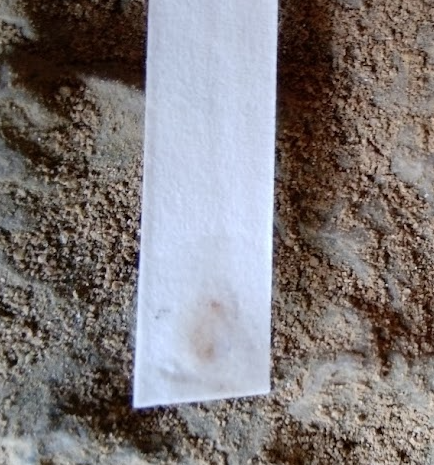
My experience is that lead acetate is not the best for picking up metallic sulphides in bolts that have been attacked by sulphur reducing bacteria (SRB). If you moisten the fracture surface with dilute hydrochloric acid and then hold the test strip against it, you can discern some browning, but it is very faint, and I think the reason is that the predominant sulphide is greigite which reacts very slowly with dilute acid to release hydrogen sulphide. The picture below is typical of what I get for a known SRB attack point.
I have found the Iodine-azide reagent to be very reliable as a means of checking for SRB attack, and if you have laboratory access the reagents are readily available. Have a look here for details.

I have no data for this location, but, one of the sure fire indicators of a problem crag is to spot test for sulphate. I did produce a little test kit which is described here but the hassles of air freighting it have discouraged me. However, the reagents are readily available and people have made their own.

Let me know if I can be of assistance. 

David Reeve · · Unknown Hometown · Joined Jul 2020 · Points: 0
bmdhackswrote:

I'm rebolting an area thats 100 meters from the ocean with 316 glue ins. 

Half the old bolts are 10 year old 304 stainless wedges and half the bolts are 30 year old plated sleeves. I've been only replacing the sleeves but this stainless wedge on the left gives me pause.

Any advice on how to evaluate 304 corrosion for danger?

The one on the right definitely needs to be replaced. Mixing metals is never a good idea, and the stainless steel hanger will guarantee severe anodic corrosion of the carbon steel bolt attached to it. This corrosion can extend well down the shaft into the drill hole.
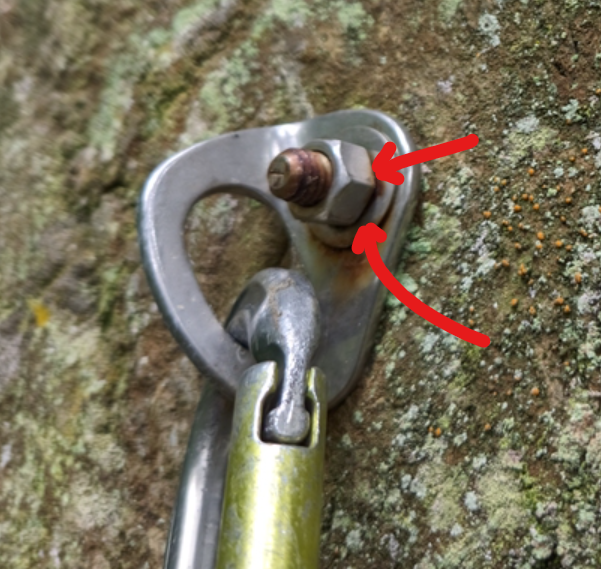
The one on the left is a worry given we have suspicions this is a sulphate crag. This is typical of how SRB attack would present for 304 components. If you see corrosion products weeping from the anoxic regions at the nut/washer/hanger junctions, then I'd be nervous.

I am yet to verify a case where SRB attack has proceeded for a material I have analyzed as 316 compliant. So maybe this is OK if it truly is 316. However, if instead it is typical for work-hardened 304, then I can point to hundreds of bolts in Portugal that look just like this, but will snap with a light tap from a hammer. Note that it is not so much a 304 versus 316 thing, as the fact that the austenite of 304 converts to martensite on cold working, and it is this latter that sponsors hydrogen embrittlement during SRB attack. Testing with a magnet is a good way to estimate the martensite content, but it takes practice to be certain.

Finally you say you are reinstalling 316 glue-ins. I'd check them with a strong rare-earth magnet before committing them to the cliff. If you can lift them up at all, don't install them. Have a read of the cautionary tale here. Note that it is not my intention to single out a particular manufacturer. The problem of lower grades of steel creeping into the 316 supply chain is endemic, and I am yet to find a manufacturer where this doesn't manifest.

Hare's an economic argument many overlook. You can invest the time and effort to establish that stainless is probably going to be ok, or you can pay the premium for titanium knowing it is definitely going to be OK. Which one is the better deal?

bmdhacks · · Bellingham, WA · Joined Jan 2012 · Points: 1,816

This is super helpful thank you. I really appreciate this community and the immense resource of collective expertise to draw from.

My plan is as follows:

  1. Use TI glue ins to replace the remaining bad bolts.
  2. Get my hands on some Iodine-azide reagent and learn how to use it.
  3. Check for magnetism on my twist and wave bolts I have already installed.
  4. If both SRB and magnetism are present I will preemptively replace the newly installed glue ins.
bmdhacks · · Bellingham, WA · Joined Jan 2012 · Points: 1,816

My buddy who is a chemistry professor at a local university helped me out with the experiment.

We tested three samples:

  1. Pyrite as a positive control
  2. Rust scraped from some bolts I pulled from a non-marine environment
  3. The corroded washer and various scrapings from the left bolt in the original picture

Here's the bolt from the original picture.  It's fully stainless and only the nut is mildly magnetic.

Anyways, after running the test we got bubbles from the pyrite, but no bubbles from the stainless corrosion or the control rust.

https://youtube.com/shorts/NGI_Xwsh3Fo

This makes me fairly confident that the twist bolts I've already installed will last quite a long time.  I'm curious if David Reeve or others would advocate further rebolts on this wall to use non-magnetic 316 or should I still only use titanium.

Thanks for all the help.

David Reeve · · Unknown Hometown · Joined Jul 2020 · Points: 0
bmdhackswrote:

My buddy who is a chemistry professor at a local university helped me out with the experiment.

We tested three samples:

  1. Pyrite as a positive control
  2. Rust scraped from some bolts I pulled from a non-marine environment
  3. The corroded washer and various scrapings from the left bolt in the original picture

Here's the bolt from the original picture.  It's fully stainless and only the nut is mildly magnetic.

Anyways, after running the test we got bubbles from the pyrite, but no bubbles from the stainless corrosion or the control rust.

https://youtube.com/shorts/NGI_Xwsh3Fo

This makes me fairly confident that the twist bolts I've already installed will last quite a long time.  I'm curious if David Reeve or others would advocate further rebolts on this wall to use non-magnetic 316 or should I still only use titanium.

Thanks for all the help.

Nice work. The pyrite control was a smart move. In my experience, this test is definitive.

I'm assuming this bolt has been in place for long enough to constitute a meaningful test, for example, greater than 5 years?

On that basis I'd be happy to proceed with rebolting with 316 proven to be non-magnetic.

One final point is that you have tested quality 316, and because it is OK, I wouldn't assume the same of 304 if it is at all magnetic.

bmdhacks · · Bellingham, WA · Joined Jan 2012 · Points: 1,816

Right on, I really appreciate the advice.

I don't actually know the composition of the stainless bolts I tested.  The hanger is labeled climbtech circa 2010's and I can't ID the bolt. Does it look familiar to anyone?

What's that liquid Climbing Taiwan uses that changes color on 304 vs 316? That'd be handy to have.

I think my plan is to replace future bolts on this wall with titanium but not replace existing uncorroded stainless.

Btw if you ever need to remove a stainless wedge, dry spinning it so the clip galls/friction welds to the stud makes it super easy.

David Reeve · · Unknown Hometown · Joined Jul 2020 · Points: 0
bmdhackswrote:

Right on, I really appreciate the advice.

I don't actually know the composition of the stainless bolts I tested.  The hanger is labeled climbtech circa 2010's and I can't ID the bolt. Does it look familiar to anyone?

What's that liquid Climbing Taiwan uses that changes color on 304 vs 316? That'd be handy to have.

I think my plan is to replace future bolts on this wall with titanium but not replace existing uncorroded stainless.

Btw if you ever need to remove a stainless wedge, dry spinning it so the clip galls/friction welds to the stud makes it super easy.

The easiest test for 316 is a strong magnet. It is true that annealed 304 is also not magnetic, but, based on my research to date, non-magnetic 304 will also be fine as far as resistance to SRB attack is concerned. It is the martensite content that allows ready diffusion of atomic hydrogen, and this will always show as magnetic.

I haven't tried that test kit that Kevin uses in his FB posts. There are several such kits available and I think they all work by detecting the molybdenum content of the 316. I have a test I use that requires access to a couple of chemicals. Hopefully, I'll find the time to write it up one day.

Maybe the approach you could take is to replace everything that is even slightly magnetic with titanium?

Good tip re spinning wedge bolts.   

Guideline #1: Don't be a jerk.

Fixed Hardware: Bolts & Anchors
Post a Reply to "Stainless Corrosion"

Log In to Reply
Welcome

Join the Community! It's FREE

Already have an account? Login to close this notice.