
 Continue with onX Maps
 Sign in with Facebook






On training for big wall climbing:



|
Charles Winsteadwrote: I'm not a coach, but if you're running marathons then your cardio is probably more than adequate. And you complained that your bag was too heavy and you were "broken" by the approach. To me that suggests raw strength could be a weakness. In my limited experience, wall climbing stresses the big muscle groups. Hangboarding won't help your hauling and bag-handling, which is what you said was holding you back. But squats, deadlifts, bench presses, and pullups might. To me, replacing a run with some weights might bear fruit. if a gym membership isn't in the cards, you could get some kettlebells for the cost of a few months of a gym membership and have them for the rest of your life. It's not the same stimulus as really loading up on heavy weight, but better than nothing, i guess. Try it for 8 weeks and then load up your haulbag with water, hike it up mt tam and see if you feel a difference. |
|
|
Nkane 1wrote: Weighted hike/climb would train your leg muscles and core muscles and is the best training for 1) hauling your bag to the start of the climb. |
|
|
 - Mark Rippetoe |
|
|
Charles Winsteadwrote: I’m 51- so pretty much same age.. My take is you've got to double up workouts.. you’re not training for a 5K- you’re training for potentially 5 days of 16hr Ditch Digging.. I’ll do my 3mile- 600ft vertical loop with a 60lb vest, 4 days a week as my morning dog walk.. and still do Squats + Deads or a 2.5hr climbing gym session later the same day.. and still get in 4 HIIT sessions a week on the Versa Climber training has to replicate the event or you’ll get your ass handed to you.. Volume and Intensity other thoughts: If you can run with your weighted pack- it’s not heavy enough.. maybe if you were training for a hilly Ultra- but you need to be able to Hump a 100lb load.. up the weight on your rucks! Why dump the load at the top? You aren’t walking down off this climb? babying your knees in training isnt going to prepare them for this climb. Training for BigWalls gives you a good excuse to do some odd hour training, which can also help you fit in the volume you need in a busy schedule.. add your rucks in before the sun comes up- or after your family goes to bed.. training with a headlamp will only make you tougher.. training tired pays dividends when you’re finishing a pitch at 10pm.. join a gym that’s open late and lift at night.. or invest in some Kettlebells and sneak down to the Garage after dinner.. lots of ways to up your training load |
|
|
Quinn Hatfieldwrote: You will get stronger from carrying the load downhill versus uphill only. It may seem counterintuitive, and most people think they need to carry weight uphill rather than downhill to get strong, but eccentric exercises and carrying weight downhill will get you more in shape. https://www.sciencefocus.com/the-human-body/dr-michael-mosley-eccentric-exercise The link above provides the best detail, but thought I’d paste this below, as a lot of people don’t bother to click links: “Another study comparing older adults doing traditional versus eccentric exercise found the eccentric group had a 38 per cent improvement in leg strength, compared to just an 8 per cent improvement in the traditional exercise group.” “Other studies have shown the benefits of eccentric exercise in young, healthy male footballers (who saw dramatic increases in strength), as well as in over-65s (who showed 30 to 50 per cent increases in strength and a 10 per cent increase in muscle mass in just six weeks). “The effects are far, far greater than we would expect from normal exercise,” concludes Kay.” |
|
|
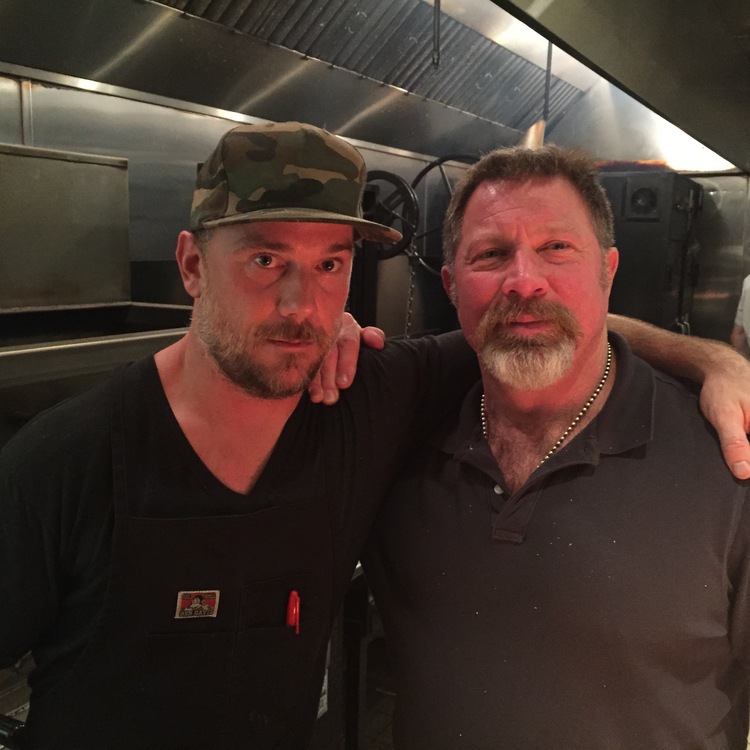 Quinn 43 Rip 59 |
|
|
So stoked!!!!!!! |
|
|
Yurywrote: because it's trained strength at loads greater than you encounter walking with a pack on. How does that not make sense that if you can lift heavy for reps, that somehow it wouldn't translate to effectively making a haul bag a light-weight day? |
|
|
I propose we all link up in yosemite this spring and perform feats of strength in the meadow to see whose training strategy paid off the most. Events/challenges including
Points deducted if you are found to be capable of free climbing 5.9. This is wall training people!! |
|
|
Quinn Hatfieldwrote: Steve House and Scott Johnston recommend this exercise in their "Training for the New Alpinism" book. https://www.amazon.com/Training-New-Alpinism-Climber-Athlete/dp/193834023X |
|
|
PWZwrote: Other muscles are used when lifting a barbell than when climbing a big wall. |
|
|
training has to replicate the event or you’ll get your ass handed to you Much agreed! I have found a hike on Mt Tam that has over 1500' of elevation gain in 3 miles or so- similar to the Sentinel approach. Planning to make this a weekly rucking hike. This will replace one of the run days on my marathon training plan.The goal is to be rucking 80# by the end of May. Starting at 40# and adding 5# every other week, gets me there. Ran 9.6 miles yesterday at an average pace of 14:30. Does anyone here have Strava and might want to share notes? No climbing this week due to nasty weather. |
|
|
Quinn Hatfield wrote: Why dump the load at the top? You aren’t walking down off this climb? babying your knees in training isnt going to prepare them for this climb Yurywrote: I was surprised that Steve House would recommend dumping a load for the downhill, so did a search. In this Uphill Athlete podcast, Steve says: https://uphillathlete.com/podcast/training-for-trail-running-muscular-endurance/ 44:47.88 |
|
|
You need to be in bar fight shape, not prancing around the neighborhood 80 times in Dolphin shorts shape. Move some heavy shit around. And even though the approach was your supposed killer, it was probably mental. Toughen up. Rob Slater said it best: "Summit or death... either way I win." Just be fucking hard. |
|
|
Russ Wallingwrote: Even better, in shape to win a bar fight while prancing in dolphin shorts. Now that's sending in style! |
|
|
Hello, I’m a Bay Area climber interested in aiding. I’ve recently picked up Chris McNamara’s How to Big Wall Climb. I’m trying to follow his program for learning the craft. I’d love to talk to Charles or other Bay Area climbers regarding where they have gone to learn and practice aiding skills. I’m specifically looking for a decent, less than vertical route where I can build myself a bolt ladder (or an over bolted sport climb) so I can practice moving up my ladders without a daisy. Please feel free to contact me directly if you have any input so as not to bog down this thread with localized info. Thanks so much, Scott |
|
|
Hello, I’m a Bay Area climber interested in aiding. I’ve recently picked up Chris McNamara’s How to Big Wall Climb. I’m trying to follow his program for learning the craft. I’d love to talk to Charles or other Bay Area climbers regarding where they have gone to learn and practice aiding skills. I’m specifically looking for a decent, less than vertical route where I can build myself a bolt ladder (or an over bolted sport climb) so I can practice moving up my ladders without a daisy. Please feel free to contact me directly if you have any input so as not to bog down this thread with localized info. Thanks so much, Scott |
|
|
Did Royal or Warren do any training prior to their early ascents? Not really? Sure they had a baseline level of cardiovascular fitness (helpful, but I'd say not absolutley essential as often alluded-to in earlier comments). In my opinion, getting worked up about training and focusing on getting fit as fuck for a basic wall climb is only going to set you up for failure. It will still be harder than you think, and I could see the emotional turmoil of beating yourself up for "not doing enough" in terms of working out could get to you. The mental fortitude required is the crux. And no amount of physical training can fix that. As you said in your original post, you don't have enough food or water for the route. Bring more food and water. The approach wooped your ass. Split it up into multiple humps. I'm in no way saying avoid training (I spend a LOT of time working out due to having to work full time), but try and avoid putting so much emphasis on it being the key to your wall success. |
|
|
Warren Harding used to run to the top of Half Dome and back. He considered 4 hours a good time. |
|
|
I’m going to stick with trying to get fit as fuck. Can’t hurt is all I’m saying. Started a weight lifting gym membership today. Pretty much immediately could tell “yeah, I need this.” Training plan so far looking like this: 1) Rucking once a week- starting at 40#, progressively increasing to 80#; on a trail that mimics the approach of my target climb in distance and elevation gain. 2) Trail running 2-3 times a week- increasing speed and distance with a marathon in April and a 50K in May. 3) Weight lifting 2-3 times a week- probably early morning with my son and then giving him a ride to school. 4) Sport climbing as often as possible- locally and via TRS if necessary to work on footwork, etc. 5) Trad climbing 1-2 times a month- looking at Lover’s Leap, Phantom SpGetting in some longer days on easier free climbing routes in the valley. 6) Aid and other technical practice days- eg hauling a bag up a 3 pitch route at LL. Short aid pitches at eg The Grotto. Maybe some mock aid with TRS back up support. Try to hit Washington’s Column in the spring. A night or two on the ledge here and there. I can fit 1-4 into my regular weekly schedule. 5&6 will require dedicating a weekend or two a month which is not impossible. Sounds like a plan! |


