
 Continue with onX Maps
 Sign in with Facebook






Ss vs plated bolts in southern oregon
|
|
From a lot of what ive been reading many people are talking about only using ss bolts for climbing. Quite a few of the crags here in southern oregon have been developed with plated steel and continue to do so on new routes (rattlesnake, terra nova, etc). Im wondering if this is a good idea. We do get some rains and snow in the winter forsure, and my initial thoughts are that we need ss, but a gew people ive talked with disagree. Anyone have input? Info: most bolts ive seen being used are powers 5 piece 1/2 and 3.5 inch long. The rock is mostly welded tuff. Seems like medium to soft rock. |


|
Stainless for sure. Even in dry areas, bolts rust (under the rock surface) in 20-30 years, and the crags you mention are in wet areas, not dry. Just look at a satellite map of Oregon - those crags are solidly in the green side of the state, with moss in a lot of the climbing photos! Also, a technical note: unless people have a big stash of 10-year-old 5-pieces, the bolts people are using to develop are actually Power-Bolt+ bolts, which are a different design than the older 5-piece. In the case of the 1/2" version, the PB+ is a better bolt than the old 1/2" plated 5-piece as far as softer rock (better dust cone design reduces spinners), while the 3/8" version is super weak (due to the bolt core size reduction from 5/16" to 1/4"). But they are not stainless, and they will be rusting in short order. To sum up, stainless for sure, and looking at the photos and comments on rock quality, glue-ins are probably the best call. |
|
|
So, I’ve done some climbing at the places you mention and others around. Pop into the Rogue Rock Gym on occasion too. The people developing those areas are cheap from what I’ve seen. More focused on the number of F.A’s than the quality of their end product. |
|
|
Hey guys. Thanks for the input. I will add that I’ve pulled several 3/8 5 piece bolts zinc ps, out of routes that were bolted in the late 80s and early 90s at Rattlesnake. I’ve found that these pieces of hardware have minimal corrosion and rust after being in the rock 20-30 years and are still in pretty good shape. They reason they’ve been yanked and replaced was because holds had broken on routes that yielded hard to clip protection and the bolts needed moved to the newly created (by the exfoliation of the choss) clipping stances. This leads me to believe that there is still an advantage, although a minor one to using ss. A conversation with a friend a while back ended in us saying that glue ins would be the best for setting up a maintenance free crag for the future generations however we though that it was as important to involve new stewards of the crag in the process of replacing the mechanical bolts. We’ve been using ps ever since. I’m not the total expert but this is my experience. |
|
|
A lot of folks maintaining crags in much more arid climates - such as Owens River Gorge, Joshua Tree, Shelf Road, etc - have similar experiences with many old bolts, BUT there are exceptions where certain bolts are super corroded under the surface even when they look perfectly fine (no rust) above the hanger. That's probably similar at your crags. Here's an example from Shelf Road (photo by Nate Liles) of a 3/8" stud bolt that looked fine but snapped super easily (the rust starts about where the hanger was, so the nut on the top didn't look rusted either): 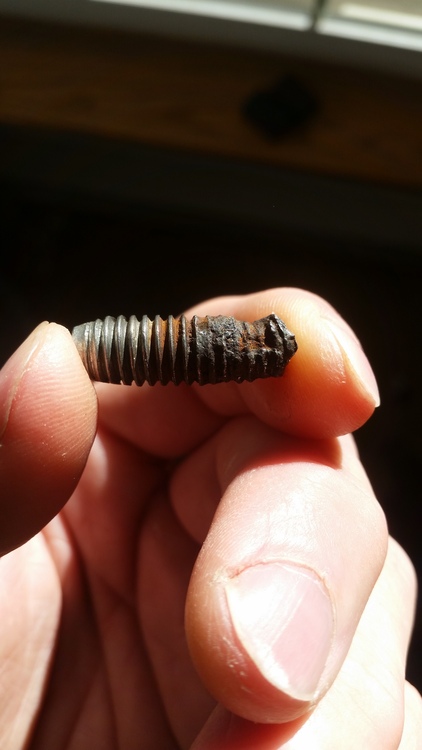 |
|
|
Greg Barneswrote: Isn't Shelf Road mostly limestone? |
|
|
Yes, but major corrosion happens in dry areas on multiple rock types. Bolts only a few feet away from that one at Shelf - same type, same hanger, same installation date - were not rusted (or barely rusted) once they were pulled with a spinner tool. Soft sandstone can be porous enough that water simply evaporates through the rock and you don't find major corrosion (in dry desert areas at least). It's possible that some of the rock in question in southern Oregon could be soft and porous enough for water to evaporate out through the rock. But if there's moss growing on the rock, it's probably too wet in general for that to happen fully! |
|
|
Greg Barneswrote: That sure looks like galvanic corrosion to me. I had two bolts look like that when I replaced the bolts on No Rest for the Wicked years ago. Stainless hangers on carbon bolts. All bolts had the same hanger/bolt combo but only two of them looked that bad |
|
|
Derek Lawrencewrote: More likely the hanger spinning and rubbing away the zinc coating and then continually wearing through the surface rust over and over again. Just an opinion based on what I've seen elsewhere. My experience with taking out a lot of bolts around the Southeast is that the plated bolts with plated hangers usually have similar corrosion to the plated bolts with ss hangers, galvanic corrosion doesn't seem to be a large factor in the rate of corrosion. This experience is with non coastal areas without SCC issues for what it's worth. |
|
|
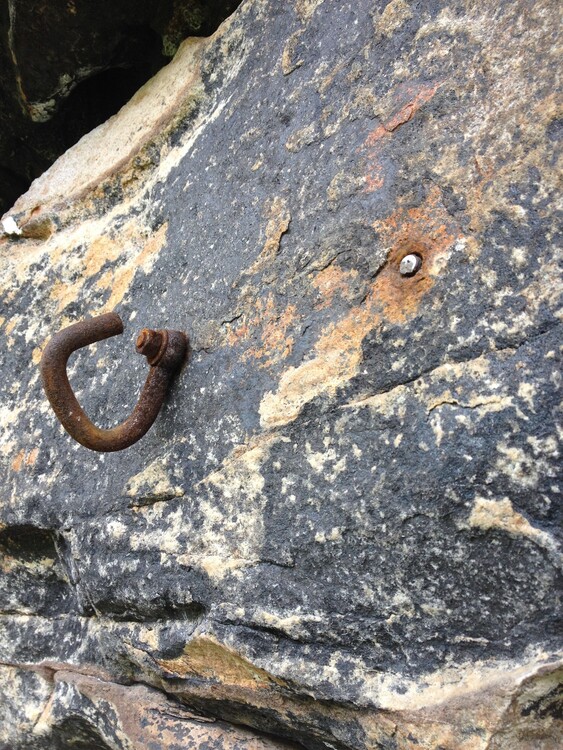 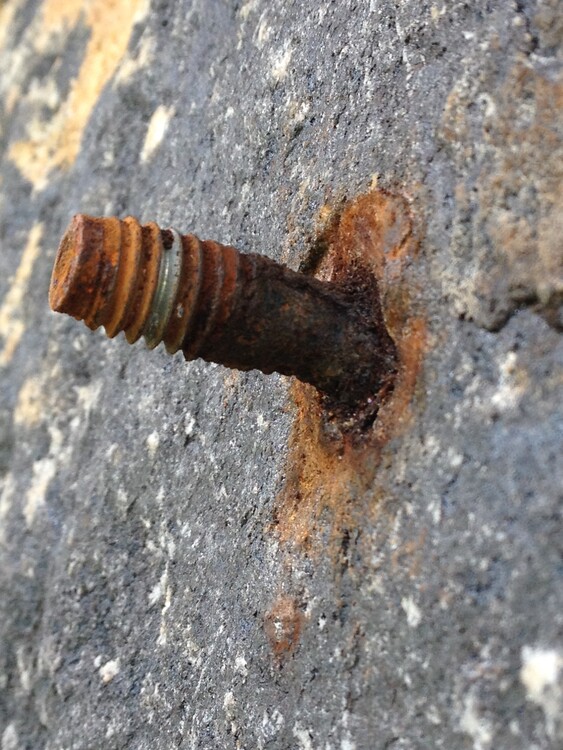 Interesting, we have seen a fair bit of corrosion just behind the hanger, or in this case the open shut. For context, this was located in Tennessee in hard sandstone, under a large roof that probably only saw moisture when the rock condensed. Both the bolt and shut were zinc planted steel about 20 years old. Fun story, in the upper photo the stud on the right was broken with a 6" adjustable wrench when trying to tighten the shut to prevent spinning. The guy was sitting on the left one, talk about pucker factor! |
|
|
All sandstone can be porous in places. Even really hard sandstone. That means the bolt can get wet from inside the hole. Not a good thing for plated steel bolts. Especially with the rain we get. |
|
|
Under roof above ^ could be a bat or bird habitat w pee/poop factor. |


