
 Continue with onX Maps
 Sign in with Facebook






Fatal accident at Tahquitz today


|
|
CAUTION: DEGRADATION CAN TAKE PLACE WITHOUT VISIBLE INDICATIONS! Based on the test results and conclusions reached, Unirope has decided to discontinue the use of NYLON webbing material for Boat Lifting Slings. https://www.unirope.com/sling/exposure-to-sun-and-uv-light/ One way to evaluate a climbing anchor is with the SERENE acronym. Is the anchor Strong, Equalized, Redundant, Efficient, No Extension? There are other acronyms, but they all boil down to the same concepts.https://www.climbing.com/skills/unbelayvable-the-entire-rope-anchor/ |


|
Ian Lauerwrote: Some micro tear pics… 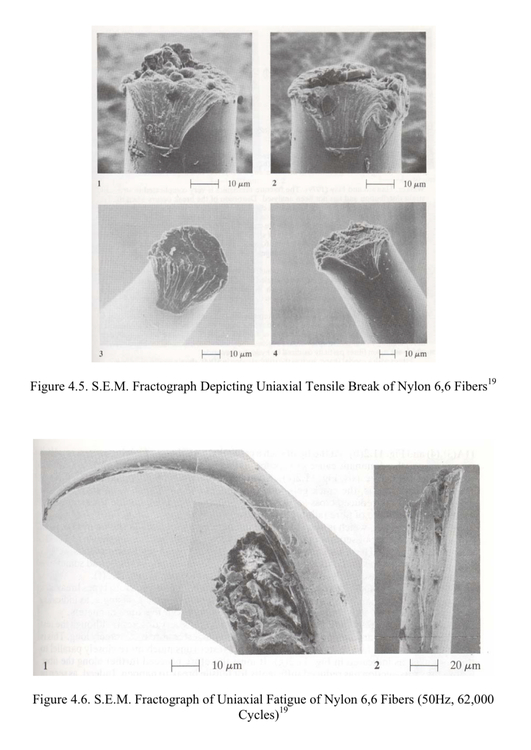 And from the files of “you do the math” …(I super simplified it in my previous post) 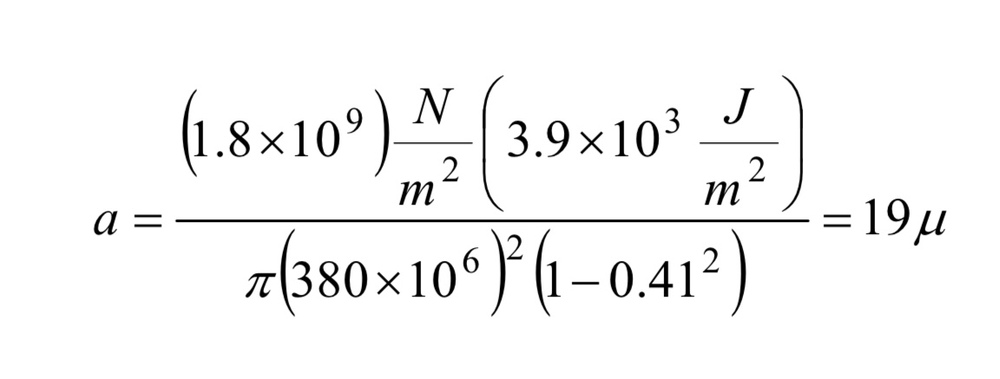 |
|
|
you guys must have some pretty effin low standards for rap anchors if you are afraid to bounce test them... I bounce test every V thread with a two screw back up. if Its a nekid thread i lock off my rappel device and give it a good bounce. I don't typically do that with tat anchors relying more on safety in numbers meaning lots of tat with at least one good looking piece. I will bounce a tat anchor that I am being too cheap to add to but don't have a warm fuzzy feeling about. over 40 years in the game and plan/ hope on not cratering in future.... |
|
|
Mark Pilatewrote: I mean, I guess ultimately we don't really know. What you guys are arguing for isn't terribly different from microfractures. This is a postulate of somewhat plausible failure mechanism, which may or not actually pan out in real life. By the way, a lot of critical component are tested below strength that cause permanent transformation (e.g. say a biner @5kN), which isn't terribly dissimilar from a bounce test. Seems to me that, if the bounce test is to weak the anchor material enough to be problematic, those damages should be observable. E.g. if I need electron microscopy to observe damages, the breaking strength of the thing hasn't been significantly altered. |
|
|
forget your damn microscope. if it can't hold a bounce test you got zero business rapping off of it. |
|
|
Ian Lauerwrote: The safer option is to assume I’m right. DON’T bounce test tat because we don’t know if it weakens it or not AND the test doesn’t prove it will hold during a rap anyway. These two may have bounce tested the anchor, the helmet cam footage would tell the tale. |
|
|
Adam Burch wrote: Like him, I listen to nothing else. Marcoscopes? Sciemce? Pfft. |
|
|
Just make sure you rack your electron microscope on a snap gate. Don’t want the unnecessary weight of another locker. |
|
|
We don't know when the webbing broke for Chelsea and Gavin. He may have slipped to accidentally load the rope higher than a 'normal smooth rappel,' which caused the break or she may have slipped at the anchor and loaded it with both of them now weighting the sling. On short, static tethers it's pretty easy to generate the loads seen by the post-accident testing, especially with two people combined. This wide spectrum of potential higher loading is indistinguishable from a bounce test or from any slip/accident we can have at any time. The safe way, as we all have said, is to back up the anchor for the the heaviest and remainder of the party until the last one down. The safest way is to always leave your own tat even for the last person down. For sure, with only one person on the system it becomes harder and harder to shock the anchor the farther down the rope you get. The bounce test might deteriorate the sling, but it's at least somewhat representative of a potential shock load. This could be worse for users who come after you, but it is also their job for their own safety to test and accept the system to their own standards. For me personally, upon encountering alpine anchors, I'm probably going to bounce test it (with a backup) to ensure my own safety and that of the rest of my party. |
|
|
Tradibanwrote: What we do know is that a reasonable bounce test can produce around 3-4kn. So if they had bounce tested this one with a reasonable backup in place, they very well should have broken it based on the testing results produced on the old tat. That would have informed them to leave their own anchor instead of trusting what was there, and these two would very likely still be alive |
|
|
Mark Pilatewrote: You gave us zero reference for where you got any of this, for all we know it's out of context. The picture is after 62,000 load cycles, you've got to be fucking kidding if you want to compare that to a single bounce test. Please provide a link to your source so we can critically analyze it. Next time I'm just going to post a formula with no explanation of variables and claim it supports my conclusion.... Jeeze |
|
|
Ian Lauerwrote: No two people will bounce test the same and no tat will break at the same forces. The lack of consistency in the materials and the subjects will not provide reliable results that anyone should base their life on. More importantly, we still don’t know for sure if bounce testing will weaken the sling but according to James Robertson’s post, it will! |
|
|
Saying a bounce test will weaken the sling(s) enough to cause a subsequent failure makes little to no sense to me. You should be able to bounce test any anchor you would rap from. I'd like to see how much the breaking strength of a sling is degraded by bounce testing, maybe a little but if that is your margin of error, back that sh$% up. |
|
|
Their only mistake was trusting that sling. All this questioning of the forecast and their decision go for it then wind up bailing and how they did it is bullshit - zip it up, sport wankers - it all reads like they went “rock climbing” to me and were doing mostly just fine with it. |
|
|
traddi doesn't even believe his own arguments. he is and has been a professional troll from day one. only in it for the argument. what a load to total BS you wankers have come up with. I don't always trust my life to anchors I haven't tested but when I do I say I learned it on MP.... |
|
|
James Wwrote: I dont often agree with this man, but when I do, we must be onto something. Good for yall who have never climbed with a cloud in the sky and need calculus II equations to determine if your gear can catch a falling boat. You're probably as much fun at the campfire as you are on the rock. I'm sure I'll catch your replies about microtears and safety nets in the morning since it's past yalls bedtime. |
|
|
John Texwrote: I love it when a fish flops in the boat and calls the fisherman a wanker…probably smells like fish around the campfire and wonders why everyone else is giggling. Still up? You Bounce boys are taking it way too seriously. It’s effectively a non issue. Mostly yanking chains here while still telling the truth. It’s equivalent to debating the risk between two teams of people playing Russian roulette with guns that have a cylinder that has a thousand chambers. One team loads one bullet and spins, the other team loads 2 bullets and spins. Gotta have a lot of people playing many rounds of the game to ever detect the difference, but I can tell you now which team is smarter. For Ian’s previous reference question (and anyone else interested) a dry but relevant read is “Fatigue Failure of Textile Fibres” . I have access to a whole library of such things daily as I’m an engineer for a materials science company specializing in Flouropolymers. There’s really nothing to argue about here. All here agree 99.9% and this is the stage in a thread that that 0.1% of mostly misunderstandings or minor trivialities causes everyone to circle up and start infighting. |
|
|
Ian Lauerwrote: To continue to zero in on and beat this 0.1% here, only because it may actually buy someone meaningful margin sometime… The point was not to make this one fail — the key point for everyone to understand always, is that you’ll NEVER know how close to the margin you are till you cross it like Chelsea and Gavin. You don’t know if there are 1000 rappels left in that sling or 2 before failure. The Option that is always guaranteed to buy you the most margin in these circumstances is to back it up immediately regardless. Single piece of unknown tat? No test needed. Back it up . Consider yourself “pre-informed”. It would have been even worse for them (or anyone reading this) to have “bounce tested” the sling with a backup (and maybe they did for all we know) and then pulled their backup after determining their anchor was “safe” and then rapped to their death. All the bounce test would’ve done is make the anchor a bit weaker for when they actually used it, and perhaps encouraged them that leaving a backup wasn’t needed. It gave no real useful information Sometimes key principles get lost to intuition and confirmation bias of the more common experience. Examples from the edges of the envelope are better at illuminating the takeaways. For example the rap test below. (Test Performed previously for just such illustrations) For arguments sake, say the narrow ice column upon first slinging it, could hold 500 lbs. say me and all my ice gear weigh 200, and during the rap my max load is 250-300. I’m good to go with 200 lbs margin. 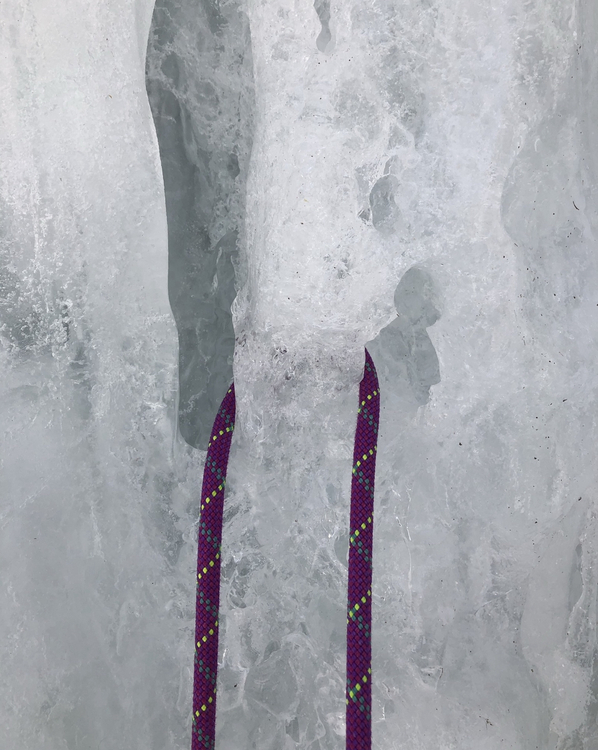 Now let’s say I’m sketched out and first want to “test” my set-up. And I do a little bounce test that imparts a bit more than 400 lbs load but unknowingly exceeds the yield strength of the icicle and it holds but cracks a bit. Now it’s max holding strength is 300 lbs. Now when I rap, I have almost zero margin. If by some chance I reach the ground, I’m a genius and proved my “protocol” worked. If not, I End up like Gavin and Chelsea. Don’t be either case. Like someone else joked, you never have microscopes or analytical tools when you’re out there and you never know if you’re in the trivial middle of a 10,000 cycle material lifetime, or the last few cycles of it’s lifetime. But ANAM has decades of stories of people who encountered the limit. Edit: yes ice and nylon have way different modulus curves that change at different rates over time and cyclical loading, yadda yadda. But when it matters, it matters the same. |
|
|
That's a totally shit looking thread . why would i listen to anything about safety from someone who would rap from that shit show. isn't Minnesota ice all single pitch anyways? and that argument is total BS. if they had a bomber back up and bounced that tat they would still be here. |
|
|
So, I would guess that if she wasn't the one that fell first, that there had to be maybe two knots on the sling, with one having to catch the biners the rope ran through, and the other having to catch the biner she had attached herself to the sling with... for just long enough for her to lose her balance. Wild, if that was the case. |


