
 Continue with onX Maps
 Sign in with Facebook






Critique my ground placements and practice anchors


|
|
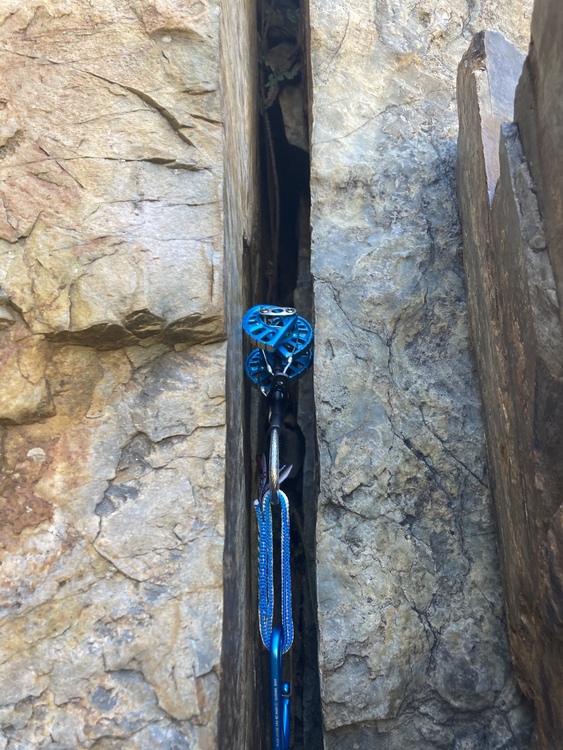
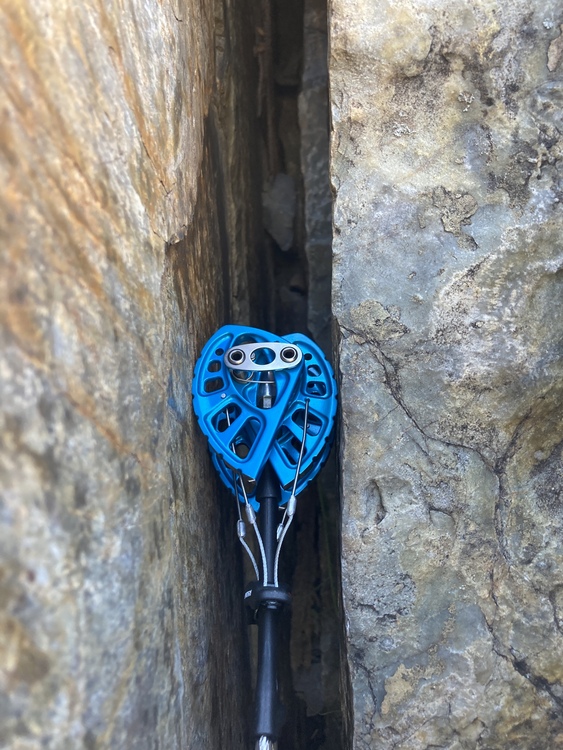
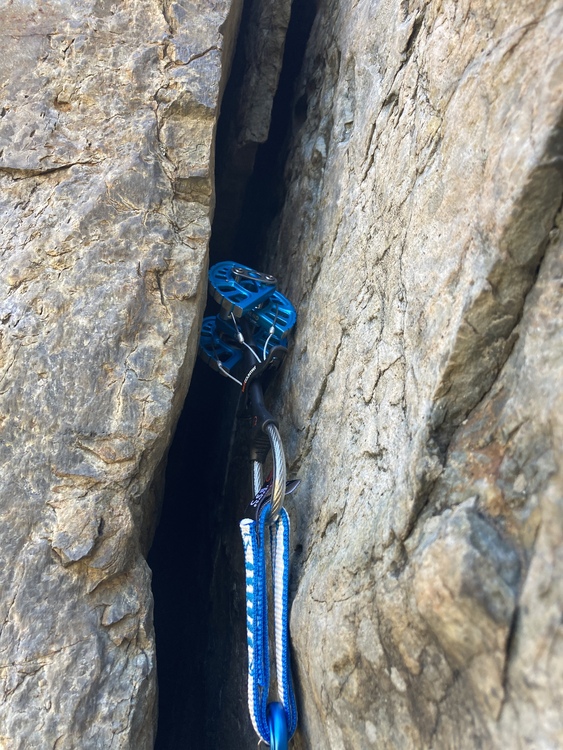
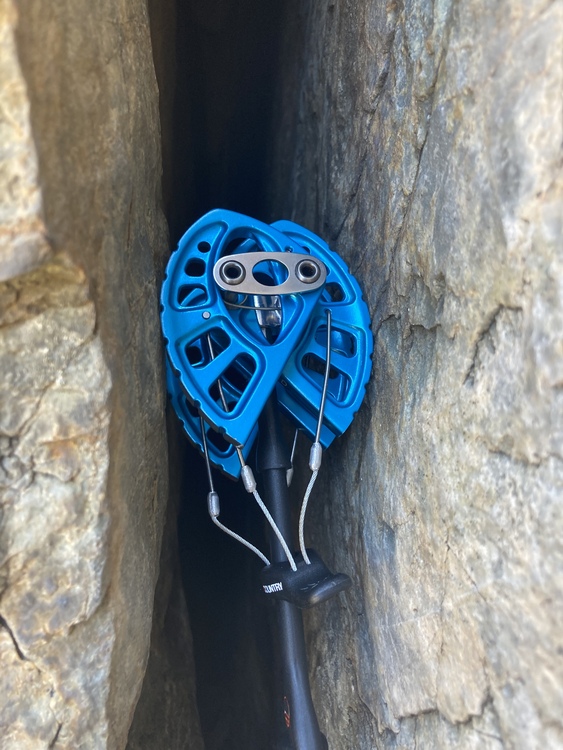
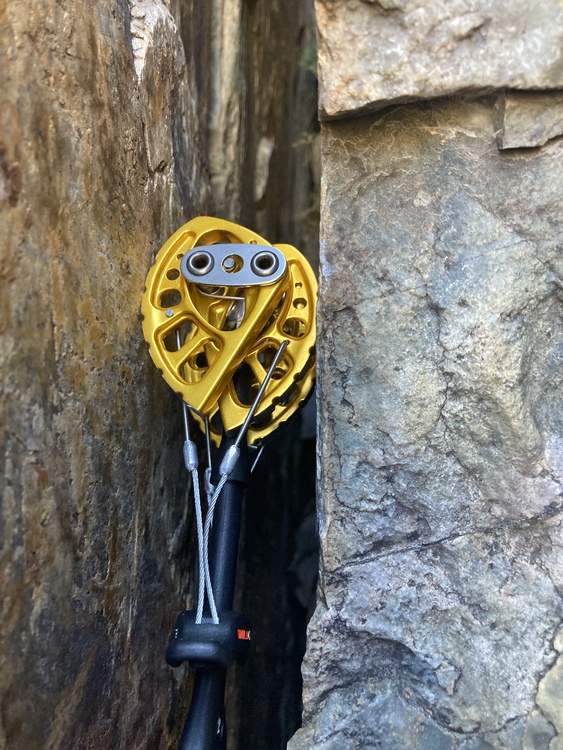
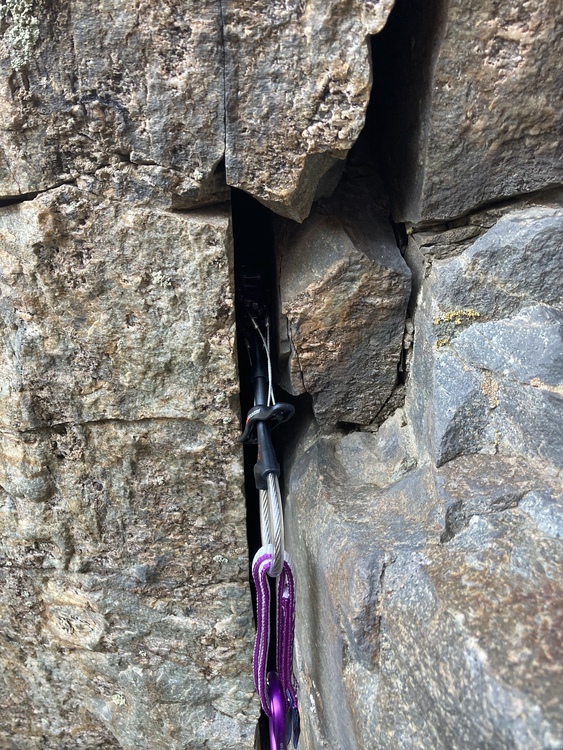
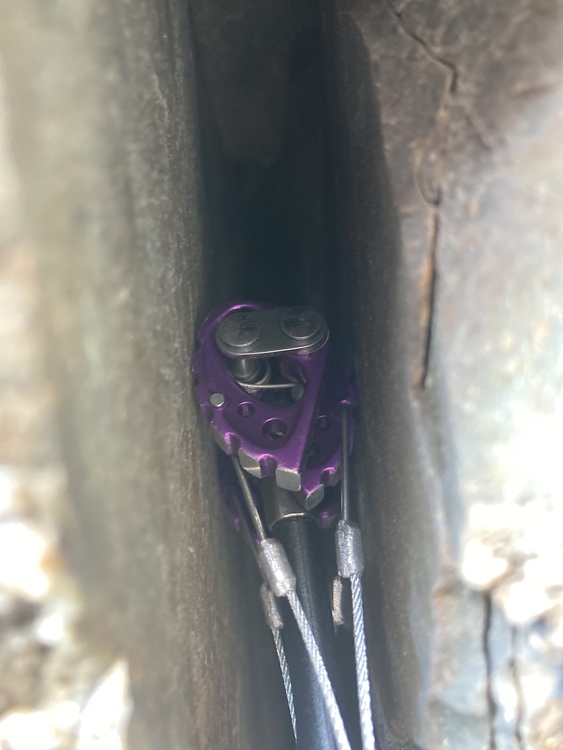
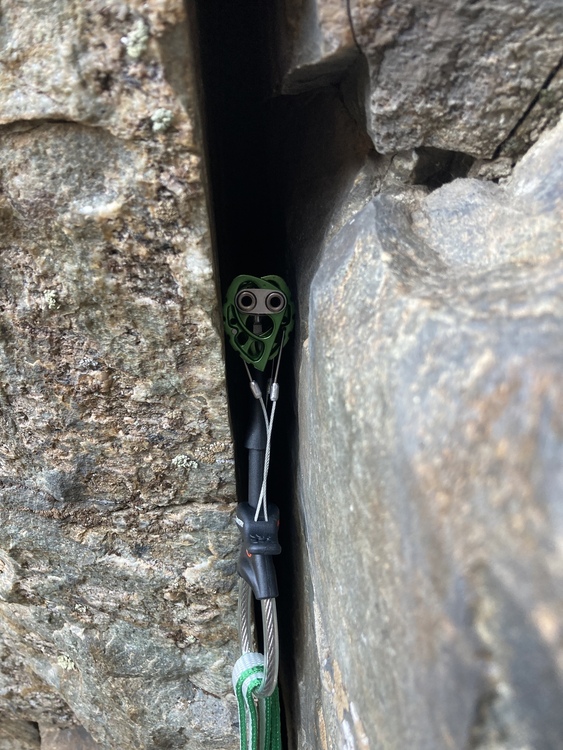
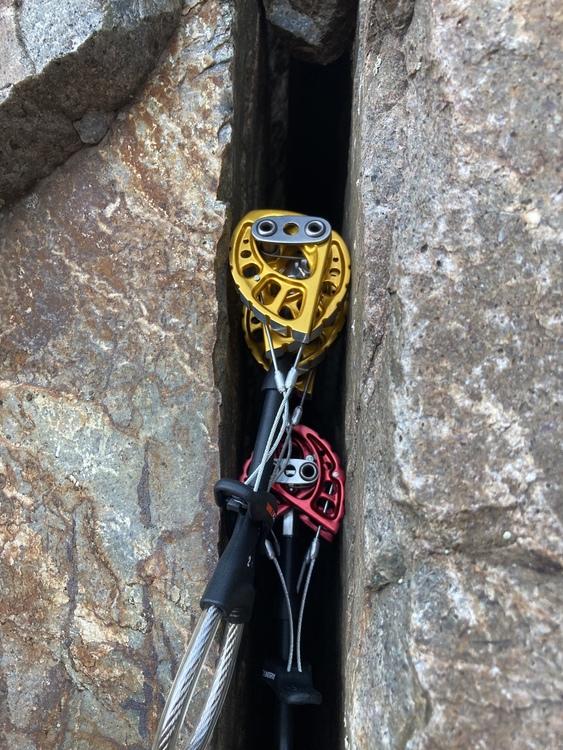
I’m currently learning to place gear and have been eating up all the content I can where photos and videos of placements are critiqued. Went out to BCC the other day and played around with my new rack. Hoping to get as much feedback as possible. Some of the placements were IMO pretty straightforward while others were a bit more… creative. You’ll see. I realize there are limitations to evaluating placements via photo, but to do my best each placement has a wide angle shot for context and a closeup to better evaluate the details. I’ll give any relevant commentary I have.
           More to come below!! |


|
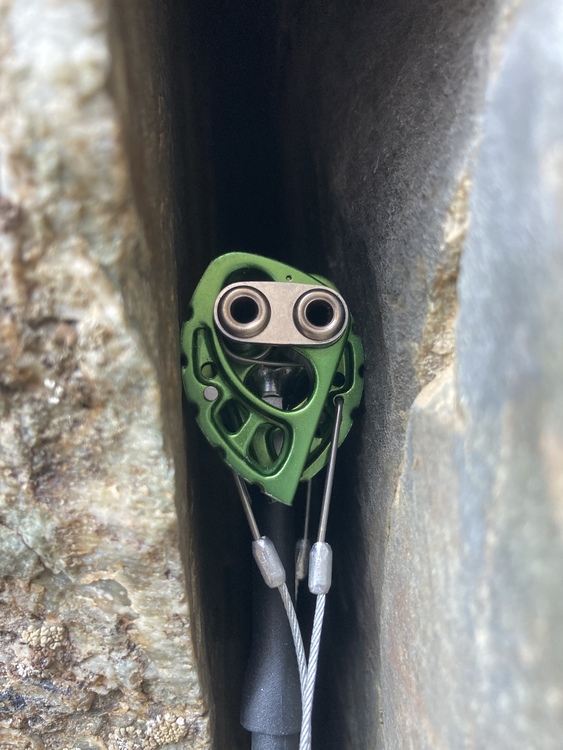
Everything looks at least ok to me except for the fact you mentioned that the detached block is a real problem. The most questionable is the green cam in 9--10, which is placed in a constriction better suited to a nut. When a cam goes in such a constriction, rope motions can make it walk up and out in some cases. Meanwhile, it looks like a perfect nut placement. |
|
|
Next up: hexes!
   |
|
|
rgoldwrote: The most questionable is the green cam in 9--10, which is placed in a constriction better suited to a nut. When a cam goes in such a constriction, rope motions can make it walk up and out in some cases. Meanwhile, it looks like a perfect nut placement. Agreed ... does the cam walk?? Attach a QD to it and start swinging it left to right with a bit upward pull. What does the cam do? |
|
|
Anchor 1 Cams felt solid, I felt good about both those placements. The stopper was hard to assess as it was difficult to see (and photo is subpar for the same reason). I guess one could argue that makes it a poor placement but from what I could see it seemed to have decent surface contact and it felt like a good fit. It did, however, get very stuck and required some heavy encouragement from my nut tool and a rock to pop loose.
 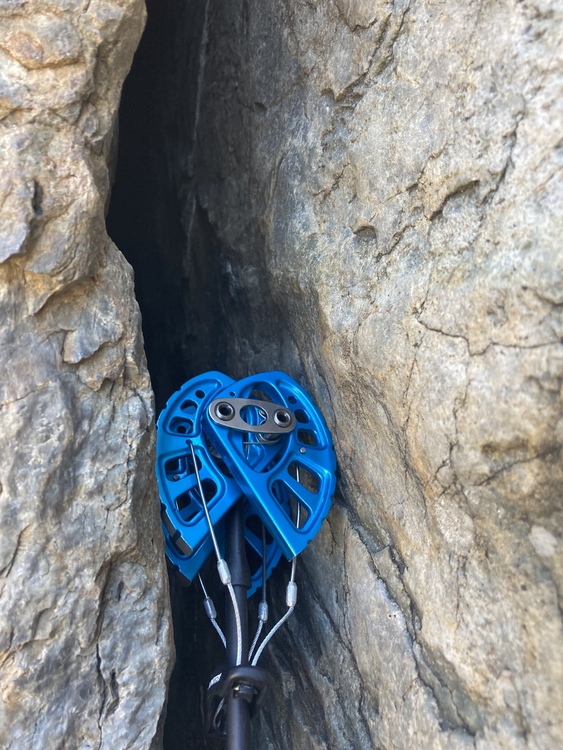  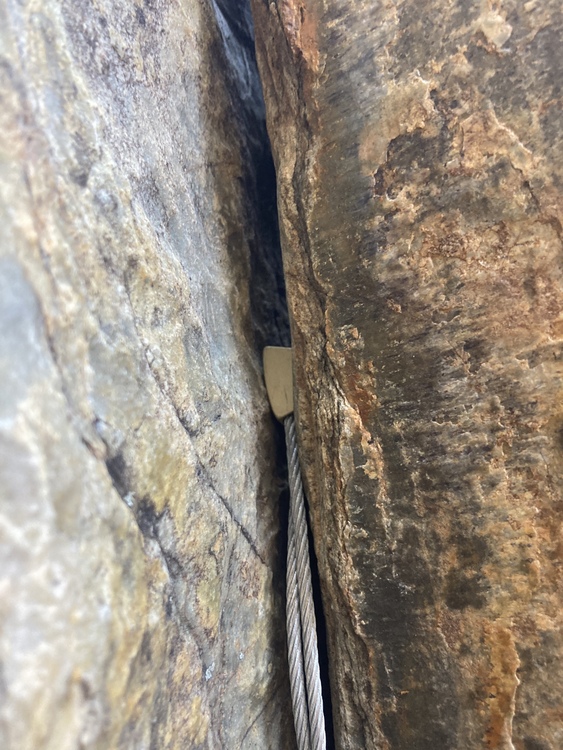 |
|
|
The #1 is fine. Would whip. |
|
|
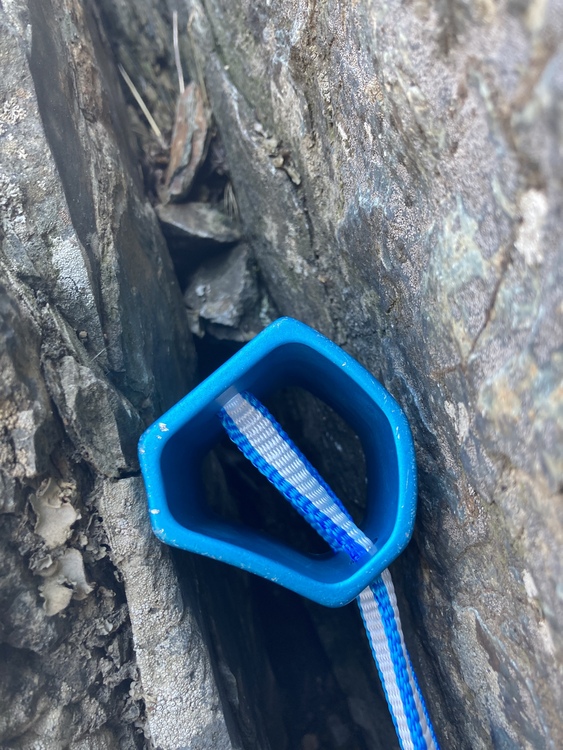
That green hex is bomb. Blue is missing some much needed surface contact on the curved side. |
|
|
All looks good. Go have fun |
|
|
Nothing to add that hasn't been said about your placements. For the anchor, in general, I'd swap the draw for a single carabiner. You already stated you have plenty of cordelette, so save the sling for the next pitch where it will mitigate rope drag instead of burning it in the anchor. |
|
|
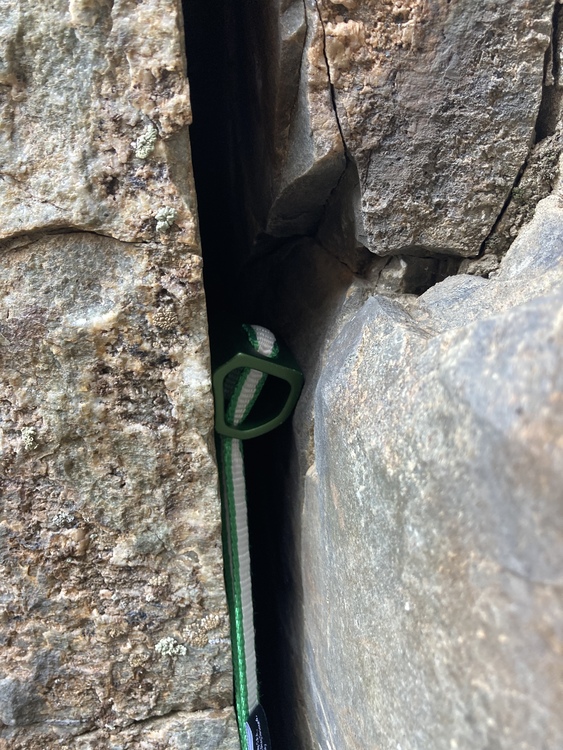
Green cam and hex have the same problem, upward opening placement which will allow the cam to walk out and the hex to fall out as you climb past. Cam is ok, but I wouldn't ever expect that hex to stay in. Hexes can be placed passively like that, but it needs to be constrictions where they won't just fall out. Cordallette can probably be cut down to ~20 feet, that's my preffered size at least. Then make a couple prusiks with the rest |
|
|
Double overhand in cordelette is fine (offset knot). Allows you to open the loop if you need the length for an anchor with pieces further apart (as long as it is 7mm). Double fishermans will weld shut (in-line knot) and you have a permanent loop. I would cut longer than 20' - probably 25'. Put the clove hitch on the longest leg which will likely have the least load on it. Three legs is OK, but you can also combine two pieces into one strong leg with a super 8 knot. If you have a big, bomber cam on one side, and two placements that are smaller or less bomber, consider combining the two smaller/weaker placements into one leg and building two-leg anchor. Better to have two strong legs than three legs with two of them being "weak". I was trained to have 10kN on each leg after de-rating the strength of the pieces (deduct 10% if less than perfect rock, 10% being human, 10% being new to placing gear = 30% de-rating). For new gear leader on sandstone, 12kN cam is de-rated to 8.5 kN so you need another piece to get to 10kN for that leg (as an example). In good granite, the deduction for "rock" goes away and that 12kN cam is good for one side. |
|
|
Did clip your harness in and sit on the pieces? Maybe even give them a little bounce. If you're placing gear on the ground that's probably the best way to critique your own placements and develop confidence in the gear. The placements all look great though, nice job finding a crack that takes both a #1 and #2 cam, the in-between sizes can be tricky. |
|
|
It's great to see some positive exchanges on the forum! Good work to Keilyx for looking for some advice, and for being teachable. This bodes well for your future trad endeavors. Always keep learning! |
|
|
Jay Andersonwrote: I would definitely recommend that OP not engage in complex equalization and math shenanigans like this. Just get 3 unquestionably good pieces that are not micro gear, and connect them individually to the masterpoint. The redundancy of 3 separate pieces is already taking care of the human factors, and trying to estimate a strength deduction based on generic rock type is dubious at best. The theory above doesn't work out for lots of great gear that is totally sufficient for an anchor. For example, all sizes of Metolius Mastercams and the largest BD stoppers are "only" rated to 10 kN; these are totally sufficient as individual pieces in an anchor and do not need complicated linking to hit an arbitrary strength target. If you follow these "rules" above and your rack is all Metolius cams and BD nuts, you'd need to build a 6 piece anchor to hit the arbitrary 10 kN number with the "de-rating." |
|
|
Jay Andersonwrote: Does combing two "weak" pieces into one leg increase their load capacity? |
|
|
Thanks everyone for the comments! Good to know some of my instincts and knowledge are serving me well and to get some more to think about for next time. In response to Kevin MP’s question, I clipped a sling to the placements and stood in them/bounced a little bit. With the anchors I clipped into the master point, leaned back on them and moved around a bit to see how they would respond to slightly different directions of pull. So the general consensus is that the #1 up thread is fine? It’s beyond the 90 degree standard that’s usually set as a teaching tool, but folks with experience don’t feel like it’s ‘dangerously’ undercammed? With the blue hex, is surface contact on the fulcrum side a concern as Todd mentioned? It’s levering off that angle to cam the other side into the crack. I’m still trying to get a handle on the dynamics of active hex placements. Anyone else have thoughts on the green hex? Got a couple mixed opinions above, but I do see how that upward flare in that section of the crack could be an issue for either the .75 or the green hex. Didn’t try a nut there as was recommended above so maybe that would be the solution, or perhaps it’s just not a good spot. I couldn’t post this last night since I posted too many times on the same thread, but here is the second anchor I built. I would have liked a bit more surface contact on the nut but it set into place fairly well and didn’t seem like it could pull through. Maybe the seam to the left of it is a concern but the rock sounded pretty solid. Also didn’t love the way the totem sling got pulled around that corner, but it wasn’t a sharp edge and the placement seemed deep enough to stick even with the quirky direction of pull. 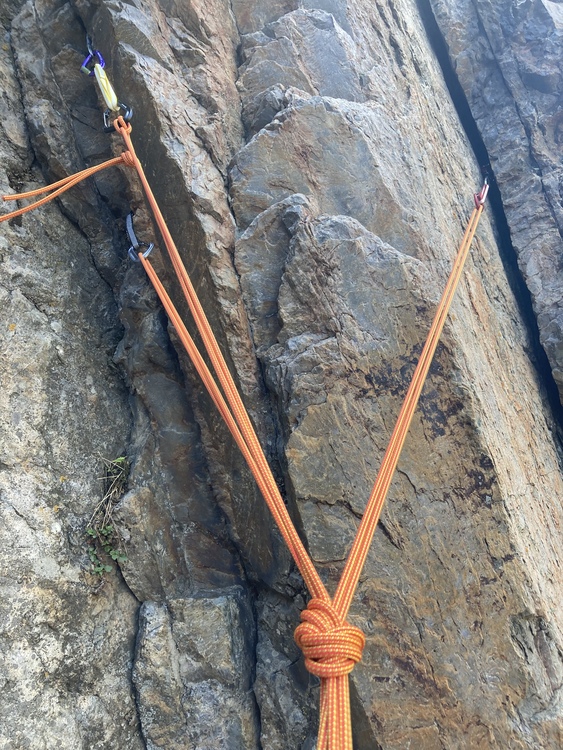 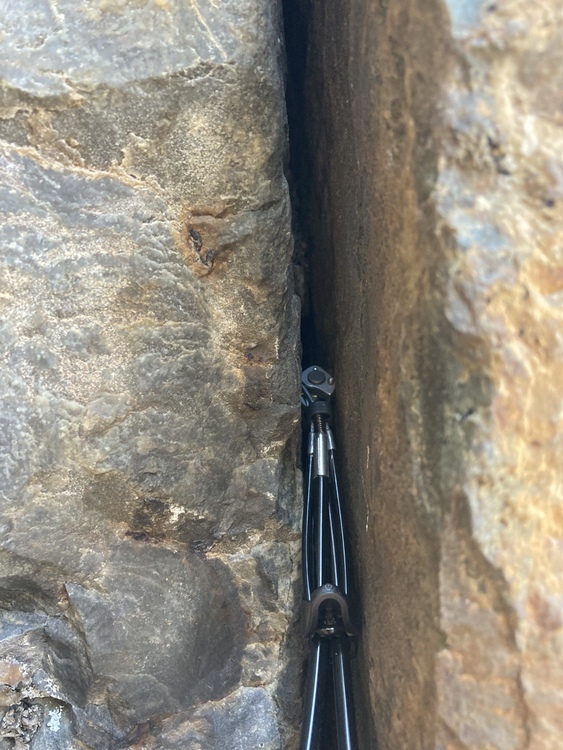 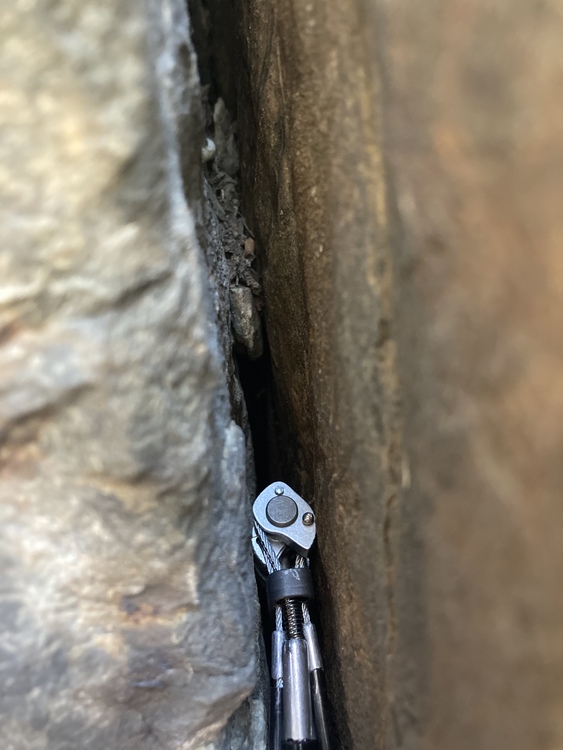 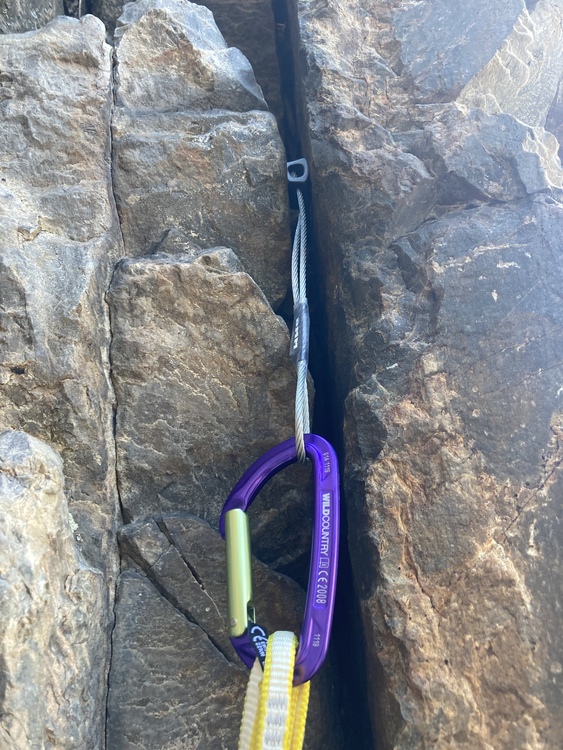 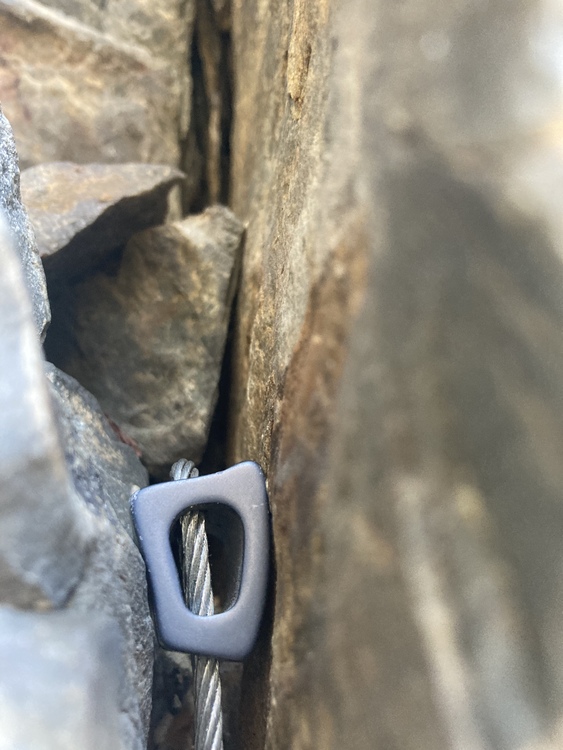   |
|
|
As a general remark, for my taste, you tend to be on the overcamed side. Most likely, the 0.4 would be fine in the 0.5 crack, and the 0.5 in the 0.75, as well as the #1 you compared with the #2. It's not unsafe, just might prove harder to remove than you/your 2nd would like. One potential issue I've noticed with this when the situation is desperate, sometimes you place something that turns out pretty overcamed/plain too small, but then when you try to get it out it's actually overcamed in the crack. Then you're pumping out and having to decide if you expend yet more energy on what should be a simple cam removal, or leave it in place and lose the piece for further up. The other issue that I have experienced is that if you get used to all placements beings like your 0.5 or 0.75 above, then you may not feel so good about something like your #1 above (which is still 100% fine, would absolutely whip, assuming good rock). Even though the placement is actually good. The issue being potentially that you're out of the correct size gear, and then don't feel confident over what you have, even though you really should. If placing closer to mid-range/max-range and the crack is not parallel and may get wider around the placement, pay more attention to any tendency to walk. This can be tested when placing and before clipping, by wiggling it by the stem like the rope might. If you do this a bunch, you'll develop a sense of what a realistic wiggle feels like, and what a stable/unstable cam feels like. This process can actually lead you to place the cam in the position least likely to walk (e.g. you can walk it this way into a stable spot where further wiggling simply doesn't seem to walk the cam further). The more there is a worry that the cam might move into a wider part where it'll be ineffective, the more severe you should be about the behavior of the cam regarding walking. Stuff like changes in route direction (traverses etc.) might also increases likelihood of the cam walking. By the way, I feel that the totem generally "feel" less walky than other cams I have tried. To prevent stuff from walking, extending with a quickdraw (or even more with a longer alpine draw) is the way to go. I have started to extend less stuff, but for quite a while I would extend most pieces, just for peace of mind. Most likely, many didn't actually need it and wouldn't have walked anyways. But when starting out, it doesn't change anything (e.g. the additional quickdraw weight isn't what's preventing you from sending stuff), but is one less thing to worry about. Then with time start considering that straight splitters are probably fine, etc. |
|
|
McHullwrote: To the extent that the load is distributed between them, yes. Two pieces that might fail at 5kN individually can make a leg that will fail at a significantly higher force. Instead of popping sequentially, they hold. |
|
|
Franck Veewrote: Thanks for the input! I’ll have to play around with cams in more open placements and get more comfortable with their performance at this end of their range.
Right now I only have the black totem, but plan to get more, at least the blue and yellow. I’m torn between the thinking that they are expensive/specialized kit that I don’t necessarily need as a beginner and the thinking that they are confidence inspiring, I will want to have them eventually, and a couple hundred dollars isn’t going to cast me into poverty at the moment. Also seems nice that their larger sizes seem to fill some of the in between sizes compared to c4s/friends. Cue this thread devolving into an advertisement for totems lol! |
|
|
Keilyx Baywrote: Fwiw, I have a double rack, half totem half wild country Zeros. I used to have metolius power cams & C4s. I then gradually sold stuff to get stuff that I preferred. Quite frankly, if you're just starting out and going to focus mostly on having fun and learning good placements, anything will do the job. I'd just work up to whatever gets something like a double rack, 0.3-#1 or #2. E.g. it's more important to have a full set of stuff to place, than an incomplete set of stuff of the most expensive best cam ever. I do trust the totems more, generally, in less than ideal crack/placements. I feel like it increases my chances of finding an acceptable placement in some cracks vs other stuff (and they don't walk much). Doesn't matter if I'm climbing something straightforward, something with lots of placements and below my onsight level/technically easy climbing, like a 5.8 or 5.9 for me, even 10-. If, however, I'm placing gear from uncomfortable stances before running it out for the crux until the next placement in a sustained climb, then I'm probably going to reach for a totem if I have one the correct size. |
|
|
Jay Andersonwrote: As Kyle Tarry mentioned above, this over-complication of anchor building seems like the kind of thing that would lead to taking too long on a multipitch climb (see other threads). Really the focus should be: 1) Get 2-3 bomber pieces 2) Tie yourself to them |


