
 Continue with onX Maps
 Sign in with Facebook






Living with Wildfires

|
I've been considering a move to the mountainous areas of the southwest (e.g., Flagstaff and Sante Fe) from the midwest but the recent fire season and general climate change trends have me a bit worried. I have no experience with wildfires and I'm curious what locals think about fire danger in the southwest. Is fire season a minor annoyance in an area with otherwise bountiful rock and recreation options? Are you worried about your favorite crags or even your town being engulfed in flames? |

|
It’s a quickly changing landscape and fire season is 27% longer now a days. We have seen several crags burn here locally this year alone. Many came very close in the last few years. It’s all going to burn, just a matter of when and how severe. Then of course the flooding with monsoon season which creates its own access challenges. It is changing where people want to live locally because if it’s not the fire, it’s the floods. Others may be more optimistic than I, but it is now a concern felt across many outdoor communities here in Northern AZ. |
|
|
All across the inter-mountain West, I'm afraid, from border to border. We can no longer think (or pretend) fire isn't going to directly affect us. |
|
|
Btw to the op, not sure about N Arizona as I don't live there, but here in the Sierra Nevada it is starting to get super expensive for home owners insurance and in the riskiest fire zones the insurers are leaving and home owners are getting dropped. If you are thinking about buying you may need to start the insurance discussion with your realtor early on in your search process. |
|
|
Cherokee Nuneswrote: I'm intimidated by the thought of moving to fire prone areas, let alone buying property there so I will cross that bridge when I get there. I would like to buy in the next few years though so that is useful advice. JJ, thank you for the input. I had read about the monsoon flood danger after fire season but didn't realize the danger/access issues were on par with the fires themselves. Bummer that it feels like a when not if for the crags catching fire. |
|
|
My wife’s sister lives in a small town in the Sierra. New buyers can no longer get fire insurance. Fortunately, she’s grandfathered in. |
|
|
Israel, not to be melodramatic, your concerns are legit. Living in these desert mountains is not without risk, however, and never was. But as a climber I'm sure you can relate to risk/reward assessments. I moved here from the moist Southeast, decades ago, and never looked back. They have fires and floods were I grew up too, and some massive examples of both in recent years. Applicable to this thread: yesterday evening I was working on dinner after a quick run to the grocery. I noticed a change in the sunlight, things got "very orange" in the house. I'm tuned to that. I looked outside - things were looking both hazy and orange. Shit, it was fine just an hour earlier when I went to the store. Out on the patio, the smell of grass fire smoke was acrid. It watered my eyes very quickly. There was a grass fire and fairly close. What did I do? I immediately checked to see if the field behind my house was burning - it was not. I listened for fire engines - nothing. I saw no activity in my neighborhood. So I went back to my dinner prep. I kept an eye on the outside for the rest of the evening. I checked outside several times. By bed time the smoke had subsided so I opened the windows, both to cool down and to allow smoke a chance to awaken me, if it returned. This morning, nothing, clear as a bell. I have not had the chance today to check the news and see where the fire was. This situation is an evert-present reality in the intermountain west. it just is. You have to get used to the threat and then train yourself to look after things when it happens. And you have to be prepared to flee, quickly. Now a lot of us don't do this. Nor do a lot of us truly work at making our properties more fireproof or resistant. But we all know we should. |
|
|
The reality is that you don’t have to worry about fire that much unless you own a home/property outside of the central town areas. Escaping a fire isn’t difficult if you are always prepared to go, but the anxiety about the potential loss of all of your invested time, work, emotional attachment and money in a property can be stressful. We have owned a few properties in the NAZ area including some for rental and have had trouble insuring some of them. (Hiring an insurance broker is worth the money, even if they can’t necessarily get you affordable coverage in every instance.) We spent some time thinning Ponderosa on one of our larger properties, but it ended up being a massive time sink. Aggressive thinning is worthwhile, but when your neighbors mourn the cutting of any trees, it can seem like a hopeless battle not worth fighting. Ponderosa is supposed to burn through regularly, but with fire suppression, that does not happen, so none of the seedlings/little saplings burn and you end up with lots of trees that are too big to kill with low intensity controlled burns that don’t happen often enough anyway and the result is overly dense forests that preclude the possibility of any of the trees doing well during droughts, so they are all susceptible to bark beetles and they burn with great intensity when a wind driven fire does finally arrive. (You can find a PDF of a good paper by someone named DeGomez on-line concerning thinning Ponderosa for forest health and fire safety.) The really huge, mature Ponderosas can survive most fires, but none of them can get that big and stay healthy if they are crowded with medium sized trees maximizing the use of any water and sunlight available. The bigger property we bought looked too dense initially, but I thought it might only be twice as bad as it should be. Once I did the actual measurements it turned out to have a basal area of 244 square feet per acre while the recommended maximum for the elevation and annual precipitation where it is located is 65. In any event, the climbing is great and even with regular closures for the sake of fire danger or actual fires you can still climb here more often than most places. If people built appropriately with metal roofs, metal siding and concrete decks with metal fire shutters for every window and door, we could all worry less and let the fires burn through. (I suppose another option would be to limit yourself to an RV that can be easily removed from the area when fire approaches. Modifying the code to allow for more of that would be useful.) There is a lot of forest where mechanical thinning seems impossible, so delaying their inevitable burning by fighting to contain fires seems problematic, but I don’t suppose that anyone in charge wants to be responsible for the destruction of water-sheds serving big communities, homes and so forth. There are patches of healthy forest out there. Look at some of the tree stands on the edges of the meadows in Priest Draw where they have space. In contrast, look at the forests on the sides of the road on the way up to the Peaks. If horses are not allowed to run around free every day, you have to trim their hooves regularly. Those pictures you see of horses with hooves that are grown out so far that they can’t walk speak of neglect and a life confined in a little stall. Those overgrown forests look like that to me. |
|
|
Some places are simply too dangerous to live or rebuild in due to wildfire and climate change. Zeke Lunder talks about Berry Creek, CA. |
|
|
J Awrote: A thousand eastern Colorado families who lost their homes in Superior and Louisville last December would like a word. Entire neighborhoods burned in this suburban Plains area Northwest of Denver. If you have bone-dry conditions, extreme winds, fuel and an ignition source, fire will go wherever it wants to. |
|
|
Darawrote: Same with the folks living in Las Vegas, NM. The Calf Canyon fire didn't reach town, but it was darn close, with large embers falling miles from the front. That said, I agree with the comments about thinning and defensible space. A lot of the issue is that people want to live out in nature, but don't recognize the work and responsibilities that go into living with nature. |
|
|
I live in Santa Fe, NM. We had a hella fire season. But was I worried about the City of Santa Fe burning down? No. My buddy who lives in Pecos had some scary times tough. Was our climbing impacted? Yes, severely. There were two months or so where all the forests were closed and we were severely limited on where we could go. I just laid low. Punchline is, if you live outside of normal civilization (like my buddy in Pecos), it's a worry that you might burn down. If the fire breached the ridge and entered Santa Fe, only the rich folk up in the eastern mountains would have burned down, and only like half of those homes are inhabited anyhow. Mostly second or third or fifth homes. There's no way the fire would have made it to the city proper. So I think that's what you really need to look at. Are you truly in the mountains or just in a "mountain town"? |
|
|
LL2wrote: Like Dara said... I bet the people in Santa Rosa thought that very same thing... looks like the vegetation survived. BEFORE: 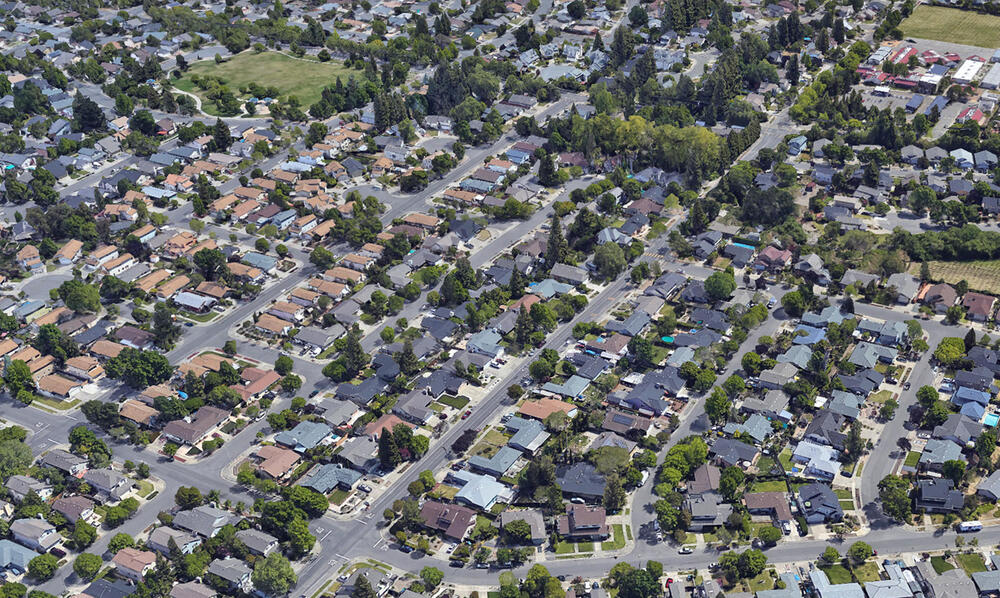 AFTER: 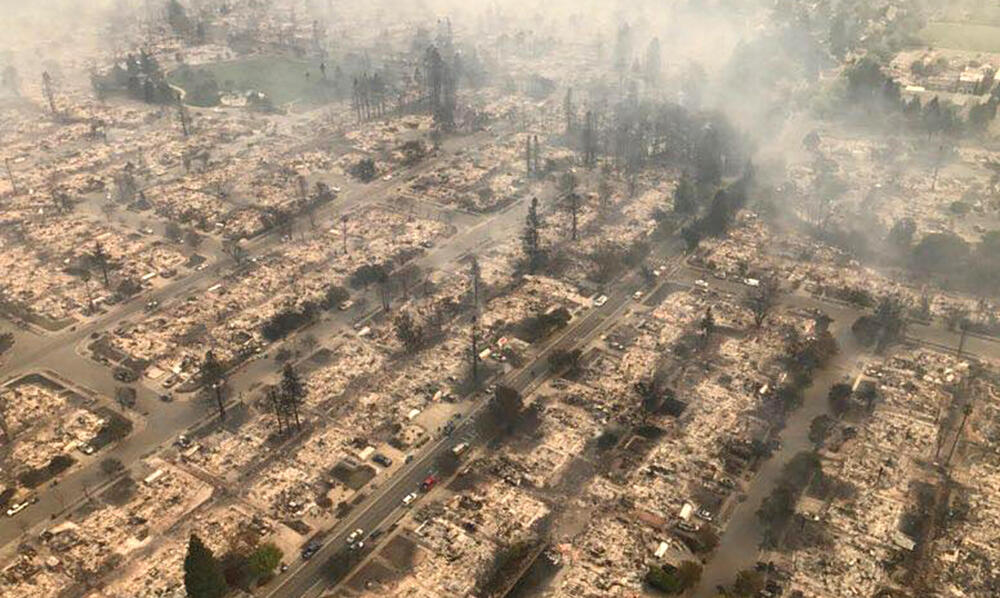 For those that like interactive sliders, here are a bunch of neighborhoods that got consumed. |
|
|
Well, thanks Shaniac, I guess I'll have to eat my words a bit. I might have been a bit overly certain with my comments. It can happen, but I'm still of the opinion that you are generally safer in the urban area than on the fringes of the forest (what I consider Pecos and the eastern $$$ reaches of Santa Fe). I also agree with Cherokee above. It's all a risk/value judgment. I choose to live in the SW in part because of the climbing opportunities and the climate. Maybe the only way to be safe from fire is to be in the extreme NW or NE US where it rains like hell. But is there reliable climbing? I got out of SLC because of the unhealthy air, not for fear of a fire sweeping down into the city from the Wasatch. I feel like I am comfortably buffered from the Sangre de Cristos in my neighborhood that a fire is unlikely to reach my neighborhood. And Cochiti Mesa was absolutely wasted by a fire years ago, as have been other areas. But it seems that remains rare. But my risk/value judgement here is that I am sufficiently buffered, have enough climbing opportunity, and that we're all exposed in some form or another. I am not worried enough about it to live somewhere that's wet all the time. I think it is likelier that society will generally collapse with social and economic unrest than that my home or climbing area will burn. Good luck in your decision, Isreal. |
|
|
Look up Paradise, CA for another awful example. The fact is a vast majority of homes in a fire-prone region will not burn down. But you will be affected by closures, or simply air so terrible you won't want to go outside. Most climbing in the mountains was effectively closed for 2 months a couple years ago in California. Even in places that were still open to visitors, we were chased away by the smoke a couple times. |
|
|
JaredGwrote: A few years ago there were a number of homes very close to a grassland fire. The homes didn't burn, but when they evacuated, a lot of residents forgot to turn off their HVAC systems. Many of the homes had extensive smoke damage issues, including the need to replace drywall, carpeting, clothing, et al. |
|
|
Fighting Fire With Fire - Zeke Lunder Explains the Problems and Solutions For Wildfire in California |
|
|
Terry Ewrote: This was a very insightful video, thank you for sharing! And thank you everyone for your input. The point Zeke made about "living in fire's home" and the inevitability of fire in some communities offers a lot of food for thought. It seems like a lot of these communities are not ready for the inevitable fires as evidenced by J A's comments about some of the fuel loads in NAZ. If I end up moving to these areas it will be with the understanding that evacuation during fire season is a real possibility. |
|
|
^^^ Agree. Great interview. Gets into how nuanced the problem is. |


