
 Continue with onX Maps
 Sign in with Facebook






Tetons, closing to humans


|
|
Teton Climberwrote: |
|
|
Neil Grimaldiwrote: Please don't say or imply that GTNP is seeking public comment or has any plans for closures unless you have proof. So far, there is no proof that any closures are planned by GTNP. That doesn't mean one doesn't need to be on guard for such actions or shouldn't have a plan to counter unreasonable closures. What is your point? To this day, GTNP has not announced changes to public policy. "It is important to note, however, that no decisions to implement these recommendations have been made yet and each agency retains the authority to determine its own path forward." . |
|
|
Fools die for want of wisdom |
|
|
Gee Dubblewrote: Haha. You crushed the zoom meeting. Since you're here, why did you remove the original post? |
|
|
Hey Teton Climber, What’s your name? |
|
|
Do you have a point to make about the zoom meeting? Or steps going forward? Or the hand that's being played by GTNP, BTNF, CTNF, WGF? Or peer reviewed studies that refute the bighorn study, or the needs of bighorns? Or an actionable plan to address any adoption of the working group's ideas should that come to pass? Apparently, not yet. When you do, please share them.  ^^^^^^ Contacts for comments and questions.
GTNP: grte_superintendent@nps.gov
Documents page for the Tetonsheep.org working group. If GTNP ever decides on policy options and is required to seek public comments, the links to documents and submitting comments are usually posted on the NPS Planning, Environment and Public Comment (PEPC) webpage for GTNP. ANY PARK: https://parkplanning.nps.gov You can sign up to receive planning updates from GTNP via email here. TGR Story on the bighorns Wild Snow Op-Ed on the bighorns, And a good one by Elizabeth Koutrelakos The supporters of closures have done more PR than the opponents. |
|
|
I did get “Lurkers” real name from his Tahoe area rock guide, but I forgot it. |
|
|
Josh, whatever. Teton climber u might not have experience on the Emerson Chimney; but among your hasty facts are some good ideas. You should join the climbing community here, by giving out your name. Your views have merit, more, if u put your name behind them |
|
|
The current permanent closures started out as voluntary closures 24 years ago.
|
|
|
Voluntary Closures - 2022 - GeoPDF map screenshots via Gee's link . 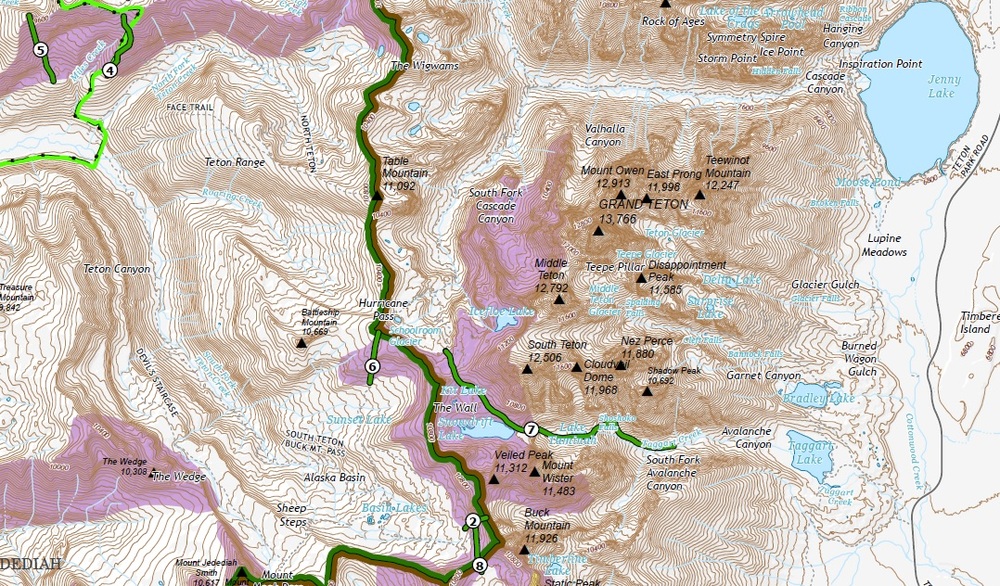 The Grand^ 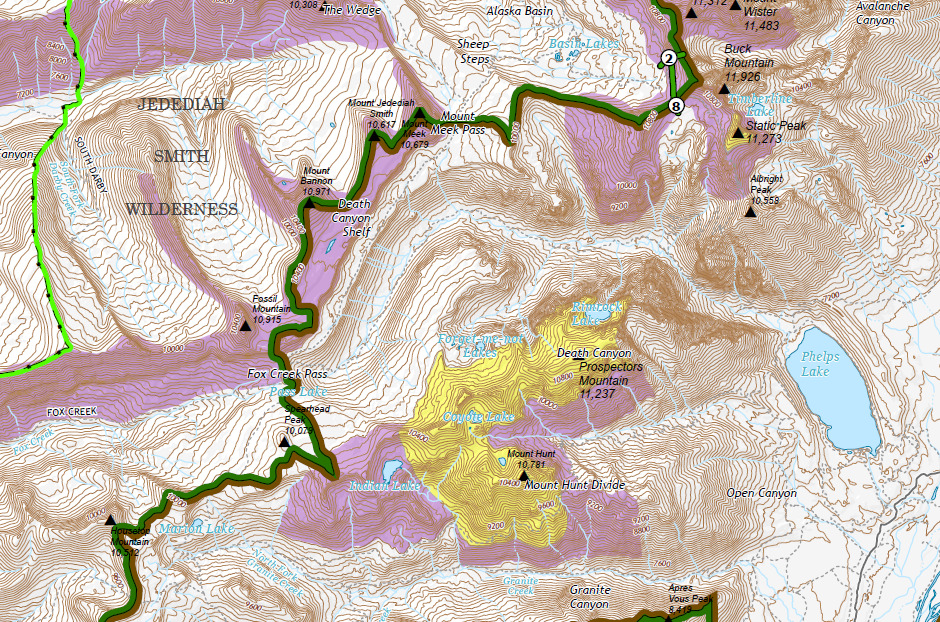 Mt Hunt^ 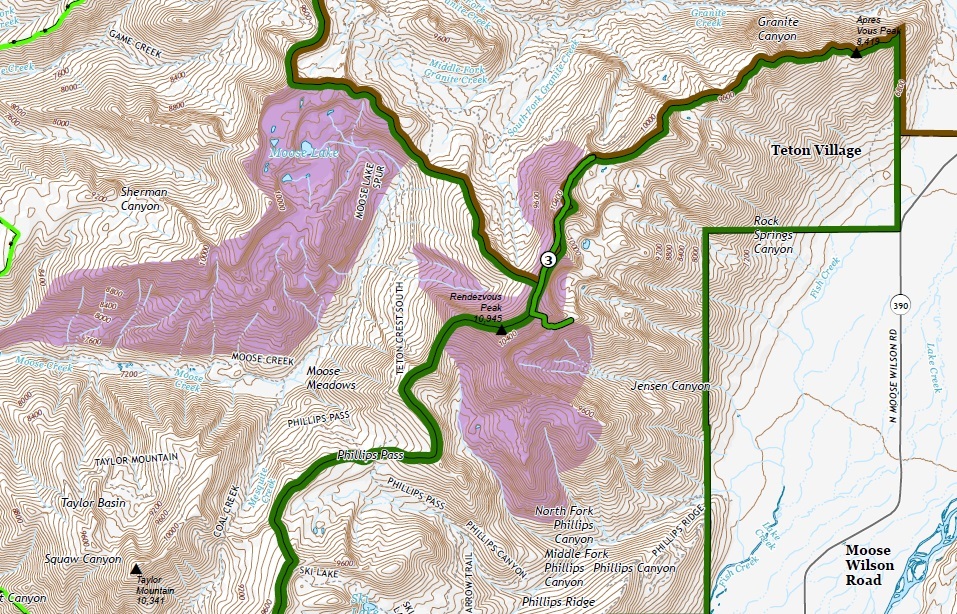 Teton Village^ 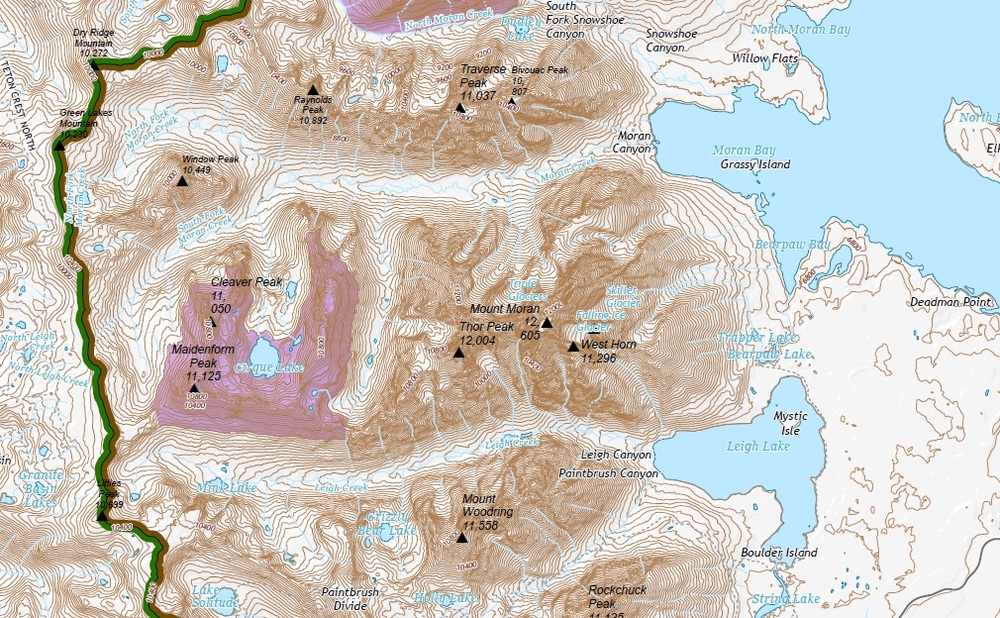 Mt Moran^ 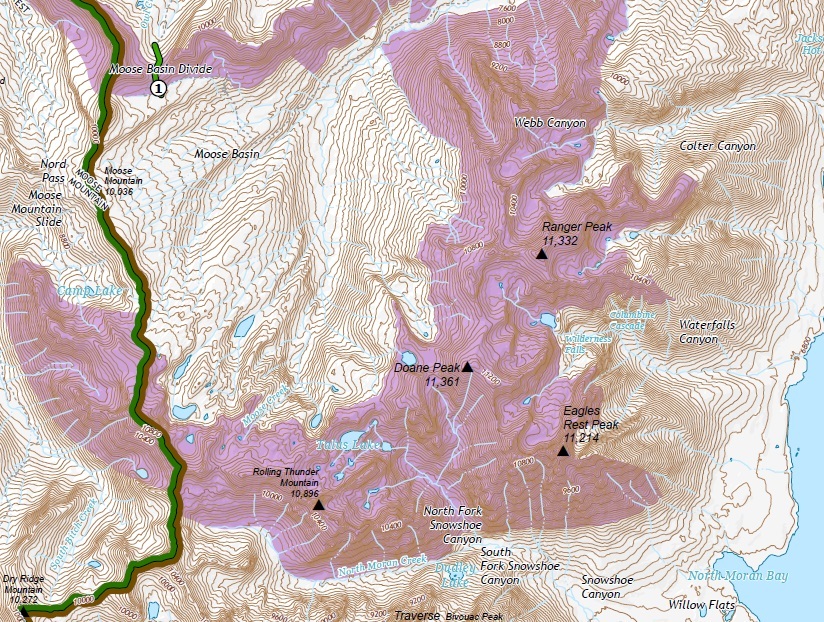 Waterfalls Cyn^ |
|
|
Like I originally stated: “if you haven’t climbed armed robbery in winter”. A very short comment period is now in effect for permanent winter closure of this and many other routes. South Ridge Nez Perce, Taminah Arête, Dem Bones, Black Ice Coulior, NW Ridge of Enclosure, etc. Tom, try not to be a wanker, tool.
|
|
|
Does anyone else see the irony in disallowing skiers to recreate in the park when it's adjacent to 3 ski resorts and is the only park with an airport inside it's borders? A 3rd grader could have figured out that this is the wrong approach. Get rid of the airport, get rid of the resorts, then we can talk about winter closures. |


|
Luigi Mwrote: No, not really. Enter the concept of concentrating recreational use of sensitive land to already impacted areas. Why do you think trails have a standard that they get built up to once usage increases to a certain threshold? See Cathedral Peak trail remediation in Yosemite National Park for example. False equivocating is what I would call this. |
|
|
Tom Zwrote: Except that the natural wintering habitat of bighorn sheep is at lower elevations than their summer habitat. Guess what’s in the valley bottom? Closing high country to backcountry skiers is a distraction from the problem of rapidly disappearing open space in the valley bottoms around the West. |
|
|
Matt Zwrote: Thank you, exactly my point. It's a band-aid for a bullet wound |
|
|
Matt Zwrote: Uhh you’re proving my point but yea keep going |
|
|
Please! Comments due 20 June: If you haven’t enchained both summits of Cleaver Peak in Winter, (unsent) you better comment. Yes, it is that busy, no one ever, proposed closed? Dear Secretary Deb Haaland, Director Chuck Samms and Superintendent Chip Jenkins,
I am a wilderness traveler who has encountered the Targhee Bighorn Sheep herd for 4 decades, we share the same habitat. I, as a visiting climber. GTNP’s current wildlife protections are excellent. The high country wilderness inside Grand Teton National Park is the preferred habitat for Bighorn Sheep, they have evolved and existed with us for generations. Now, using D.O. # 41 protected wilderness they thrive. Their numbers were recently estimated at 178. A target population of 200 will soon be reached. Teton Bighorns find sanctuary here away from hunting on the Park’s west boundary, away from most domestic grazing, with landform protection from some predation. Their solitude is only marred by noisy aviation and the recent risk of helicopter capture by ballistic netting and survey. Bighorn Sheep have evolved along with climbers and are habituated to us, a visiting biped, who does not compete or predate. We move very slowly uphill, taking 4-11 hours. We only stay a short time, usually departing long before dusk. Only a few of us ever reach deep into the wilderness and only during fair weather. Almost all of the time, the area is without humans. Humans do not pose a threat. Humans do not disturb. Bighorns know these things. Bighorn prefer humans to predators. Sheep have included human presence in their normal movements. Humans are better at disturbing wolves, mountain lions, wolverine and fox but this is momentary. Recently, the Bighorn Sheep Working Group added 4000 commercial, Human hikers with skis to sheep habitat, saying: “ it does not constitute an extraordinary circumstance with significant effects as a result of these actions”. I disagree with the proposed action of eliminating humans from GTNP wilderness. If you are concerned with encroaching, visiting, primitive bipeds in remote wilderness, I recommend making this habitat more difficult to reach and limiting the commercial use. Otherwise, please support proven biological methods of wild sheep recovery. Eliminate all domestic grazing, eliminate all Bighorn hunting, reduce predation, limit the spread of invasive plants and non compliant aviation disturbances. Then consider adding genetics to and migration corridors for the herd, if the other measures fail to produce your intended results. Please allow the rebound of the Targhee Bighorn Sheep herd to continue. Don’t ban humans from wilderness. Don’t cast us into a separate, alternate, technological universe without contact to our home planet, perusing an evolution that we will be unable to attain. Allows us to proceed, non augmented, within nature. Allow wildlife to attain an evolution with humans, not separate. Allow us a unified future we can all be proud of. Thank you for your consideration, sincerely, Gregory G Collins |
|
|
Public commentary is the government's way of making us feel heard, while simultaneously doing the exact opposite of what the majority of people want. They don't give a flying fuck about these. And probably don't even read them. |
|
|
Please! Comments due 20 June: parkplanning.nps.gov/commen… If you haven’t enchained both summits of Cleaver Peak in Winter, (unsent) you better comment. Yes, it is that busy, no one ever, proposed closed? Dear Secretary Deb Haaland, Director Chuck Samms and Superintendent Chip Jenkins,
I am a wilderness traveler who has encountered the Targhee Bighorn Sheep herd for 4 decades, we share the same habitat. I, as a visiting climber. GTNP’s current wildlife protections are excellent. The high country wilderness inside Grand Teton National Park is the preferred habitat for Bighorn Sheep, they have evolved and existed with us for generations. Now, using D.O. # 41 protected wilderness they thrive. Their numbers were recently estimated at 178. A target population of 200 will soon be reached. Teton Bighorns find sanctuary here away from hunting on the Park’s west boundary, away from most domestic grazing, with landform protection from some predation. Their solitude is only marred by noisy aviation and the recent risk of helicopter capture by ballistic netting and survey. Bighorn Sheep have evolved along with climbers and are habituated to us, a visiting biped, who does not compete or predate. We move very slowly uphill, taking 4-11 hours. We only stay a short time, usually departing long before dusk. Only a few of us ever reach deep into the wilderness and only during fair weather. Almost all of the time, the area is without humans. Humans do not pose a threat. Humans do not disturb. Bighorns know these things. Bighorn prefer humans to predators. Sheep have included human presence in their normal movements. Humans are better at disturbing wolves, mountain lions, wolverine and fox but this is momentary. Recently, the Bighorn Sheep Working Group added 4000 commercial, Human hikers with skis to sheep habitat, saying: “ it does not constitute an extraordinary circumstance with significant effects as a result of these actions”. I disagree with the proposed action of eliminating humans from GTNP wilderness. If you are concerned with encroaching, visiting, primitive bipeds in remote wilderness, I recommend making this habitat more difficult to reach and limiting the commercial use. Otherwise, please support proven biological methods of wild sheep recovery. Eliminate all domestic grazing, eliminate all Bighorn hunting, reduce predation, limit the spread of invasive plants and non compliant aviation disturbances. Then consider adding genetics to and migration corridors for the herd, if the other measures fail to produce your intended results. Please allow the rebound of the Targhee Bighorn Sheep herd to continue. Don’t ban humans from wilderness. Don’t cast us into a separate, alternate, technological universe without contact to our home planet, perusing an evolution that we will be unable to attain. Allows us to proceed, non augmented, within nature. Allow wildlife to attain an evolution with humans, not separate. Allow us a unified future we can all be proud of. Thank you for your consideration, sincerely, Gregory G Collins |
|
|
Dear Superintendent Jenkins, A belated welcome to Grand Teton National Park! It was hard for me to annually leave the beauty of Mt. Rainier National Park as a seasonal guide for RMI. I am a long time, year-round visitor to GTNP and local resident. I first climbed the Grand in 1976 and have climbed most of the other GTNP peaks, many times, in all seasons. Visiting the Grand’s summit around 375 times since. I am writing to you about a perceived issue I’ve been involved with since it’s conception in the graduate school of University of Wyoming and to a lesser degree, GTNP biologists. I wrote both your predecessors, Gopaul Noojibail and David Vela and on this issue. The issue that a slow, visiting, biped mammal have negative effects on habituated ungulate wildlife. GTNP’s current wildlife protections are excellent in the alpine zone. Especially since Director’s Order # 41 was signed in 2013 and since surveyed and now being implemented. Our park is a fully functioning, dynamic, natural ecosystem, this order should insure it. Alpine wildlife has long habituated to Teton climbers and skiers. For several generations, Bighorn Sheep has treated Teton climbers as lumbering, non-threatening animals, that move very slowly uphill, taking 4-11 hours to reach their objectives. Then, they only stay a short time. They depart at dusk. They only travel during easy weather. Only a few of them ever reach deep into the wilderness. Almost all of the time, the area is without humans. Humans do not pose a threat. Humans do not significantly disturb. Bighorn sheep prefer humans to predators. Sheep have included human presence in their normal movements. Humans are slightly better at disturbing wolves, mountain lions, wolverine and fox but this is also more momentary than collaring sheep. There is anecdotal data, video and photos on this open site: facebook.com/groups/5714538… My above observation was recently confirmed by the Bighorn Sheep Working Group and the BTNF study and subsequent allowance of the doubling of JHMR ski hikers in Bighorn Sheep habitat on Rendezvous Peak. Stating that 4000 ski-hikers: “do not constitute an extraordinary circumstance with significant effects as a result of these actions”. If there were D.O. # 41 mandated scientific study of the 23 year, first, voluntary 5 month, now mandatory 6 month human closure on Prospector’s Peak and Mt Hunt, the mandated data stream would confirm my observations that; only mountain goats live on Prospector’s and Bighorn population on Mt. Hunt is unchanged. Human closure has not had the intended result. A study of the very few Bighorn Sheep GPS collars during the pandemic-human shut down last winter would also reveal no change in Bighorn movement without bipeds. A Yellowstone study: scholarworks.montana.edu/..…... revealed, that Sheep will be Sheep. Sheep like cliffs, cold weather, shallow snow. They hate wolves, lions and eagles. They are ambivalent to humans. The study that purports to counter this observation and justify removing humans is from NPS D.O. # 41 Wilderness is: COURTEMANCH 2018 Wyoming Game and Fish. Courtemanch omitted fundamental field observations. Courtemanch omitted correlating movements of Bighorns to Climbers. To base GTNP policy on this WYG&F/UW study is very careless. We should be also aware the the WYG&F continues to sell the killing of GTNP Bighorn Sheep rams on the Parks western boundary. (WYG&F area 6 and 7) Removing some of the Mountain Goats was helpful, removing motorized, aerial capture and study is and will be important to comply with. Additional Human closures are unnecessary and will have no benefit to Bighorn Sheep. It would be great if we could close Sub-alpine zones to Pine Beetles, Mountain Goats, Wolves, Lions and destructive wildfire; but alas, we can’t. It’s time to explore other protections for Bighorn Sheep. I have a list of possible future protections for your further consideration, available. Closing wilderness to Humans is a giant evolutionary step backwards. Closing wilderness should not be taken lightly. It is the only place where humans can continue their evolutions with out the trappings of motors, chemicals and canines. Please continue to manage Grand Teton National Park surveyed wilderness under the Wilderness act and Director’s order # 41. Thank you for your consideration, sincerely, Gregory G Collins |


