
 Continue with onX Maps
 Sign in with Facebook






Help! Managing Raynaud’s (or very very cold hands and feet) at high altitudes



|
Hey all!! Hoping someone has gone through the same problem and figured out a way to combat |
|
|
For some reason cut off my text so here’s the rest of it: I’ve been browsing forums and other resources on the interwebs to see if I could get any advice on what to do to help combat Raynaud’s symptoms at high altitudes when mountaineering. I haven’t found much beyond “don’t be in cold temperatures” and “wear gloves” My hands and feet get COLD cold. It makes me feel like everything is terrible and takes away my will to do anything at all, especially once my hands start aching. If I’m able to warm them up, then I realize the rest of me is actually ok and the whole world feels better. This is a not-great problem to have when trying to light a stove on the mountain, undo a zipper, or even hang on to an ice tool, and I’d say it’s my greatest impediment in mountaineering, and something that I’m actually seriously concerned about as I push for harder routes and taller mountains. I’ll be climbing in Peru this summer to 6000m and the temperatures look like they won’t be much below what I’ve experienced this far, but I’ll be exposed to it for much longer. Getting frostbite feels like a serious possibility if I don’t get things right. My current system includes heated liner gloves, mid-weight climbing gloves, and the outdoor research double mittens. I’ve done the outer shell of mittens + heated liners, or shell + hand warmers when my hands are really cold, and heated liners or midweight for climbing up. The heated liners work great with the mittens, and only ok on their own. When it’s really cold I don’t feel their heating power, but they do stop my hands from falling off. They’re not a perfect system though bc the batteries are quite heavy and take a long time to charge. I’m most concerned about the times when I need to have some sort of dexterity in my hands or for when it gets colder and I have to expose my hands more.. also my toes are probably even more extreme than my hands, but stay less exposed, but are also harder to warm up.. Anyone have a system that works for them? Or any advice for what else to try/who to see/ anything to do that has worked for them? Appreciate any help or advice here |
|
|
I have a milder version of Raynaud's, and have been to Peru. It was tough, especially since you have to climb a lot at night when the snow is firm, and need some manual dexterity for swinging tools. I used something like OR Highcamp gloves (it was several years ago), and supergaiters over Sportiva Nepals and heavyweight Darn Tough socks with silk liners. I also used chemical hand- and foot-warmers on Huascaran. However, I never camped on a glacier, instead starting earlier from various base camps and moving quickly, so YMMV. One of the worst parts was treating water, which is necessary since there are livestock *everywhere*. Handling the cold, wet filter bag always left my hands painful and useless for awhile. Fortunately you have time to warm up and dry out every afternoon on a normal climbing schedule. Good luck! EDIT: One other thing I did is slept with a thermos of hot water in my sleeping bag. The thermos leaked enough heat to keep me a bit warmer, while keeping the water hot enough to make breakfast without fiddling with my stove. This helped me get going quickly with happy hands, which I've found helps a lot in keeping them from shutting down. |
|
|
Old adage is if your hands and feet are cold, warm up your head. IE... Counter-intuitively, add a stocking hat, hoody, etc. first to address cold hands / feet. The reason is that the most heated blood goes to the head first which in effect sacrifices the extremities.. |

|
I'd recommend trying out some vapor barrier layers if you haven't already. My Raynaud's sounds milder than yours but this is my go to strategy when expecting sustained cold temps. RBH Designs makes same great VBL products. You could test out the idea by using something like a non-breathable nitrile or latex glove under your mid-weight gloves or mitts before investing in any commercial products. |
|
|
Thank you all!! I’ll have to the vapor barrier layers, that’s a new one for me. In case anyone stumbles upon this later in history, I also got some great advice on Reddit |
|
|
Julia Sakaluswrote: |
|
|
I wrote this a little while ago. Perhaps there's some tips in it you haven't seen yet. |
|
|
This advice is mostly for day trips or places where you can dry clothes, but I've found that by keeping my core warmer than desired my hands and feet both stay significantly warmer. In practice this usually just means an additional light puffy vest over what would be a normal action layer otherwise. The problem is that I tend to sweat just thinking about being hot, so the combo of minor reynauds and quick-to-sweat is not a good one. I'm warm but probably wet most of the day. I wear a lot of Polartech Alpha and this stuff dries faster than anything else I've used. Again, this only works in shorter term trips or where you can change and dry layers out in the sun or wind. Otherwise the multiple pairs of gloves is necessary and I wear heavy lobster gloves for as much as possible. I wear Spantiks if <15F for the day. They are designed for 6000m, but for me it's perfect for new england winters. |
|
|
David Pneumanwrote: I've been dealing with cold hands for years and I have been trying a variety of gloves and mittens to solve the issue. I finally found a solution living through a winter in Germany. I realized when my hands and feet are getting cold it is because my core is trying to stay warm. Look up "cold weather vasoconstriction". Your body will restrict blood flow to your extremities in cold weather to keep your core warm. My solution was layering up more to keep my overall body warm. I'm a big fan of merino base layers because the material breathes well and doesn't stink as much as synthetics. For the winter, I always had leggings and a t shirt + long sleeve as a base layer. I also use a buff and a beanie to not lose heat from around my head. |
|
|
For people chiming in with generic "here's how to stay warm" advice, Raynauds is like your familiar vasoconstriction, but gone completely off the rails. For example, I got chilled for 5 minutes yesterday, and here's what my hands looked like for an hour afterward in 50-degree weather: 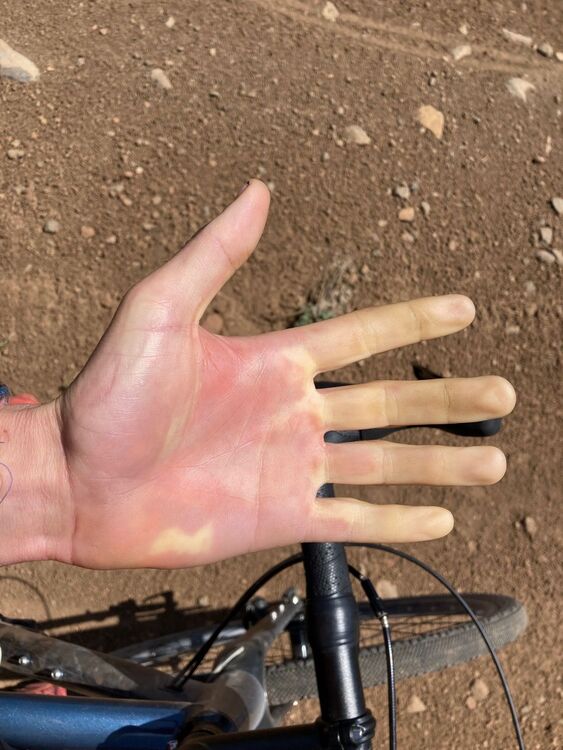 I was sweating in a single long-sleeved layer and mitts, and my fingers remained white and stiff. The "solution" is basically to never let it begin, which involves some combination of keeping your core warm, wearing loose-fitting gloves or mitts, not touching metal or gripping anything harder than necessary, minimizing bare-handed fiddling time, not being stressed, staying well-fed and -hydrated, etc. And it will still happen sometimes, rendering your hands useless for 30-60 minutes, so you learn to do things with your palms and teeth. |
|
|
sean owrote: Heh yeah this is very relatable I've been walking the fine line and all of those things are great to do but it is EXHAUSTING to have to think about my stupid hands and feet all the time The scenario I'm picturing is: me on ice lead after a long approach. At the level where I'm at, I'll be gripping the shit out of those tools, probably a healthy amount of stressed, in a fat calorie deficit, and it's cold outside. It's HARD to stay on top of everything I've gotten some great tips here and more insight, so will be trying something new things out and putting a greater stress on core temp. Someone on reddit also suggested a hilarious option, taking Viagra :D |
|
|
Julia Sakaluswrote: Read the article I posted upthread. Yeah, it's a lot to manage, but everything takes longer in winter. Re: viagra specifically (if you go that route), look into cialis as an alternative since it's a longer acting once daily dose and easier to manage in the field. |
|
|
Derek DeBruinwrote: Yesss! I have, thank you for sharing!! I’ll look into that one too, haven’t heard of it but it’s also the first time I’m considering taking any medication for it so haven’t done too much research on that front yet — thanks! |
|
|
Julia Sakaluswrote: You'll need to talk with your primary care provider most likely, ideally someone who understands outdoor activity, as I'm pretty sure cialis and viagea are both still off-label for women (I'm assuming you are a woman based on your name, but please correct me if I'm wrong as I don't think it's come up yet). You could also look into niacin, though it can be a heart rate governor. Depending on your anticipated physical output, that could be a problem. But since you'll be at altitude, it might not actually be limiting (since heart rate is also governed with altitude). If you have the flexibility, you might also consider timing with your cycle. Some women run warmer around ovulation, which could work to your benefit if you can line it up with all the variables. |
|
|
Julia, talk to your doctor about Dexamethasone. You might be aware it is used to treat altitude sickness and can be used as a prophylactic to prevent symptoms. I found some literature on PubMed that it is used to treat Raynaud's phenomenon. It will be a useful thing to have on the volcano and it might help a little with the hands. Also I recently found that weekly deep tissue massage on my arms and calves increased my circulation to the extent that it nearly completely prevented the screaming barfys that I normally get when I go ice climbing. Granted the Temperatures were not that bad, mid-teens to low 20s but the effect was like magic. Props to you for pushing yourself. Suerta |
|
|
My trick is making fists inside your gloves by pulling your fingers out of the finger sockets in the gloves (easier with mittens). The skin on skin contact helps you rewarm your fingers. It works well for skiing and hiking for me but not sure if this will help for the badass stuff you're doing! Good luck! |
|
|
Derek DeBruinwrote: Thanks Derek!! Yes, a woman indeed, thank you for checking :) I really appreciate all the tips! I’ll look into all these options. The medication is an interesting one to explore with all the variables and effects at play |
|
|
Robert Townleywrote: Thanks!! I’m making a list of all the druggos people are recommending hahaha thank you! I can see the logic behind the massages too so would be worth a shot |
|
|
Nick Herdegwrote: Been on the mitten train my whole life ;o) definitely do this all the time but not quite enough to help unfortunately |
|
|
One more time for those who don't seem to get it ; Old adage is if your hands and feet are cold, warm up your head. IE... Counter-intuitively, add a stocking hat, hoody, etc. first to address cold hands / feet. The reason is that the most heated blood goes to the head first which in effect sacrifices the extremities. As noted in another post, The Core. IE... The heart needs to be warm first,. The Heart can't warm the head if it is not warm itself. If you have some kind of circuation problem, then address that first or don't go out in cold temperatures. |


