
 Continue with onX Maps
 Sign in with Facebook






Busted Grivel Ice Tool Hammers...happen to anyone else?



|
Karl Henizewrote: These assumptions only hold if one insists that their hammers have the same complex curves and aesthetics as factory manufactured goods, and they aren't interested in investing any of their own imagination or elbow grease in the project. Most colleges and universities have machine shops for student use. An enterprising individual could leverage their connections to get in there and build stuff after hours. |
|
|
Kyle Tarrywrote: I would scour the web for the previous generation “Machine” picks, ie before the vario system, and just get the old Ice plus picks with those hammers that bolt right in…that might be the best thing to do, if you can find ‘em, that will allow you to keep your tools |
|
|
Karl Henizewrote: Thanks Karl. I would only need 1 hammer, and I have no interest in buying a new pair of tools for a variety of other reasons. For the love of god, can we not keep this conversation focused on a solution to the broken hammer problem that doesn't involve "buy a bunch of this other stuff"?
I have access to a full machine shop and could make these parts for myself at no cost. I was trying to keep the rest of community up to date about various options and challenges, in case it was of interest to folks like the OP or others.
There are a variety of reasons why it's beneficial to utilize the Vario system as opposed to the old design. Availability of the picks is one, plus availability of new/different pick geometries that you can't get in the old style (such as the Katana). I also use Grivel Tech Machines as my steep ice tool and have Vario picks on those, and it's beneficial to be able to use the same picks on both of my tools. The non-Vario tools also have the bolt tab on the back of the pick which is a less clean profile if you're not running a hammer/adze. Anyway, it seems like people are most interested in "solving" this problem by telling others to just buy a bunch of additional stuff, so I'm signing off here. I regret trying to post some info in the first place, which is generally the case on MP. |
|
|
Kyle Tarrywrote: Grivel says they're stainless steel, and since (IMO) Grivel decided to take shortcuts designing their vario hammers, then I'd wager they used a cheap and generic 300 series stainless steel. So while the material that's left on the OPs hammers looks like it's definitely too ductile to make a good, durable hammer, you won't see any hardening from heat treatment because it's probably austenitic. The main problem isnt hardness though, the design just sucks. Using a forged and hardened alloy steel with proper construction (like their standard ice picks with their fancy "hot forged in Italy" tags) probably would have made this a non-issue. Quick edit to add the old pre-Vario hammer attachments sucked too. Terrible tolerancing, the bolt holes never lined up for me and I couldn't thread the stock bolts through the hole on any of my picks. |
|
|
Air temp must be considered as well. On paper, or in a 70F testing lab, the new Grivel design might work just fine. But all steels have a ductile - brittle transition curve that's a function of carbon content (hardness) and temperature. As the temperature drops the steel isn't able to absorb the impact and simply *shatters*. This becomes more and more pronounced when using a higher carbon steel, like the ones used for ice climbing picks and hammers.... Not knowing what these hammers are made from I'd guess it's a medium carbon steel. 1045? Maybe 1018. It's probably heat treated after welding, but that only reduces the detrimental effects of welding. Simple answer would be to make it out of stainless. Hell, you could just replace the striking face with stainless and it'd last longer. Nickel-containing alloys are excellent at retaining ductility at low temps. I'd love to print these out of Inconel (3d printed parts absolutely have comparable mechanicals to wrought materials) at work but I don't know if I could build a legit business case for that.... This is a BDTT curve for steels with varying carbon content. You'll notice they lose a tremendous amount of ductility at temps that are generally conducive to using said tools. 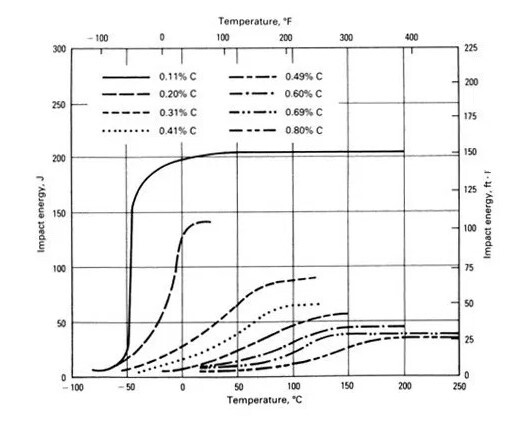 Edit: Just saw the above pointing out Grivel says they're stainless. Odd. 300 series wouldn't exhibit a brittle failure like this. Could be 400 stainless (cheaper still than 300 and is ferritic, so what I said above still comes into play) Anyone want to put a magnet on one? 300 is weakly magnetic, but 400 stainless or carbon steel is strongly magnetic. |
|
|
Micah Hooverwrote: I only have the blank inserts but I have no reason to think they'd be any different material than the hammers and these are definitely magnetic. So you're right, they probably did go 400 (link to their site). So heat treat will harden them up, but the design is just junk and I would likely guess they would break in the field under similar circumstances. It's just a shoddy design, a real hammer would be forged alloy steel, or at least have a sturdier structure such as the Black Diamond interchangable heads (unsure if these are machined or forged) |
|
|
probably reiterating something already said, but it bears repeating: driving iron with modern ice tools is a pain in the ass. if you expect to use iron, carry a real hammer. I've tried both ways, and finally resigned myself to always carrying my old Forrest Mjollnir, even on modest day trips. besides being a "real" hammer, it makes one helluva third tool, performing respectably among even the nomics & x dreams. the hammer heads on most modern tools are, in my opinion, next to useless. that yours is failing is an opportunity for you to embrace a better way. yeah, you might get your hammers repaired/replaced via warrantee, but why bother? they still won't work worth a shit. the weight penalty of a real hammer - when you actually use it - is more than worth it. -Haireball |
|
|
Kyle Tarrywrote: Your solutions are to produce a different hammer (money), get ahold of older hammers (money) or buy tools that have hammers you can trust (money). What do you expect? |
|
|
Here is a potentially easy to execute ”solution” for folks that already have Vario hammers: Cut or grind away all of the strike plate that extends beyond the fillet welds. It will drastically reduce the striking surface area, but it will also reduce the likelihood of completely breaking off the entire striking surface. 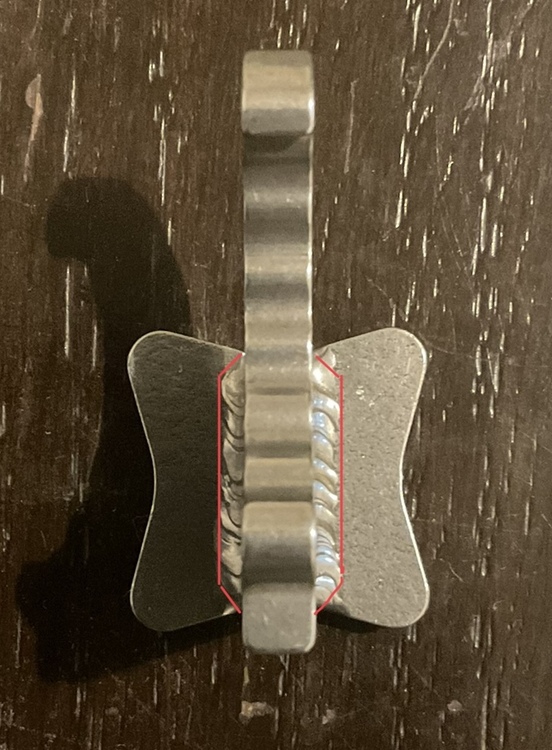 Anyone with access to a grinder should be able to do this. If grinding, try to avoid overheating the metal too much. |
|
|
For those with the ability to make straight cuts and weld, here is what I would suggest: Modify the Vario hammers to be similar to the Petzl Gully Hammers. 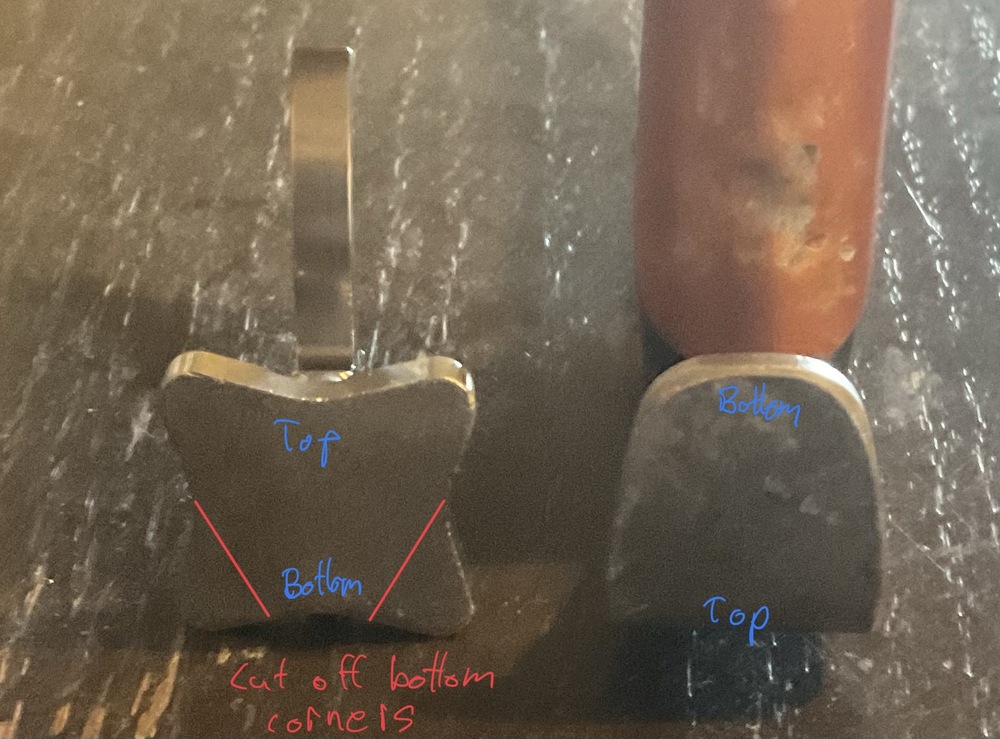 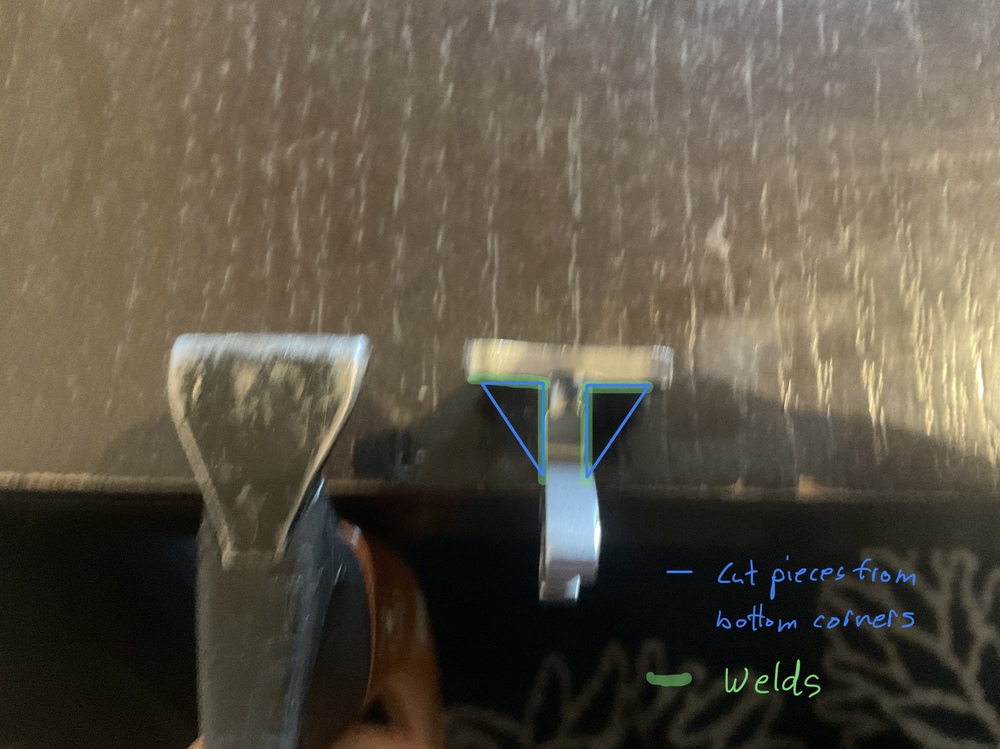 Anyone interested in welding should be aware of of the potential issues with welding this type of steel. |
|
|
Here are some photos of the custom hammer I made for my North Machine; tempered tool steel ought to be pretty durable. If you want the CAD model, shoot me an email. 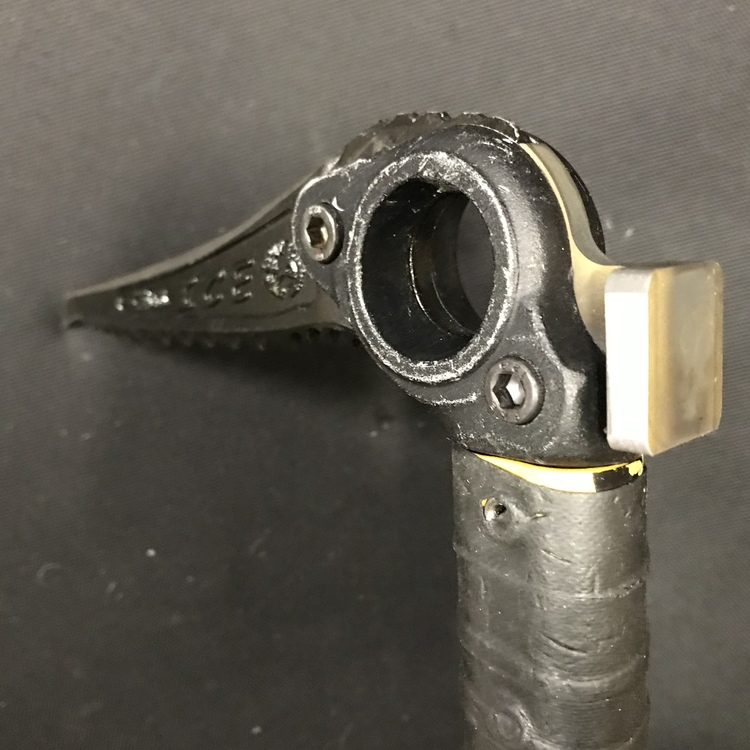 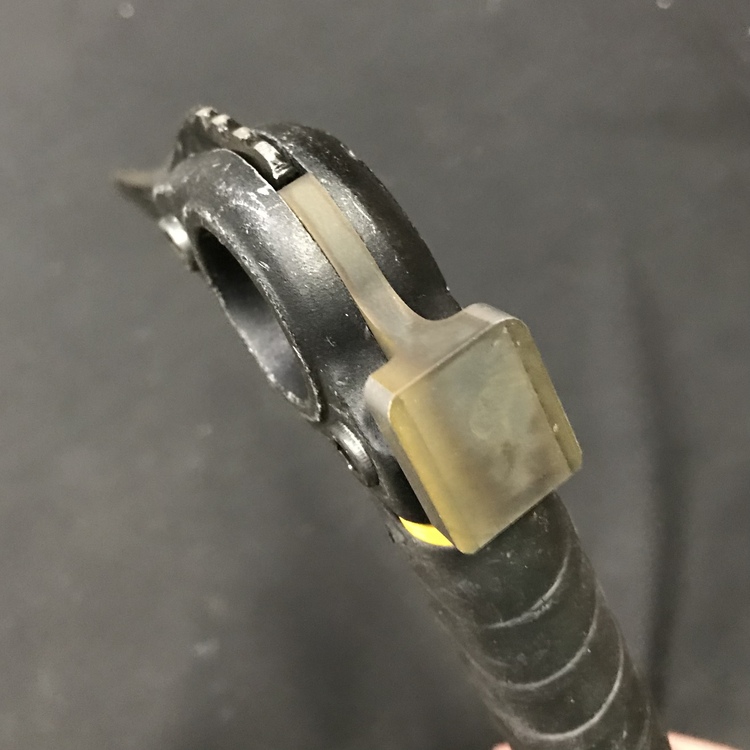 |
|
|
Just to add to this in case anyone else is curious and looking at this later: my buddy in Alaska has gone through multiple of the new grivel vario hammers. I have beat the shit out of my petzl hammers with no problems. The welded T shaped design is not as strong as other hammer designs and does break sometimes. My buddy thought cold temperatures also had something to do with the times he broke his hammers. I can't speak to this and I would imagine that Grivel knows how to forge steel to deal with cold temperatures. Hopefully the design changes in the future. |
|
|
I’m the buyer for Grivel at Liberty Mountain. Sorry for just hopping on this thread and that no one got back to you from Liberty earlier. This is good reading and I appreciate the feedback. I have a meeting with Grivel this week and I’ll bring this the topic up with them. If you folks have any additional thoughts/questions that you want to speak directly with me about or want me to pass along to Grivel, send me an email at davidm@libertymountain.com. |
|
|
The hammer I made almost a year ago for my North Machines is holding up really well so far, after a season of local alpine climbing and an expedition to Alaska. Happy to share drawings and CAD with anyone who wants to make their own. 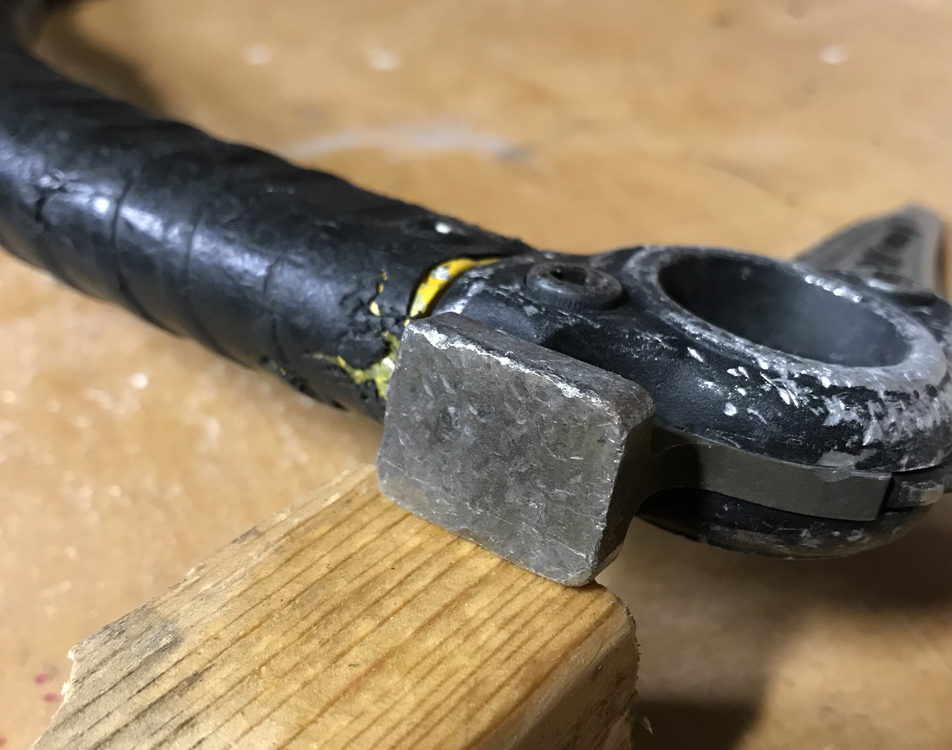 |
|
|
Micah Hooverwrote: Hi Micah, sorry I missed this last time around. I just checked my OEM hammers, and both sizes are strongly magnetic. So maybe your guess of 400 series was correct? I don't think they are carbon steel, they are high gloss and corrosion resistant. I broke the edge of one of them with a file and it doesn't seem like a chrome plating either. So some type of SST seems likely, I think... |
|
|
It seems Grivel has listened: Thor Vario hammer is now available in Europe, one-piece hot drop forged from carbon steel, EUR 31.20. https://grivel.com/products/thor-vario 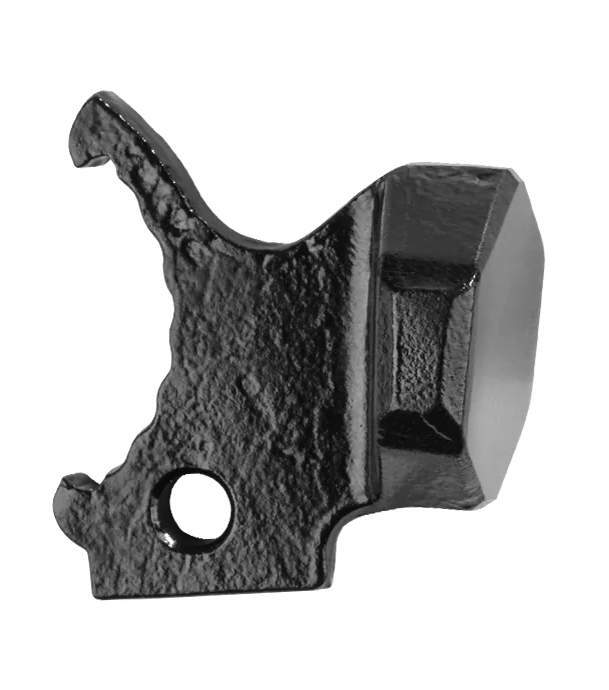 Thor Vario – Grivel |
|
|
Stan Bwrote: Thanks for posting! This is a very promising update. https://grivel.com/products/thor-vario For anyone who might be interested like me: Mini Hammer Vario - 37g, EUR 31.20 Hammer Vario - 67g, EUR 36.40 Thor Vario - 66g, EUR 31.20 There might also be a Mini Thor hammer, I can't find it on the Grivel site but it's listed at a couple retailers. In theory I just ordered the mini thor from trekinn, we'll see if anything actually shows up. :) |
|
|
Thor Mini hammer arrived, looks like a good option for occasional hammer use while still being pretty low profile. Hopefully the 1-piece forging will be more robust.  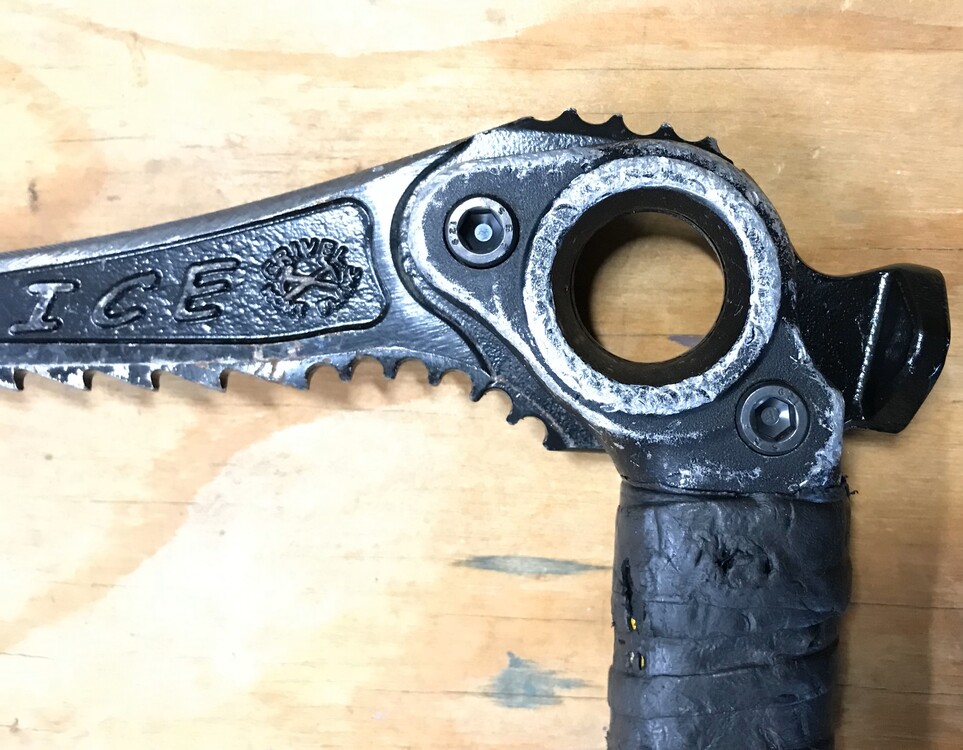 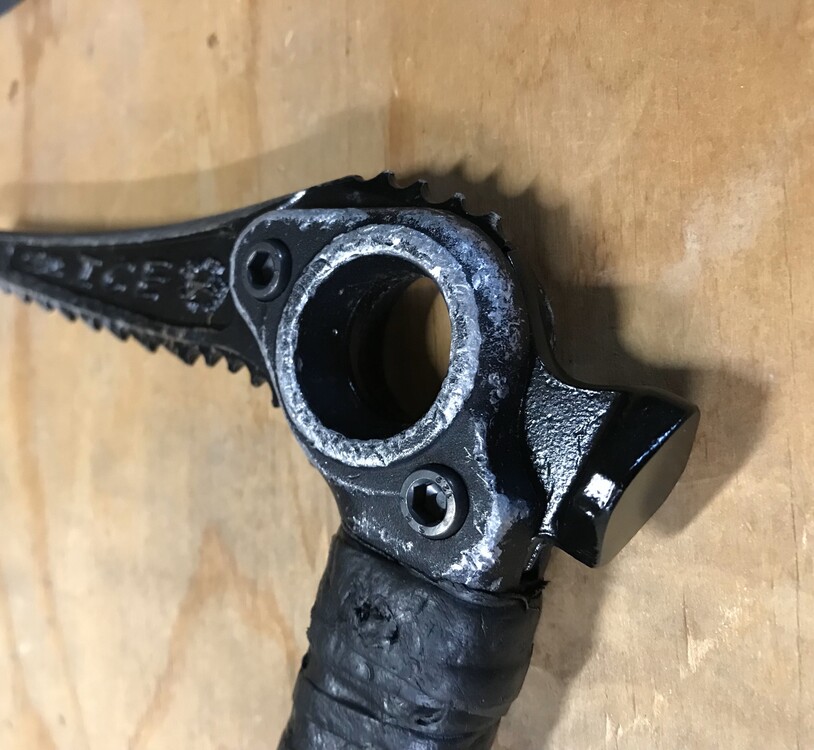 |
|
|
9 |


