
 Continue with onX Maps
 Sign in with Facebook






Anyone into Sewing?



|
Patrick Lwrote: I've got an industrial walking foot sewing machine, but a heavy duty home machine could get close if you were patient, used a big needle, and manually cranked the machine through the thickest parts. Made from a self-designed pattern, including shoulder straps. Only thing I didn't make was the hipbelt as my friend wanted to use the one off his old HMG pack. Fabric is VX42 and 500d Cordura. |

|
Beta question: what do y'all use for thread on general outdoor projects (backpacks and the like)? Does Gutermann sew-all thread do the trick, or polyester #69? |
|
|
Big Redwrote: My go-to is Gutermann mara 50. For high wear areas, or bartacks, i like to use upholstery thread (with a larger needle). |
|
|
omg, i'm so excited to see this thread--i just wrapped up a very janky tri-roll rope bag project. took it out to the crag a couple weeks ago but needed a 3rd buckle to keep the excess centre flap down. i'm actually really proud of it--very dirtbaggy! thrifted tent floor+thrifted throw blanket+thrifted dog leash (modified, obviously to a functional strap)+buckles, webbing, latching biner from old chalk bags and other detritus snagged from the unclaimed lost & found at work. so...all told 1.50-2$ish of materials. forgive awful photo quality--these are from my webcam, as i don't own a smartphone. i have it slung low on the strap's adjustment slider so it fits comfortably over my pack. very happy & can't wait to share more of my projects here (-: 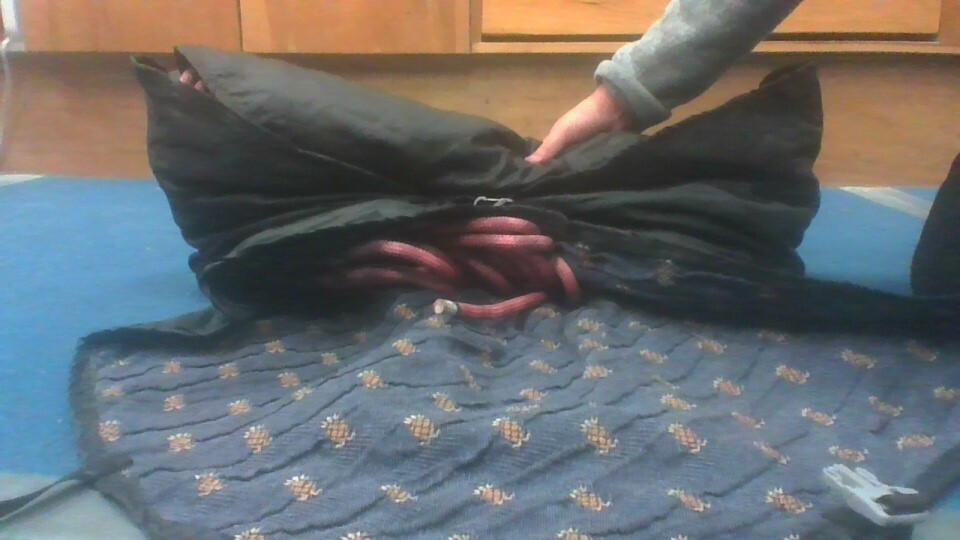 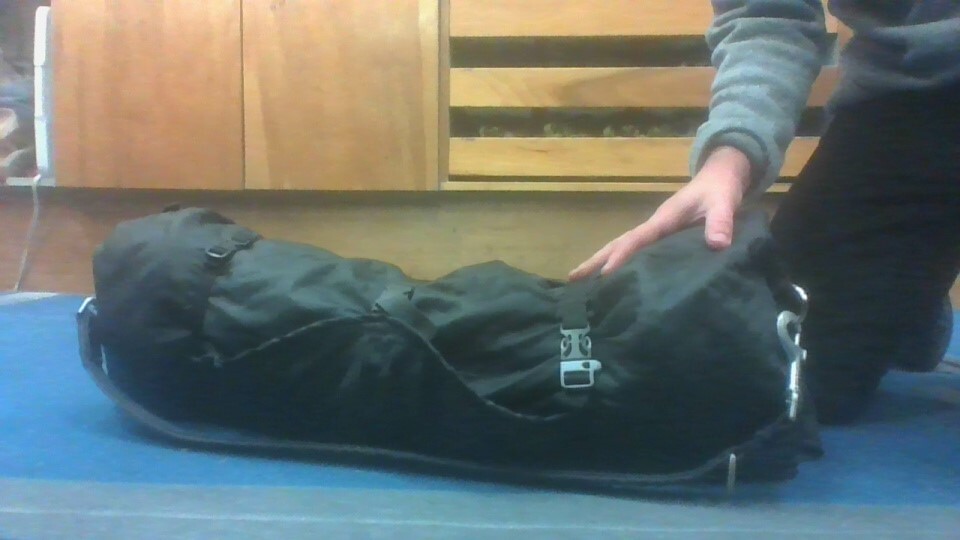 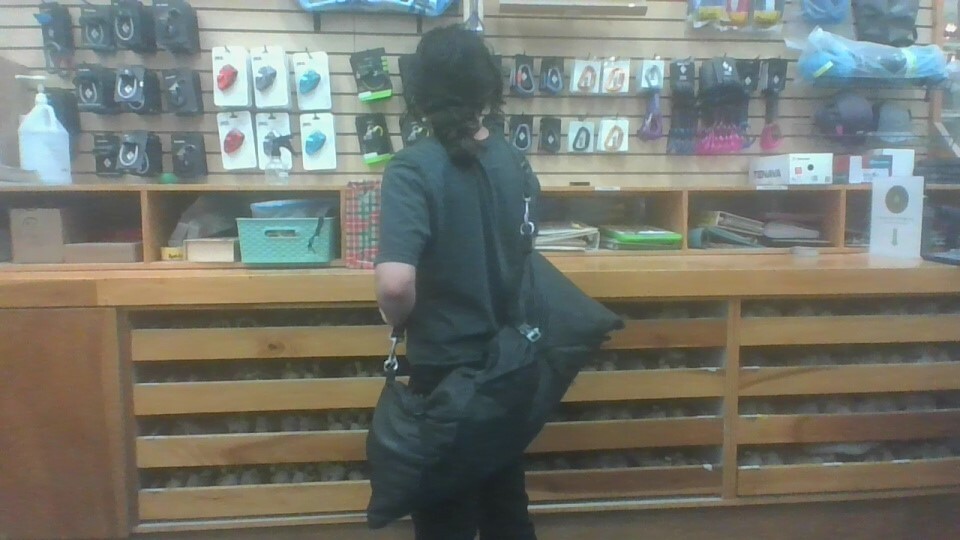 |
|
|
Big Redwrote: heavy duty upholstery thread--i use the coats & clark extra strong nylon, as it's made for heavyweight textiles. i'm not a professional, but in doing a lot of 'janky seamster' stuff over the years personally i avoid natural+natural-blended thread for anything i know is going to take a beating outdoors because of organic degradation. i also only use "new to me" secondhand materials besides my thread and hand+machine needles, so i like to have as durable a thread as possible. better living through chemistry |
|
|
Max Rwrote: Seconding Mara 50, I used it exclusively for every stitch on my pack. |
|
|
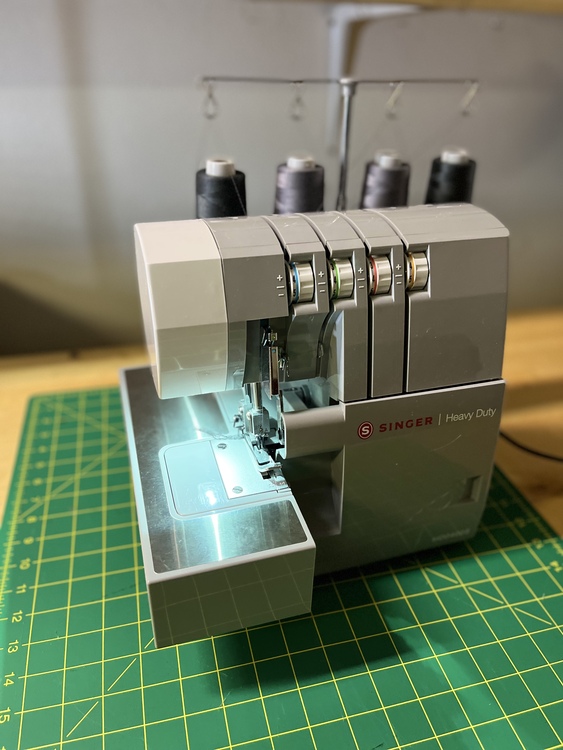
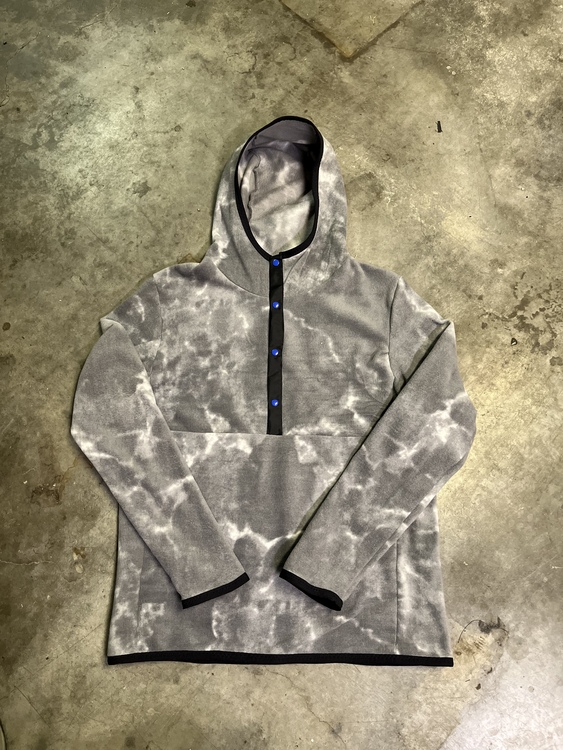
Love seeing everyone's work, so beautiful and inspiring! I'm currently working on leather. I craft small leather goods such as jewelry, pouches/wristlets, and sunglass cases/sleeves. I use Adobe Illustrator to design patterns for my pouches/wristlets and the sunglass cases/sleeves. I take the sunglass cases/sleeves pattern into Cricut to cut so I don't have to handcut. Then apply hot transfer vinyl (HTV) to the fronts, then sew up the sides. I create my pouches of all leather as well as a combo of leather/wool and leather/waxed canvas. I have a beautiful vintage Pfaff industrial walking foot machine with a Servo motor and sew my leather goods at the slowest speed. I use #69 thread, both bonded Nylon and unbonded Polyester. I love creating things that make people happy! 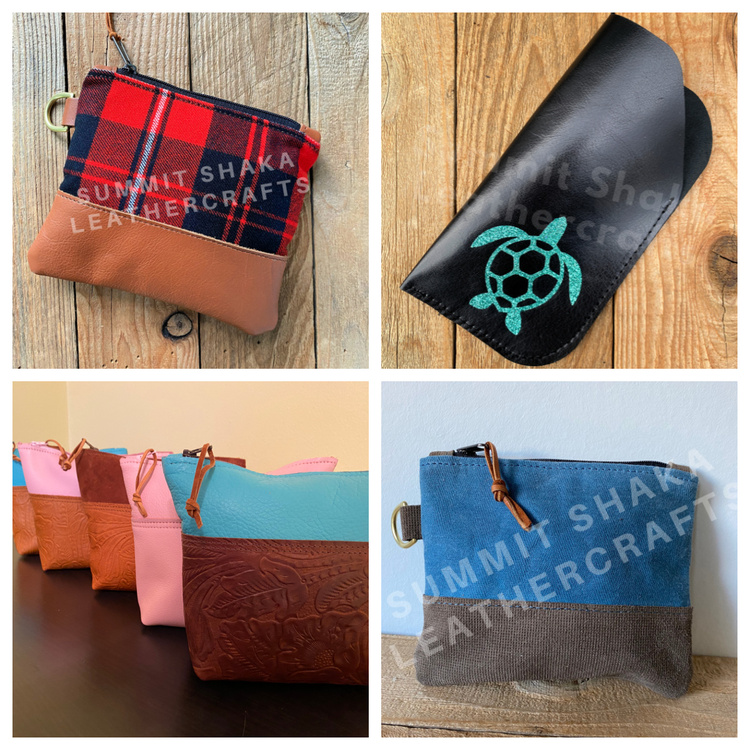 |
|
|
  |
|
|
Big Redwrote: polyester or nylon #69 on Industrial machine (JUKI LU-562) On my home heavy duty, I use Gutterman |
|
|
If your home machine (not industrial) will take heavy thread like v69 then I would use it for a backpack or other hard use outdoors items. But the difference between v69 and gutermann sew-all is huge. The mara threads come in all different sizes, from really fine like the sew-all to almost 2x as thick as v69, and v69 is thicker than a lot of home machines will allow, unless it is an older all metal machine. There are other "V" threads too. But basically you match your thread (and needle) size to the fabric or material that you're using it on. If you're sewing through 2 layers of cordura and a layer of nylon webbing, you will need a stout needle and thread (like a size 16 and up needle and whatever the heaviest thread your machine will sew with) but then if, with that same machine, you want to make a down sleeping bag out of really thin and slippery nylon or some silk lingerie or whatever- then you use a much smaller needle and correspondingly lighter weight thread. https://www.sailrite.com/Selecting-the-Right-Thread-Size There's really good info on the sailrite website |
|
|
Thanks for the good info - I'm having trouble finding the Gutermann mara 50 or 70 anywhere with a reasonable lead time and shipping cost. Any recommended vendors appreciated! |
|
|
Gutermann Tera is another option to look for if you can’t find Mara (probably Tera 60 if you’re looking for Mara 50 or 70). The MYOG Reddit is a good place for thread info |
|
|
BigRed, Try Wawak. I've had good, fast service from them and reasonable shipping. https://www.wawak.com/search-results/?q=mara%2050 Kit |
|
|
Big Redwrote: I use #69 bonded nylon as it is the heaviest things I can run in my household machine. I don’t see why an equivalent size high quality polyester wouldn’t work too. I’m not familiar with the sew-all offering, but I had great luck with Gutermann #69 threads in the past. |
|
|
When I started sewing my own harnesses and runners, I used REI’s advice with bonded 92 polyester. In a cheap plastic machine. The gears soon broke and I bought an old all metal Pfaff home machine and it lasted years till I got a commercial one. I would go with b69 or lighter for a home machine. |
|
|
Great thread, sorry in advance for the long post...sewing is one of my favorite hobbies. Sewing your own gear is a fun way to save money. And if you like working with your hands, even better! A chalk bag is a great beginner project, and can be sewn on any home machine. YouTube is your friend. Once you get some experience you can tackle bigger projects. Goretex bibs can cost up to $400, I bought a $15 pattern and $50 worth of goretex at SeattleFabrics and sewed them over a weekend. I had never used a pattern before but it worked…again, youtube tutorials for beginners. I also got tired of repairing zippers on tripped out, over designed backpacks. I’d get a $300 backpack and blow it out in 3 years of rock climbing. As they'd blow, I’d think of ways to make them more durable…like where to put re-enforcing, where to use a drawstring instead of a zipper, etc. I made 3 bad packs before I made one good one. It does take practice. It really helps to have a good pack to copy. I copied my old 1977 Lowe Expedition. It's basically a haul bag with a harness, a brain, and some tie down straps. Before I got into packs I was doing so many little projects like bivy sacks, overmitts and general repairs that I realized it was a serious hobby and worth investing in an industrial machine. 15 years ago I bought a brand new walking foot, straight stitch Juki Model DU-1181N for around $1600. In hindsight, I should have bought the $2000 machine which had a compound feed. Compound feed means that the needle also helps to pull the fabric through the machine. The needle pulls backward as it goes up and down. To see it in action, YouTube: “compound feed walking foot”. There are also many older used industrial machines…prices range from $600 to $2000. Compound machines will basically sew plywood. http://www.berninaofrenton.com (Sewing Machine Service) in Seattle is where I bought mine. They sell and service new and used machines and are really good people. Their mechanics are amazing. Industrial sewing machines can sew through much thicker materials with ease. Mine will sew a quarter inch of basically anything you put under the foot, even leather. I have had to get it tuned up once in 10 years. It's very complicated to work on...sort of like a car. The tuneup was $200 and well worth it. I've not yet had the nerve to sew cam slings though I've been tempted. There are some nerdy websites out there that explain how to test your stitching by tossing concrete blocks off of heavy tree branches. You basically toss until you break, then break some commercial slings. I've been advised by professionals not to sew my own slings...and so far I haven't. I'm retired now, but if I was younger, I'd seriously consider doing repairs, packs and bags for money. Everyone has a broken zipper on a pack, coat or sleeping bag. Have you seen the prices on leather bags and duffel sacks? They are super easy to sew with a real machine. And sails for boaters...they always need repairs. You do need a zig-zag machine for sails. Mine is straight stitch only. This is my trusty Juki, note the motor on the bottom. It came with the table which has a foot pedal control, and a knee knocker lever to lift the foot.  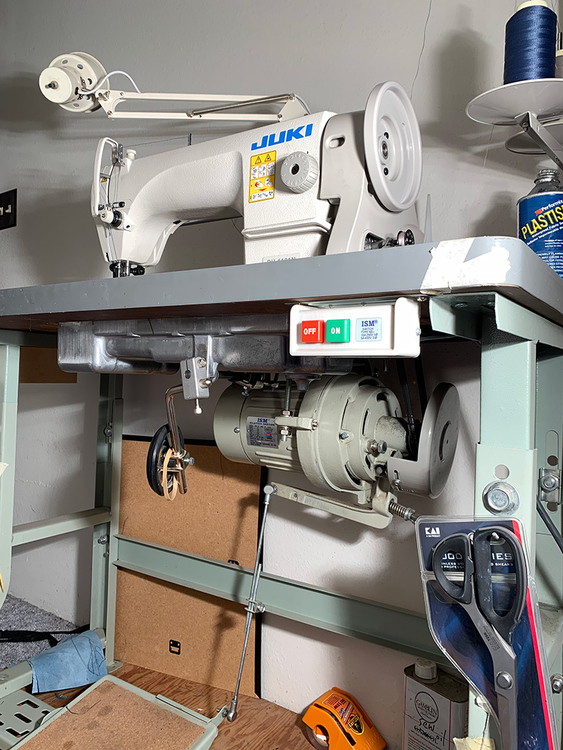 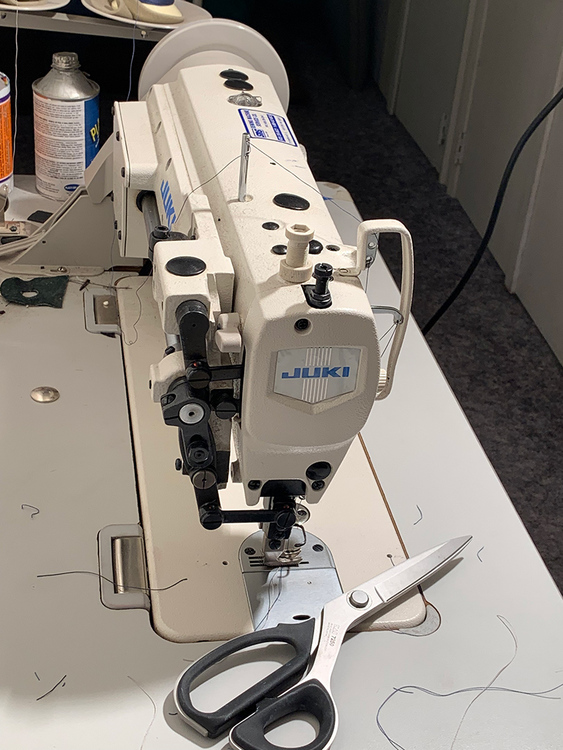 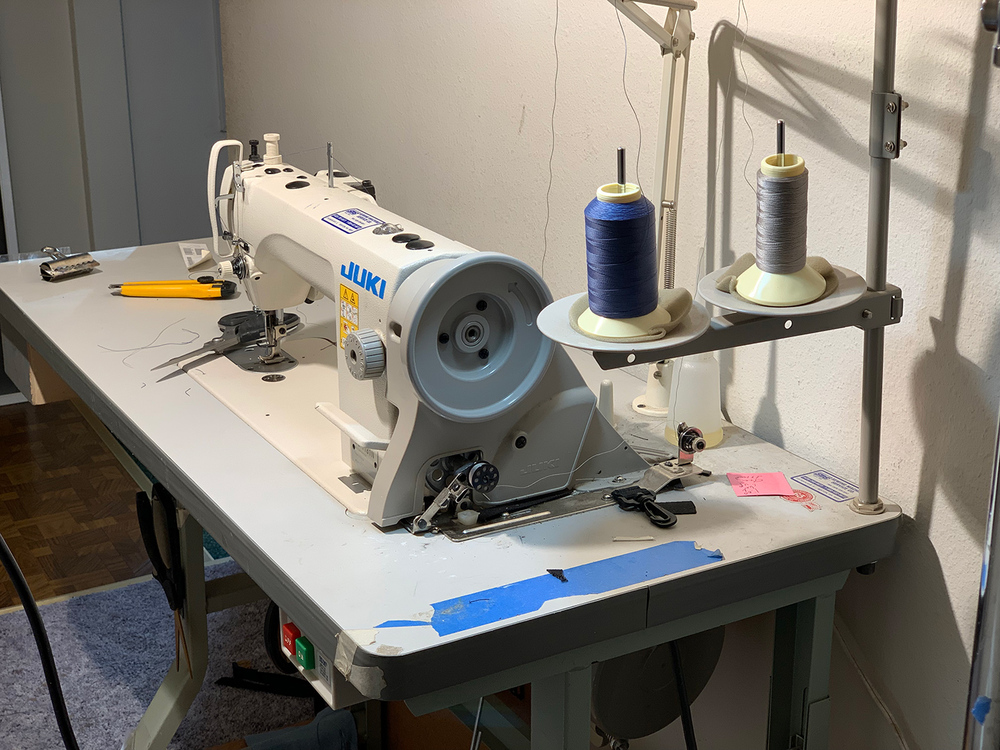 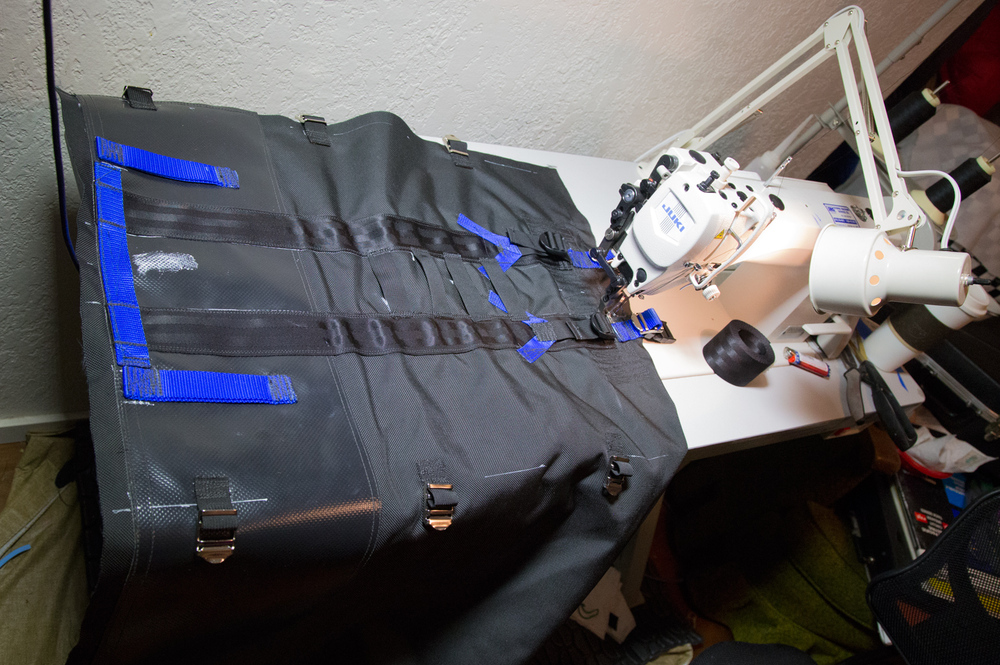 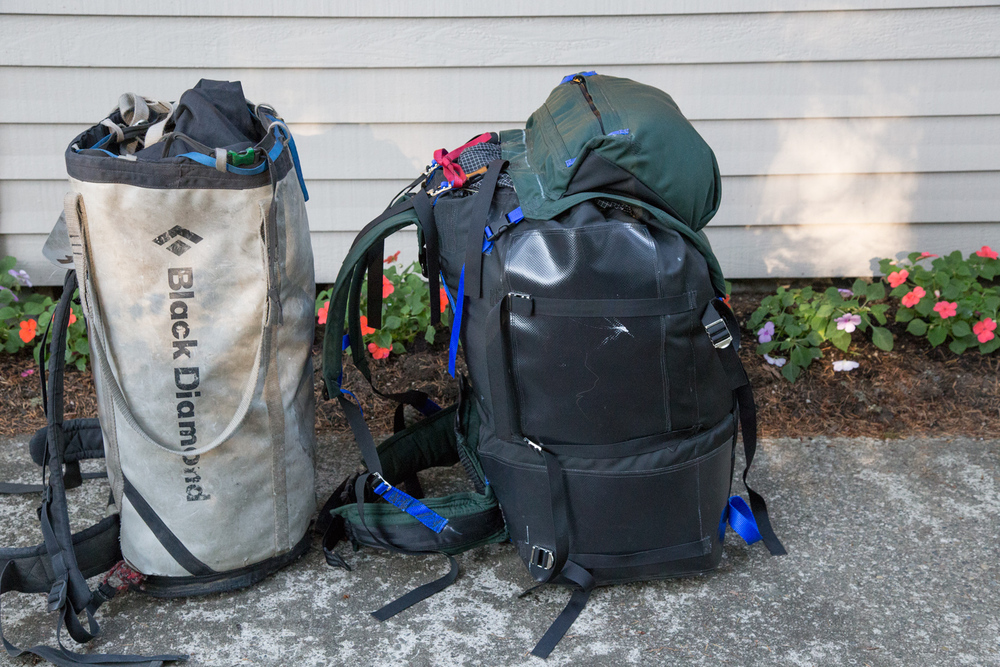 I also sewed a leather chalkbag...got tired of those only lasting a season. I like to make things that last forever, or at least are designed to be repairable. I put a heavy zipper in my last climbing pack so I could have access to get it back in the machine when it inevitably wore out. Sewing is fun, creative and satisfying. Ya'll should try it. Here is a great explanation of a triple feed sewing machine. Mine works fine...but if I ever upgrade, it will be one of these: https://www.youtube.com/watch?v=avr3pN_udMA 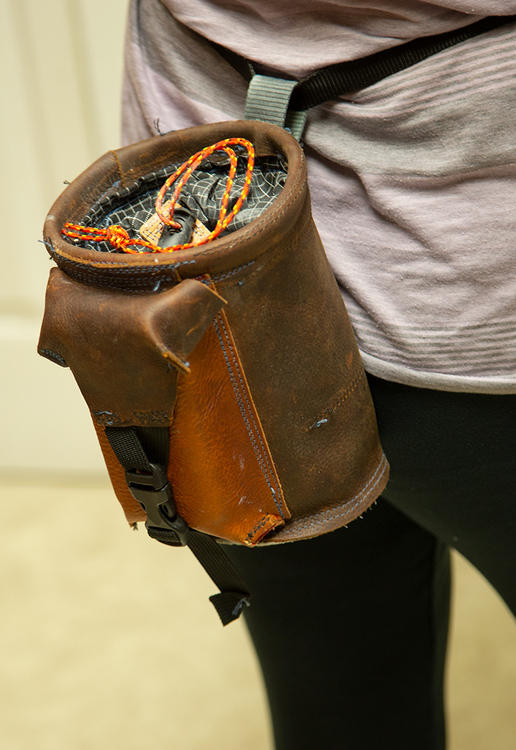 |
|
|
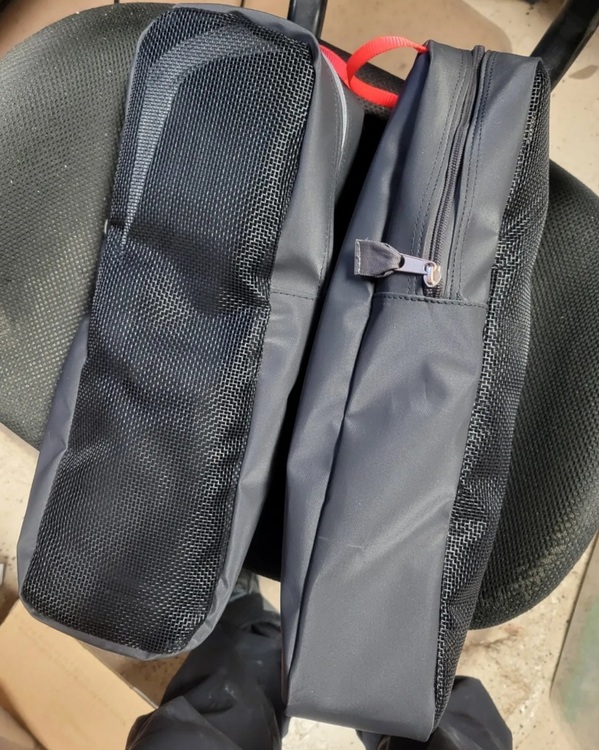 Quick draw bags for a friend, based off Petzl Harness bags which he was using previously, but these are longer and a whole lot more durable. 600d vinyl coated (one side) polyester, vinyl coated mesh, salvaged zippers, and v69 nylon thread. |
|
|
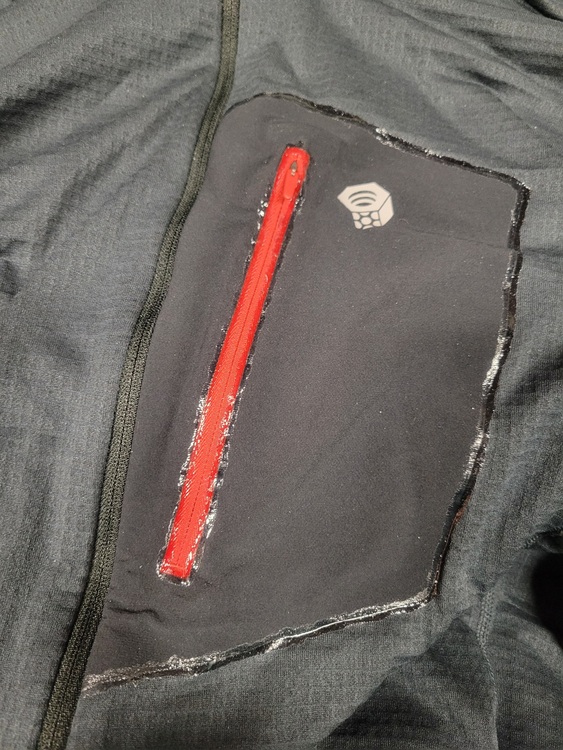 Not sewn, but glued. REI Garage Sale find. Zipper had completely detached so re-glued with E6000 inside and out and also added some more around the outside of the compartment to fleece just in case. |
|
|
Has anyone made a chalk bag like camera holster than would be protective and could swivel around the waist like how a chalk bag is. Haven’t really found a great solutions for taking a camera up walls that allows for quick access and protection agains rock and ice. |
|
|
To the post above. I made this padded dyneema rolltop bag for my friends DSLR. It mounts to the handlebar/stem on his gravel bike, but also can be clipped to a shoulder sling. I’m assuming you’re climbing with a smaller point and shoot, but you could make a scaled down version of this. Alternatively, you could make a copy of something like the Tufa Salathe Pack 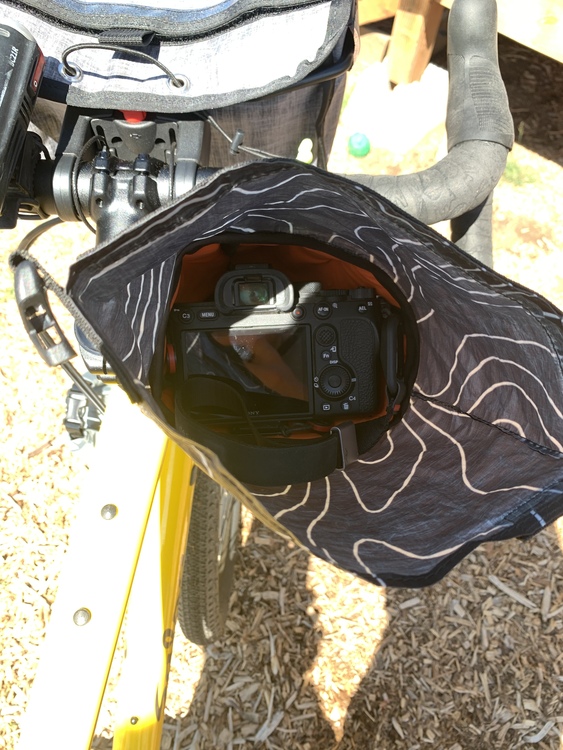 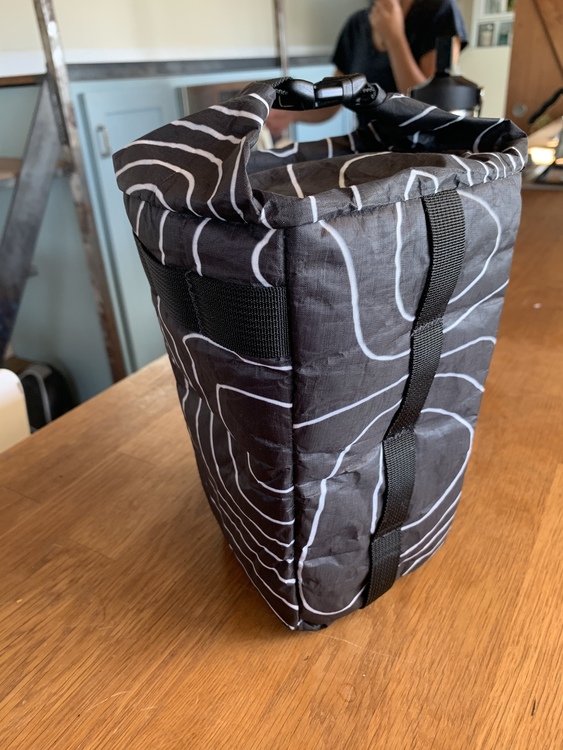 |


