
 Continue with onX Maps
 Sign in with Facebook






Alternate Hitch Metollius PAS
|
|
Just returning to climbing after a long hiatus and soon remembered how uncomfortable a PAS is when it cinches down on your tie-in points. Does anyone rig their PAS like this to avoid cinching down? Looks like it could possibly put a lot of load on the stitching which maybe could be a problem over time. 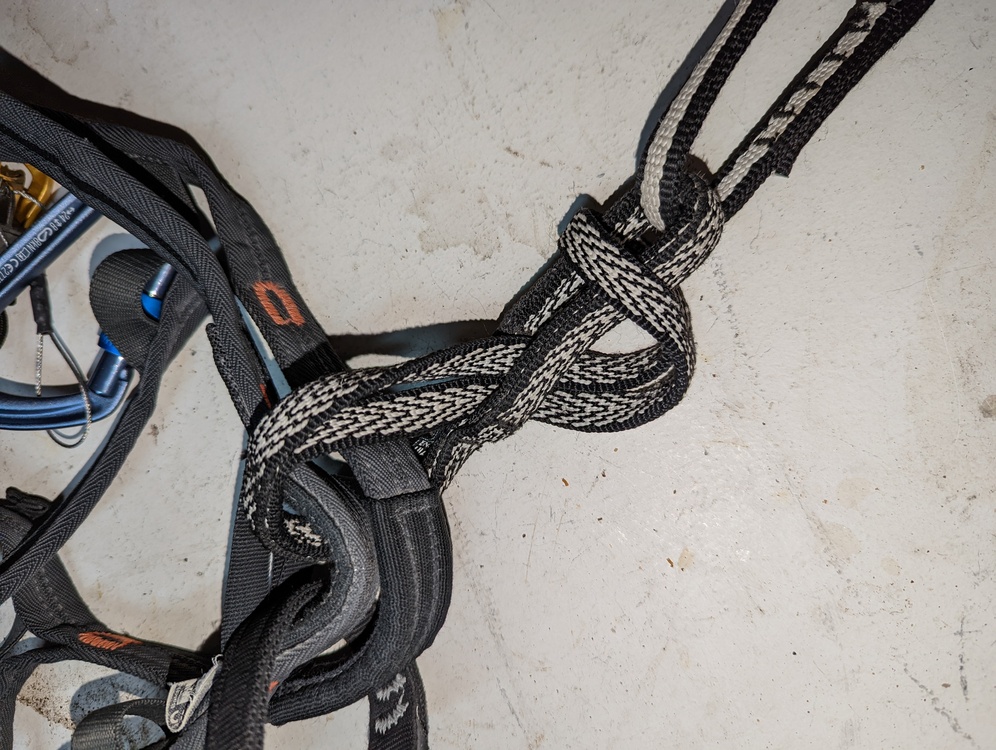 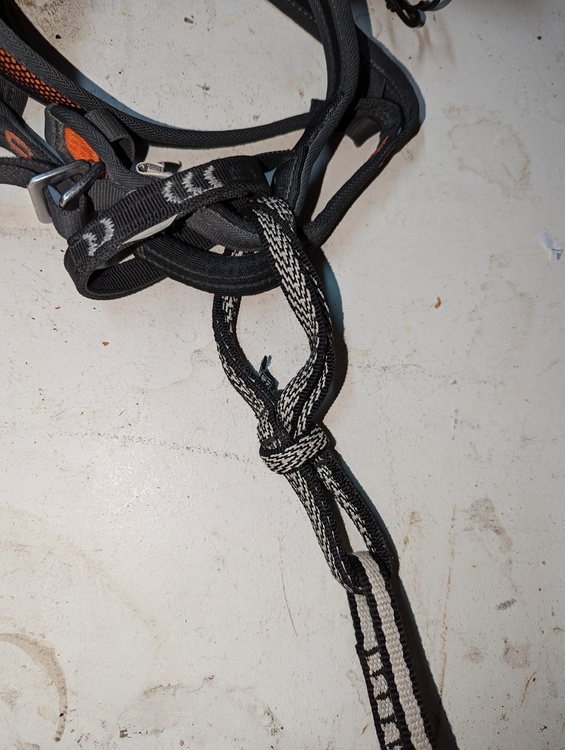 |
|
|
Depending on the application, you could just girth it to your belay loop. Also depending on the application, don't use a PAS. Alternatively, try loosening your leg loops a bit. |
|
|
I think CAMP (or maybe Kong?) actually shows this method in the user manual for their anchoring sling. |
|
|
I don't like how the bar tacks are being loaded. Sure it's fine at body weight, but why rig something in the weakest way possible? Instead, try tying it as a bowline on a bight. Makes your PAS shorter, but works well enough if you object to just hitching it to your belay loop. aikibujinwrote: The big difference here is that this tether has an extra little loop sewn in which favorably loads the stitching, unlike the method pictured above. |


|
Petzl says the girth hitch the belay loop rather than the tie in points. |
|
|
climber patwrote: Petzl actually says, "From a safety and strength perspective, the lanyard can be attached to the belay loop or to the two tie-in points. But as a matter of comfort, it is preferable to attach your lanyard to the belay loop." |
|
|
J Cwrote: Thanks for the reply. Why is this weakest way possible? is it really significantly weaker than a standard girth hitch or a bowline on a bight through the tie-in points? The more I play with it I'm not sure it is. |
|
|
J Cwrote: Nope, no extra little loop is needed. I found the instruction and it's definitely CAMP. 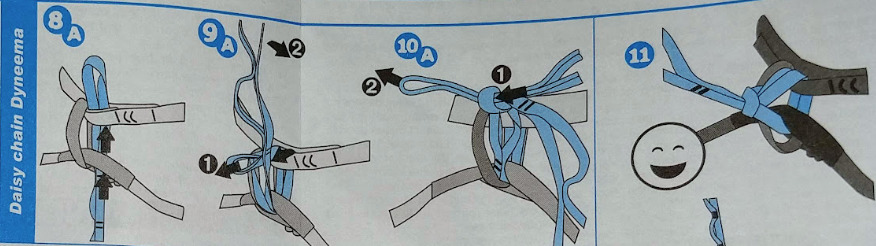 |
|
|
aikibujinwrote: Thanks for sharing that. i had looked at every manufacture, Google, etc and couldn't find it. i know what my setup will be tomorrow. cheers |
|
|
Ryan Gwrote: I may have worded that poorly, what I meant was that the stitching is loaded in a non-optimal way. Depending on the way the device is constructed, it may be inconsequential if the affected bar tacks were to fail (like the daisy chain pictured above). I believe this is the case for the Metolius PAS too. As to the CAMP instructions, I think it's also worth pointing out that they may classify a daisy chain differently than a "full strength" tether. I thought the tether being referred to was the Grivel one, which feathers an extra loop to prevent sub-optimal loading of the stitching. See below: 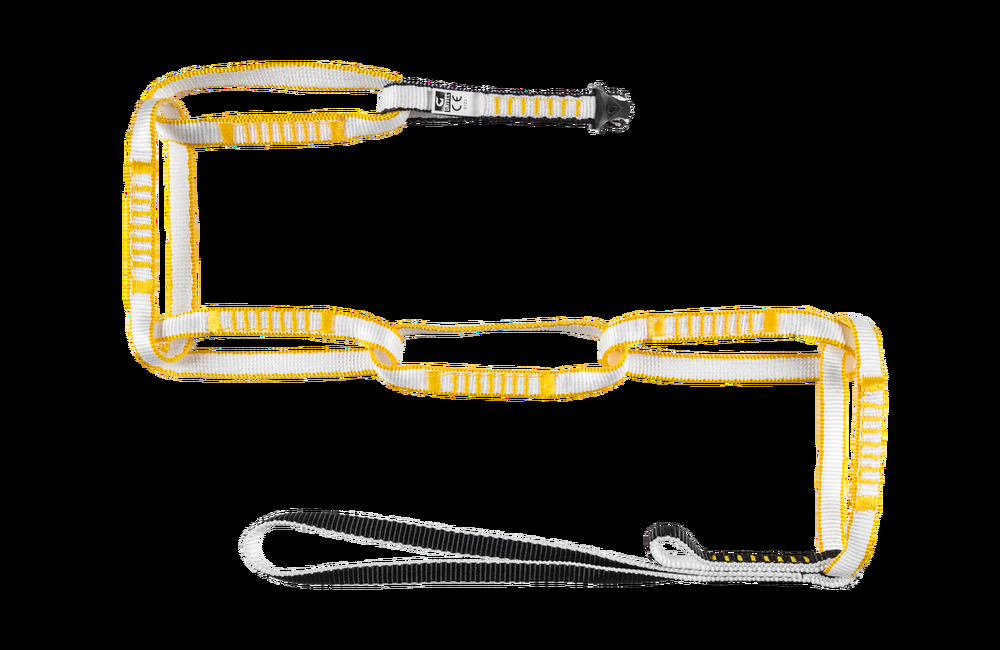 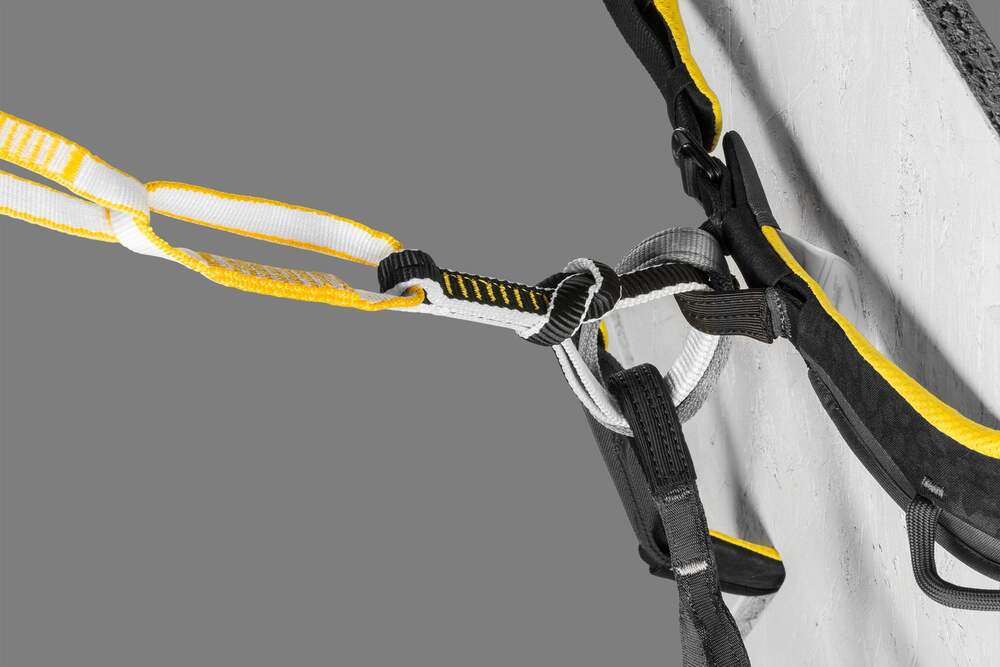 |
|
|
J Cwrote: thanks for taking the time to share your thoughts. i also found this one from climbing technology that looks pretty nice and is significantly cheaper than Grovel. https://www.climbingtechnology.com/en/outdoor-en/slings-and-lanyards/daisy-chain2/multi-chain-evo |


