
 Continue with onX Maps
 Sign in with Facebook






Accident at Haus Rock near Keystone, CO (Petzl Shunt accident)


|
For those of you saying we shouldn't rely on a single piece of gear... do you wear two harnesses? |
|
|
Seems like I’m in recovery due to this issue. Large fall, lots of broken stuff. Spread the word that macleods got plenty of great knowledge but he’s the reason I always used the shunt top rope method and I now think it’s super reckless. Would like to see an update video come out of him. I still haven’t had the mental fortitude to reach out to him(or doing anything productive yet) but he’s got a large audience and I think him redacting his stance would be the most beneficial to the climbing community. |
|
|
Mark Pilatewrote: Sure that makes sense in hindsight when we don’t have a great device that does it all for top rope solo but there are plenty of circumstances where that advice does not get followed. Examples: one rope, one belay device, one non locking gate on each draw, one belayer, one bolt between yourself and the ground. The list goes on. It just makes sense to remove redundancy in systems we really trust. Unfortunately I no longer really trust any of the top rope solo systems enough to follow this. Which is a bit perplexing to me that a system like lead climbing can be more trust worthy than a system like top rope soloing. I’m not an engineer but it seems like the latter has fewer moving parts, complex situations, and need for redundancy. It’s also unfortunate because certain methods for top rope soloing actually change the way the climbing feels. For example you might make a horizontally positioned move like a mantle feel way easier on top rope than on lead. I guess things can be more intricate than they first appear. It’s also possible we haven’t spent enough time exploring TR solo because it’s not as fun as lead. Maybe in the future the complexity switches and TR solo becomes safer than lead. |

|
John RBwrote: Sincere question or spurious red herring? Parachuting only uses one harness also. We often climb on only one rope. The “redundancy” is essentially built in with the safety factor of the specs, design, and manufacture. The point (and practice) is a common sense risk assessment of the active critical life safety components for your “mission”and make any weak/highest risk points redundant - especially those that are used outside of design intent. For instance, Sometimes you do use two ropes… Do you disagree? Edit to Trevor: I guess to some it is in hindsight. But I’ve been TRS for over 20 years and always understood that redundancy is “required” - at least for what could be considered “center of the bell curve” standard safety practice. Of course there are always those cutting corners or pushing the edges of the envelope in any endeavor. Hopefully they are doing so knowingly and after a hard thought-thru decision process. I think we are all in agreement on about 99%+ of the issues here. I just think perhaps a larger gap than is realized by many, is the need for a robust personal safety analysis for anything you do and to take personal responsibility for it. When I ride my motorcycle, I assume that everyone and everything is out to kill me. I apply the same for climbing. Trust no one but yourself, you’ll stay alive longer (if you’re trustworthy) |
|
|
John RBwrote: This is a strawman argument. Trusting a single piece of gear is acceptable if it is unquestionably bomber and will not fail. A correctly-fitting, good-condition harness won't just randomly fail on you one day. It never happens.* TR solo devices, any of them, are liable to just randomly fail on you one day due to fluke conditions. There's an extensive track record of these failures to prove it. Maybe one of these so one will invent an infallible TR solo device, and we can happily use it by itself. But that doesn't exist yet. It's really not complicated. A single cam or a single TR solo device can fail, so use more than one. A harness, or a 3 foot diameter tree, won't fail, so it's fine to rely on one.
* The main example is the Todd Skinner accident, but that harness was in extremely poor condition. The exception that proves the rule. |
|
|
Trevor stuartwrote: I've always thought that the idea that the Shunt method is OK because Macleod uses it is ... misguided. He's got good info on a lot of topics, and I respect him quite a lot, but I don't think I'd want to follow his example on acceptable-risk. I definitely have a lower risk tolerance than he does, across all aspects of climbing. How many times has he broken his legs*? No thanks.
* Granted, his accidents have not been from shunting. But the indicator across all his climbing is a greater acceptance of risk than I'd choose. I don't take the leading risks he does, and I don't take the TR solo risks he does either. |
|
|
Mark Pilate wrote: Mark, are you going to go to the Michigan Ice Fest in Feb? If so, I'll PM you, my first time going... |
|
|
My "do you wear two harnesses" wasn't to be provocative or ridiculous, but to point out that most of us DO rely on various single points of failure in our systems... often entrusting our lives to a single device or piece of gear. You CAN back up your harness (with a chest harness), your rope (double rope system), even your belayer (use two belayers). But invariably you will knowingly or unwittingly be in situations where a single failure can/will kill you. Perhaps the most common is the 2nd/3rd bolt of a sport route where failure of that bolt/draw means you'll hit the ground from 5-8 meters off the deck. We often don't think about this because we feel like we won't fall there, or we feel like shiny bolts and new-ish draws won't break or unclip themselves. But there really is no backup in these situations. Virtually every freak thing that can happen will eventually happen: a belay loop has failed (Todd Skinner), bolts break (esp old or improperly installed bolts), hangers, biners, draws can all break (esp sun-soaked dog bones), draws magically unclip themselves even when not back-clipped, belayers drop people (mostly due to user error). The difference in Craig's situation (and this is the crucial difference!) is that normally we acknowledge these risks and document these failure modes and spread information as widely and honestly as possible so that each climber can make her own decision about the risks she is (or is not) willing to take with her safety. But here Petzl is retreating to "not an approved use" language and lawyerly tactics to (presumably) protect themselves from litigation rather than trying to protect human life. This is unconscionable to me. Especially since they know there are people out there right now still TR soloing on a shunt who haven't gotten the word that Petzl no longer approves that use or haven't gotten word that it can and has failed so catastrophically. |
|
|
JCMwrote: Yea Macleod has done some risky climbing in his life but i find that he’s a pretty logical and thorough person. Kind of similar to honnold in that way. Hell he just put out a 4 hour long video about diet. Dude likes to delve deep. I do disagree with his stance here as well but I appreciate the thoughtfulness. |
|
|
I think the Macleod shunt thing is a perfect example that just because a pro climber espouses or recommends something doesn't mean its right, good or best practice. I watched one of his shunt TRS videos and I was all "no thanks." He actually showed a failure mode and made some point about having to keep the device oriented a certain way, plus he had no backup. That was some bogus advice. My point is, we are each responsible for our own kit, our own evaluations, and our own decisions. I personally never outsource my final decisions on things like this. |
|
|
Not to change the direction of this thread but this should be required reading for route developers: Too often (there are a number of Flatirons routes that do this for example) there will be a long easy section to the beginning of the hard climbing where a single bolt stands between you and a 20-30' or more groundfall. To me that is unacceptable bolting practice, especially if a hard/ish section starts the route. Redundancy near the ground should be standard practice where the climber cannot make choices about the position or quality of the protection. High first bolts that are stick clipped are okay for example as TR situations but the next bolt should follow it quickly. |
|
|
Cherokee Nuneswrote: I mean to be far, the dude puts up E11's and duct tapes skyhooks as literally the only pro on the route (and then has videos of him falling, the pro blowing, and him in the emergency room with a broken ankle) , so you should kinda know what you're getting into. It's like getting motorcycle safety advice from Evil Knievel. "Here's what I do despite the manufacturer's instructions" seems on brand. |
|
|
Trevor stuartwrote: So now there is a 3rd accident in the past few weeks? IMO - RTFM and stay on top of best practices. The trax devices have been a thing for about 20 yrs now. The Shunt was for rap bolting in the 90’s. I had no idea anyone anywhere was still using the thing, now bodies are raining from the sky because some training blogger from BFE made a Youtube video? That’s crazy. |
|
|
Trevor stuartwrote: I agree. He has the reach to partly "fix" the situation he encouraged in the first place. Top rope solo with a Shunt and no efficient backup is a "semi-free-solo" but the climber often thinks he is safe.. I hope you have a full and prompt recovery Trevor! Damn Petzl is clear enough about the better devices and better systems for this: see 10 web pages starting here: https://www.petzl.com/US/en/Sport/To-read-for-self-belaying?ActivityName=rock-climbing Including this pictograph in appendix 1. But they fail at simply stating that the Shunt should never be used for any top rope solo because of many problems including its weak body that can release a rope. 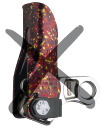 |
|
|
Thanks for the well wishes guys. I do know that dave Macleod isn’t the only one out there using the shunt. Maybe it has something to do with them both being Scottish pros and in the same circle but Robbie Phillips also commonly uses it on top rope. Not trying to reason that I’m smarter than all the people who immediately understood how bad an idea it was. Just saying this mistake is being made by multiple well established climbers. Therefor being copied by many. |
|
|
For some unknown reason, the Shunt is popular with Scottish sponsored climbers. Andy Kirkpatrick is promoting it too. Hopefully, like Dave MacLeod, these guys will realize how sketchy the Shunt is for TRS and start mentioning the risk involved, rather than recommending it for this purpose. |
|
|
Jim Stephenwrote: https://www.andy-kirkpatrick.com/blog/view/top-rope-solo-with-petzl-shunt-can-kill-you |
|
|
Yep. That's my point, with respect to all climbing knowledge. The end user is the final judge Surrendering that judgement to some "pro" climber is ill-advised. |
|
|
For Sale One Petzl Shunt in 90's-Public-Bus-Chaos-Glitter-Paint-Pattern paintjob |
|
|
 |


