
 Continue with onX Maps
 Sign in with Facebook






Tying into the belay loop?


|
|
Check out these two diagrams. The first one is from the Edelrid website, technical documentation for their harnesses. It clearly shows a tie in directly to the belay loop. The second diagram is from the German Mountain and Ski Guides Association (VDBS); it has their logo for “approved technique.” You’ll notice the rope is also tied through the belay loop. This is of course not standard practice in North America, but I’d like to hear your thoughts on how common this is in Europe, if it’s a German thing, and what some of the benefits are. Thanks! 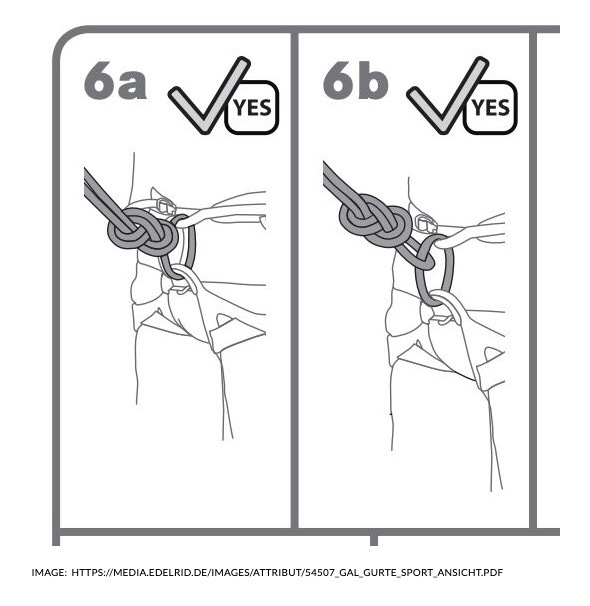 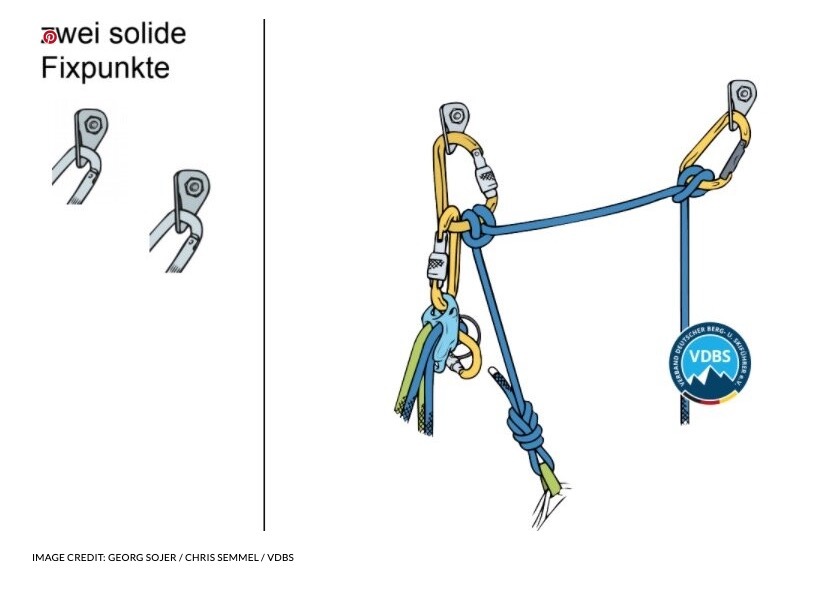 |
|
|
Lol. Nice catch. |


|
A few thoughts.
|
|
|
Works fine. Especially compared to Alex free soloing. Single-point harnesses usually have a horizontal loop. You don't get that here. And many harnesses have different designs that work perfectly with a single loop and are designed that way. Obviously, everything rgold says comes into play. Seen people use slings and biners effectively, safely. I am sure the American Alpine Club would not approve. The old timers got by with far less. Better than not being tied in. |
|
|
What if we just used a big locker on the harness instead of the belay loop and just clipped the end of the lead or TR belay into the locker? |
|
|
Is the Edelrid drawing you posted above from the technical manual for a specific harness? Your comment related to the drawing implies the double tie-in option is for “all” Edelrid harnesses. Do they give some sort of global instruction on their website that the option applies to all their harnesses? |
|
|
An Alpine guide I know who ties this way says it reduces wear on the hardpoints if one does a lot of roped up walking. Mammut also show this as acceptable practice. |
|
|
Adding on to what Noel Z said, the higher ups at Edelrid came into my workplace and we talked climbing. I brought up that their rock climbing harnesses that we sell show in the instructions (sewn onto the inside of the harnesses waistbelt) that tying into the belay loop was also an acceptable option. They told me that is what people in Germany do. |
|
|
Noel Z wrote: Reference? |
|
|
Noel Z wrote: To be fair, only your second link from BD explicitly say to not tie in directly to the belay loop. The links from petzl and CT dont, they just say the proper way to tie in is via the tie-in points, they omit any mention of using the belay loop. So I’d hardly call that support of “almost every manufacturer stating this is not correct.”. I don’t think it is a particular useful practice, and I don’t see any real benefit. If anything, it seems like it would hang obnoxiously low if leading, but I doubt there is any real safety concern. In the context of gym TRing, it is fairly common practice to clip a fixed locker on to the belay loop, so other than a little more wear potential, I don’t really see tying directly to the belay loop as very different than clipping a carabiner to the belay loop. |
|
|
csproulwrote: In paragraph 6 - 'Tying In' - Petzl certainly just says "Tie in to the two tie-in points", and the same in French; no mention of the belay loop - although one could argue that if the correct method has been specified there is no subsequent requirement to list and eliminate all other potential methods. In the German instructions, however, they elaborate slightly: "Binden Sie sich parallel zum Sicherungsring in Beinschlaufensteg und Hüftgurtöse ein" - ie "Tie in through the legloop and waistbelt tie-in loops parallel with the belay loop". Note that they refer to the belay loop - 'Sicherungsring' - rather than the 'Anseilschlaufe' mentioned upthread. One wonders whether Petzl are aware of common practice in Germany and are here advising against it - albeit subtly. |
|
|
aikibujinwrote: You can find all over in the German/Austrian/Swiss literature that both are acceptable as well as in Pit Schuberts work. When I worked as a DAV instructor it was taught as well as parallel tying on. In fact through the "belay loop" is usually the only recommended way if you are also using a chest harness. As I said it's a popular method with alpinists, walking long distances with the rope chafing in the lower tie-in point ruins harnesses amazingly quickly. The safety benefit is clear, it is impossible to miss either the leg loops or the waistband when tying on. |
|
|
For the younger kids in comps, they tie off a figure 8 & locker to the belay loop. |
|
|
Tying into the belay loop used to be pretty common way back when that style of harness started to emerge. I remember it being very common in the late 80's early 90's |
|
|
Anna Brownwrote: Anna, good question. I did not click every harness on the full website, but I looked at three or four. They all link to the same PDF showing this, so I assume they approve the technique for all of their harnesses. Here's the link for one, have a look. https://media.edelrid.de/images/attribut/54507_GAL_Gurte_Sport_ANSICHT.pdf |
|
|
Noel Z wrote: Noel, thanks for sharing your experience on this. |
|
|
Jim Tittwrote: Jim, thanks for posting this. I didn't think about walking along way on a glacier with the rope rubbing. The safety benefit of making sure you're in one solid place seems like one benefit. |
|
|
A few months ago I climbed with a guy that was using a Simond harness that didn't have tie-in points. You could only tie in on the belay loop, and there was a tiny image of the figure eight stitched on the belay loop. |
|
|
Danny Herrerawrote: & locker? I hate know-nothing parents. |
|
|
So, let's say that you've tied into your belay anchor directly with the rope, a solid practice if you're swinging leads, and you're tied in to the belay loop. You're leaning out, weighting the anchor and your belay loop, ready to belay up your second. Maybe, to see your partner, or for comfort, you want to stand sideways, leaning out. Now you want to use that belay loop to, well, belay. Sounds like things could get a little weird. Why, if your harness has re-enforced tie in points (most Do), would you ever even think of tying into the belay loop? What's the upside? |
|
|
Matthew Jaggerswrote: Every auto belay in every gym uses a locker connected to the belay loop. As to the parents, how are they to know any better. If I were trying to make a system as idiot proof as possible and have a figure 8 pre tied with a locker on it so all the “no nothing parents” just have to clip the locker to the belay loop. Easy to inspect. |


