
 Continue with onX Maps
 Sign in with Facebook






Choosing the right tool for the job



|
Hi All, I wanted to gauge the field on the tools that people use for the grade they climb. As in, I hear a lot of jokes talking about how hardmen used to climb grade 6 on straight shaft tools (granted leashed) so where do folks stand now? I've been climbing on cobras for the past 5 seasons and have been pretty fine with them until I get to anything around grade 5 (unleashed) and I picked up a pair of x-dreams this season because I'd been curious about having an ergo tool in the quiver. Obviously, I'm hoping to get more confident on the cobras to climb steeper stuff so it's a matter of comfort to climb on the ergo tools rather than necessity. With that said, I'm sure there is some variance to where the line of "I need an ergo tool now" is among different groups. I can only hope that Rainsford Rouner doesn't see this post... -J |
|
|
Just embrace the x Dreams. I have the alpine grips with the spike . Use them for everything except steep summer snow out west. If I had Cassin all mountains I would use them for easy gully routes but I don't and the x Dreams work. |
|
|
My experience with less "ergo" tools is that they climb really well even for steep ice, but you bang your knuckles a lot more, especially when there are bulges. They're always lighter in the shaft/handle and that makes swings really easy and precise. Quarks with pick weights (minus hammer/adze) are fantastic, and I'd imagine tools in that vein like North Machines would be similar. That said, I sold my Quarks, I like Nomics for bulge clearance and just take the extra weight in stride. Tried new BD Reactors which are shaped after the X-Dream. Like most "ergo" tools, they could probably benefit from better weight distribution, but they are the first BD tools I haven't had difficulty with (including Cobra, old Reactors, old Fusions, Fuels). I don't really like how Cobras swing when leashless. |

|
If you are just breaking into harder ice I can see having an ergo tool being helpful, more aggressive is arguably better when it's really steep and you are less dialed on technique also maybe slightly less pumpy? I honestly can't tell, but if you are maxing out I suspect easy matching and better ergonomics might provide some help? once you are dialed and comfortable I don't think it matters all that much? I climb WI6 and use Nomic's for 99 percent of my climbing, including alpine, but I don't feel any significant handicap using quarks or north machines, in general, I don't think BD tools swing all that well, that might be more the issue than ergonomics. |
|
|
Grant Kleeveswrote: Yeah it doesn't really seem like it matters all that much, it's the painter not the brush of course. But yes I agree, I think the pick angle on BD tools is slightly too low, I switched mine to the mixed T picks and it improved the swing and made it feel more similar to the nomics/quarks I've climbed with. I just wonder if there is ever a point when others throw their hands up and just go for the easier-to-thretch-on tools. We all have seen this in climbing rock where there is either some new kid on the block redpointing 5.9 in solutions or inversely some hardman/woman climbing 5.14 in moccs. Neither one is any more valid or invalid than the other, it's just a matter of the reliance you put into your gear. Not to stand on a soapbox about it but I think it's the sort of thing that if you're going to climb something, you should be able to make due with the absolute minimum required until the going is so physically difficult that the only weak link in the situation is the gear or the level of objective danger. Maybe I'm wrong to think that, obviously, to go along with the painter/paintbrush analogy, as climbers, it's also our canvas to choose. |
|
|
I like to climb on the set of tools i enjoy climbing most on, i can climb any WI 4 on my quarks, but its just more fun on my dark machines. I could climb moderate alpine routes with my dark machines, but its more enjoyable with my quarks, so thats what i use. By the logic of climb with the absolute minimum required, why wouldn’t one try doing climbs with a single tool? Or maybe front point up steep snow with just a single trecking pole. |
|
|
Dark machines?! I didn't even know Grivel made such a thing. They look/sound awesome. Weight of a Quark, geometry more like a Nomic. Probably a ton of weight in the head, as grivel picks/heads have a lot of heft. Damn. |
|
|
On thick ice, all you really need is a pick that places/cleans well and a shaft that provides some clearance. Climbing very thin ice is essentially the same as drytooling, where stability when hooking small features and being able to match and switch hands on a tool becomes important, which is where having a recessed or offset grip becomes more useful. While tools like Quarks and Cobras (with stock picks) may seem the same at first glance, Quarks are noticeably more stable when hooking flat edges, especially when in second position. The stock pick on the Quark is more downturned and the “trigrest” can be placed much lower on the shaft. (EDIT: If the above description didn't make sense to you, scroll to the section of this article titled "Pick Shift Comparisons" and look at the pictures of Raf hooking an edge in first, second, and third hand positions. The other major limiting factor really becomes your pain tolerance and grip strength, when you have to cut feet, particularly when using a reverse grip. You probably will not encounter many of these moves below M8. Part of this is related to wrist position, part is related to the size and shape of the pommel. More curved shafts can make some things harder, like when you have to get into tight corners. Recessed grip tools are also much less useful for hammering or using an adze. Tools without a secondary pommel are usually easier to clean because you can easily move your hand up/down the shaft and pull from the head, without taking your hand off the tool. In summary, choosing the right tool for the job is more about evaluating the types of features you will be climbing and the protection that you will be placing, rather than grades. Your pick choice often matters as much or more than the tool choice. Every tool is going to have it's own idiosyncrasies that make it marginally better for some things and worse for others. I would encourage you to bring both sets of tools to the crags and try climbing the same routes with different tools and picks. You’ll likely gain a better appreciation for the equipment and learn the best applications for the tools that you have. |
|
|
too much tech shit for me. All i know is that haveing climbed ice since 1983 the X dreams climb everything grade 3 and up better than anything else I have ever used. I don't bother with changing the handle possition. I keep it on the dry setting. thats how they came. usually use the mixed pick but don't see a whole lot of difference with the ice pick.. whatever is available and on sale... 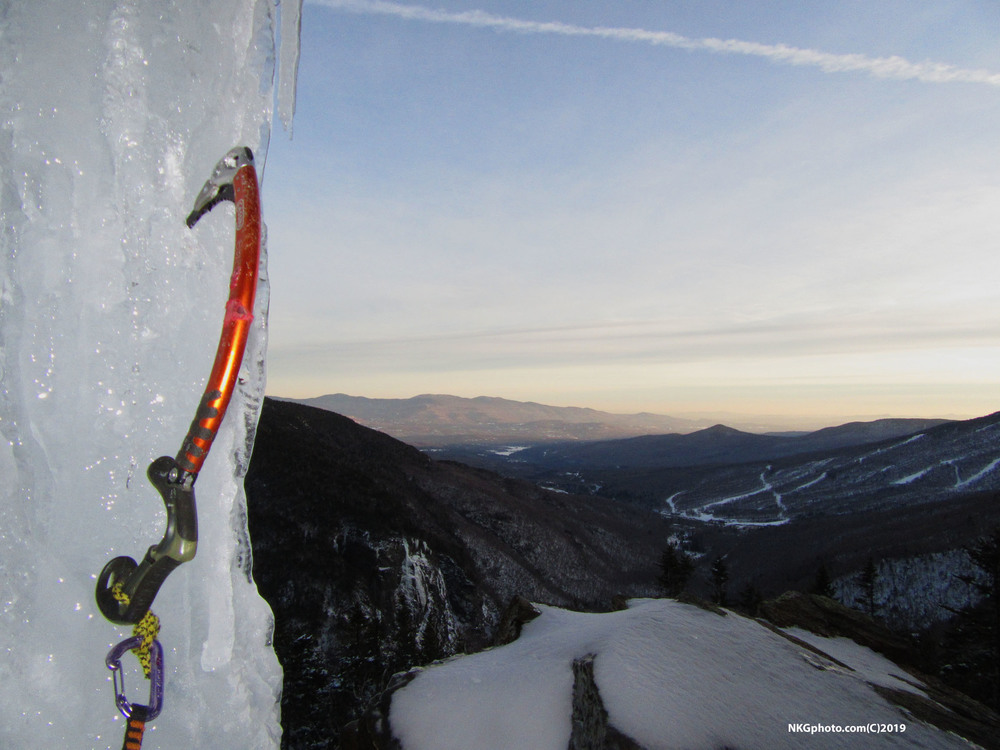 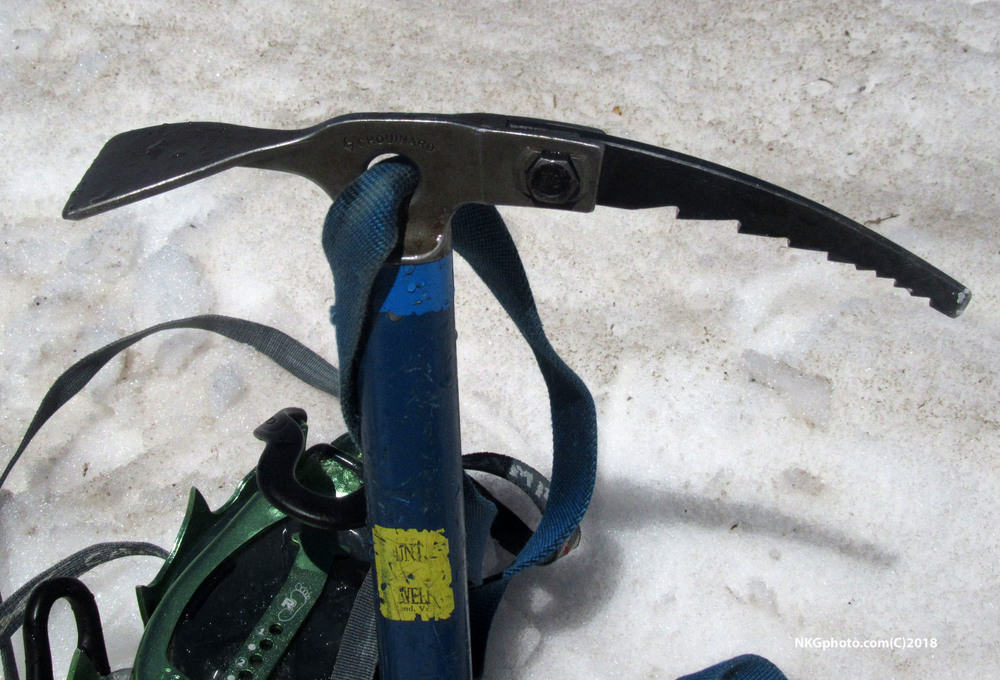 |
|
|
CDubwrote: Yes very similar geometry to a nomic, but better balance and swing in my opinion, and they look way cooler. definitely dont need tools like this to climb WI 4 or 5, but it sure dose make it alot more fun for me, and thats the whole point. 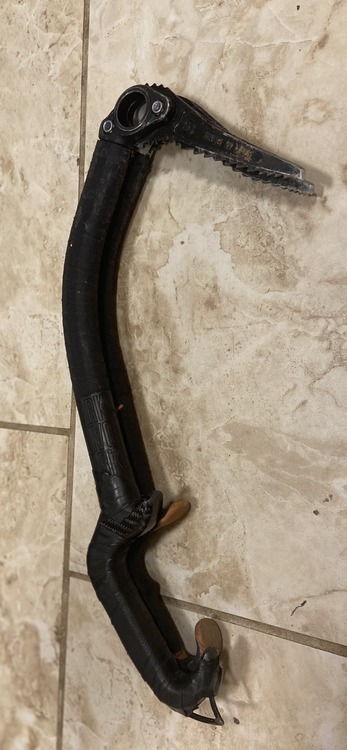 |
|
|
ryan Smithwrote: Oh yeah. I've always thought that tools have too much mass in the shaft/pommel, which seems to be necessary for most of the major brands to guarantee some degree of durability. Saw some really wild composite tools out of eastern Europe for sale @ Ouray Mountain Sports once, and it's clear to me that decent pick/head mass + maximally light shaft is far superior for swing. I'm guessing the Dark Machine does that in a more mass-market way.. |
|
|
Will Gadd climbs Helmcken Falls with Cobras. I’ve got a great friend that climbed back in the 80s; recently I got him back into ice climbing. I gave him some new gear and was super stoked to see what he thought of the advances in climbing equipment since he last swung a tool. Initially he climbed with leashed cobras, loved that until I convinced him to take the leashes off, and now he loves his unleashed cobras. He’s given the nomics (my tool) a shot and said he didn’t really see much difference. Compared to the equipment he used back in the day everything feels great. I took him dry tooling and he tried both the cobras and the nomics on an D5/6 Route and he really enjoyed the nomics for their feeling of security. |
|
|
CDubwrote: You were probably looking at the Eliteclimb tools out of Poland. The Trango Kestrels are a combination of Eliteclimb composite shafts and Trango heads |
|
|
Not trying to be pedantic, but it raises a couple good points. ryan Smithwrote: You definitely can, and arguably should, at some point. Strongly emphasizes good footwork stances for the swing. Also teaches climbing up the tool, mantling when appropriate, and minimizing the number of swings/tool placements per pitch. Great way to improve efficiency.
I usually take two poles, but this can be much more efficient than an axe in certain snow conditions. |
|
|
Derek DeBruinwrote: Alex Lowe liked to ice boulder, climb with no tools. As noted a good way to figure out good foot work. I have taken a few new ice climbers out and make them follow using no tools on less steep ice. A first they hesitate but when done they said it was easier than they thought. |
|
|
Derek DeBruinwrote: Yes a single tool can be a great great training method for developing good foot work. And yes poles can be more efficient in certain snow conditions, they can also be much more dangerous, and make the climbing much less enjoyable. What i was really trying to articulate is that i personally never feel like pride is a reason to use less effective equipment, especially when climbing is made more enjoyable with the use of better equipment, but thats just my opinion. |
|
|
ryan Smithwrote: Definitely in agreement on this. I use the best tools I have available for a given task. Simply pointing out that we can also take lessons from the more minimalist ideas (which often were the best tools of the past). Had a truly mindblowing experience watching a seasoned guide leading a 3+/4 pitch in New Hampshire once upon a time. 100 feet of climbing, most of it done with a single tool in the ice at a time. Very few swings and sticks (fewer than 25 total maybe?!) mega efficient, client was standing around getting cold belaying for less than 10 minutes. True demonstration of mastery. |
|
|
Allen Sandersonwrote: I've used the same for teaching. I just make sure they have a dry pair of gloves at the ready when they're done climbing. As I'm sure you know, in the right conditions pile fleece or wool gloves even "velcro" to the ice. |
|
|
Derek DeBruinwrote: Excellent point, minimal equipment definitely puts a greater emphasis on technique. I have always been partial to ergo style tools on steep ice but when i tested multiple times on my training wall how much longer i could dead hang from my Nomics over my quarks i was surprised. The grip shape plays a big role in how long i can hang on, and i enjoy that extra margin of saftey it provides me on ice, or at least a boost in confidence... |
|
|
ryan Smithwrote: Sometimes confidence means safety, so there's probably some wisdom in that. |
|
|
Derek DeBruinwrote: I've even had them (wool mittens) stick to the (very cold) rock. 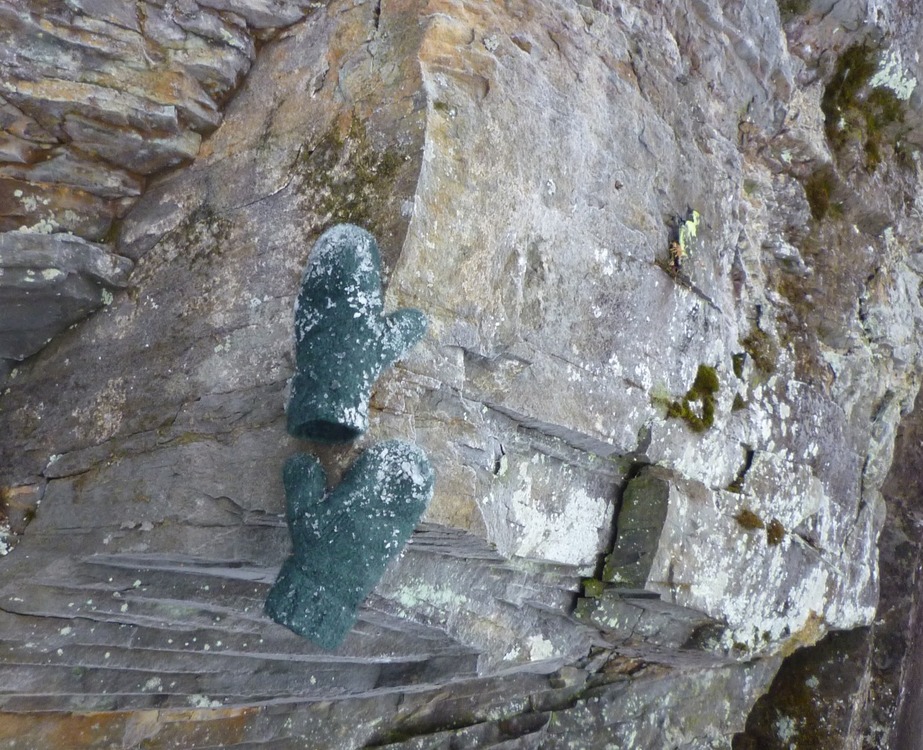 |


