
 Continue with onX Maps
 Sign in with Facebook






removing drop ins


|
|
Hello all, At an area near me there are lots of old 1/2" drop in anchors. I think they are the self drilling type, something like what Petzl sells for caving. I'd like to rebolt a couple routes that currently have the original drop ins. I would like to reuse the holes if I'm able to get them out. Has anyone had success removing them, and if so, how? Somewhere I read you can put a couple ball bearings in the sleeve, and tighten a bolt on top, forcing the sleeve out of the rock while pushing on the cone in the back, adding more ball bearings if you run out of travel. Has anyone used this method? How likely do you think this is to blow out the hole to an unusable extent? The rock is a super crumbly conglomerate. Jonathan |


|
Hey Jonathan, I've pulled some of the 8mm (12mm hole) and 10mm (14mm hole) self drills in schist and granite. I've had like 50/50 luck getting them out in one piece. I've tried using the ball-bearing method and using a hydraulic punch driver. Both work about the same 50/50. Most of the time I've snapped the sleeve in the removal process. Biggest problem with the larger models is you're pretty limited on what you can use to re-use the hole because it's 14mm (1/2 is like 12.7mm or something). Basically a beefy glue-in is your only option. Shoot me a PM if you want to discuss this more. |
|
|
Wanted to revisit this thread and see if anyone can shed further light on pulling old Petzl caving drop-in anchors and reusing the hole. I would prefer to avoid core drilling although I think some have used that method. I've got a Hurley that I thought about giving a go with. Anyone know the thread size and such that you need to get into the drop-in? With the ball bearing method, what size bolt are you using? 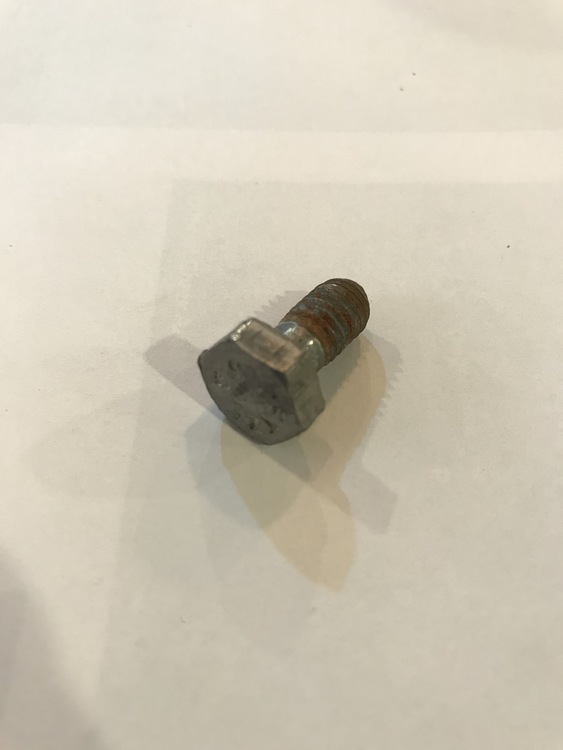 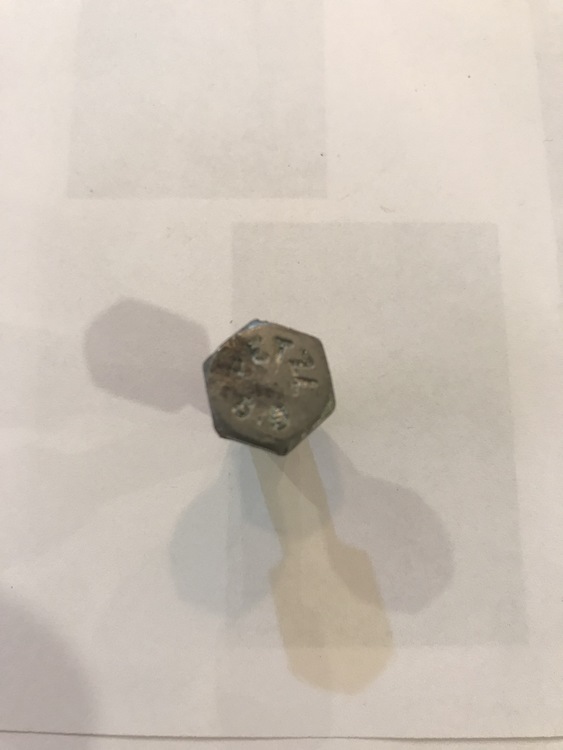 |
|
|
For clarity I call these bolts self drives. Drop-ins are a different animal and require different method of extraction. You can tell by looking at the bolt head if it is metric or murican. you might need to brush off some rust though. Take 5/16 and 8mm jacking bolts for small self drives if you are not sure which you are dealing with. In a pinch you can use the bolt that held on the hanger but they are rarely as strong as needed. The outside diameter of the small self drives are 12mm for metric and standard sleeves. Some knuckleheads placed 1/4" self drives but I don't know why cause the sleeve is the same size as the 5/16" . So I have had really good success recently by starting with drilling small holes around the sleeve. 5/32" drill. One to three holes right next to the sleeve. Then remove the sleeve as normal: First put penetrating oil on bolt holding on hanger. If you skip this step the bolt will often just break off. Then you are fucked. Then drill your small holes. Blow out as much of the rock dust as you can. You can try the removal without the small holes. That will leave you with mechanical bolt options. But if you put too much force on the jacking bolt, the bolt or sleeve will break. For 8mm sleeves I use a jacking bolt rated to at least 10.9. Soak the sleeve with penetrating oil. Run the jacking bolt in till it bottoms and eyeball the threads remaining. So you don't put force on the jacking bolt when it is bottomed out. This will break the sleeve for sure. I take a film can with moly grease to lube the jacking bolt. 1/4" ball bearing works most of the time for 8mm sleeves. I have found some older sleeves that required smaller bearing so I also carry 1/8" and short pieces of 0.20" tungsten drill stock. Put your bearing in the hole and screw in the jacking bolt. Check the remaining threads on the jacking bolt. Add another ball if your jacking bolt appears to be bottomed out. Once you get the sleeve to move an 1/8" you can pull it the rest of the way with a doodad. Take a small magnet to fish out the cone. Go prepared to put in glue ins. Then if you have to drill the small holes, it does not matter. If some of the small holes remain after drilling a half inch hole for 6mm twist bolts, this will just help "key" the glue to the hole. Usually these self drives are found in good rock. 80mm length for a twist bolt is plenty in hard rock. If you are placing Wave bolts drilling a larger hole for the length of the self drive will help with placing the bolt. 14mm or 9/16 I have done the same thing with 10mm and 3/8" self drives. You just end up with a large hole. The 8mm twist bolts from bolt-products are perfect for this. You can cut them what every length appropriate for the rock hardness. |
|
|
Thanks for the details Timothy, and thanks to the other people who gave advice. Haven't gotten around to the original project yet, but I'll update if I try to pull any. timothy fisherwrote: This was interesting to me, because I've mostly seen them in bad/soft rock in the west, so maybe that is a regional thing. Where I've climbed, it seems like back in the day buttonheads were the go to bolts where rock was good, and self drives were used where a buttonhead literally will not compress due to the rock quality. Semi-related, Ryan Jenks did a pull test on some new drop ins (true drop ins, not self drives) and the rusty Leeper hangers they come with. They were pretty strong. |
|
|
Interesting about the rock you find them in. Aid gear? In good rock they are decent temporary bolts except they are among the hardest to remove. Today if i were hand drilling i would put in a stainless 5/16 wedge. Relatively easy to get out and reasonably strong . But i am retired from hand drilling... |
|
|
I’ve tried putting a Hurley Jr on self drills and as expected, it was a no-go. Haven’t tried the ball bearing trick. Based on Jim Titt’s comments here, I just replaced a few self drills with an adjacent hole and a single leg bolt glue-in. I forgot to get a pic after placing it, but here’s the hole I put one in. Haven’t “field tested” them yet but I’m sure we will, as this was on a 5.13a 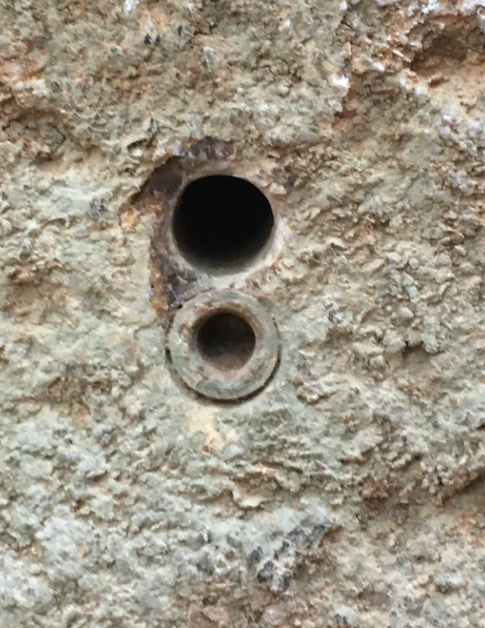 |
|
|
Drew this does make a lot of sense. If you put in the 12mm SLB no one would see (or care about) the self drive. |
|
|
"Drop-in" anchors and "self-drilling" anchors are visually similar, once installed. The ball bearing removal method could work on a self-drilling anchor. Trying that method to remove a drop-in anchor will only serve to further expand the sleeve in the hole. Self-drilling anchors, including the Rawl "Sabre Tooth", were around in the 1960s. Petzl has the "Cheville". The drawing on this page will show the separate cone/wedge: https://www.alteria.co.jp/download/pdf/ifu/P12.pdf The sleeve is hammered onto the external cone, causing the expansion of the sleeve. A drop-in anchor has an internal cone. Hammering on a setting tool (a pin punch tool), drives the cone/wedge deeper into the sleeve, causing the expansion. It may be difficult to visually identify the type of installed anchor. Perhaps with a flashlight, you could observe the difference, with advance knowledge of what you are looking for. Or feel with a piece of wire for a deeper recess on a self-drill anchor. If one anchor is successfully removed by ball bearing method on a particular route or area, then it is likely the other anchors are of the same (self-drilling) type. |
|
|
That is really good info ClimbBaja. In general i would add, if the bolt is 8mm or 5/16 the sleeve will be a self drive. I think any 10mm you find will also be self drive with a 14mm sleeve O.D. The 3/8 ones could trip you up. Most of the selfdrive sleeves i have seen in that size have a 14mm/9/16 sleeve OD. But i dealt with one recently that was self drive and 1/2 inch OD. If the bolt was placed before 88/89 you could assume it was a self drive. I dont know of any drop ins that were placed in hand drilled holes. |
|
|
Thanks for all of the beta here. I figured I'd get a bunch of great info with personal experience. Thanks! |
|
|
I second what ClimbBaja said. Self Drives and Drop-ins are different anchors though they work in similar ways. In the case of Drop-ins, once you have used a setting tool to push the cone out to the end of the sleeve I don't know how you would be able to pull the cone back up to it's original position to help getting it out cleanly. |
|
|
I have an idea for a simple removal tool for self-drives (not for drop-ins). Rather than using a hex head bolt and ball bearing, a longer hex head bolt (say 3") can be machined at the tip to narrow the diameter to 6mm (15/64"). I don't have a lathe, so, putting the longer bolt into a motorized drill chuck and spinning against an angle grinder abrasive wheel might be a down-and-dirty was to make the tool. Cut off the threaded end of the bolt which is in the drill motor chuck. Perhaps two of these, to be utilized in succession, one with an approx. 3/4" snout and the other with a 1-1/4" snout seems about right. It will be self-centering and not have ball bearings to lose. Edited to add: Some research turned up this info: Looks like this tool has already been made (see page 28). It was used on a Mammut ring bolt which has an external cone similar to the self-drive (see page 29). Not sure why it wasn't used on a self-drive (page 30). The note reads "process under review", using dowels rather than ball bearing(s). Seems less complex to use the page 29 tool. texasmountaineers.com/docs/… |
|
|
Bruce Hildenbrandwrote: The Carolina Climbers Coalition (CCC) rebolt volunteers have removed hundreds (maybe more) drop-ins at Hidden Valley, VA using the Hurley Jr (same one for wedges). I've experimented with it too and pulled a few; I just use a bit of 3/8" threaded rod (old bolt segment) to adapt into the 1/2" OD/3/8" ID drop-ins. |
|
|
ClimbBajawrote: |
|
|
I have tried this reduced diameter bolt method many times. In my experience ball bearings and small pieces of drill stock Work better. It is difficult to maintain the hardness of the bolt when reducing the diameter. The tip will just mushroom if it is not tough.. lots of work prepping the bolt and hardc o get the diameter as small as needed. It makes a bit more sense for 10mm and 3/8 selfdrives. |
|
|
I'm going to remove one of these Mammut ring bolts on Wednesday in Eldo using a core drill bit. I'll try to time the process from start to finish and get some photos and/or video. I've removed self-drives the same way. It is more complicated, but manageable.
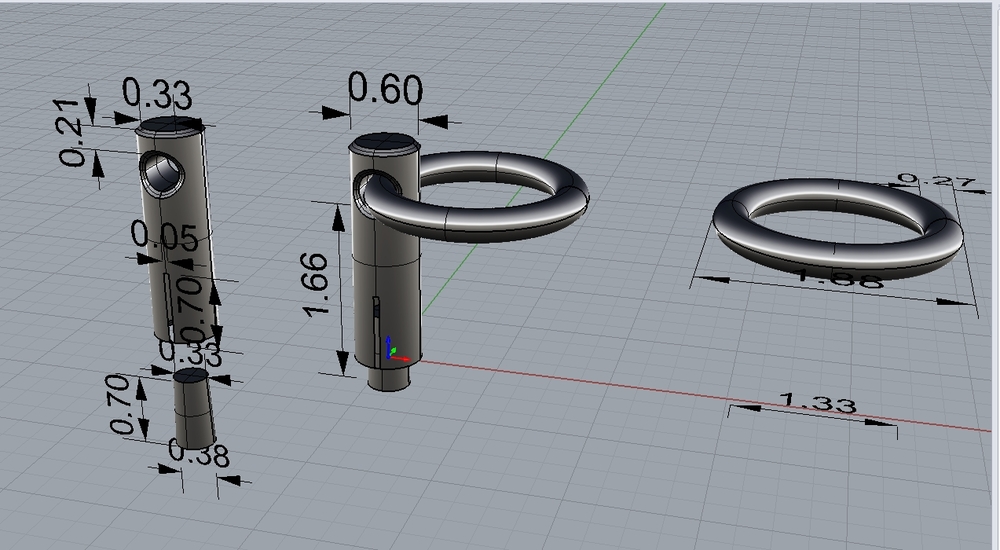 bits: we have used these https://www.ukam.com/thinwall_diamond_drills.htm You can also find thicker wall bits on AliBaba very cheap (~$9/each) [link fixed] |
|
|
Thanks for sharing Greg. Can you check your link? It doesn't seem to work and I'd love to see what you're buying for core drills. There's some Mammut ring bolts I need to remove plus for these drop-ins that are around. Thanks for all the hard work. |
|
|
Super interesting method Greg, I am sure I will use it. Thank you for sharing it (and all the other bolt removing methods.) Was curious about the stainless tubing. Does it have to be stainless if it isn't staying in the hole? Edited to add: Nevermind. I missed the step where you add it back to the hole with the bolt. Haven't core drilled yet but I hadn't thought of using a support collar. Be interesting to see if it makes a strength difference. Looking forward to seeing pics and video. Keep up the great work. |
|
|
This is a video from three years ago - the first one we did with this process. (note: We did not set the bolt deeper than the friction fit on this one - should have hit it with a hammer.) |
|
|
Thanks for posting this up Greg! You do great work. I get the idea behind the sleeve. You were looking to keep the hole diameter close to the bolt diameter. Sleeve stronger in shear than thicker glue? My question is the bolt really better this way? If your 8mm twist was 100mm (or even 80mm) and you countersunk the bolt, more than half the bolt would have been at the smaller diameter. The sleeve is not adding to the pullout strength of the bolt at all? Maybe Jim Titt has a POV on this? |


