
 Continue with onX Maps
 Sign in with Facebook






Best bolts for longevity but ALSO ease of future removal?


|
|
Question: What are the most easily removable bolt(s)? Note: I am not talking about “Removable Bolts” or “RB’s” (intended for short term use and rapid removal). I am talking about bolts intended for long term “fixed” use BUT that are also the most easily removable – if one should find better placement options or wish to maintain a “low impact” on the environment? I know about the Triplex Bolt which are definitely easy to remove but they are “out of stock” everywhere for 2 months or so (as of 10/6/20). AND besides that their are strongly varying opinions about the safety/longevity of Triplex Bolt placements. So, what are the best alternatives? My focus is always upon safety and longevity - but I would also like to find the most easily (completely) removable (and reusable) bolt out there. Does such a bolt exist or am I asking too much? |


|
Ss 5 piece. Can be remove pretty easily and hole reused. Although after rereading your op; the 5 piece after being removed can not be reused. |
|
|
Honestly most expansion bolts are pretty easy to remove with the right tools and techniques. 5 piece bolts are a little simpler than wedge bolts, but both usually come out and leave a reusable hole. Especially if they haven't been there long. |
|
|
Rich Travis wrote: The whole point of replacing a bolt is due to its age making it no longer safe. Reusability of a bolt is pointless. Planning on placing a bolt and removing it for reuse later is in itself carries environmental impact as well and is not really something one should be planning on doing. |
|
|
The ClimbTech "Legacy" bolt is a contender. Very well crafted. However, it may be out of production. The cost is/was prohibitive. https://rockandice.com/gear-reviews/bolting/climbtech-legacy-bolt/ |
|
|
Rich Travis wrote: What is the difference between a patched hole with a chopped bolt in it and just a patched hole... SS wedge bolts cost roughly $2 a piece. I also do not feel Triplex bolts are safe as if they loosen they pull out and the hole is still present. |
|
|
If such a magic bullet existed we wouldn't have this debate all the time. As it is, everything has compromises. Fixe - The Triplex is likely out of stock most places as it's seen a re-design. They now make it WITHOUT the lip on the sleeve but it remains one piece. There is now a lock washer included. This should make the latest 2020 version the CLOSEST to what you're asking for assuming it works as it should. 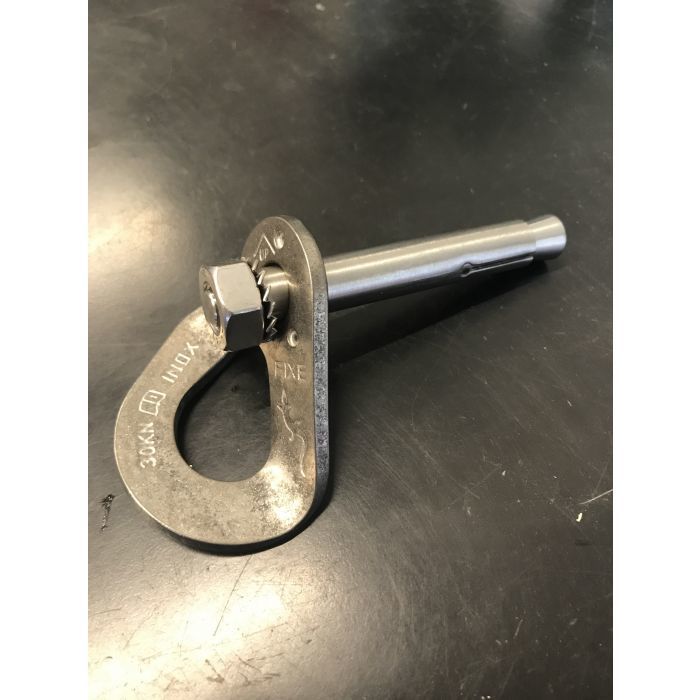 Stainless 5 Piece - I debate how "easy" this one is to remove. Yes, it can be done but anyone that's spent time tapping and pulling sleeves lost down a hole only to NOT be able to re-thread the cone to pull it knows that 5 pieces generally are not that easy. Can it be done? Yes. Are the worth the sacrifices? Only in very specific circumstances in my opinion. They cost significantly more than other options AND are only available in 304SS which makes longevity less certain. Wedges - 316SS wedges can be found for sub $2 and sometimes more like $1 and are available in the smaller diameters of 3/8" or 10mm. Wedges CAN be removed and the hole re-used with the spinning techniques that have turned up recently. If it works it's FAR easier than pulling a 5 piece. If it doesn't then you're SOL. Will a 316 wedges longer life outweigh the risk that it may not pull cleanly? For most I think more and more the answer is yes. |
|
|
I’ve been placing studs for the above mentioned reasons. I seem to have an easier time removing them then 5 pieces. I started Replacing with glue ins at my local sport crag. In a perfect world, I’m hoping those can be removed by drilling out along the shaft to remove some glue and then using a breaker bar or a puller. Not sure how realistic this is; and not sure I’ll even live long enough to try on the ones I placed. |
|
|
The Simpson Titen HD cuts a thread into the rock as you install it. I've used them and found them easy to unscrew and replace, and they seem bomber to me. A fellow on Mt. Proj. has tested them in several types of rock (including granite) and found them to be at least as strong as several other common types tested. Not expensive either. |
|
|
Also, if it’s only temporary but with the possibility of becoming permanent you can use the 1/4” TitanHD, then drill out the hole to 3/8”. The Titans cut threads into the hole in the rock, thus if you are going to replace with a wedge or sleeve bolt later you need to drill the hole out to a larger diameter to remove the “threaded”/compromised rock. So a 1/4”titan —> 3/8” removes all the “damaged” rock. Also 3/8” titan to 1/2” does as well. Also you can only fit a 1/4” titan in a 3/8” hanger, a 3/8” titan needs a 1/2” hanger. Most TitanHD’s are plate steel so not the best option long term. Even the “Stainless” version still has carbon steel cutting teeth on a stainless shaft, and ss is only available in some larger diameters. |
|
|
Jon Nelson wrote: Completely forgot about the Titens. Only the small cutting band at the tip is not Stainless so I would think corrosion issues are pretty minimal with them. Rock type will be important with them. I was pretty excited to try them on some local granite that had similar "ease of replacement" requirements. I had issues with them not driving home in the rock. The granite in TX tends to be very old and "Chunky" with large chunks of quartz etc. It is NOT fine grained like WA or Squamish etc. It resembles Vedauwoo (although I don't have first hand experience there). I tested 3/8x3" 304SS Titens following Marks technique of soaking the hole with water before driving it home. I Could not get the bolt to drive the last 1"-1 1/4" in. Granted, I wasn't using a 3/8" impact wrench (1/4" with adapter) but that still can achieve far more than the recommended ft/lbs to install. The Titens in our local limestone have been GREAT and I use them as temp bolts. Good to hear on the 1/4" being useful as well. Thought about picking some of them up. far better than RBs etc from my limited experience. |
|
|
Been playing with the Titens for a year or so. Super strong in testing. No spinning hangers or loose bolts so far despite being installed in an area that repeatedly produces spinning hangers on 5 piece bolts. I have also had issues installing in hard rock. Even with Mark's soaking trick the cutting threads on the 3/8" 304 SS can get mangled. Gets expensive when you have to use two bolts to get one placement. I have also had good luck with limestone. It does sometimes chip the top of the hole. I am loving the 1/4" PS Titens for temporary development anchors in softer rock. I wouldn't use them for permanent placement bc PS and not enough safety factor overkill for repeated lead falls for me. |
|
|
Can someone link Mark's soaking tech. I am not familiar with it. I have also occationally had trouble getting the titans to fully cut the threads in really high quality fine grained granite, requiring using a 2ed titan to finish the hole. No such problems in the larger grained gneiss i have tried them in. This is being installed by hand with a 10" socket ratchet, not a power impact driver. Thanks. |
|
|
NickMartel wrote: https://www.mountainproject.com/forum/topic/116802147/simpson-titen-hd Basically fill up the hole with water and lit it soak for while. Mark might weigh in with why it works. |
|
|
I would say every 1 in 10 five piece bolt I place ends up being a spinner. Removing them, after only being in for two months has been a absolute nightmare or extremely easy. Also they seem very fragile especially if you don't drill the hole with a relatively fresh bit the cones and sleeves are really fragile. |
|
|
Trevor, the key to avoid spinners with 5-piece (besides doing a good job cleaning the hole with brush and blow tube) is simply that when you pound the bolt into the hole, do not hit the bolt once the hanger is almost fully seated on the rock surface, and definitely never hit it if the bolt is fully seated. I try to stop when the bolt is about 0.5-1mm before seated. Then tighten the rest of the way and the bolt snugs up. If you hit the bolt once it's fully seated, the only place for that energy to go is into vibrating the end of the bolt - namely the cone - and breaking rock out around the cone. The only times I've ever heard of people having spinners in good granite is people who whack the bolts a bunch of times after the bolt is fully seated. Bolts are not pitons! If you're placing in sandstone, you have to be extra careful since sand grains can get stuck. Drill the hole deeper than you need, clean it really well, make sure the blue dust cap is still on the bolt, tap it in until almost seated, then tighten the rest of the way. For the original question, asking about permanent bolts that can be removed if needed, stainless 5-piece/Power-Bolts are the way to go. Strong, versatile, permanent, won't rust but easily removed - especially if you are just moving a bolt and patching the old hole. For future removal, they're definitely removable, you can pretty much always reuse the hole, and besides with stainless bolts in most of the U.S. you're probably talking 100 years down the line....there are plenty of plated 1/4" buttonheads that held up for 4 decades or more! If you are talking about bolts that you expect to move in the near future, they are pricy for sure, there are better options for temporary bolts (and those options are very dependent on the rock quality). I've had issues with stainless stud bolts stretching and not being removable with spinner tools since you can not remove the nut (since the threads have stretched). By using an adapter and a deep socket, you can spin the bolt, but it's more difficult than with a spinner tool straight on a bolt. So relying on spinning out stainless stud bolts in the future may not be so great - but on the other hand that will be so far in the future (in most of the U.S. - not seaside) that better spinner tricks will probably be around - along with a 3-pound power drill with a battery that lasts for hours & hours of spinning and drilling! |
|
|
Greg Barnes wrote: I appreciate the advice but I try to clean the hole super super well. The issue for me I think is sometimes the surface rock isn’t the best and it’s not always perfectly flush no matter how hard I try (rock chips, I miss the ideal hole a little bit, my angle isn’t perfect) I don’t have any of these issues if I’m bolting face or slab climbs but I’m bolting caves. All other bolt types seem to be more forgiving on me and don’t cost as much. Also I have been using the newest fixe 5 piece which other people have complained about it to me on the same style of rock. |
|
|
With Titens in super fine grained rock (or concrete with very hard aggregate) I’ll sometimes establish the thread with the PS version which seems to have a much harder cutting tip. You can typically cut several holes with a PS shank. A good soak with water helps as discussed too. Not saying they unequivocally work in all rock, but they do work really well in many types.
Cheers! MH |
|
|
I want to thank everyone for their continuing input on “Best Bolts”. In my ongoing research on the subject I have brought over: The following quote from a Mountain Project “Triplex Information” thread started years ago… Tom Caldwell · Jul 7, 2017 · Clemson, S.C. · Joined Jun 2009 · Points: 3,447 20 kN wrote: (regarding the Triplex Bolt): I am not sure it exists. Climbing bolts are the type of thing that require a lot more than a piece of paper to install correctly as you seem to know, and I've never seen a strength rating on the Triplex. However, it's apparently UIAA certified which means it has to hold at least 25kN in shear and 20 kN in tension. Anyway, the key points on the Triplex are use a 12mm SDS bit, NOT a 1/2" bit, and if you plan to use the bolts permanently, cut the flange off as the bolt can pull very easily if the nut loosens and the flange is in front of the hanger. Torque to 25 ft/ lbs according to Fixe USA's website. These bolts are actually quite good in soft rock. If you use a 3/8" hanger, the flange will be under the hanger. This will prevent the sleeve from getting pulled out if the nut falls off. Use thread locker to secure the nut after placement. The cone and sleeve go into the hole after drilling, making this an ideal lead bolt in soft rock. If you use a 1/2" hanger and put the sleeve with flange through (over) the hanger, the bolt acts as a removal bolt. You can save $60 or so by not buying the spring-loaded removable bolt that often get stuck if you weight them. The big downside is the cost of a 12mm bit. In soft rock, you shouldn't have to buy that many bits. I am sold on these bolts. They seem better than the 5-piece bolts. The 5-piece is a challenging lead bolt since the cone won't go into the hole, you need two hands to hammer the bolt in. The cone on the 5-piece has the ability to get messed up since it is threaded to the stud. The triplex cone and stud is all one piece. Way less moving parts. When you order these bolts, Fixe sends a booklet for installation. It is pretty simple if you have ever installed a bolt before. [End qoute:] Here are my thoughts so far…please feel free to correct or add depth to my understanding of the subject: Triplex Bolts: The Triplex Bolt still seems like a good candidate – with specific stipulations … The 12 mm. Triplex bolt (with flange over a ½” hanger) can be utilized during “route development” phase (because it’s so easily removable); but once a route is determined safe and a “great line” for years of future climbing – I intend to remove it (easily) and (and put it right back in) but this time with the flange against the rock, under the hanger and exchange out the ½” hanger with a 3/8” hanger above flange and secured directly to the rock under a lock washer/nut … (for permanent placement). And of course, (I assume) the next generation Triplex bolt – with flange removed (will still be “one unit”) and easily removable. I also assume that the new design – by removing the flange and adding the lock washer will resolve the risk of – the whole bolt unit - loosening over time and pulling from the rock - if the nut loosens… Caveat Emptor: Let the buyer beware! Climbing remains an inherently dangerous adventure sport and requires that climbers beware and periodically check bolts and nuts – especially on critical belay anchors and rappel stations that they are tight! Simpson SS Titen HD (Simpson SS Titen Heavy Duty Screw Anchor): The SS Titen HD comes in SS 304 and SS 316. And comes in sizes ¼”, 3/8”, ½”, 5/8”, ¾” The cutting teeth for the screw are not SS (but pose little risk of corrosion/expansion) bc the teeth are such a small portion of the otherwise SS screw. For route development (exploration) ¼ “ PS Titen can be placed and when the route proves golden the ¼” can be removed and re-drilled out to 3/8” - clearing out the damaged (threaded) rock and placing a permanent 3/8” SS Titen (which can be easily removed) and replaced/re-drilled out in the future with a 1/2” hole / bolt, etc. When drilling/screwing into hard rock I will pre-thread the hole using a PS bolt (bc they have stronger cutting teeth) and thread the SS Bolt into place. Hopefully getting several “pre-threading” uses out of one PS bolt before its cutting teeth are mangled). That combined with the “presoaking” technique for softening the rock) should help greatly to sink the bolt all the way. Utilizing all these tips combined with the use of a powered Impact gun should go a long ways to sinking the Titens all the way. FYI: ¼” Titan requires a 3/8” hanger and a 3/8” Titan requires a ½” hanger. I will decide whether a SS 304 is adequate or a SS 316 is best for the given application. If cost is not too prohibitive I will go with SS 316 across the board! It seems to me so far like the Triplex and Titens are the easiest to remove/reuse after short term use and replace with permanent Triplex/Titan anchors (once a route proves golden) or to remove n patch the hole if the exploration/discovery process reveals reasons not to develop the route. Other Contenders: Powers SS 5 Piece bolts are easy to remove… (at least the visible bolt portion); but much more difficult to remove the sheath and cone (in order to reuse the hole) and so, the hole becomes difficult to reuse and the bolt itself is not at all reusable. Stud bolts and Wedge bolts are less expensive and SS ones are safe and will last a very long time but if removal (and patching) or removal/replacement seems appropriate - they are a lot more work to remove completely. Not impossible but difficult. How difficult I do not know… Which raises another potential Forum question (which has probably been asked before): “What are the most recent breakthroughs in bolt removal?” While I appreciate that discussion,... I am not currently focusing on (the noble mission) of removing/replacing failing bolts – I am simply trying to reduce the hassle of removing/replacing the bolts that I place when that becomes necessary down the road. Thank you for your responses thus far and I would love to hear and learn more from the “route developing community” on the subject of: What are the best (and specifically) most easily removable / replaceable bolts – when that becomes necessary? |
|
|
It is common for 5 piece bolts to become spinners after a period of use. This is especially true of the first bolt and those subjected to repeated falls. The first bolt takes a soft leader fall every time someone lowers off. This usually happens in softer rock where the twist on the hanger can wear away the rock below. Once they spin they are difficult to tighten. I think the cone fills with dust over time. I have been able to remove the bolt and add washers before replacing it, but this is spooky and I won't do it unless I am prepared to drill if it doesn't work. I have been using studs just for this reason. If they loosen, just tighten. If it loosens repeatedly use a lock nut. As stated above both studs and 5 piece can be removed, each with its own brand of hassle. I think the installer should look at what has been used in that locale and stick with what works. |
|
|
The Morse-Bradys wrote: Wedge bolts loosen up, too. I've run into dozens, if not hundreds, of loose ones. |


