
 Continue with onX Maps
 Sign in with Facebook






Training for Mixed/Drytool

|
I live in Michigan and there isn't any mixed or drytooling near me as far as I know of. The only exception is Peabody's but they're only open every once in a while and my schedule rarely lines up. How would you recommend training for mixed or drytooling? I'd like to get on some mixed routes this winter out in NH or out west, but probably wont see any real mixed or DT until I venture out to those places. Are there any places that I could TR within, say, 8 hours of Metro Detroit? |
|
|
Get creative. (traversing 150 ft of fence will PUMP YOU UP) 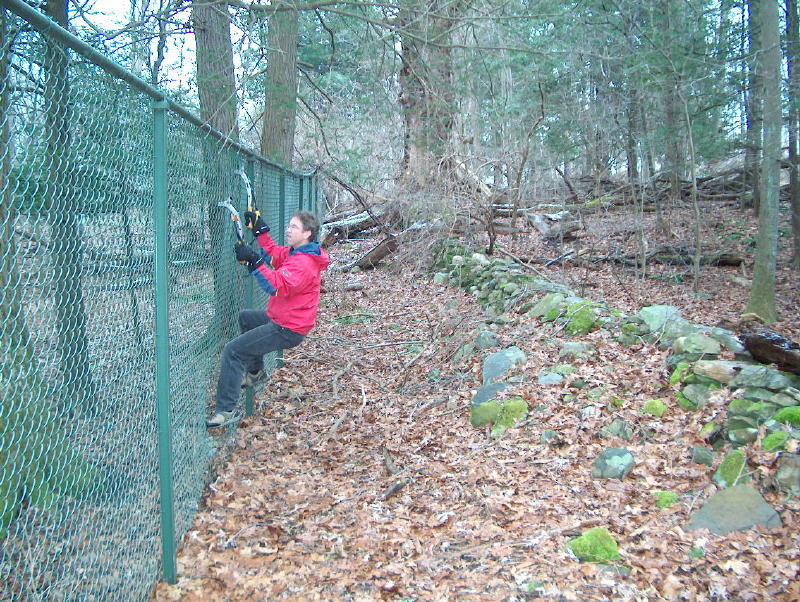 |
|
|
Gunkiemikewrote: hell yes, great idea. maybe I'll have to find some brick wall with deep enough joints too |
|
|
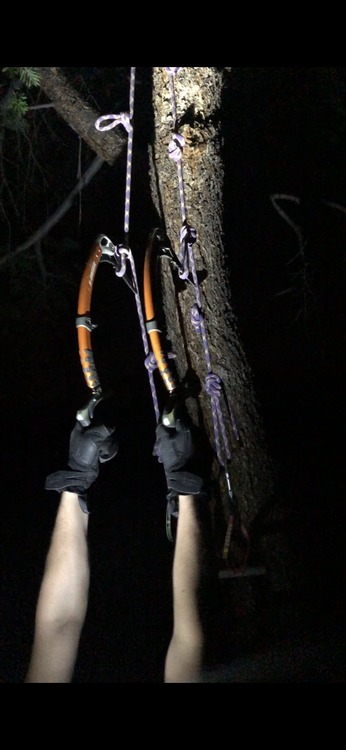 I tied a bunch of knots offset into an old rope that goes up about 20 feet. You can’t see it in this pic, but I tied circular sections to the knots down low to put my feet in as to not damage the tree. I’ll train switching one hand “pretending to put ice screw” then move up on other hand. |
|
|
Martin Brzozowskiwrote: Shallow joints will work your technique more anyway. You can work crampon technique just by scrambling in them, walking up boulder fields, etc. Maybe the pile of rubble under a highway overpass would have big enough blocks that you could really work your front pointing. The chain link fence idea is solid. If you've got a climbing wall, edelrid (I think) sells metal dry tool holds. Or you can improvise your own using half a door hinge (hook the top where the pin would normally go). Hang carabiners in some slings and do inverted rows on your tools. Put your feet on a step stool or exercise ball for extra core stability. Do one arm rows and reach the free tool to a high edge and then release. Add extra carabiners to make a ladder to walk the tools up. Variations on this theme abound. Hang a series of carabiners along a rafter or tree branch and traverse with figure 4s/9s. If you've got a climbing wall and some holds you don't mind thrashing, you can go bouldering (with care!). Any hunk of lumber near ground level can be used for front point calf raises. Pullups and other exercises on your tools, or for more pump, on towels draped over a bar. Wear old boots and/or ankle weights for more realistic foot weight while training (particularly for core exercises). Wear gloves and practice clipping in them as needed. Either incorporate into the workout (ex. traversing and clipping a short piece of rope as you go) or practice between sets just holding a draw. I'm a fan of training outdoors for better cold acclimation. 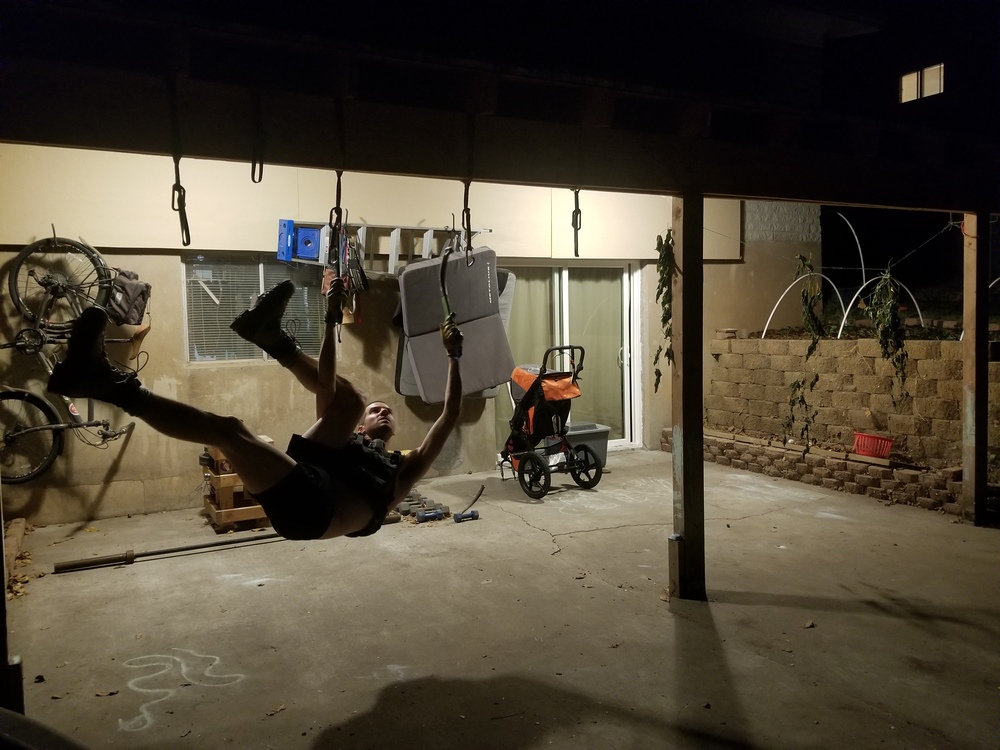 |
|
|
Martin Brzozowskiwrote: There's a rock gym in metro Detroit that does simulated ice climbing on telephone poles inside the gym. |
|
|
Derek - this is awesome, thank you drew - yes, unfortunately they are closed because the pandemic :/ But the poles are nice and pumpy |
|
|
@Martin: sure thing. Train hard and send it! |
|
|
Derek DeBruinwrote: https://www.climbing.com/news/steep-ice-skills-special/ |
|
|
Gunkiemikewrote: Seconded. I did this during lockdown when all the climbing gyms closed. Doesn't do much for your technique (though you can practice putting more weight on your legs), but you get a great pump. |
|
|
Yesterday I found a slightly overhanging fence and did a figure 4/9 traverse back and fourth |

|
|
|
|
Thank you everyone. These are all great tips on the physical training aspect, what I'm more concerned with is technique. Some people spoke of this already, but I guess my bigger question is how do you practice the different techniques that go into mixed or DT, without having access to DT routes? Essentially, I'm just wondering if there is a way that I can prepare my technique enough so that when I venture out to the mountains, I could possibly lead M1-2 right off the bat (since there is nothing near me that I could TR other than Peabody's). I also live in a van so I can't build any (large) structures. |
|
|
You're talking about M1-2? I was thinking M6-8! You can literally TR any cliff or rock anywhere to get technique. Find something that no one cares about. TR solo if you don't have a partner. I've done the chain-link fence thing which is good technique training for pure ice (got me to WI4 without having much ice where I live), but if you're thinking about M1-2... that is just scrambling and your tools won't matter much. Focus on crampon placement with an old pair of pons, just go scramble around boulders and other blocky rocky zones with them on and get a sense for how they handle and what you can trust them to do. Beyond that that just climb trad a lot so you trust your gear. I think you'll probably climb M3-4 right off the bat if you're doing those things all the time. |
|
|
Also, as various top level climbers would tell you, just go bouldering. The strength and technique carries over much more than people initially think. Looks like you're leading up to 5.8 trad, get to 5.10 at least. Just get comfortable being on steeper, pumpier and more technical climbs and everything else will follow. |
|
|
Thanks. Only reason I say M1-2 is because I’ve only ever mixed climbed like twice and both were short so I barely even know what it’s like to climb rock with tools, and I’d want to be able to lead something since wherever there’s mixed I’d have to drive really far. I mean I followed Pegasus rock finish and it wasn’t very hard and I’d probably lead it next time I’m out there. I’m not trying to start sending Mixed routes or anything yet, just if the ice route just so happens to have a short mixed section. Unfortunately there are no cliffs in lower Michigan, but I can probably find some chossy cliff after some driving and TR it. As for trad, I’m totally ready to bump my levels I just never thought I had the strength and was rather just trying to do longer and longer easy routes rather than harder short ones. |
|
|
Martin Brzozowskiwrote: In general, mixed climbing doesn't start to require tools until around M4. Below that grade it's usually easier to use your hands. As far as footwork is concerned, walking around on rocks can definitely help, as long as you're intentional about it. See what you can actually front point on while scrambling around. But really any hard surface can do the trick: the bricks you mentioned, small pieces of wood, climbing holds, etc. I bet if you get creative (and want to go to this much effort) you could glue or bolt some pavers to a piece of plywood and place it against the base of a wall. Practice traversing, stepping up and down, flagging, cross stepping, foot switching, etc., using gloved hands against the wall just for balance. |


