Continue with onX Maps
 Sign in with Facebook






Are biner blocks a good or bad idea for long rappels?



|
aikibujinwrote: Thanks for the feedback! Honestly, I tried the rappel with just a normal round (as opposed to I-beam which is what I meant by thick) locker. After the first rappel someone suggested the other carabiner so I tried it. I didn't find it to really make a difference, but I understand what you mean about adding more friction. In your example setup, that is like using an ATC Guide (what I use) in Guide Mode, right? |
|
|
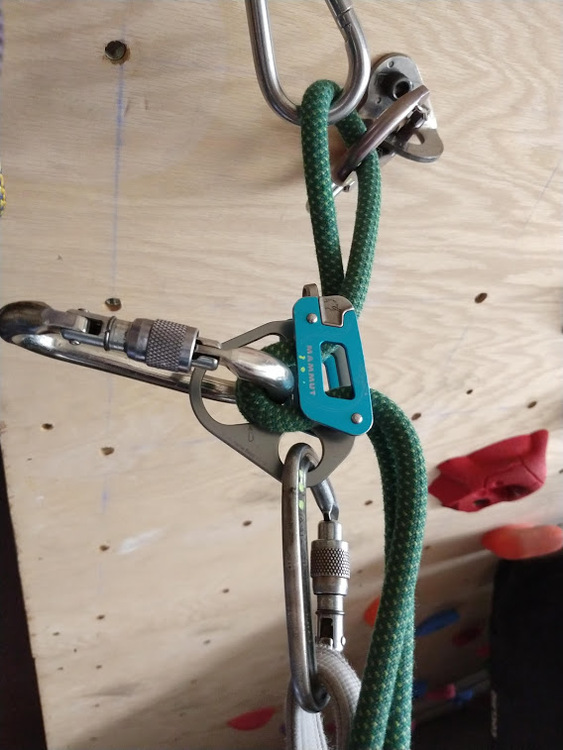
Gina Schaeferwrote: No it's not. If you rig it in guide mode, it would block the rope and you won't be able to go anywhere (a good method for ascending a rope). On your ATC Guide, there should be a drawing of a hand showing you where the brake strand goes. To rig this "carabiner brake" rappel, you would actually put the brake strand on the opposite side of the brake hand drawing (in my picture, you can see a drawing of a little hand holding the rope at the top of my Mammut Bionic device). |
|
|
aikibujinwrote: High friction mode vs. regular-friction mode. RFM is like using a classic ATC, HFM gives you those little grooves on the brake side, but I could never tell much difference. 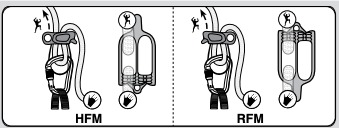 |
|
|
JaredGwrote: On low angle terrain, even regular friction mode has too much friction and can result in a bouncy rappel. |
|
|
I don't know the technical response to this. However I would be tempted take a step back. I would consider whether or not the gains in weight are important for my current endeavours. For me personally, the weight difference isn't going to make a difference as to whether or not I achieve my objectives. I'm just not climbing multi pitch that are close enough to my limits. But the flexibility of having 2 dynamic rope strands is nice. If whatever happens, I have more options with a twin/half rope than with a single strand & pull cord. If you want to cut down weight I would suggest looking into half or twin ropes. |
|
|
nrj5011wrote: nrj5011wrote: It’s the standard in canyoneering most places outside of the desert. You don’t throw the second side of the rope until the last person is rappel, and you also almost always Have a decent ledge to stand on and weight the rappel as a check that you’re on the blocked side. For wet rappels (most canyoneering outside the desert), anchors are rigged releasable, such that if needed you can lower the person on rappel, which is especially important for high flow canyons with hydraulics where people can get stuck on rappel and potentially drown. I canyoneered before I climbed and never understood so many of my climbing partner’s aversion to single strand raps and using a pullcord. It’s nicer with my canyoneering rappel device which has adjustable friction, but my 6mm pullcord is certainly lighter than an extra rope and is easy to use. Another reason single rope raps are nice is that canyoneering can have some pretty low angle raps, in which case double rope rappels can be a huge pain. Too much friction on the base setting. Canyoneering specific rappel devices you can add friction on rappel easily, so I’d rather have less friction in the base setting. As far as if your rope gets stuck, it definitely has an increased risk of getting stuck by having probably a slightly a larger knot and a biner hanging off, but if the issue is it won’t pull right away (which seems very odd), it’s actually a whole lot easier to ascend a single blocked off rope than a double unblocked rope |
|
|
Zachary Zwickwrote: I am somewhat unsurprised, yet saddened to hear that it is standard practice. I don't recall them saying in the SE podcast episode whether or not they waited to throw the second side of the rope until she was ready to rappel, but she was on a good ledge and there was no reason she couldn't doublecheck her rappel. They also went on and on about how many years of experience, people she had taught, hundreds of routes she had done, etc. They don't describe the rappel as being low-angle, and rock climbers also do plenty of low-angle rappels- I am thinking of the first rappel off Royal Arches and off most of the domes in Tuolumne- they're really not that bad, and certainly not worth changing rappel methods. The accident described in the SE podcast was clear-cut user error made possible by their choice, not necessity, to single-strand rappel and the danger was increased by using a single rope, where both strands coming from the anchor look identical. My question still stands: Why is a single-strand rappel standard practice in this scenario? Does anyone believe it is worth the risk? |
|
|
nrj5011wrote: Everyone has their own personal lines drawn in the sand as to what is dangerous and what's not. Plenty of very experienced climbers have died or been seriously injured after making mistakes as simple as this one. Being a smaller person, I can tell you it makes a HUGE difference doing a double strand rappel vs a single strand rappel. Double strands are often more work than fun for me and if that was my only option I probably never would have bothered canyoneering after my first trip. Canyoneering rappel devices are made to be used with a single strand and have lots of friction options for this reason. You could do double ropes on some of them, but they really function better with single strand. It's also worth noting that canyoneering rappels can be 200+ feet depending on where you are. Making sure you're on the proper side of the rope really isn't much different than making sure you clip in with your PAS, test your device, or visually check your device to make sure you're actually attached. It's a really simple step that generally isn't a dealbreaker. When people are tired, rushed, distracted though... accidents happen. |
|
|
Gina Schaeferwrote: As described in the comments above, there are ways to both reduce and add friction in a double-rope rappel with a $20 ATC. For 200' rappels, you need two ropes anyway which increases the rationale for a double-rope rappel in my mind, and for those light-and-fast folks, at least a pull cord cannot be mistaken for the rope. In the SE podcast, they state that the group was essentially taking a chill rest day and were not tired, rushed, or distracted. Of course, checking that you are on the correct strand when using a biner block is a standard safety check similar to checking that the rope is threaded correctly through your ATC. However, it is an extra safety check, and is clearly difficult due to the ropes appearing to be identical, even for the experienced. I am not a canyoneer but it appears to me that using biner block with a single rope, when a double-rope rappel could be done instead, is unnecessarily risky and should not be taught as standard practice. |
|
|
nrj5011wrote: I'm not a canyoneer either, so I'm scratching my head on why you're arguing what should or shouldn't be a canyoneering standard practice on a climbing forum. |
|
|
Tom Chingas wrote: I hope you're kidding... ? |
|
|
nrj5011wrote: It actually works pretty well: climbing.com/skills/long-ra… |

|
One single line and one tag. I use a sterling 7mm tag. EDK, rap duel ling with an ATC. I'm not sure what the benefit of rapping single line is other than getting to use your grigri. Use a prussic backup and it's all the same to me. |
|
|
nrj5011wrote: I give the rope a good yank before rigging in every time. Simple, quick and instinct. I put that at 0% extra effort. I also should mention that it’s standard practice in canyoneering to have someone man each rap station (usually whoever’s carrying the rope used there) so they just hang out there and will just hand each person the right end. Not always done but it is in my experience the common practice |
|
|
Stephen Lwrote: My tag is very light and not rated. I’m alright with that because I can single strand rap and the strength of the pullcord isn’t important at all except that it needs to be strong enough for me to be able to apply enough force to pull it down. I think some good yarn could probably handle that. If I was screwed I’d double it and have no doubts it’d be fine, but I have no desire to put my weight on something that isn’t supposed to be used for that. Never seen anyone use this climbing, but check out this https://www.canyoneeringusa.com/store/super-pull-cord-amsteel-18-x-300-feet It’s not even very popular among canyoneers but it works. Haha don’t think I’d want to rap on that on one side and a climbing rope on the other |
|
|
Zachary Zwickwrote: I think that stuff is similar to "tech 12," a rigging cord that stunt peeps (film industry) use. Pretty slick stuff, seems like it would be hard to get good friction for the knot if used with a larger diameter single line. I dunno, never used anything like that. I see the benefit of single line rap if it means you're saving big weight. I guess I'm not doing anything hard enough to warrant shaving ounces, that sterling tag has been great so far. |