Continue with onX Maps
 Sign in with Facebook






hammer ? stainless steel ?



|
Post cleaning, kinda wondering about rubbing the cleaned surface with a cut lemon (or brushing on some citric acid solution). Then, after some time, rinse it off with water. |
|
|
jonathan knightwrote: Open to ideas, but I'd try a brass brush then oxalic acid (bar keepers friend). Hopefully, they don't need to be removed, but we could do that too if necessary. Don't use a brass brush ( the voice of experience here), use Scotchbrite or a stainless scouring pad and any citrus based cleaner. Better still don't have the problem to start with. |
|
|
Thanks for the advice! Now to find the bolts. They look to be in our local quartzite. Tends to take an whacking to pound a wave into the hole so the extent of the corrosion isn't surprising. Jim, I'm going to keep suggesting that our org by some of your bolts from Team Tough. That would save us some of these headaches. |
|
|
jonathan knightwrote: Thanks for the advice! Now to find the bolts. They look to be in our local quartzite. Tends to take an whacking to pound a wave into the hole so the extent of the corrosion isn't surprising. Jim, I'm going to keep suggesting that our org by some of your bolts from Team Tough. That would save us some of these headaches. I got tired of pounding Waves (and having headaches with removal if you had to dink with more glue etc) and just starting drilling 14mm holes for Waves I'm issued by the local .ORG. I buy Jim's stuff if it's out of my pocket. I esp like using the twist to drive the glue into the hole as I insert, less mess. |
|
|
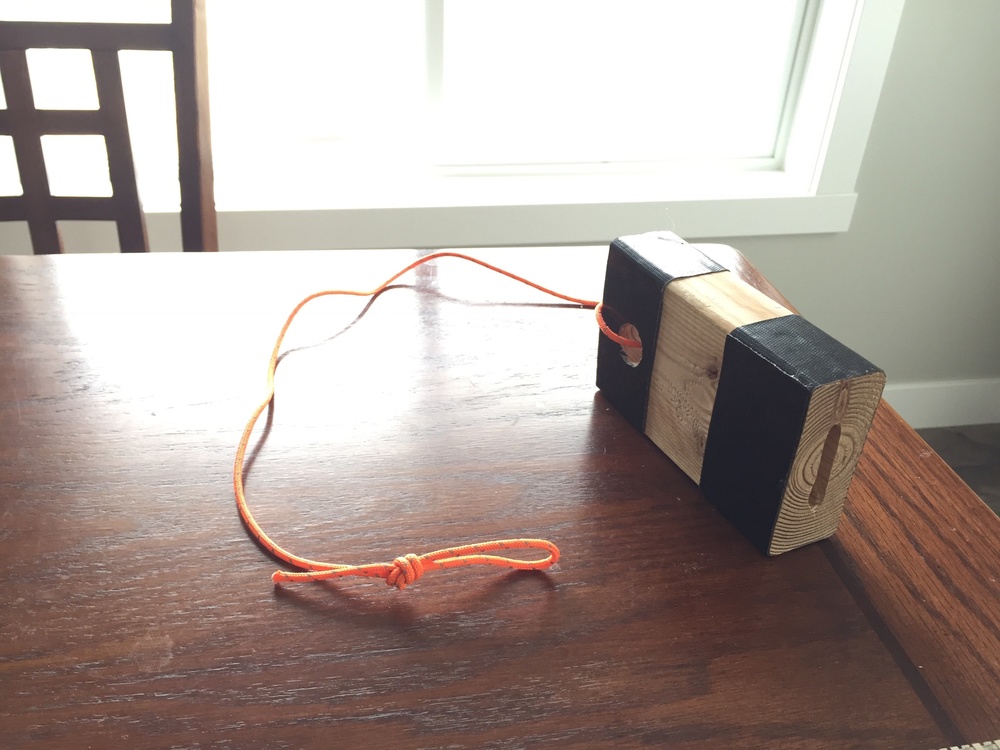
Yeah, I think it was a time I had a wave squash and bottom out in the quartzite convinced me that less interference was good, or a SS wall hammer would be better than this damn rubber mallet. |
|
|
mattmwrote: yep, 14mm bits are the way to go with waves! |
|
|
I've had great luck with scotchbrite. |
|
|
Got those waves cleaned up. The Barkeepers worked the best imo. Lemon juice and citrus GoJoe worked but not quite as well on the iron in the deeper crevices. Real quick and easy process with a Scotch Brite pad and a hot sauce bottle with water for the rinse. 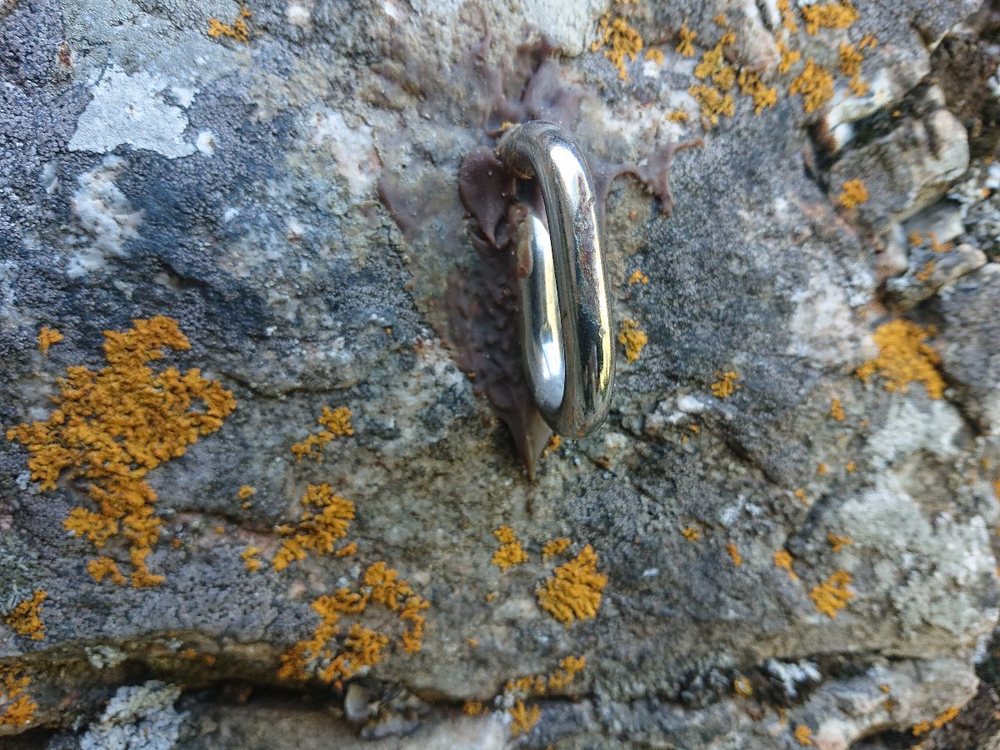 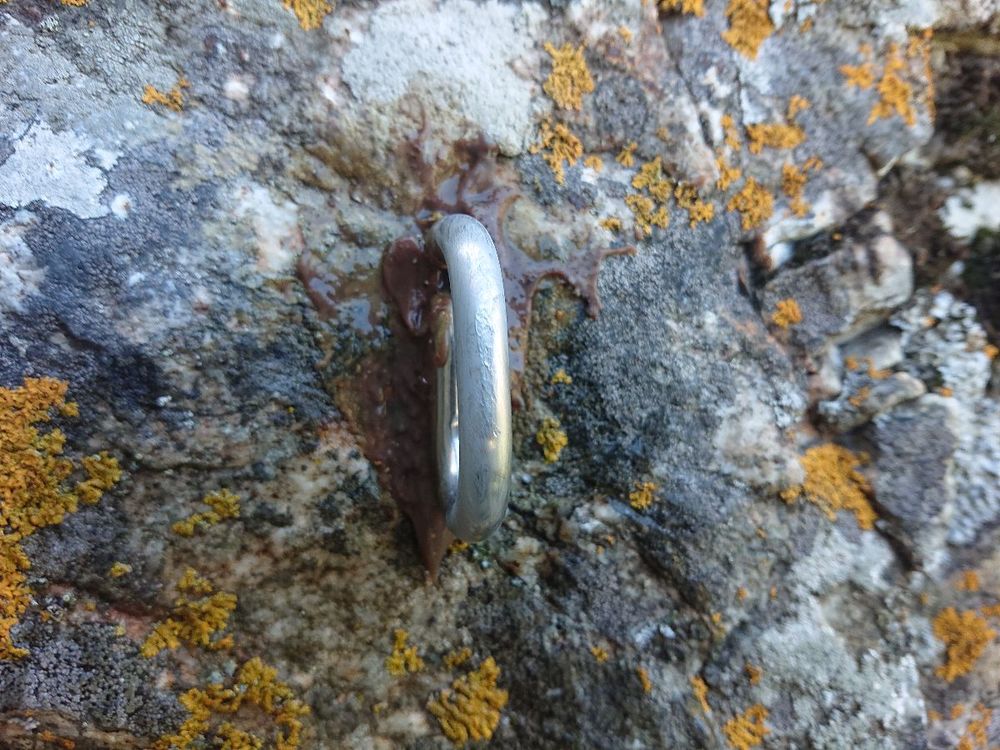 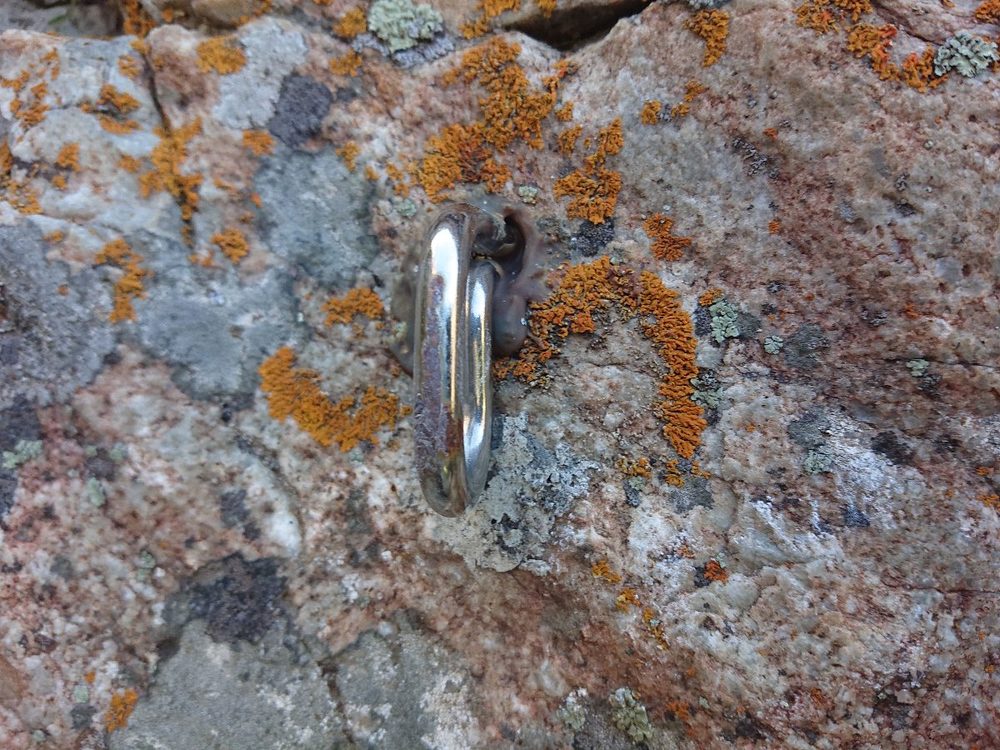 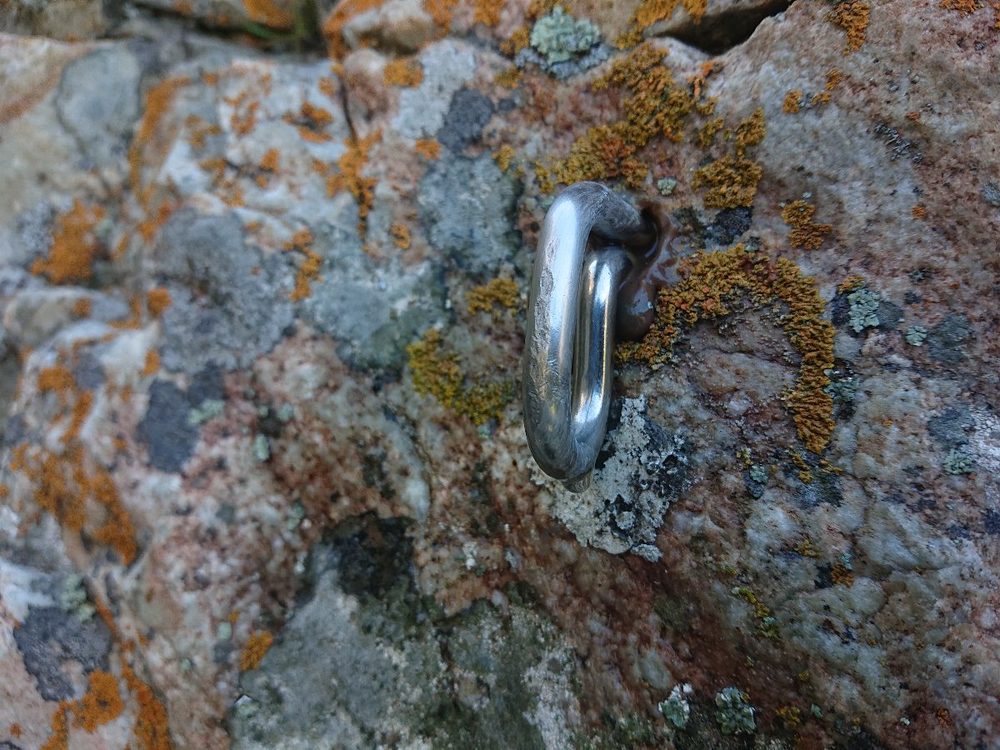 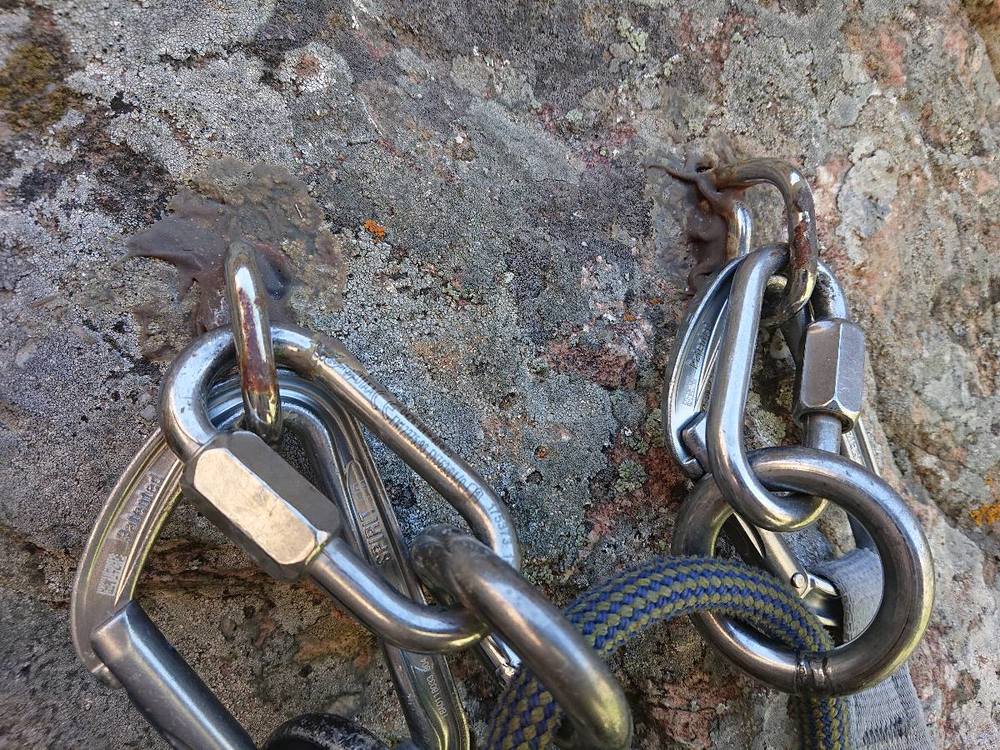 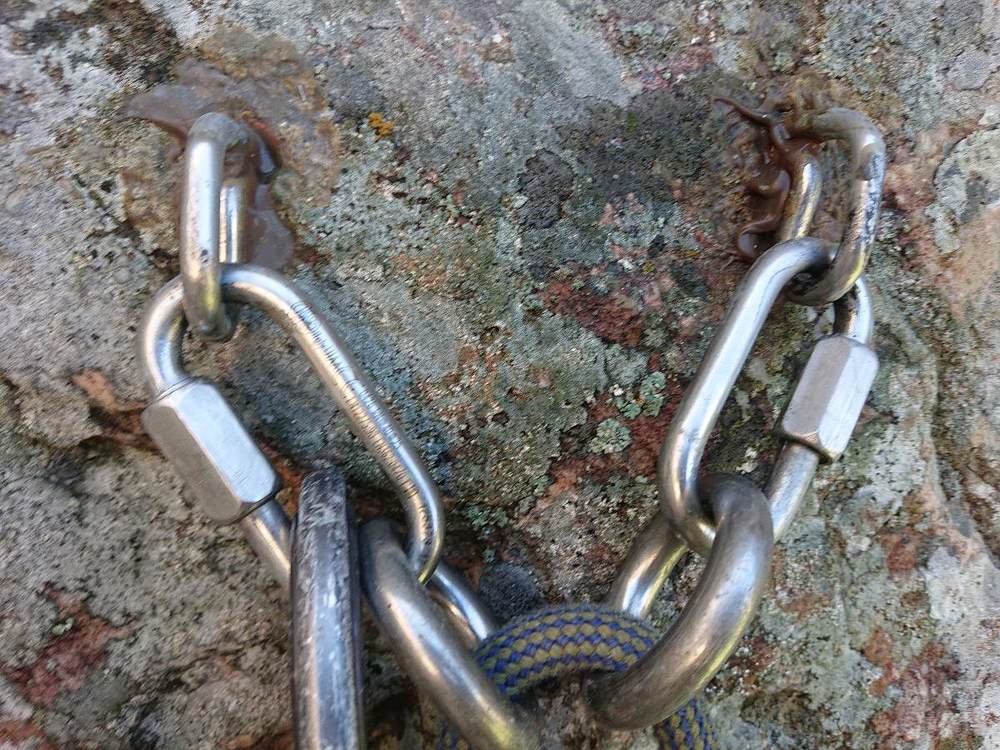 Brian, keep an eye on these. Hopefully this will take care of the corrosion but no guarantees with Mr. Hankey's glue slop likely covering some of it. |
|
|
Reckon you'll be cleaning them again! To get even the normal surface passive you are talking 35 minutes or longer in a temp controlled bath and the way the iron has been pounded in on those some more agressive action would be needed. Oxalic acid isn't a listed passivating product by the way. The weld on the right hand ring also needs pickling, that black stuff is a no-no. |
|
|
Yeah well, no rain till August around here so we'll see about that! |
|
|
And pretty common to see the black stuff and corrosion on the ring welds. Is there risk of catastrophic failure in the near term? |
|
|
All hammers mushroom. Your job is to keep it in good shape. |
|
|
They have been seen cracked completely through beside the weld, where they are black there is no corrosion resistance as the chromium is no longer there. |
|
|
Easy enough for the installer. Thanks Jim. Have to keep an eye on the rings too. |
|
|
NRoblwrote: This seems like a very common sense approach to the problem at hand. I was envisioning a hardened plastic version that popped onto the end of the hanger but this wooden version seems super practical. Also, it probably makes a funky clopping sound when you pound on it? Kind of like a slow motion version of galloping. |
|
|
I recently ran into a similar issue of minor surface rust on brand new stainless wedge bolts. I've never had this problem before, so I assumed it was from the new hammer I was using, a DAMMERR. I placed the next set of bolts at the same crag while using my old Petzl Bongo and the problem did not occur. |
|
|
Dakota from North Dakotawrote: I recently ran into a similar issue of minor surface rust on brand new stainless wedge bolts. I've never had this problem before, so I assumed it was from the new hammer I was using, a DAMMERR. I placed the next set of bolts at the same crag while using my old Petzl Bongo and the problem did not occur. IS the bongo Stainless? Been trying to find out for ages. "INOX" |
|
|
mattmwrote: I can't say without a doubt that it is, sorry. I only know for sure that after hundreds of bolts I've never run into the surface rust problem while using the Bongo |
|
|
In critical industries like nuclear plants and chemical plants, carbon steel is never allowed to contact stainless. If this is a real problem for us climbers, we need to not only use a stainless steel hammer but also stainless steel wrench of equal or higher grade stainless than the bolt. In critical applications, a stainless wrench that has been used on mild steel is not allowed to be used on stainless. I doubt any of us carry a virgin stainless steel wrench. You should probably also avoid other sources of iron such as iron-bearing rock like red sandstone. |
|
|
Dan Merrickwrote:...How many climbers have load tested their own bolts? Often only the crux bolts |