
 Continue with onX Maps
 Sign in with Facebook






Help me invent a retractable quickdraw?!


|
|
It seems like you’re thinking about what may have happened with the Animal World accident, and the risk due to clipping above your head (extra slack and longer fall). How about this low tech solution, which is a variation on clipping both a long and short draw to the hanger 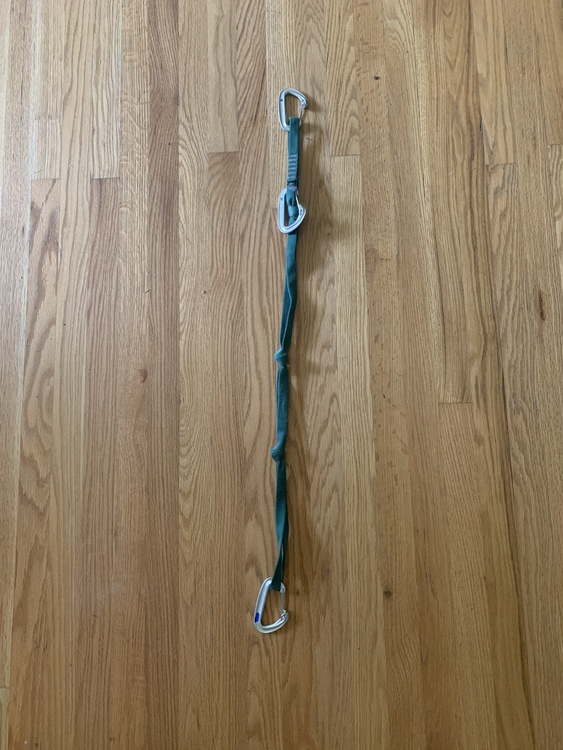 |


|
I only recently learned that the term for hanging really LONG draws to put the clip below a cruxy move is called "festooning." |
|
|
I only read the first page so forgive me if I'm repeating. |
|
|
On a wall this is where you would have a fixed line. |
|
|
Sport climbing was always called the invisible top rope... now its visable |
|
|
What you’re asking for is called a Kong panic draw. You can get one on rei for 40 dollars |
|
|
John RB wrote: I want a long draw (say 2m long) where it is prehung on a bolt 2m overhead. You clip the rope through the biner on the draw, then do something(?) and the draw retracts up to the bolt 2m higher and assume a normal length (10cm or whatever) with normal strength at that length. what about using a Petzl connect adjust lanyard, hook the metal locking device to the bolt with a carabiner, and a carabiner to the end with the loop to clip the rope to. to shorten the "draw" pull the tail and the rope would go up, allowing you to essentially top rope the crux not sure about the strength ratings for dynamic load but it could work just fine and if you are worried about redundancy the dual connect adjust would allow you to have a long sling as back up while still being adjustable |
|
|
Hari Rau-Murthy wrote: What you’re asking for is called a Kong panic draw. You can get one on rei for 40 dollars Explain to me, Mr reading comprehension, how an 18" long stiff quick draw helps a climber from 2m below a bolt then simultaneously retracts at the bolt. For the Petzl lanyard (or any tie down device, NRS or whatever) I've got several. For aid climbing or positioning while bolting. Also a non climbing version for my hammock and homemade TRX rings. |
|
|
Mark E Dixon wrote: Sometimes you just need to get stronger or pick a different climb. I think this is the correct answer for pragmatists. For solving the technical problem, I think the microtraxion or petzl adjust rigged to the hanger side of a dogbone with a long tail coming out the slack side of the progress capture system would be the way to give yourself the ability to pull a drawstring and transform the long dogbone lead pro into a short dogbone toprope, midclimb, before committing to “can’t let go for a microsecond to clip, falls would be super dangerous” terrain. |
|
|
Brent Kelly wrote: Edit: Ha, so, basically I just described the exact solution described a few posts earlier. It’s kind of a brilliant one, no? But, it still requires installing the gear from above.... so.... stickclip... Typically you can get up a route bolt-to-bolt long before you can link. So equipping whatever contraption in advance is typically fine (and like you said, you can just stick clip). The winner so far is reboot since his system is fairly simple and clearly is fall rated since there are no devices involved. He just has a rotating clothesline that lets you haul a draw up higher with one hand. |
|
|
John RB wrote: OooOOoooh reboot's solution is slick! It does incur the risk of the downward force of the fall being redirected to an upwards force on the lower bolt hanger, and, since you've esentially installed a 1-to-1 pulley for this system (without a progress capture device) isn't the force on Bolt 6 subject to a 2X force multiplier (somebody please check my math here)? |
|
|
I think you may be overthinking this. Clip a regular draw and then add whatever length of sling to the top biner of that draw. This way, there are two clips you can make for each bolt. (edit to add: just like Jim's picture a few comments ahead of me) Or do what everyone else does and the FA intended and just run it out. |
|
|
Mike Womack wrote: I think you may be overthinking this. Clip a regular draw and then add whatever length of sling to the top biner of that draw. This way, there are two clips you can make for each bolt. (edit to add: just like Jim's picture a few comments ahead of me) You're both missing the (questionable) point of the OP: he claims the issue is that the climber cannot take his hands off the hold long enough to make the shorter clip. Or do what everyone else does and the FA intended and just run it out. The FA didn't intend to place a bolt and then ignore it and run it out, esp if doing so can mean a ground fall. Hence the suggestion to get stronger/better on routes more within the climber's ability. |
|
|
If I understand what your wanting correctly, you could use something like an alpine block and tackle setup with PCD... but thats a lot going on. |
|
|
Just want to add that the guide plate / grigri on the uppper bolt can be backed up with a knot clipped to the lower bolt. Most likely the device holds and avoids reboot's pulley effect, but if the device fails you end up with reboot's solution. |
|
|
Fix a taut line on top and the bottom. top rope solo it... no chance of swinging... seems like extreme via feretta!!! Cool! Now we can call it the new age of climbing. |
|
|
Serge S wrote: ...but if the device fails you end up with reboot's solution. I dont think a grigri would have much of a chance to fail, if it was turned away from the wall, and setup normally. I'd trust it less as a top rope setup, but for one bolt of climbing, there's little to worry about. My vote is for the GriGri, with a long rope setup as a ridiculous draw. Pretty genius. If you're going through that trouble, I'd put 2 biners on, opposite and opposed. |
|
|
John RB- |
|
|
Edelrid makes an adjustable "cordelette" that could be used for this purpose. It's a bit beefy though. 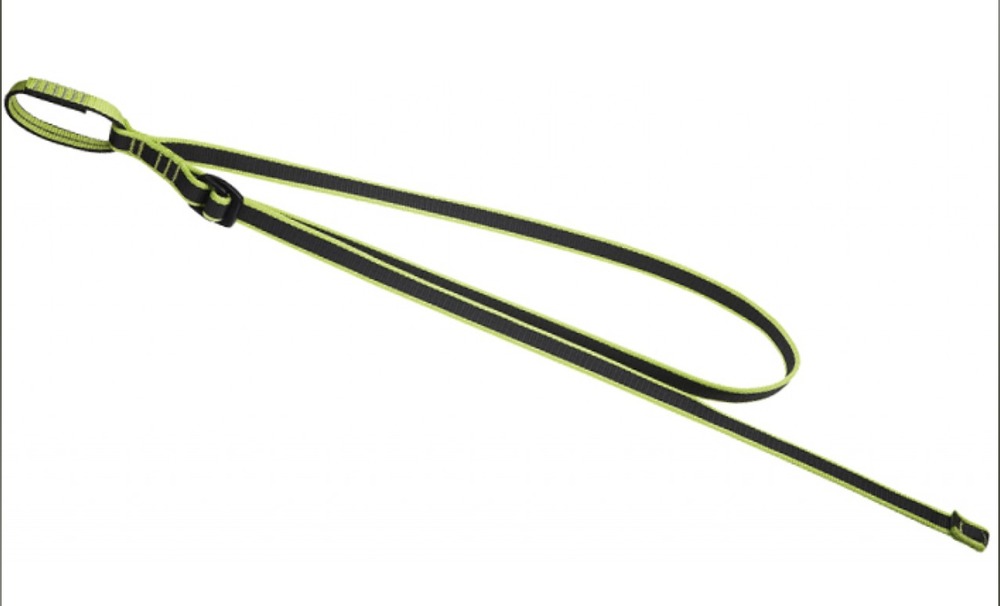 |
|
|
Sean Peter wrote: John RB- Yes that is exactly what you could do. I have used these lot at work. They are 5000lb or about 22 kn rated |


