Continue with onX Maps
 Sign in with Facebook






Merlin Cam Safety Notice


|
|
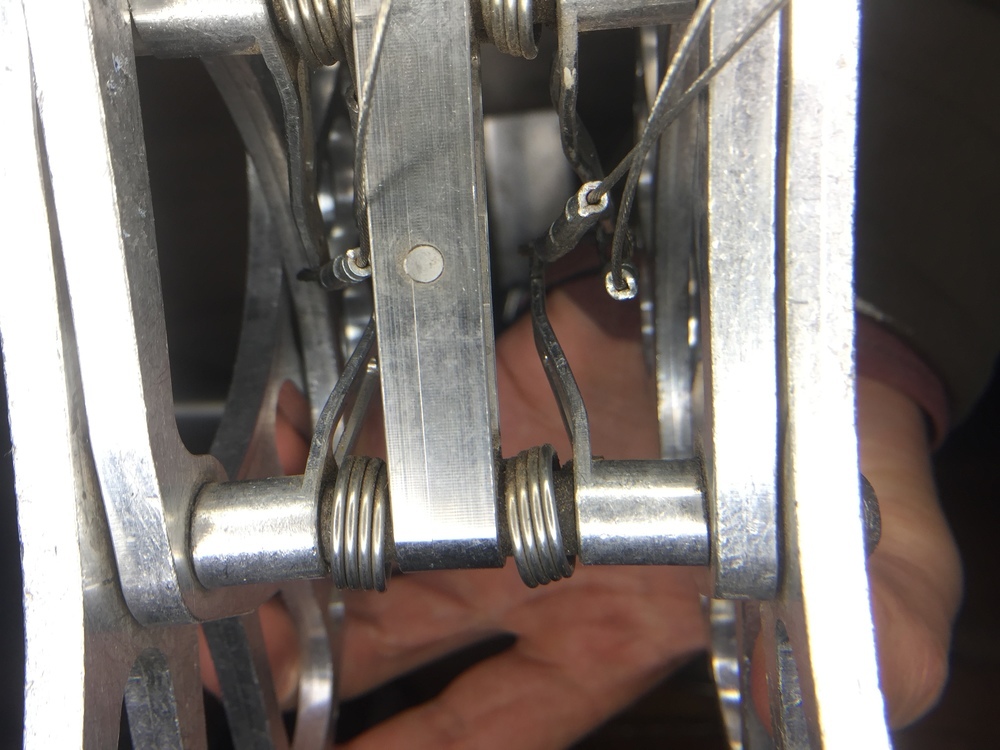
Joey Jarrell wrote: Erick asked me to add this photo to the first post. Also figured I'd share it as a comment so it isn't missed as an edit. Not sure it adds any clarity or anything, but you guys might appreciate it? since this is basically garage specialty gear, if it were mine, i would drill out that stem, replace it with another only to have a stiff stem to operate the trigger, drill out 2 more holes, one on each side of it and swage a u cable through them for hanging body weight placements off of and use it again. but thats just me, im a do it yourself kind of dude. yes, properly swaged cables will hold way more than body weight.....it would work fine as its designed to. most wont agree with me. some will be butthurt that theres a piece of gear out thats pretty much homemade and not tested, who think there should never be any such piece of gear, some will know what it is, and still be ok with it, in the end, it will turn into the usual m/p shitshow, with everyones opinions being "the only opinion that matters" and there should be no other. whatever, i dont know why im even replying to this thread, i dont even own one..... |


|
EFS wrote: If it were mine, I'd send it to Erick for his analysis and for this community discussion. (Like the owner did) But it wasn't mine and it wasn't yours. I am thankful that the owner wasn't you and decided to bring this up to the community so that we can all be educated on what we (some of us) are climbing with. |
|
|
Bill Schick wrote: I'm both entertained and disturbed by - despite how clear the facts are here - some are going to continue using this cam. elaborate please! if i'm on a climb and there is zero protection above 6 inch gear should I just run it out? I do occasionally run out easier wide climbing, but if I have something to place, then I place it. |
|
|
Has there been a stem failure of any Merlin that wasn't stored wet/didn't have the potential corrosion issue this one did? Or is this the only known Merlin stem failure (besides those induced by Erick after ~70 bend cycles @ 35 degrees)? |
|
|
Sirius wrote: Has there been a stem failure of any Merlin that wasn't stored wet/didn't have the potential corrosion issue this one did? Or is this the only known Merlin stem failure (besides those induced by Erick after ~70 bend cycles @ 35 degrees)? The salient question is how many cams were manufactured with this [over]heating process? I would assume all of them unless told otherwise. That means every cam he's ever made could fail under body weight. Have fun with that, fanboys. It's a pusher piece - meaning your only piece. So you're waaay up there - and the stem snaps off? Like holy fucking shit, batman? That makes me cringe - and I fucking LOVE that some of you think that very real and possible outcome is OKAY! Like you got this, you've analyzed the situation with that steel trap mind of yours and you're going to handle it! You're the kind of person who needs a cam in a crack this size in the first place - so you're totally not going to completely freak the fuck out. That said - I do like the cord backup idea - but it won't rotate the cam to the direction of pull - which might be a problem when the stem just snapped off while doing exactly this. Erick Davidson wrote:The stem is not welded or brazed, at least not in this area. It is delivered in Condition A, I head [ed: heat] the end to flare it out in a 5 deg taper, and then heat treated this one to the H925 condition. I remove heat treat tint by mechanical means and then press the stem into a mating taper on the stem end with a couple tons. It is a self-retaining taper so that is all that is required, no braze. I do silver solder the opposite end to a 304 SST handle but the stem end side doesn't see any heat outside of the initial heat treatment. I tested the hardness on this stem and it checked out. FYI - for those with short attentions spans and low reading comprehension: |
|
|
Climbing is dangerous Bill, and we are all going to die. |
|
|
Bill Schick wrote:Explain your overheating theory, please. |
|
|
Bill Schick wrote: that steel trap mind of yours and you're going to handle it! You're the kind of person who needs a cam in a crack this size in the first place As I suspected, you're not an offwidth climber. So this needs to be explained to you... Merlin cams are the only lightweight cam option. You can't bump big bro. VG are super heavy and lugging an already heavy rack gets out of control. So yeah, if this happened to a cam that didn't marinate, get bent, then soak again (Repeatedly) along with miles of wide crack, then yeah, it'd be an issue that it broke. |
|
|
It's like you took your sports car on rough dirt roads for 500 miles then complain to the dealer that a crankshaft broke when you got it high centered on a berm |
|
|
Just give it a beefier stem, won't add much weight and will be all hell of a lot safer. The obsession with lightweight is counterproductive. |
|
|
Bill, your replies are overconfident, angry, and have little regard for the material science going on here. You're fear-mongering, and it's not fair to the readers on this forum nor Erick. Stop trolling. Or at least become a little more entertaining like Tradiban. |
|
|
revans90 wrote: Orange is the fracture region at ultimate failure (the fatigue is really the failure mode imo). After the fatigue area, the fracture progressed along the orange lines to the final fracture area on the upper right, which looks like shear from the picture (actual shear loading, not the shear component from tensile loading). I wouldn’t call it cup and cone as that refers to the classic shape of a tensile fracture. It could also be post-fracture damage as the broken shaft rubbed the surface; hard to tell from a picture online. I’m unclear what you mean by etched. |
|
|
Joey Jarrell wrote: i didnt say i wouldnt have brought the issue up to the guy who made it...the guy who made them put out a notice about the issue, as he should have. erick 100% legit in my book. dont assume what i would or would not have done because i said i would mod the gear to make it work. i still in the end would have a cam with a missing stem, which is why i would do as i said, so it would allow the cam to be used again, bumped above still, and hung on if necessary. unless he needed the cam to be evaluated. from a large manufacturer, in that case i would expect another to replace it, but from a one man operation like erick, it would have to be played by ear. im sure hes a stand up guy and would do the same, but he may end up not even wanting to make another after this, due to liability issues and the litigious society we live in. i would hope thats not the case though. if he did send another, id still swage a cable on it like i said earlier and possibly even braze it...he is welcome to use my idea if he thinks its a good one. |
|
|
About 1 year ago, Erick Davidson went on the All Things Climbing podcast to discuss his cams, and he goes into a lot of depth about the stem design. |
|
|
Appreciate the discussion here and all the effort Erick put into making these cams available to our wide-loving community. Echoing what others have said: Erick please keep making these! Most of us were well aware of the limitations of the cams when we bought them, and they still fill a valuable and unique niche as light, bumpable, big crack pro. |
|
|
Bill Schick wrote: Well I wouldn't like to give a definitive pinion based on a photo (and I'm just an engineer that works with stainless not a metallurgist) but hot heading is to be treated with caution. For the common stuff like bolts there are special grades available and warm heading is an option but for 17-4 things are more difficult. Hot heading is forging and the conditions are "For forging, the material has to be pre-soaked for 1 h at 1177° C (2150°F). Grade 17-4 should not be worked below 1010°C (1850°F). Post-work solution treatment has to be performed before the final hardening step." That is you must heat treat at 1038°C/1900°F for30 mins then cooled rapidly below 16°C to bring it back to martensitic condition. Then heat treat.The problem with heading being the tooling that clamps the rod when it is headed has also to be heated to the 1177°C or you get a boundary layer between the two conditions if you don't solution treat afterwards. |
|
|
His post didn’t specify how it was headed, but I’m interpreting it as being cold headed. But I’m not sure the heading is of concern with how small the taper is. Condition A can be cold worked and precipitation hardened. The head itself will probably be a little stronger with a bit less ductility, but the process seems sound from my research. And we know the stem was bent multiple times without breaking. |
|
|
bagel bagels wrote: His post didn’t specify how it was headed, but I’m interpreting it as being cold headed. But I’m not sure the heading is of concern with how small the taper is. Condition A can be cold worked and precipitation hardened. The head itself will probably be a little stronger with a bit less ductility, but the process seems sound from my research. And we know the stem was bent multiple times without breaking. Well I was replying to the person I quoted, personally I'd assumed it was cold headed but that was just because that's how I would do it. |
|
|
Jim Titt wrote: There’s a discrepancy between Erik’s post and Bill’s quote of the post, which may be causing us some confusion. The sentence about heading. |
|
|
bagel bagels wrote: Yeah, re-reading it all about 3 times I realised the edit in the quote wasn't an original from Erik. Possibly Bill doesn't know what heading is and decided it was a spelling mistake. Thinking heat tinting is evidence of over-heating tells me perhaps his knowledge is a bit lacking though the fact that it is visible after mechanical removal means that area is still sensitised which does nothing for the corrosion resistance. |