|
|
Joey Jarrell
·
Dec 15, 2019
·
SLC
· Joined Jun 2013
· Points: 145
Erick emailed this out and he posted it in another thread. I am quoting him and creating a new topic specific to the notice, so that it is not missed.
Erick Davidson wrote: Merlin #8 SAFETY NOTICE
Regretfully, I received notice a little over a week ago of the first stem failure of a Merlin cam that I'm aware of. Luckily, no-one was injured in the incident. The cam failed due to an unforeseen use case and failure mode. I spent the past week analyzing the failure and here are the details.
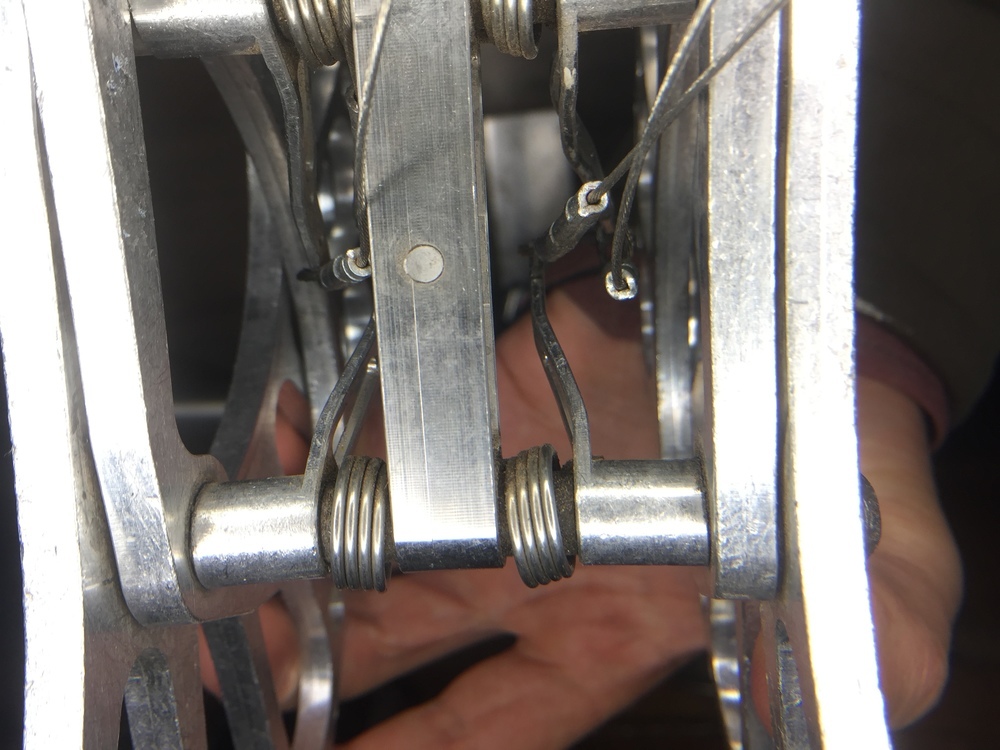
Circumstances: The climber was aiding on the cam and was hooked in direct with a fifi when it failed. The stem failed right where it meets the base.
The cam: The Merlin #8 that failed was SN 102. The cam was purchased in May 2018. The cam was used extensively in the southwestern US over the past 1.5 years. It was stashed with the rest of his rack in a heavy plastic bag. It got rained on in Feb 2019 for a day or two when the rack was not in a plastic bag. It was subjected to night time dew/moisture during that week in Feb 2019. The cam had some rust around the black screws from the Feb 2019 rain event and some WD40 was applied. The cam was used frequently. Storage was in the plastic bag at the crag except for a couple months when it was stored in a closet indoors.
Load history: During the frequent use of the cam, the cam was yarded on about 10 times and used for direct aid about 10 times. There were no whippers taken on the cam. The stem had to be bent back to straight 2 or 3 times and was not bent by more than a few degrees.
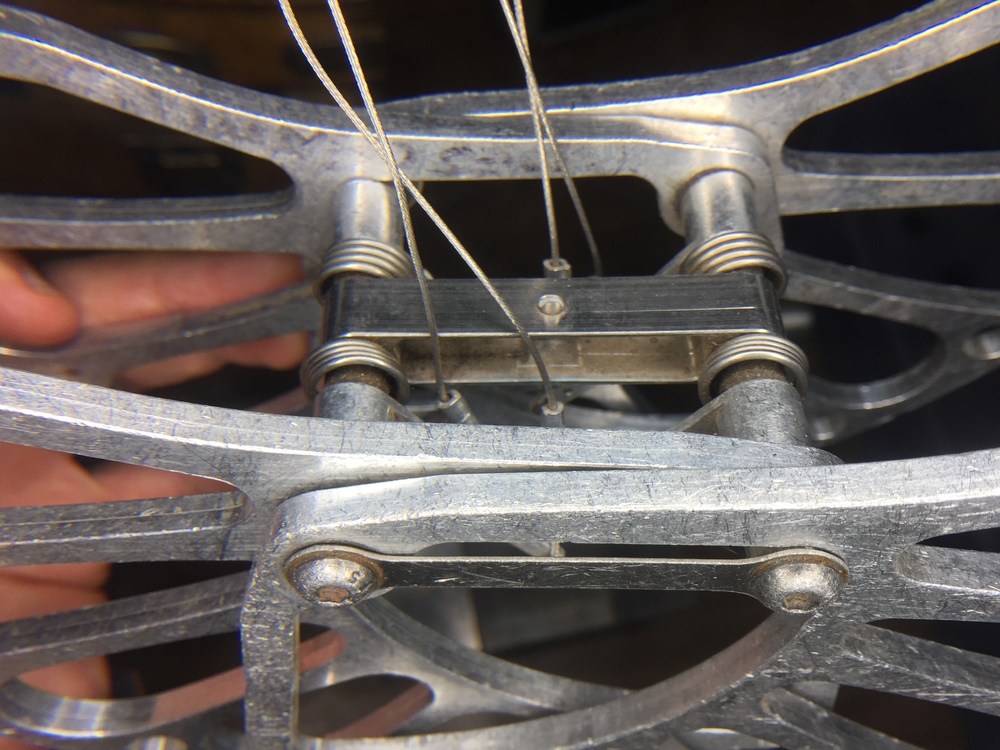
Analysis: Here is a picture of the failed cam:
The cam was very well used but its load history alone wouldn't explain the failure. The stem was bent by about 10 degrees when I received it meaning it was bent by at least 10 degrees when it failed. About the same time this cam was sold, I did stem bend testing on a stem from the same batch that this stem came from. I tested two stems by bending the stem back and forth 35 degrees to each side (20 degree bend after springback) until failure. One stem survived 66 cycles and the other 68 cycles or no less than 132 bends. A bend of this magnitude would be due to a very off-axis force. Fatigue is highly non-linear meaning lesser bends result in substantially higher lifetimes. In other words, given this cam's load history, it should have survived thousands of more cycles. It should be noted here that bending a solid stem like this results in the highest stresses and strains that the stem will see - the actual load of body weight or even a whipper results in less stress and strain.
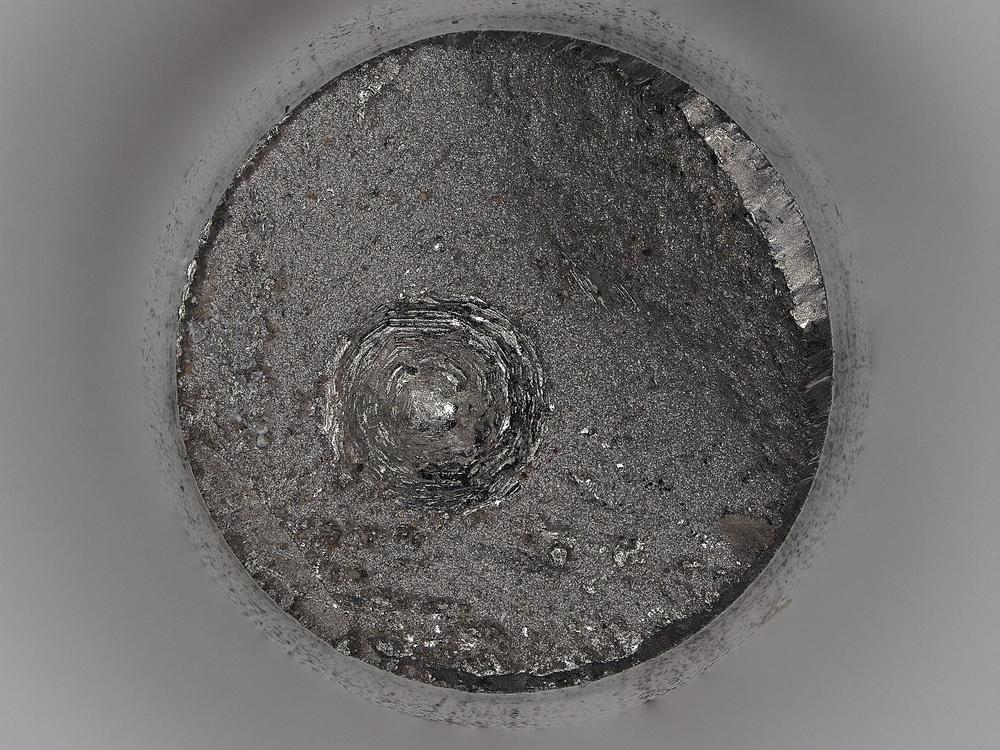
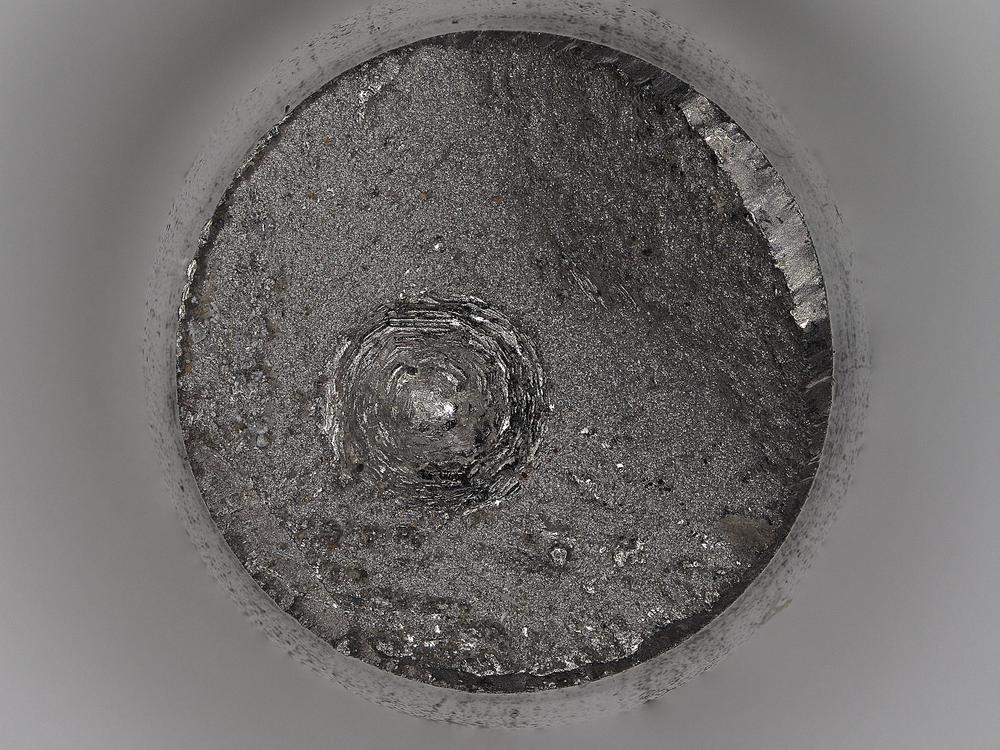
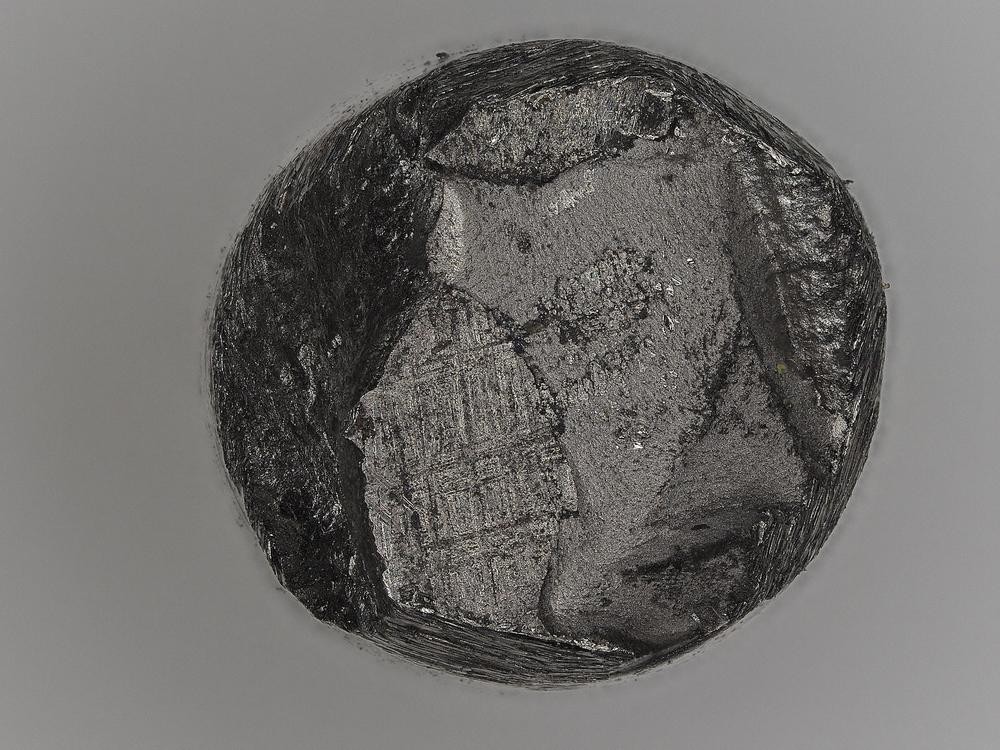
Aside from failing at significantly fewer cycles than my bending tests would have indicated, the other thing that didn't add up was the failure being right at the point where it meets stem end (base). In all of my bending tests, the stem failed at the point of highest strain, which is in the middle of the bend or about half an inch above where it intersects the stem end. I looked at the failure at many different angles under a high power microscope and noticed that the failure also looked different from my bending test failures. Here is the comparison:
Merlin #8 failed stem. Disregard the crater in the middle - this was from pressing the stem out of the stem end.
Failed stem from a bending test.
The primary takeaway from these two micrographs is that the failed Merlin #8 stem was a completely brittle fracture as indicated by it being perfectly round and its uniform grainy appearance. It also fits perfectly with its mating half. The failed stem from the bending test is not perfectly round due to ductile yielding during fatigue cycling. You can see final brittle fracture accounts for maybe half of the total area and the rest is crack propagation.
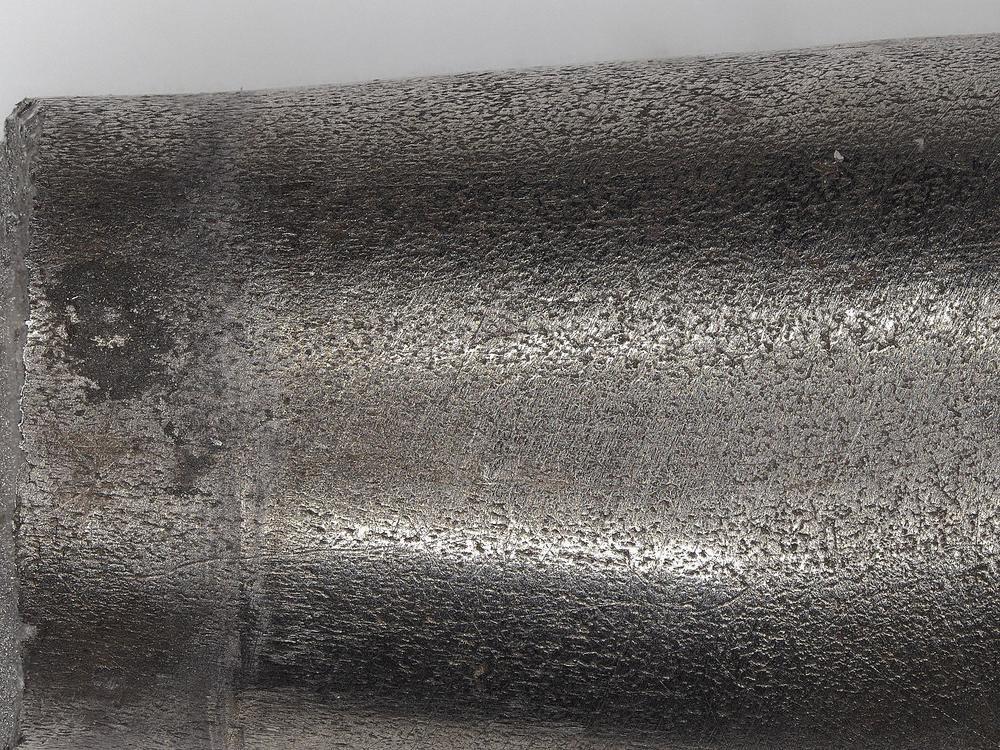
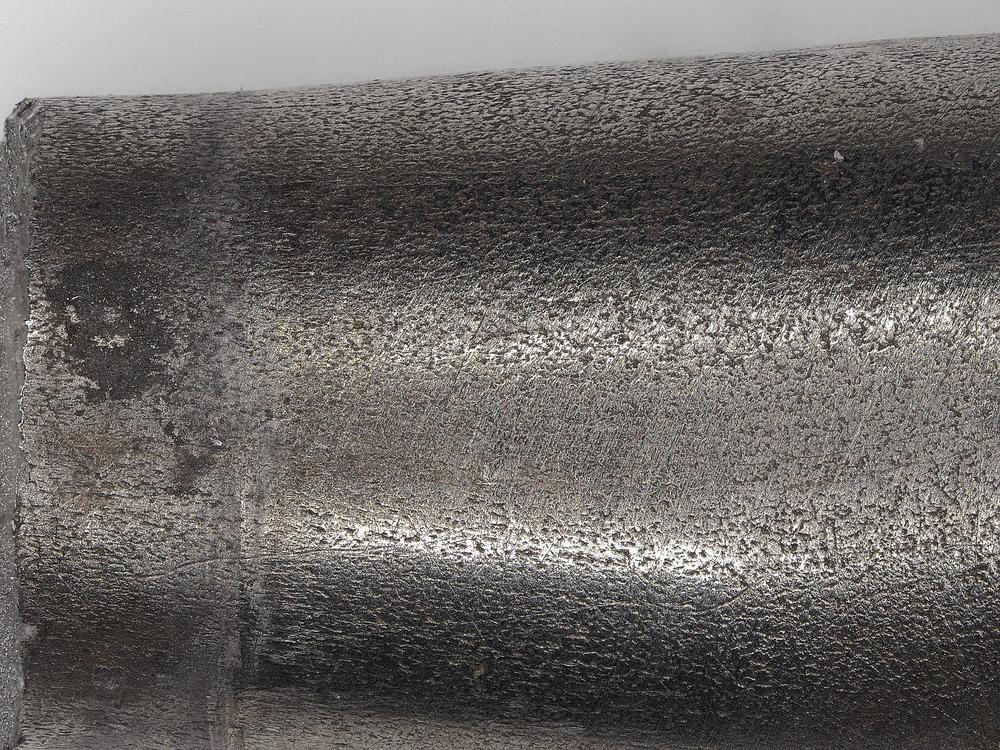
Upon inspection of other areas of the broken Merlin #8 stem, I saw evidence of corrosion. Here's a micrograph:
Corrosion in the vicinity of fracture.
The black marks here are corrosion I believe. They exist on other parts of the stem but are worse around the area of failure. The large black splotch in the above micrograph is just under the surface of the stem end. Black inclusions were seen sticking into the fracture area. These black areas are not present on other stems I looked at.
Conclusion: The stem failed due to corrosion fatigue cracking. Fatigue loading was caused by stem bending and the failure was greatly accelerated by the presence of corrosion. The cam was not stored in ideal conditions, which led to the corrosion. I do not know the exact mechanism of corrosion here. Both the stem and stem end are 17-4 stainless steel, though of different heat treatments. Moisture due to the rain event and general storage conditions probably resulted in liquid water seeping in and staying in the small gap between the stem and stem end. This could result in hydrogen embrittlement, aqueous corrosion, pitting corrosion, or galvanic corrosion or some combination of these in the right conditions. If you are an experienced metallurgist specializing in corrosion, it would be great to get your take on the mechanism of corrosion here.
Next steps: If you own a Merlin cam, please store it in dry conditions. Storing in a plastic bag can actually trap moisture inside and make the condition worse. If it does encounter moisture, dry it out and spray WD40 in the tiny gap between the stem and stem end. It is not a bad idea to preemptively spray WD40 in this gap (WD = water displacement). If your cam has experienced similar conditions or you are otherwise worried about the condition of your stem, please contact me at merlinrockgear@gmail.com. I can do stem replacements as necessary. The black screws are the only parts that aren't stainless or aluminum so if those show any rust, that is enough evidence that your cam has seen excessive moisture. I will also be emailing everyone who has bought a cam directly from me. For future batches, there are a couple of things I can do to increase corrosion resistance, which are usually only required when 17-4 is used in submerged conditions. I'm also going to start working on a new stem concept which may or may not be successful but that will take several months.
|
|
|
climber pat
·
Dec 16, 2019
·
Las Cruces NM
· Joined Feb 2006
· Points: 301
Thee corrosion is very troublesome. Are you sure the suppliers supplied you with the metal you ordered and not something else.
|
|
|
Adam bloc
·
Dec 16, 2019
·
San Golderino, Calirado
· Joined Dec 2012
· Points: 3,430
75 days total and over 1-1.5 miles of offwidth OW, I think I got Fatigue Cracking just reading that!
Cool write up, appreciate the in depth look.
|
|
|
Max Supertramp
·
Dec 16, 2019
·
Unknown Hometown
· Joined Mar 2008
· Points: 95
Thanks to Erick for the analysis. I think of the early folks to adopt new technologies in protection and am happy to have the mind behind the Merlins here to help figure out this kinda stuff. I’d be fine analyzing questionable chock issues/failures or nailup stuff but this is an immensely more complex beast.
|
|
|
Fehim Hasecic
·
Dec 16, 2019
·
Boulder, CO
· Joined Jun 2013
· Points: 215
Yup, WD40 is be all remedy!!!
|
|
|
Charlie S
·
Dec 16, 2019
·
TN? NV? UT?
· Joined Aug 2007
· Points: 2,411
Interesting. 17-4PH is aerospace grade stainless. It is used because it is not nearly as sensitive to corrosion. I don't know Erick Davidson's metallurgy background, but I'd challenge the "corrosion fatigue cracking," which isn't an actual term in the fatigue and fracture circles.
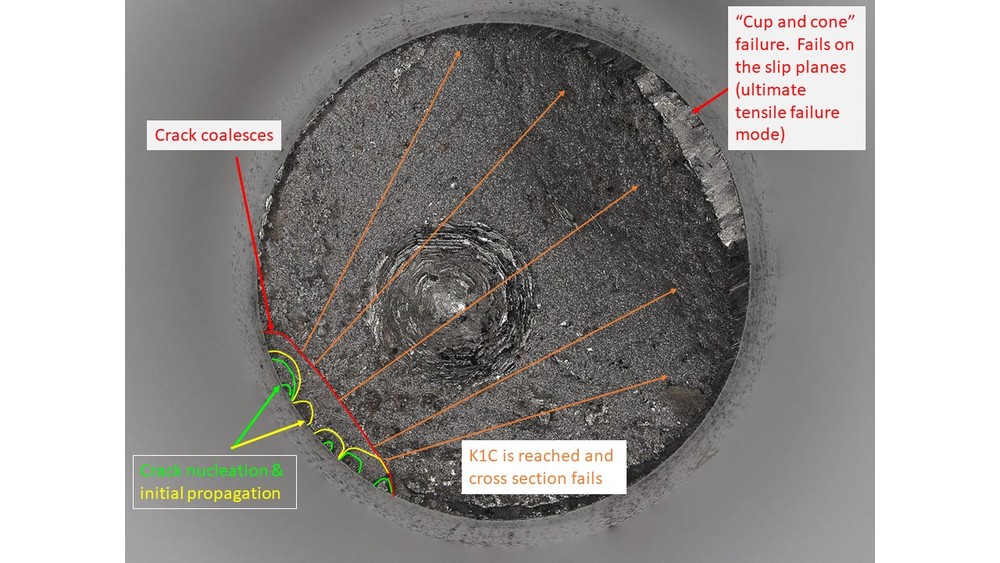
First, if you look at the perimeter of the first image, you can see multiple flaws, whether they are inclusions (introduced during fabrication of the metal itself), nucleated flaws (occurred during use), or introduced damage (scratches and dings during normal use), it is hard to tell with the given scale. You would need to zoom in at least one more order of magnitude (10x), maybe two more (100x) to make this assessment.
![]() The fatigue failed region is pretty small compared to the "lab" fatigue "test". The mottled faces failed due to material tensile failure for the 1st image. The 2nd image failed due to the bending stress. For a better comparison, it would have been better to perform the "lab" test with both oscillation AND a tensile load. You really can't make a comparison between the two failures because they are not the same failure mode. It is also curious that the beachmarks appear to be running perpendicular (instead of parallel) to the supposed crack propagation in the first photo. Finally, can someone tell me how the stem is attached to the base? Is it brazed? Welded? The reason I ask is that there appears to be a heat-affected zone (HAZ) on this image (the vertical looking delineation): Heat-affected zones are known to significantly decrease the material strength. In certain materials (especially aluminum), the post-welding cooling and shrinking of the material actually introduces very large cracks into the structure. These can be negated through various means...usually by increasing material size to allow ample margins. Side note: I have witnessed these cams work as advertised:
|
|
|
Charlie S
·
Dec 16, 2019
·
TN? NV? UT?
· Joined Aug 2007
· Points: 2,411
Upon further observation, perhaps this was the failure progression?
|
|
|
David Bruneau
 ·
Dec 16, 2019
·
St. John
· Joined Feb 2012
· Points: 3,031
·
Dec 16, 2019
·
St. John
· Joined Feb 2012
· Points: 3,031
Looks like a pretty dinky stem to me. Bending the stem of a cam is pretty normal, and it's pretty worrying that the cam only survives 65ish cycles before the stem falls off. Probably would take even less cycles to severely weaken the stem. I would guess that most other cams would survive many more cycles than this, and that more merlin cam failures will happen with time.
|
|
|
climber pat
·
Dec 16, 2019
·
Las Cruces NM
· Joined Feb 2006
· Points: 301
The more I think about this the less happy I am with the analysis of the failure. I am pretty sure I know the owner of the cam and climb with him occasionally; in fact he was bragging about this cam last time I climbed with him.
I just cannot imagine how a stainless steel rod could corrode this much in about a year in Arizona (cochise stronghold). Yes it got wet, maybe it even was wet for a period of time but this is stainless steel and not a saltwater environment. Furthermore he has been caching his gear for decades and has not had this sort of problem before with camalot, wired nuts, carabiners, ropes ...
I think I will steer clear of merlins until a more believable explanation is put forth.
|
|
|
bagel bagels
·
Dec 16, 2019
·
Unknown Hometown
· Joined Aug 2019
· Points: 0
Edit: for tone. Tldr: this FA is incomplete in its testing and the bend testing may fall under low cycle fatigue, so I’m removing most of my post
|
|
|
Cortney L
·
Dec 16, 2019
·
Englehood, CO
· Joined May 2015
· Points: 42
Charlie S wrote: I don't know Erick Davidson's metallurgy background, but I'd challenge the "corrosion fatigue cracking," which isn't an actual term in the fatigue and fracture circles. This is true and I agree with you. However it is worth noting that corrosion can accelerate the creation of crack nucleation sites.
The fatigue failed region is pretty small compared to the "lab" fatigue "test". The mottled faces failed due to material tensile failure for the 1st image. The 2nd image failed due to the bending stress. For a better comparison, it would have been better to perform the "lab" test with both oscillation AND a tensile load. You really can't make a comparison between the two failures because they are not the same failure mode.
Don't forget about Von Misses equivalence and effective area. It is certainly possible to compare coupon samples with a real world part for fatigue life predictions. You just really need an accurate number for maximum stress and R value (easier said than done in complex loading scenarios!). The thing that strikes me about this 'fatigue' failure, his testing, and analysis is that there is no identification of which analysis (or prediction type) he is using (stress life, strain life, Da/DN del K, fracture mechanics, etc). Each of those has nuances which need to be addressed...I think basically it comes down to predicted stress level is lower than what is being seen in the field. Likely there is more plasticity than anticipated.
I would love to see what they think the R value is for this...makes a huge difference if you get that wrong.
It is also curious that the beachmarks appear to be running perpendicular (instead of parallel) to the supposed crack propagation in the first photo.
Not sure I see well defined beachmarks.
Heat-affected zones are known to significantly decrease the material strength. In certain materials (especially aluminum), the post-welding cooling and shrinking of the material actually introduces very large cracks into the structure. These can be negated through various means...usually by increasing material size to allow ample margins.
I am also interested in the MFG process for attaching stem to head for reasons you mentioned. Further to corroborate my point about maximum stress levels, I think the overarching issue is that there is a stress concentration happening at the corner of the head/stem which is not being accounted for which may be above yield, leading to dramatically lower than predicted fatigue life. edit: Instead of poking holes in someones design and analysis like a jerk, I'll offer this: OP/merlin cam guy, I'm happy to help you get this design more dialed. Currently a grad student in mech e focusing on FE, fatigue, and instabilities in sliding friction systems. Reach out if you would like help, happy to contribute however I can.
|
|
|
Mike C
·
Dec 16, 2019
·
Fort Collins, CO
· Joined Jun 2018
· Points: 5
Highly brittle fracture.
No signs of beach marks which would indicate fatigue cracking.
Exterior corrosion relatively minor.
Potentially Hydrogen Embrittlement during manufacture.
|
|
|
Cortney L
·
Dec 16, 2019
·
Englehood, CO
· Joined May 2015
· Points: 42
Mike C wrote: Highly brittle fracture.
No signs of beach marks which would indicate fatigue cracking.
Exterior corrosion relatively minor.
Potentially Hydrogen Embrittlement during manufacture. upon second read through of OP, I think yeah brittle fracture of some sort...as Charlie S pointed out it could be from a heat affected zone if welded or brazed.
|
|
|
bagel bagels
·
Dec 16, 2019
·
Unknown Hometown
· Joined Aug 2019
· Points: 0
Corrosion fatigue is a failure mechanism, as an aside.
|
|
|
Cortney L
·
Dec 16, 2019
·
Englehood, CO
· Joined May 2015
· Points: 42
bagel bagels wrote: Corrosion fatigue is a failure mechanism, as an aside. Absolutely. An important one at that!
|
|
|
Charlie S
·
Dec 16, 2019
·
TN? NV? UT?
· Joined Aug 2007
· Points: 2,411
@Cortney L:
Awesome to read a post that is constructive and not a troll! Too many of those around here lately. Also, you have no idea how much it makes me smile to read "R value" and not "R ratio." The latter always gets people up in a tizzy and it's fun to watch...from a distance.
I think this is all a great discussion. It would be really helpful to get more details from Mr. Davidson if he'd be willing to share. I too would be willing to help, however, you (Courtney) will have much easier access to the proper tools for a better fracture face analysis.
|
|
|
Billcoe
·
Dec 16, 2019
·
Pacific Northwet
· Joined Mar 2006
· Points: 936
Interesting puzzle. Erick - did you clean the cams off with any substances before you shipped them out? Stress Corrosion Cracking is a real thing. Some lubrication products that contain chloride can also cause it if someone were to lube with that kind of product. Assuming that is wasn't a Hydrogen embrittlement issue (likely not) there is a slight chance of SCC although it's less prevalent on 17/4 than our normal 304 and 316 stainless bolt hangers.
Info:
https://www.corrosionclinic.com/types_of_corrosion/stress_corrosion_cracking.htm
|
|
|
bagel bagels
·
Dec 16, 2019
·
Unknown Hometown
· Joined Aug 2019
· Points: 0
Billcoe wrote:
Interesting. Erick - did you clean the cams off with any substances before you shipped them out? Stress Corrosion Cracking is a real thing. Some lubrication products that contain chloride can also cause it if someone were to lube with that kind of product. Assuming that is wasn't a Hydrogen embrittlement issue (likely not) there is a slight chance of SCC although it's less prevalent on 17/4 than our normal 304 and 316 stainless bolt hangers.
Info:
https://www.corrosionclinic.com/types_of_corrosion/stress_corrosion_cracking.htm Unlikely in this case. I think the analysis is on the right track-ish. We know the stem was bent a couple times, so overstressed. Bending it back and forth could have caused a small surface crack and alongside the apparently corroded surface initiated fatigue at the lower left side on the image. Then it was bounced on a lot in general use and eventually failed. In my opinion, this is possible (and likely) with the given information. It’s possible other things factored in, but without a full range of testing I can’t know. I do question the conditions it was stored in since the surface looks exceptionally pitted for supposedly being stored dry apart from a few times. Not to call the owner a liar, but the story you get told and the actual story don’t always completely line up. Also, I do this for a living if anyone is wondering.
|
|
|
climber pat
·
Dec 16, 2019
·
Las Cruces NM
· Joined Feb 2006
· Points: 301
bagel bagels wrote: Unlikely in this case. I think the analysis is on the right track-ish. We know the stem was bent a couple times, so overstressed. Bending it back and forth could have caused a small surface crack and alongside the apparently corroded surface initiated fatigue at the lower left side on the image. Then it was bounced on a lot in general use and eventually failed. In my opinion, this is possible (and likely) with the given information. It’s possible other things factored in, but without a full range of testing I can’t know.
I do question the conditions it was stored in since the surface looks exceptionally pitted for supposedly being stored dry apart from a few times. Not to call the owner a liar, but the story you get told and the actual story don’t always completely line up.
Also, I do this for a living if anyone is wondering. If it is the cam I think it is the storage description is very accurate. The cam lived full time is a cache in the stronghold. The cache was placed in garbage bag and used often (more than weekly). The mile and half is a reasonable estimate for the distance climbed with it on the rack and used occasionally. So the potential of storage while wet would be how often it rained in the desert. I would hate to think all the stainless steel bolts might break after a year. I guess something like what happened to the fixe chain anchors in Europe is possible. In any case the failure of the cam is unacceptable and the WD40 treatment seems very unlikely to actually fix anything.
|
|
|
Max Supertramp
·
Dec 16, 2019
·
Unknown Hometown
· Joined Mar 2008
· Points: 95
pretty amusing to see all the hate for what is a super niche product that Erick was basically arm-twisted (in part by me) into producing to share with others besides his climbing partner. it’s sorta like gay marriage or abortion...if you don’t like it, well, just don’t do it...
|
|
|
Alexey Zelditch
·
Dec 16, 2019
·
San Jose
· Joined Feb 2006
· Points: 1,055
for climbers for whom is difficult to follow Merlin#8 spec for " dry conditions" + "spray WD40" it is possible to use other safety protocol: place dry Merlin#8 and before the fall back it up with wet WG #9 [ Wet Valley Gigant ]
|

 Continue with onX Maps
 Sign in with Facebook