|
|
abs257 abs257
·
Oct 3, 2019
·
Unknown Hometown
· Joined Jul 2019
· Points: 0
|
|
|
Sawyer W
·
Oct 3, 2019
·
NH
· Joined May 2018
· Points: 0
I don’t care what people say. Vegan shoes are the only vegan version of something that tastes the same as the animal product version.
|
|
|
L Kap
·
Oct 3, 2019
·
Boulder, CO
· Joined Apr 2014
· Points: 224
Andrei Steclaru wrote: Did you read the article I've linked? If them cows would be allowed to graze naturally (as the article says), there'd be no need to feed them GMO soy and not only would you not need to grow so much soy, but the soil the cows graze on would benefit too. At least for the US and most other industrialized countries, this is not a realistic argument. There are literally a fraction of a percentage of US cows that are not fed grain at some point in their lives (over the winter, in finishing lots, etc.) It is not environmentally or economically viable. If we did not factory farm (and HEAVILY subsidize with our tax dollars), the cost of beef and dairy would skyrocket. Which, in my vegan opinion, would be a good thing. Ban factory farms and put those tax dollars to better use elsewhere (e.g. use them to directly help people who are food insecure rather than subsidizing a chosen agribusiness industry), and let's see how plant foods compete in the marketplace.
|
|
|
Wes Martin
·
Oct 3, 2019
·
Golden, CO
· Joined Dec 2015
· Points: 15
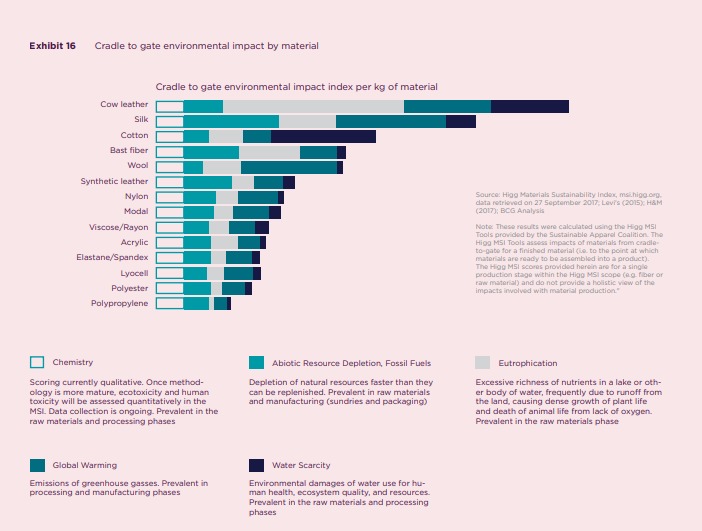
All good points here. Another thing to consider - products made with plastic (like fake leather), do not last nearly as long as real leather. This creates more waste, and more energy is needed to to make more items as they don't last as long. In addition, plastic products take forever to degrade, and they produce microplastics, getting into every crevice of the natural world.
Not saying real leather is better (at all, the animal industry is super fucked up), just that there is always more information to consider, and most groups and people who are super dedicated to one side of things cherry pick information and ignore the rest...
Edit: This is one of the biggest problems in our society today - people are so one-sided. They form a belief, and when any legitimate evidence is presented that counters their viewpoint they get super defensive and dismissive.
|
|
|
Michael Brady
·
Oct 3, 2019
·
Wenatchee, WA
· Joined Jul 2014
· Points: 1,392
|
|
|
Chase G
·
Oct 3, 2019
·
Salt Lake City, UT
· Joined Jun 2017
· Points: 169
Andrei Steclaru wrote: Did you read the article I've linked? If them cows would be allowed to graze naturally (as the article says), there'd be no need to feed them GMO soy and not only would you not need to grow so much soy, but the soil the cows graze on would benefit too. Hey man the problem with that is the world doesn't have the land mass to support grazed livestock. They are given feed for a reason. If we are worried about things like the Amazon getting cut down that would increase ten-fold if we were grazing all livestock because they would need so much space. A plant based food system would mean that we could free 75% of global agricultural land.
|
|
|
that guy named seb
·
Oct 3, 2019
·
Britland
· Joined Oct 2015
· Points: 236
The eating of mammals must not continue for environmental reasons, end of story. Fish could be okay if it was possible to do it sustainably but it's probably not going to happen so engineered meat and bugs is the real future of our meat lust. All the data backs this up and it saddens me greatly I really love meat, but the future is some form of pescatarian/vegetarian diet.
Regarding vegan products I really disagree with how companies are going about this, they're often using microfibers (any synthetic leather) or cheap fragile constructions (bd's polyester knit) if they're going to do this they have to look at switching over to materials that are durable enough so it offsets the eventual micro fiber release, these materials also need to have no biological impact on when they do eventually end up in the environment.
They could also look at alternatives forms of artificial leather there's work being done on micellium based leathers and there's some potential (IMO limited) for lab grown leather.
I got some ideas for bug or wool based leathers that would work well.
|
|
|
Mark Roberts
 ·
Oct 3, 2019
·
Vancouver, BC
· Joined Oct 2009
· Points: 1,372
·
Oct 3, 2019
·
Vancouver, BC
· Joined Oct 2009
· Points: 1,372
Andrei Steclaru wrote: Did you read the article I've linked? If them cows would be allowed to graze naturally (as the article says), there'd be no need to feed them GMO soy and not only would you not need to grow so much soy, but the soil the cows graze on would benefit too. I've read it. It's a series of strawman arguments against veganism written by an animal farmer who acknowledges "There’s no question we should all be eating far less meat". If this article is what you're hanging your opposition to veganism on, my guess is you're just looking for articles that support your position rather than using articles to inform your position.
|
|
|
Chase G
·
Oct 3, 2019
·
Salt Lake City, UT
· Joined Jun 2017
· Points: 169
Julian H wrote: This is just marketing. The only place they mention vegan is in the name of the shoe, they didn’t even bother changing the description of the shoe. The difference between the original and vegan version is the color.
There is no special vegan glue. All glues in shoemaking are synthetic that makes them vegan. Animal based glue is not that strong and will not work on man made materials. As mentioned previously, scarpa admits they use non-vegan adhesive. So no, not all glues in shoemaking are synthetic and vegan. When Scarpa is asked about vegan shoes: "Unfortunately, the glue used in our climbing shoes contain animal-products"
|
|
|
Matt Hostetler
·
Oct 3, 2019
·
Unknown Hometown
· Joined May 2016
· Points: 141
Olav Grøttveit wrote: Yeah.. thats about as good propaganda can get. Select carefully the stuff that makes your case better, dismiss all the rest. Or does anybody here actually thinks its a good idea to stop using any natural fiber, and go all-in for plastic ?
We have been making plastic for about 100 years. Most of wich is still around. By 2050 there will be more plastic in the ocean than fish... this is comon knowledge I presume?
(Source? The UN)
We are currently unable to even reduce the acceleration of plastics-production.. think about that for a second.. we cant even reduce the acceleration.
Hey Olav, if you are anti plastic and pro fish then we are on the same team!
If we want less plastic in the ocean and for fish populations to survive, the biggest answer is to stop eating fish.
Most plastic in the ocean is fishing gear. National Geographic took a look at the "Great Pacific Garbage Patch" and found that most of it - 46% - was fishing gear.
3/4 of the world's fisheries are overexploited or depleted. Scientists are worried that the oceans biodiversity will get so low that we run out of fish to catch. This is not to mention the terrible practice of bottom trawling which destroys ocean biodiversity indiscriminately.
So if you care about plastic in the oceans and fish populations, the biggest thing you can do is to stop eating fish. The next biggest thing is to stop using any animal products since one third of fish caught worldwide is used for animal feed.
|
|
|
Matt Hostetler
·
Oct 3, 2019
·
Unknown Hometown
· Joined May 2016
· Points: 141
Andrei Steclaru wrote:
Is it now? Well, maybe you'd like to have a gander at this then:
https://www.theguardian.com/commentisfree/2018/aug/25/veganism-intensively-farmed-meat-dairy-soya-maize
I agree that we should all consume far less of everything, but veganism is not the answer. Hey Andrei, thanks for bringing up this point.
Unfortunately you will notice the article doesn't have any citations. That is because the science doesn't support it. From Oxford:
We set the estimated sequestration potential (Column 1) against current annual emissions from grazing ruminants (Column 2) – about 1.32 Gt CO2-eq or 20% of the livestock total.147 The third column shows the net of emissions and potential removals: even assuming the maximum mitigation potential, the grazing sector would continue to be a net emitter (and it is even more of a net emitter today). At this point, it is also essential to recall that the grazing sector’s contribution to overall meat and milk output is very low indeed at 13% of ruminant meat and 6% of ruminant milk – and the ruminant sector as a whole contributes less than half of overall animal protein supply (Section 1.2). It would be physically impossible for the animal protein production produced today – about 27 g/person/day – to be supplied by grazing systems, at least without an unthinkably damaging programme of forest clearance, which would vastly increase the livestock sector’s already large (at 7 Gt CO2-eq) contribution to global GHG emissions. This is why the figure also shows the emissions from the livestock sector as a whole (Column 4); and the net result (Column 5) when the potential sequestration effect achieved through grazing management is included. What all this clearly illustrates is that if we want to continue to eat animal products at the levels we do today, then the livestock sector will continue to be a very significant emitter of GHGs. Grazing management, however good, makes little difference. These points are discussed more fully in Chapter 4.
Sequestration through soil does not offset the carbon of the methane produced by cows and there is simply not enough land to feed billions of people with grazed animals.
Also consider that 20 percent of pastures worldwide are considered as degraded through overgrazing, compaction and erosion. So the evidence we are seeing is that grazing has the opposite effect in practice.
|
|
|
Wes Martin
·
Oct 3, 2019
·
Golden, CO
· Joined Dec 2015
· Points: 15
that guy named seb wrote: ... engineered meat and bugs is the real future of our meat lust... This is whats up
|
|
|
Matt Hostetler
·
Oct 3, 2019
·
Unknown Hometown
· Joined May 2016
· Points: 141
Helping the environment is a huge reason to go vegan.
As are the health benefits: for example, plant based diets reduce the risk of heart disease, the largest killer in the USA and globally, by 40%, and can even reverse the disease. As another example, a vegan diet reduces the total risk of cancer by 15%. Athletes are finding that a plant based diet improves performance.
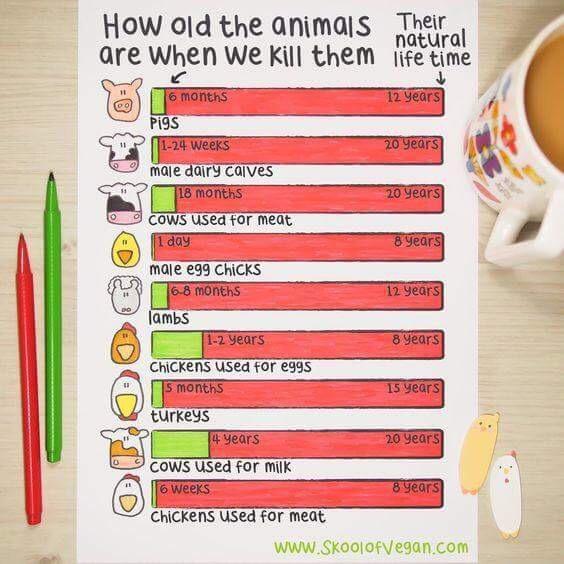
But the main reason to go vegan in my opinion is to reduce unnecessary, unnatural and human inflicted animal suffering. Animals, especially common livestock animals like cows, pigs and chickens, are alive and sentient, feel and suffer, the same way we and our dogs and our cats do. We wouldn't do this to dogs or cats - and we wouldn't do this to humans - so why do we do it to these animals? The answer is carnism.
56 billion land animals are killed annually in a horrific system of breeding, torture, rape and abuse. Trillions of marine animals annually. There is nothing humane or natural about animal agriculture in the world today.
I highly encourage you to check out the lives of animals in today's farming systems and consider if you want to be paying for it. And I highly recommend checking out these bite size videos that respond to the most common questions people have about veganism.
![]()
|
|
|
abs257 abs257
·
Oct 3, 2019
·
Unknown Hometown
· Joined Jul 2019
· Points: 0
Chase G wrote: Hey man the problem with that is the world doesn't have the land mass to support grazed livestock. They are given feed for a reason. If we are worried about things like the Amazon getting cut down that would increase ten-fold if we were grazing all livestock because they would need so much space. A plant based food system would mean that we could free 75% of global agricultural land. And doesn't that highlight a much bigger issue to you (i.e. that there's simply too many mouths to feed)? Think about this: according to Google, at the rate we are currently multiplying, it will take 63 years for the current world population to double in size. If everyone on the planet cut their emissions by 50%, we would still be back in this exact same point within the lifetimes of some current MP members. And we all know there's no chance that that (everyone cutting their emissions in half) will ever happen. So, while I think it's admirable that some people are trying to do something, it pretty much amounts to a fart in a windstorm when you think globally.
|
|
|
Anonymous User
·
Oct 3, 2019
·
Bergen, Hordaland
· Joined Apr 2017
· Points: 5
Matt Hostetler wrote:
Hey Olav, if you are anti plastic and pro fish then we are on the same team!
If we want less plastic in the ocean and for fish populations to survive, the biggest answer is to stop eating fish.
Most plastic in the ocean is fishing gear. National Geographic took a look at the "Great Pacific Garbage Patch" and found that most of it - 46% - was fishing gear.
3/4 of the world's fisheries are overexploited or depleted. Scientists are worried that the oceans biodiversity will get so low that we run out of fish to catch. This is not to mention the terrible practice of bottom trawling which destroys ocean biodiversity indiscriminately.
So if you care about plastic in the oceans and fish populations, the biggest thing you can do is to stop eating fish. The next biggest thing is to stop using any animal products since one third of fish caught worldwide is used for animal feed.
The problem of plastics-pollution is not "just" that it will fill our oceans, but that the pollution is _total_.. There is now tiny plastic elements in the water that you drink, and even the air you breathe. And it is global.
Fishing can be done without plastic-made equipment, it can also be done without threatening the population. This also goes for any other resource. But its not possible within our present consumerist mindset. It's our way of living, wich in the modern world is purely focused on short term profit that is what we need to change if this world is going to have a hope. Not eating meat, or fish, or getting an electrical car is not going to save anything. Global political effort to regulate our kapitalistic freedom is needed. People dont really want that, they are more interested in getting the next IPhone..
If you want to do something that actually matters; Get political, any other choice is just a lie people do to try to feel better about themselves.
Plastic production needs to be completely banned, that will give the plastic in our nature a real value and it will be collected and reused.
|
|
|
abs257 abs257
·
Oct 3, 2019
·
Unknown Hometown
· Joined Jul 2019
· Points: 0
Mark Roberts wrote: If this article is what you're hanging your opposition to veganism on, my guess is you're just looking for articles that support your position rather than using articles to inform your position. I actually don't oppose veganism per se: I tend to not care what anyone else does with their lives. Someone linked that article on another forum I am on and I found it interesting. But I also happen to think that there are much bigger issues that no one is willing to address (i.e. overpopulation) which is why I think veganism is just the latest fad and not a real solution.
|
|
|
abs257 abs257
·
Oct 3, 2019
·
Unknown Hometown
· Joined Jul 2019
· Points: 0
|
|
|
Sam D
·
Oct 3, 2019
·
CA
· Joined Apr 2017
· Points: 178
I think we need to make a new thread: "How to keep people out of eating"
|
|
|
Matt Hostetler
·
Oct 3, 2019
·
Unknown Hometown
· Joined May 2016
· Points: 141
Andrei Steclaru wrote: If you look hard enough, you'll find people claiming just about anything. Research the facts and think for yourself. That's why I provide so many sources. Check them out.
|
|
|
Marc801 C
·
Oct 3, 2019
·
Sandy, Utah
· Joined Feb 2014
· Points: 65
Matt Hostetler wrote: It makes sense why one would think that but if you look at the data it is a big win.
Isn't leather a by product of meat production? IOW, all those hidden costs of fertilizer, electricity, transport, etc. aren't *all* going toward leather production.
|

 Continue with onX Maps
 Sign in with Facebook