Since the action is heating up in the the new Dart thread, it's time to bump this one, because these are the two new crampons that every well equipped alpinist should be ogling this season. I finally got a chance to unbox and geek out on the Alpinist Techs. It’ll be a month before I really go ice climbing, but I dry tooled a few pitches in them, walked around in them in ski boots on a glacier, and tried to simulate a little vertical ice by climbing some ice in a stream bed. So basically, anything I say about their performance now is akin to carpet testing a ski boot and then extrapolating how it skis (which is another favorite pastime of mine, along with half the dudes on TGR).
TLDR - the Techs feel and fit great, dry tool really well, I haven't climbed proper ice in them so can't speculate on that yet, and are so similar to the new Darts that someone really needs to do a side-by-side field performance comparison.
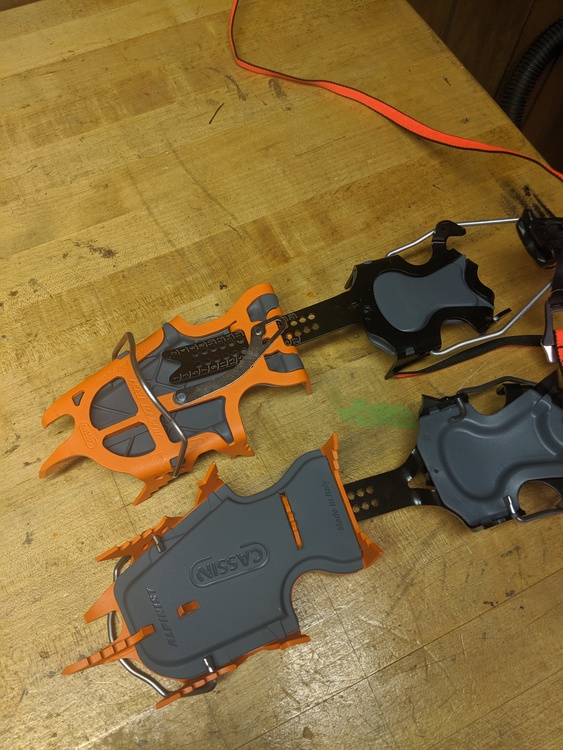
Fresh out the box after installing the anti-balling plates:
![]()
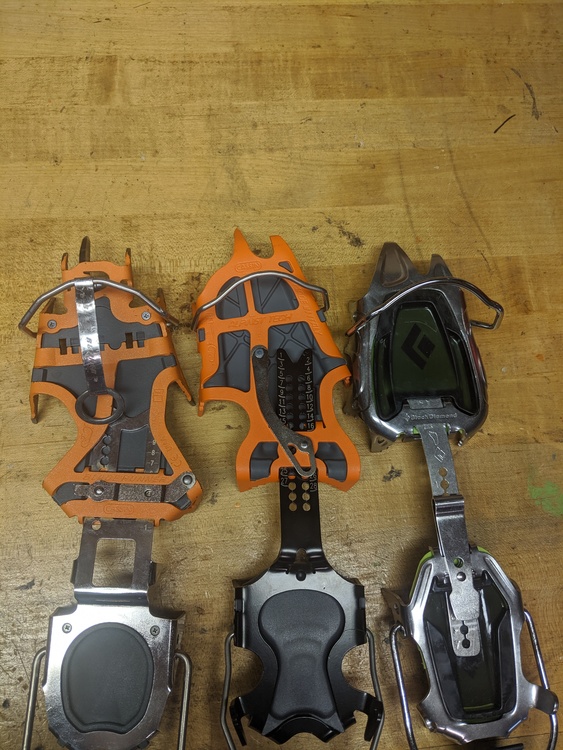
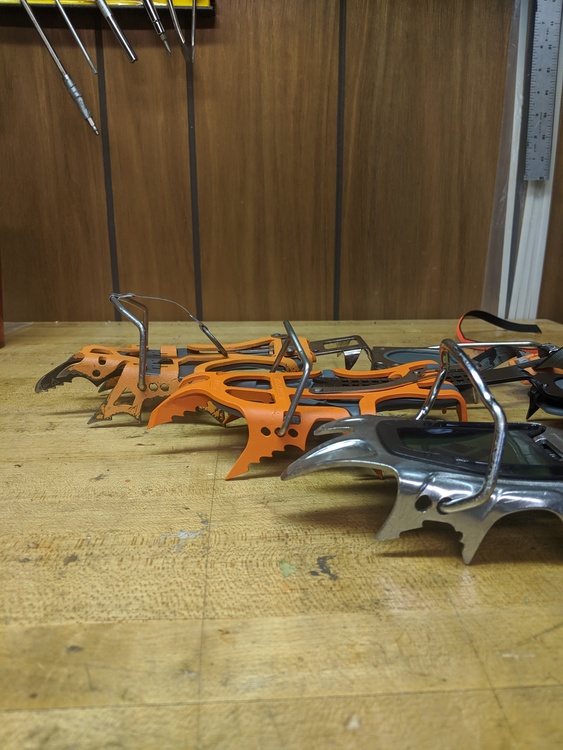
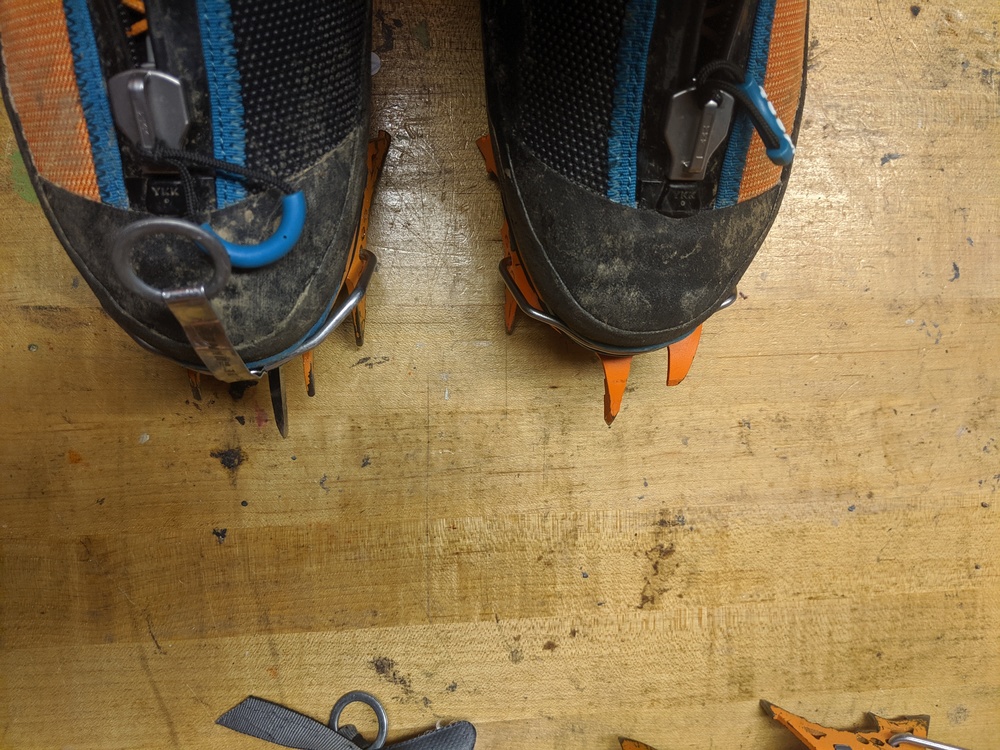
Some pictures below of a portion of my sharps quiver. I bought the Techs to fill the hole between the BD Snaggletooths and the BladeRunners. Weight-wise and based on the relative size and position of the secondary points, the Techs appear to be just what I needed (or, just really wanted but was able to quickly turn into a need). Left to right, back to front - Blades, Techs, Snaggles:
Measured Weights:
Snaggletooth: 863g/pair
Bladerunners: 1009 g/pair
Alpinist Tech w/o anti-balling plates: 808 g/pair
Total weight with anti-balling plates: 921 g/pair
Anti-ballling plates only: 113 g/pair
To throw the two leading competitors into the mix (which I don’t own and have not weighed):
Older Petzl Dart – claimed weight 737 g/pair (no anti-snow plates, not modular, front point not replaceable)
Petzl Dart 2019 – claimed weight 820 g/pair (now modular with anti-snow plates, assume claimed weight is in monopoint configuration)
Grivel G20+ claimed weight = 862 g/pair (note there is no antibott plate on the front of this crampon, and this crampon seems so specialized, it may be in its own category)
And yes, each company uses a different name for the plates underfoot.
The Techs come without the anti-balling plates installed (mostly I assume so they can claim their weight is only 808 grams). No hardware is require to install the plates but I would plan on 20 minutes and some heavy manipulation with a flat head screw driver, not something you want to do in the field.
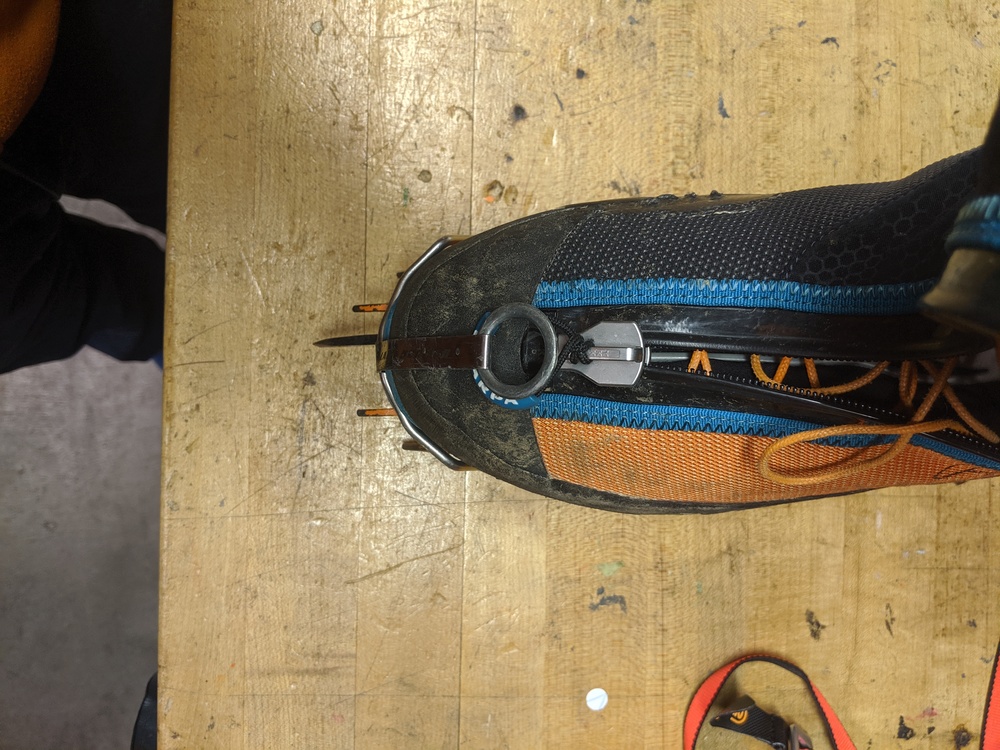
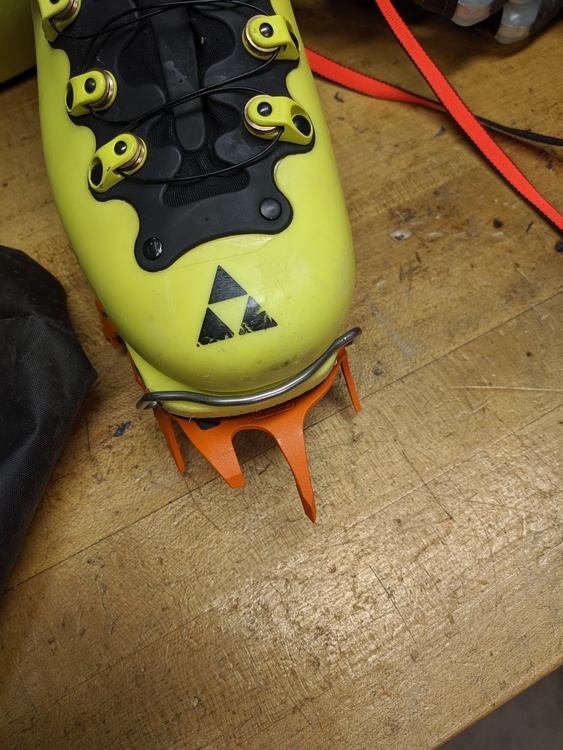
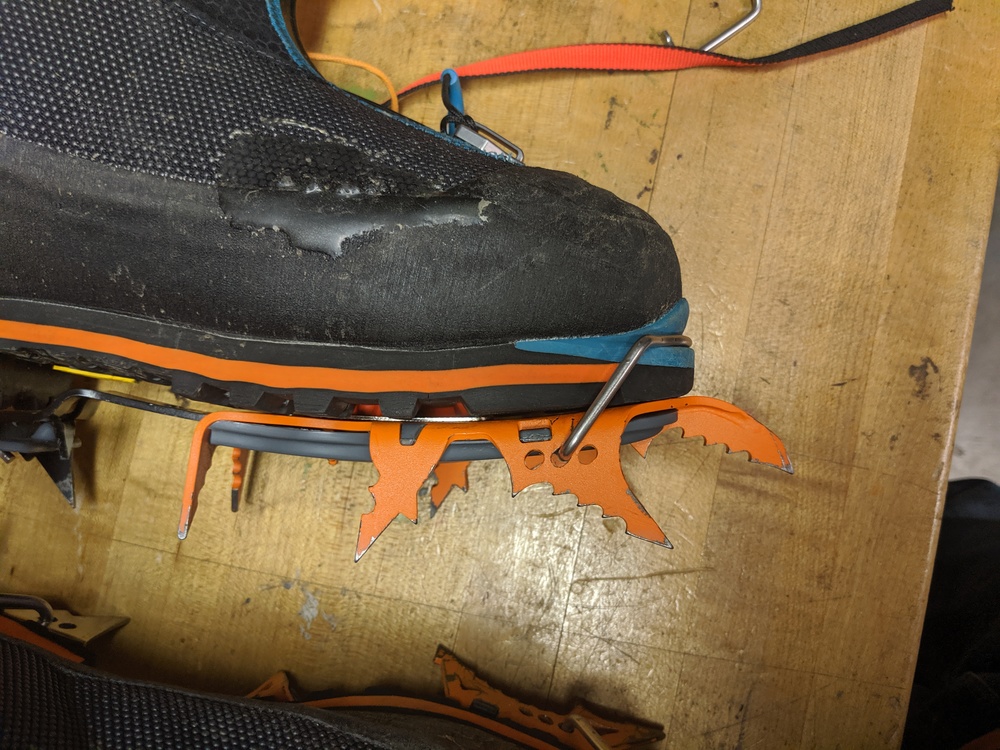
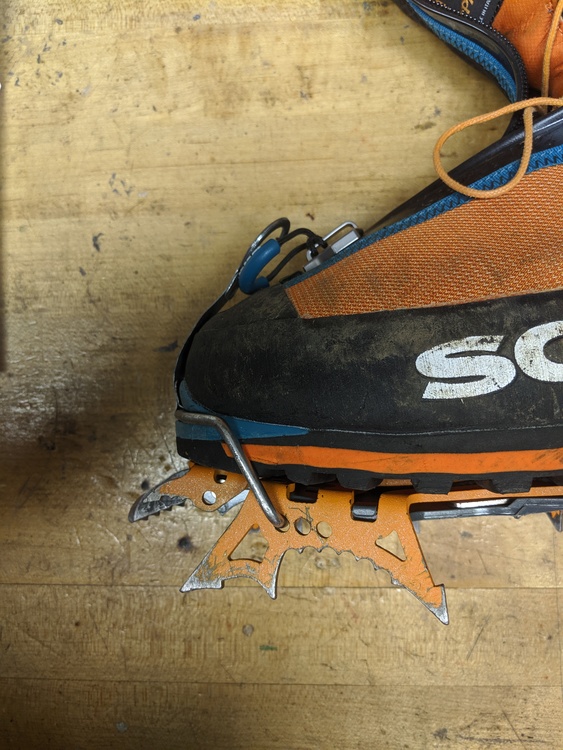
The toe bails on the Techs are noticeably lighter and thinner diameter than the bails on any other crampon that I have owned. I have never broken a toe bail but if there was a crampon to carry a spare, it might be these. Since it is thinner and more flexible, I could actually remove and reposition it with just my hands and not the typical use-a-sling-for-leverage-while-standing-on-it maneuver. The bail also has a smaller radius curve compared to the BladeRunners so will fit snugger on boots with a narrower toe profile. Techs top and BladeRunner's bottom (rearward most hole on Techs, front postion on the Blades so these pics are apples to oranges and don't illustrate well that the Tech bail is indeed narrower):
![]()
![]()
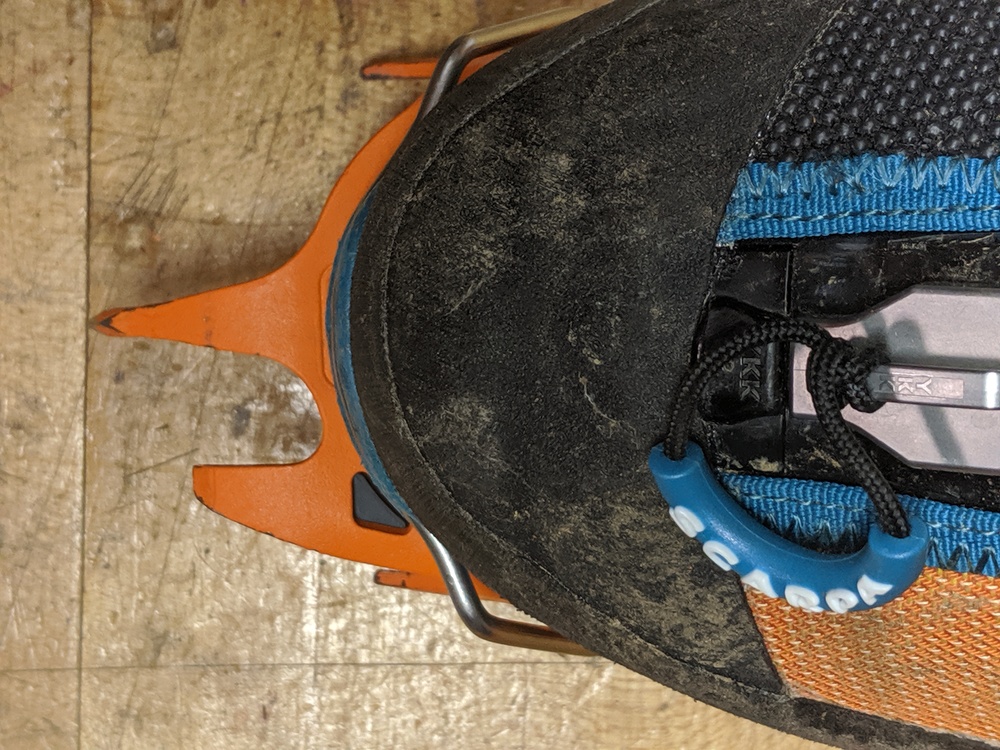
Both bails fit my Size 43 Phantom Techs well (note how much "Tech" I have in my kit - for the rest of the post "Tech" refers to the pons only). If there is play with the BladeRunners bail on the toe of your boots, the hack is to buy a pair of the Tech bails and put on the BladeRunners (according to the rep in the vid I linked to a few posts above). However, my hack is to use the BladeRunner toe bail on the Techs so they will fit ski boots. The Tech bail is a little small to fit my ski boots properly (the poor fit does not come across well in this pic). Tech bail on top, Blade bail below.
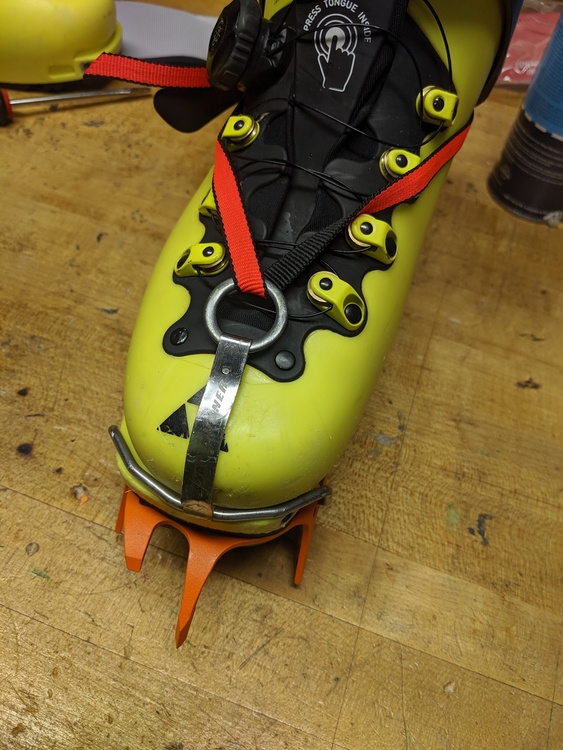
The Tech straps were just long enough to go through the retainer ring/strip on the BladeRunner toe bail (boots shown are 296mm BSL). Note that the Techs don’t have the ring/strip on the toe bail, a trend that seems universal for techy crampons these days.
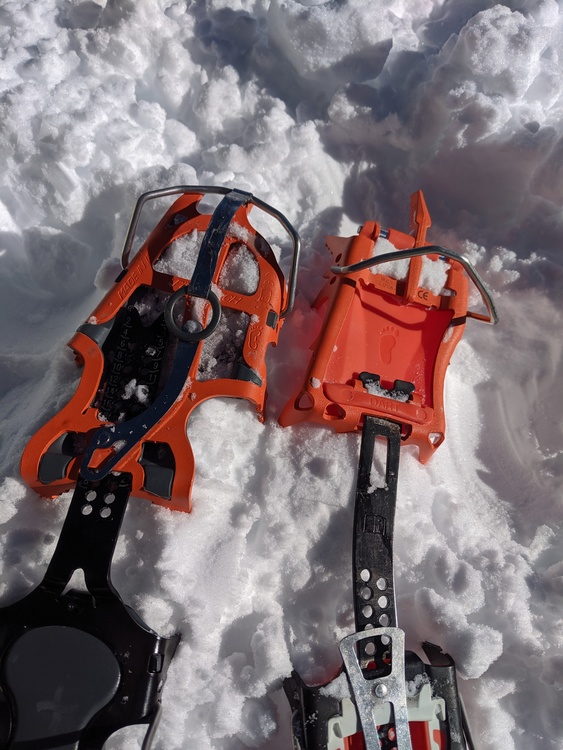
It is interesting that the new Dart and the new Techs are similar in many ways, most noticeably the identical price and orange color (Tech on left, new Dart on right):
If I had to guess, the secondary points on the Darts are maybe a tad more aggressive (raked forward) compared to the Techs (seems like Petzl moved the secondaries forward on the Dart compared to previous models based on pics, which is a big improvement IMO), but the Techs have a much larger front piece in general with more points below the forefoot. It is also interesting that the Darts and G20+ were redesigned to be modular and now have replaceable front points, but the Techs are one solid front piece.
Compared to the BladeRunners, new Darts, and G20+; there are no parts/bolts holding the front of the Techs together, so theoretically there should be less play in the Techs (not that I noticed any with BladeRunners) and the lack of parts means that the Techs can be made lighter than otherwise.
The biggest performance difference between the BladeRunners and Techs will be due to the size, position, and number of the front and secondary points. The BladeRunners have huge, aggressive secondary points, in addition to the large mono front point and the two other, smaller front points, which make them very stable on vertical ice (five points if configured mono, or six if configured dual, into the ice!), but walking and dry tooling is more awkward/challenging. Conversely, the secondary points on the Techs are a little smaller and further back. This translates to the Techs being better at dry tooling (based on a few pitches, the Techs felt superb on rock, as good as or better than any crampon I have dry tooled in) and walking around in, and theoretically better on snow due to the shovel-style, horizontal second front point; but this all will likely translate into being less stable on vertical ice. It did feel that I had to drop my heel more with the Techs to engage the secondary points compared to how I remember the Blades feeling (but it is super premature for me to speculate on this now), and I am not sure if I may end up moving the toe bail farther back to get the secondary points more in the action. I used the Techs with the bail in the middle position (middle pic) which is roughly equivalent to the most forward position on the BladeRunners (bottom) when comparing where the secondaries are relative to the front of the boot.
![]()
![]()
![]()
The Techs have three positions for the toe bail, two for the rear bail, and three heel throw height settings (but no micro adjustment on the heel throw); and have a micro-adjustable linking bar allows for fine-tuning the fit (which the Dart also has).
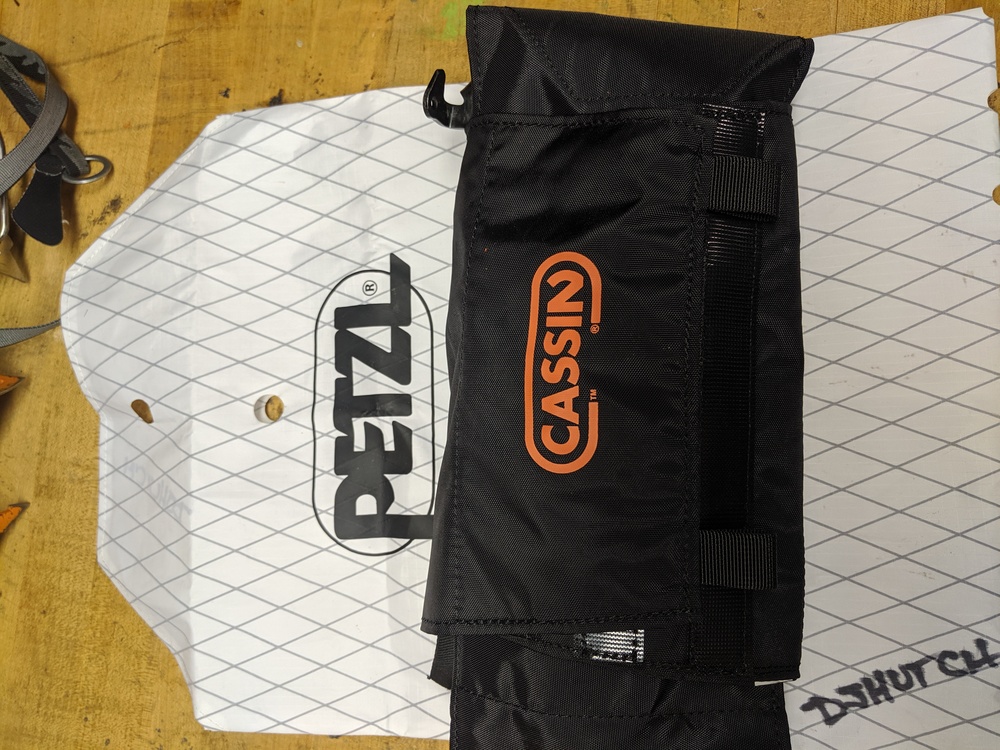
The Techs come with a heavy and over-designed crampon pouch. I didn’t weigh it but would guess it could be 10x heavier than the new Petzl ultra-lite 50g Pouch (the Pouchette!) underneath - which is a true gearhead’s dream and something anyone that has read this far should immediately run out and buy.
The Techs worked/walked fine on fall glacier ice but I assume I will still use something like the Snaggletooth or Sabretooths for any winter/spring/summer Cascade/glacier adventure just because I prefer a horizontal front point for the easy and soft stuff. However, the secondary shovel-style (horizontal) front point on the Tech (which is also on the G20+) is a nice addition and may make the Tech a better all-arounder compared to the Dart. For pure, steep waterfall ice, I assume the BladeRunners will continue to be the crampon to beat - if your wallet and feet can afford their heaviness.
Anyone in the market for a new, techy mixed and alpine crampon should look at the Techs and new Darts. My fondness for the BladeRunners and XDreams (and great dislike for the performance of the Petzl Lynx on vertical ice, ugh) have made me a Camp/Cassin fanboy. But now that Petzl has gone to all modular, interchangeable crampon system, and made the secondary points more aggressive (I assume, based on pictures); Petzl’s crampons have become much more appealing. I am interested to see which one of these two becomes the winner in this category, or will probably be Coke vs Pepsi. They are very similar in so many ways and identical in price, but the modular nature of the Darts is enticing for those that don’t want to own a quiver, or want to trick out their pons by replacing the rear with a lighter aluminum unit held on by only cord (enter the LeoDart, so cool!).
OK, enough extrapolating for now, I reserve the right to contradict everything I just wrote after I really use them. Phew.

 Continue with onX Maps
 Sign in with Facebook