
 Continue with onX Maps
 Sign in with Facebook






Rappelling accident using Mad Rock belay device.



|
Tammy Gueterman wrote: I misunderstood your point. My "practical" observation, based on some half-assed tests myself but mostly on a knowledge of several prusiking accidents BITD before mechanical ascenders is simply that once the rope is running through a friction knot, you can't assume that it will stop a fall. The factors you described may describe the underlying mechanisms, but what climbers need to know is that the backups won't necessarily intervene in a loss of control scenario, even if the knots are eventually released (which they almost never are). Add to this observations about material, diameter, and tightness of wraps and you have a system with failure modes even in its expected performance. I've seen a surprising (to me) number of climbers rappelling with rigs I don't think would work in an emergency, and I've also noted a much larger group of climbers who don't test the functioning of their backup before starting the rappel. I worry that the mere presence of an assumed backup can create a sense of security that interferes with the kind of vigilence rappelling ought to demand. |
|
|
Rgold and Tammy, thanks for the posts! To my ears, your points aren't contradictory, but complementary. Rgolds observations are true, I'm sure, but Tammy's tests may give the "why" of it. Really beneficial! |
|
|
I haven't read all the responses, so I hope I'm not being redundant. I got started climbing by rappelling. We didn't quite know what we were doing. We got rope burns, and had trouble controlling our speed. Unlike the chief, we had massive Clog 8's with a lot of surface area, but we didn't know how to use them. The equipment was up to the task, but we weren't. IMHO, it sounds like the chief's choice of rappell device, his weight, and possible unfamiliarity with what looks like a brand new device may have been contributing factors. A small, light device will heat up very fast. The rope won't, (It heats along its length, but the source of the heating, the friction, moves along the rope, and thus dissipates it, as far as the rope is concerned.) but will absorb heat as it contacts the rappell device, which , as mentioned before, will heat up, and thus allow the rope to slide ever faster. If you are new to this sport, GET INSTRUCTION. KNOW HOW TO USE YOUR EQUIPMENT. Also, ask questions, listen to the answers, and don't take offense if somebody points out mistakes you are making. It could prevent a serious accident. I hope Chief May is going to be alright. |
|
|
Old lady H wroteMy "noobish" takeaway? If you are going to use a system, any system, be fairly confident the thing works before you undo whatever is currently keeping you alive. That means a well dressed prussik that holds your weight. There' s an old Jewish saying: Act as if everything depends on you, but pray as if everything depends on god. Translated (and order-reversed) into the realm of rappelling, set up and test your backup system as if everything depends on it, but rappel as if it isn't there. |
|
|
How do you set up a backup system for a, Dulfersitz? |
|
|
Cosmiccragsman AKA Dwain wrote: How do you set up a backup system for a, Dulfersitz? It's called your brain. Suffering now from declining employment. |
|
|
rgold wrote: Lololol |
|
|
Cosmiccragsman AKA Dwain wrote: Lololol Well aware pops! |
|
|
rgold wrote: Well then, I guess my brain is fully employed, as well as yours. ;-) |
|
|
Has anyone mentioned this? 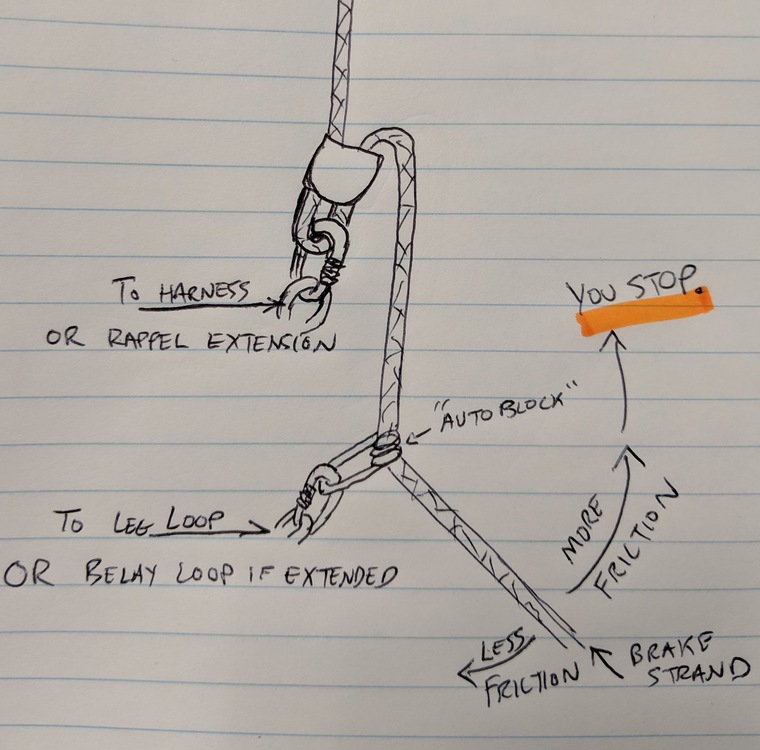 |
|
|
Jorge Jordan wrote: Has anyone mentioned this? Nice post and cool drawing. Fundamentally (imo) the issue is one of over-weighting the combo of rope and device and then (likely) getting into panic-mode. It has been shown that in the panic-mode case the victims often defeat the device or safety backups by clutching at them preventing their proper action. |
|
|
Cosmiccragsman AKA Dwain wrote: Well then, I guess my brain is fully employed, as well as yours. ;-) Hey Dwain, I was speaking in generalities, not about any one person---such as you. |
|
|
Nick Goldsmith wrote: sounds like they need some outside training.. Ok Nick, you first |
|
|
rgold wrote: Your halo there is tarnished, Rgold. ;-) |
|
|
If only I ever actually had one... |
|
|
I want to thank the Chief and SAR for putting this out there. It can be difficult to suffer the slings and arrows that can come along with honesty, but if their words help just one other poor soul and perhaps save even a single life, then it would be gloriously worth it. I down own the ad Rock, but think that that advice would apply to many other rappel devices that are similar. I don't have anything new to add to some earlier great points: add a second biner (or a third if it's a long overhanging rap) and doing a leg wrap (or 2) have always worked for me. I also have a Petzl Stop and a Ukranian figure 8 with ears to lock off the rope or add friction specifically for long drops. Regardless, it's important to match the device to the rope you are out with, no matter if climbing or rappelling. I bought extra DMM Bugettes for my climbing partners when I am thinking I might fall on a skinny rope. 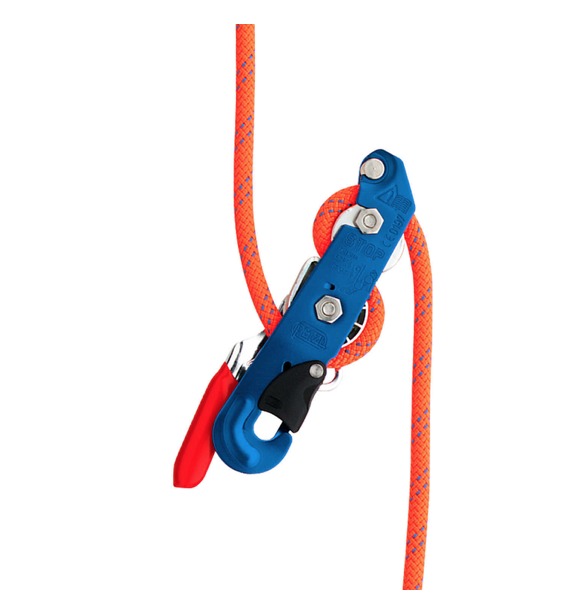 Similar to below (lifted from Gary Storriks site (http://storrick.cnc.net/VerticalDevicesPage/Rappel/EightPages/EaredEights/EEight1108.html: ) 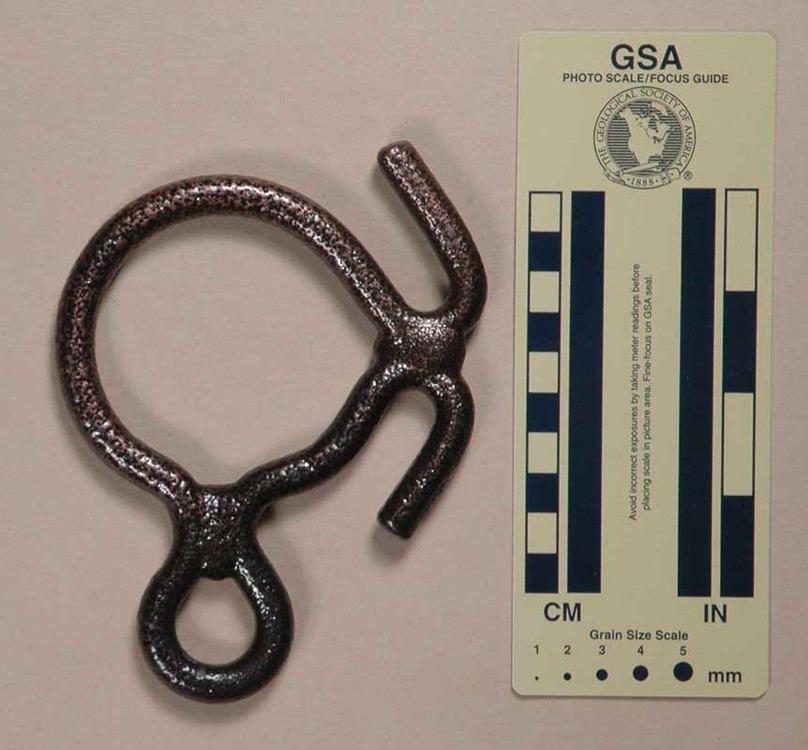 Best to all, but especially to the Chief. |
|
|
This particular device is called the "Mad Lock" and seems to be a clone of the original model Petzl Reverso. |


