
 Continue with onX Maps
 Sign in with Facebook






Your ATC is unsafe


|
Cosmiccragsman AKA Dwain wroteEspecially if her piece pulled Yes. True, Dwain. And good there was that backup piece nearby. :) |

|
Julian H wrote: Grigri saved her ass I'm not even a little bit interested in the debate in general, but that isn't a bad fall in terms of impact---the belayer barely budges---and anyone who was awake and paying attention would have caught it with any method, all the way back to a hip belay. Meanwhile, it looks like she pulled a piece, which could have been a consequence of the static behavior of the Grigri, exacerbated by the belayer's reaction to yard in slack. But on the other hand, the flake she stopped just above was a good reason not to allow the fall to be longer. As an aside, at the beginning of the video the belayer had far too much slack in the system. And better make sure he never uses anything but a Grigri, because the way he shoots his brake hand up above the device to yard in slack will virtually eliminate the braking effect of an ATC. So yes, the Grigri saved her ass from this belayer. |
|
|
Gives me chills ... not about this belayer, but where 100% use of BA devices takes us. 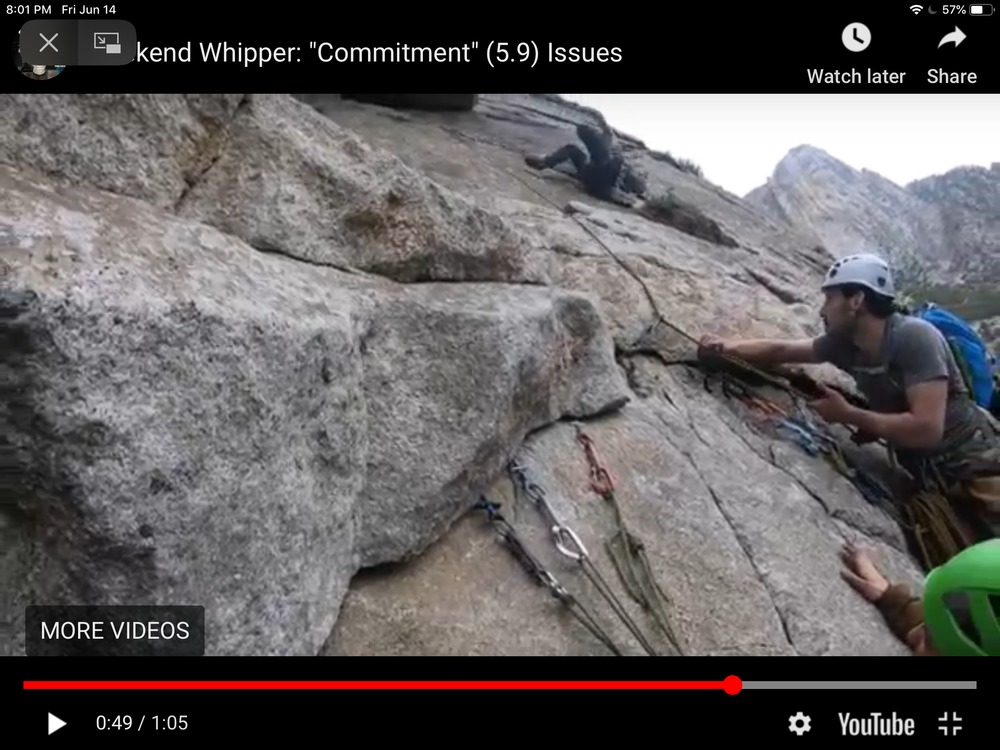 And yes, Y’all are relying on the backup as the primary. (I know, I’ve gone a step too far in saying it is 100% so.) |
|
|
the weekend whipper is back and rgold is spot on. not much for surprises here. |
|
|
TR Fellhung wrote: lol, there's nothing spot on about that. Pieces fail because the load applied to them is greater than their holding power. Compared to ATC-type devices, Grigris increase the peak load applied to the top piece. 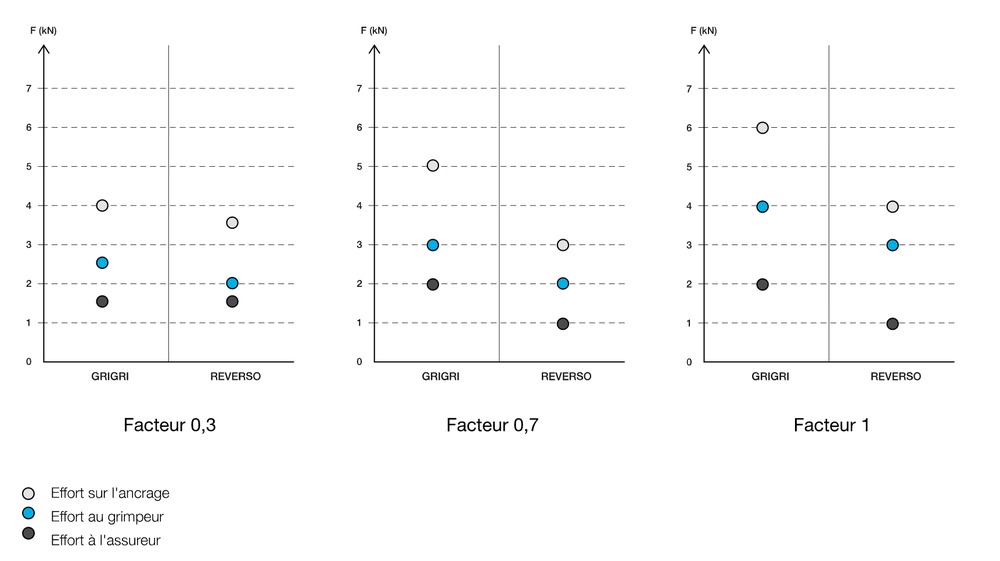 The Grigri may or may not have been the cause of the failure, but mentioning it as a possible contributing factor is far from ridiculous. |
|
|
I’m going to weigh in here with what I’m sure will be a controversial post. |
|
|
TR Fellhung wrote: But that's the whole point isn't it? Bad gear that fails at a moderate load might not fail at a lower load? That's a "ridiculous" statement?
Whoa. I never said anything about choosing a belay device.
It is a factor to consider and come to a conclusion about. I personally respect any outcome of that consideration that takes the advantages and risks into account and arrives at a personally acceptable solution. But is it really rational to completely ignore the potential effects of higher loads? If the gear fails, is it automatically a failure of placing skills? Oh, I see you added a chart with French words so I guess that changes everything, lol. That fall was probably not even a "Facteur 0,3" The chart is from Petzl, the Grigri manufacturer. They originally recommended the Grigri only be used for sport climbing, i.e. with bolts. |
|
|
Well, that's that then, the eradication of force as the determining quantity in gear failure. |
|
|
rgold wrote: Although it is true that the grigri slips much less, if any amount, compared to a tube device, I think it would not be a contributing factor in this case since there is a lot of friction in this case. The experiments that produced those graphs seem to have been done without any kind of friction in the system (drag, rope bends at carabiners, etc). Source: https://www.petzl.com/US/en/Sport/Influence-of-the-belay-device |
|
|
TR Fellhung wrote: If placement skills are poor, we all agree that the primary issue is generally with the leader. Still, in such a case, a Gri-Gri can amplify the issue no less than when the leader is competent and the choices for placements are actually poor. And the route ‘chooses’ where that point may occur, whether right off the belay or after some torturous run of gear placements. I do factor belay-device-choice in when it is a topic being discussed with a new multi-pitch climber. You can guess where Gri-Gri is on my priority list of recommendations. :) |
|
|
Fran M wrote: This is probably right, the point being that there might not be any ameliorating slippage even with an ATC. But note that the same friction that makes life easy for the belayer increases the "effective" fall factor and so results in higher than expected loads on the gear. |
|
|
"GriGris are bad because they will catch a falling climber even with poor hand placement, which reinforces bad habits" |
|
|
Personally, I never said "Grigri's are bad." Many, perhaps now most of my friends use them for trad. I climb with half ropes, so a Grigri is out, but I use an assisted braking device with the same issues when it comes to loading the gear. It is obvious that most gear most of the time is up to whatever extra loads Grigris impose. |
|
|
Kristian Solem wrote: I’m going to weigh in here with what I’m sure will be a controversial post. Not controversial at all but definitely lacking the full understanding of how a biner block combined with a grigri or any other single rope device works. Are you a new climber as well? |
|
|
m Mobes wrote: Kris? LOL. He was climbing 5.13 decades ago. |
|
|
phylp wrote: OK, but that doesn't mean he's right all the time. I disagree with his contention that most people who use Grigris can't throw out slack fast enough. If that's been his experience, he's been climbing with people who just don't know how to use Grigris, which is not particularly hard, but also is not intuitive. If you follow Petzl's recommended technique for fast feeding, it's smoother, easier, and (IMO) safer than any other device I've used, and I've used a bunch (many types of standard tubes, Click Up, Click Up+, ATC Pilot, Megajul, Smart 2.0, Munter). To put it another way, go somewhere populated mostly by experienced sport climbers. You will see vast majority using Grigris, and vast majority don't seem to have any problem throwing rope out. |
|
|
The fact that someone doesn't know many people who can properly use a device doesn't say anything about the device. |
|
|
pfwein wrote: I agree that the grigri can feed quickly using the recommended method. I do see however poor use where the device is locked open and held that way all the time......ok the device will mostly work as long as the death grip is not engaged. This observation relates to long time climbers. |
|
|
I love that random weirdos are so confident they are right and don't realize they are arguing with guys who have been on the cutting edge for longer than they have been alive... Please keep it up. |
|
|
Jon Hillis wrote: I love that random weirdos are so confident they are right and don't realize they are arguing with guys who have been on the cutting edge for longer than they have been alive... Please keep it up. Not sure what "arguing" you're referring to, but if it has to with whether it's easy or hard to pay out slack with a Grigri, there's really not much to argue about it. Simply get a Grigri, watch Petzl's instructional video, and try it. It does take a little practice, and like anything else, some people pick it up more quickly than others. When you get the hang of it, congratulations, you can belay like the vast majority of people who frequently sport climb in the modern era. This isn't really something you have to take other people's word on. (But if it was, I wouldn't pay too much attention to random weirdos either, I'd instead look at what the majority of active, accomplished sport climbers do.) |


