
 Continue with onX Maps
 Sign in with Facebook






Possible Options for Replacing Mammut Pro Cord in Cordelette? Sailing Dyneema Cord?


|
Full warning this is well into the gear geek spectrum. Several on here (many?) mourned the day Mammut discontinued their Pro Cord. It was one of my favorite cords for anchor building etc and many seemed to feel the same. I've dinked around with other options over the years but never was as happy as using the thinner Pro Cord. Watching a surprisingly good video series on alpine rock put out by Ortovox I saw several uses of what looked like thin cord buy the VDBS Guides. Google led me to a product called Dyna Mit made by AustriAlpin. 6mm Dyneema cord rated to 22kN single strand. Very cool. Problem is it isn't sold in the US or CAN (I emailed the NA distributor). More searching led me into the realm of maritime cord / rope. One item in particular (there's a metric TON of cordage for sailing) jumped out at me. Paraloc cords made by Mamutec. Digging, this stuff looks an AWFUL LOT like Pro Cord made by Mammut (Mammut and Mamutec are related - Sports vs Industrial). Specifically, Paraloc Piranha looks damn close to Pro Cord save it's woven Dyneema / Polyester. 6mm rates to 24kN. 8mm rates to 40kN (!). Not cheap stuff but really interesting. The interwoven sheath makes me wonder about higher strengths knotted. Thoughts? 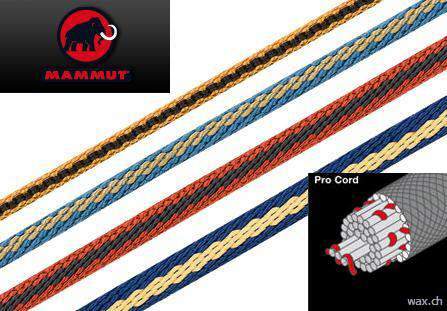 Pro Cord 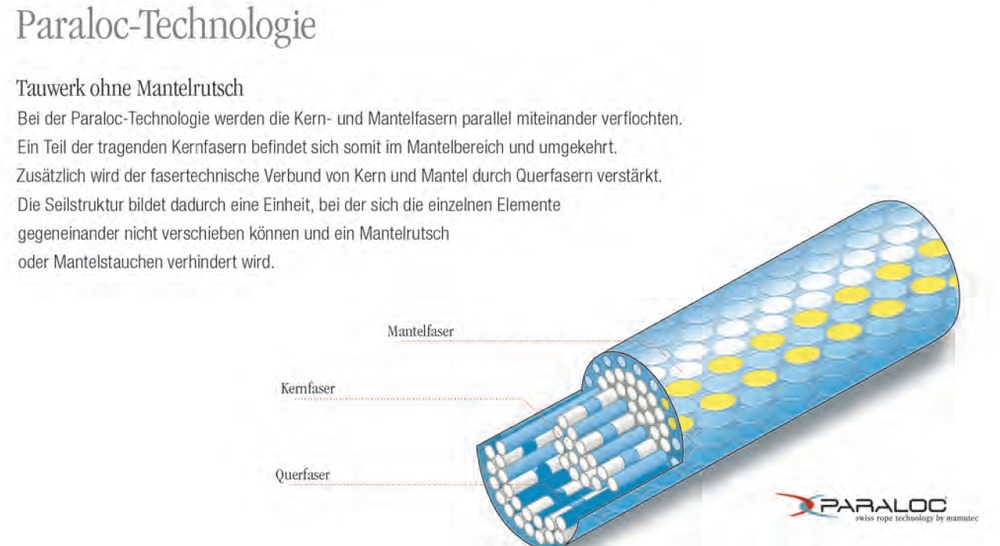 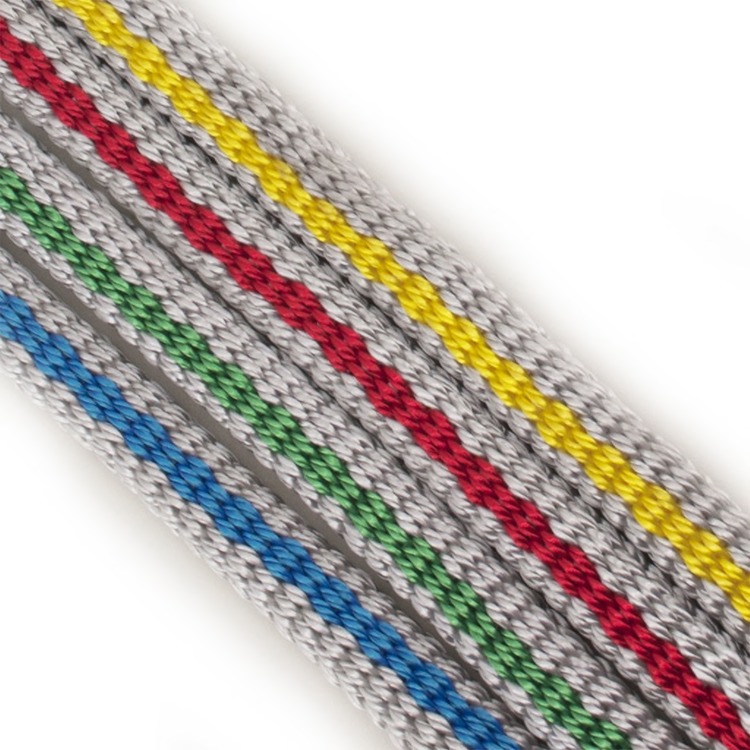 |

|
How about the blue water Titan cord? |
|
|
5.9mm sterling powercord , i’ve been using it for afew yrs, really like it. |
|
|
The Sterling stuff is good and holds knots well. |
|
|
Jaren Watson wrote: Me too, it handles like butter, and is compact enough to twist up into a nice little ball. For rope solo, I use my nylon DMM 240cm sling, it inspires a little more confidence, and has some give to it. |
|
|
Lots of different types of sailing line out there. Some of it may be good for climbing, some maybe not. Lots of different core/sheath combinations, some of which may hold knots better than others. Ratings are all over the place for a given diameter too. Definitely a little more complicated, but not insurmountable. |
|
|
We love the low-stretch Dyneema stuff on performance sailboats, but most of it is used for control lines where you're splicing terminations rather than tying knots. Even the Dyneema-core ropes with a sheath can be slick and hard to secure. I would want to see some pull testing of common climbing knots before I trusted it in a critical system. |
|
|
Petzl 6mm (non RAD) cord at 9kn mbs. |
|
|
Marlow 6mm Excel Elite at 23kN, dyneema core and technora and polyester cover. |
|
|
Buck Rio wrote:Better idea, just use a 240cm Mammut Contact Sling for anchors. I’ve been using these for a couple seasons now and I really like them. Before that I was just using 120s. I haven’t carried a cordalette in over ten years and I don’t miss them one bit. |
|
|
Marc H wrote: Cordalette's are nice for one thing...if you need some tat for either a bail or at a tree or chock stone anchor that already has a bunch of suspect tat hanging, you can cut a hunk off and back the mess up. |
|
|
Buck Rio wrote: I’ve done this by just cutting my most beat-up sling and tying it around the tree. |
|
|
Marc H wrote: I love my slings too much...each one of them has sentimental value . BITD when they were all just tied pieces of 1" webbing, I had no problem leaving them behind. But the Mammut contact slings are $10 each. My cordalette is at least 10 years old, and was about a .25 a foot. |
|
|
As there is some interest... 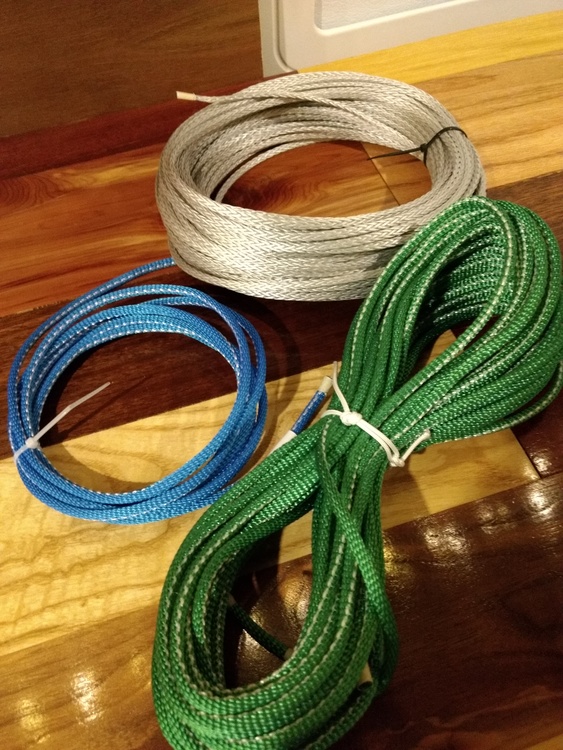 The cord definitely feels similar to the old procord. Unfortunately in what I think was a mixup, the 1/4" / 6mm I also ordered is clearly not the right diameter. Aside from the different color I selected it's identical to the 3/16" / 5mm in diameter and feel. Shame as that's the one I was most interested in. The "Marlow 6mm Excel Elite" that Brocky posted looks awesome. I'm likely going to order some of that to mess around with soon-ish as well. Also I didn't realise there were so many grades of dyneema out there. A lot of stuff is SK75, but there's grades that are considerably stronger: https://www.marlowropes.com/product/d12-max-99-grand-prix-rope There's a good chance this isn't even the strongest such modified dyneema. Single braid dyneema is so easy to splice too that this has me thinking home made ultralight slings. Look at single strand strength, convert to kN, double, minus loss from splice... Wow. Problem likely is that most of these dyneemas are coated, stiff, and wouldn't make nice to use supple slings. The grey cord there is a different manufacturer, but same idea, very high grade. Unfortunately it seems to have been compressed through rollers into a weird rectangular shape. Quite stiff compared to standard amsteel for instance. Will likely be more of a pain to splice. 5.9mm Sterling Powercord is great stuff of course and readily available. May be worth mentioning that the old loved Mammut procord appears to be lacking in strength compared to Sterling accessory cord size for size... And I still love and very often use my 7mm 27.5' Sterling accessory cord cordellette when guiding. Very supple. |
|
|
The grey single braid should loosen up once it’s bent back and forth,or run over something small and round. Robline’s Ocean 5000 STS is the strongest dyneema single braid I’ve seen and is still flexible. The Marlow D12 you linked comes with an extreme amount of coating, making it as stiff as wire, and takes a lot of effort to loosen up. I’ve found that it is easier to splice the stiffer cords because the coating holds the strands together, allowing the fid to pass through the middle. Making soft shackles instead of splicing is another option for dyneema. |
|
|
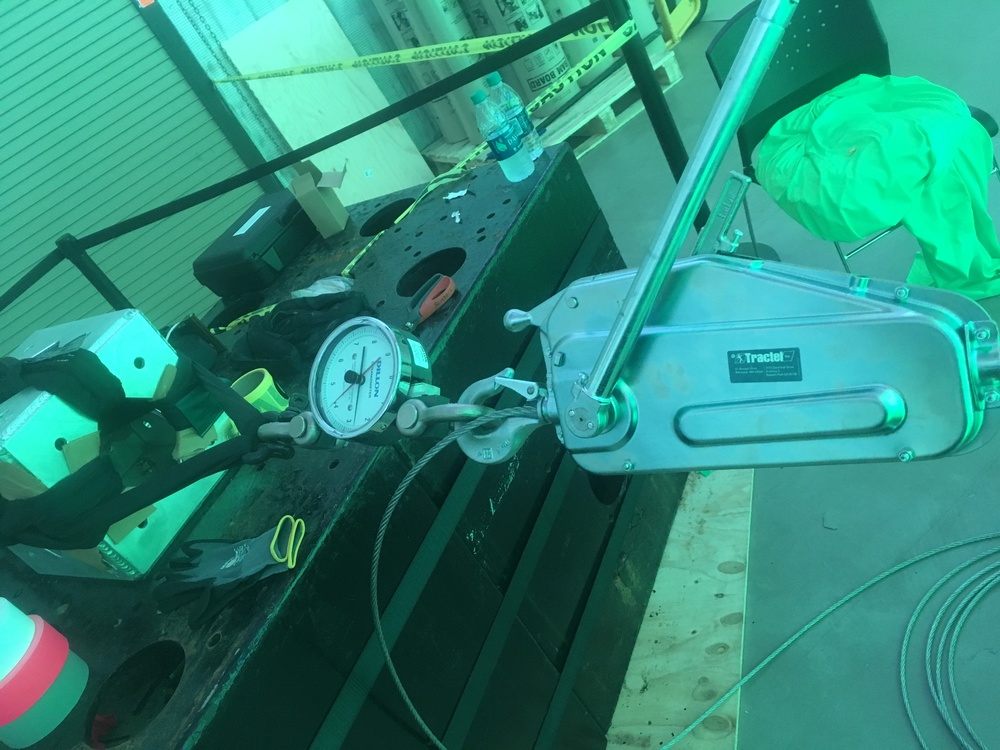 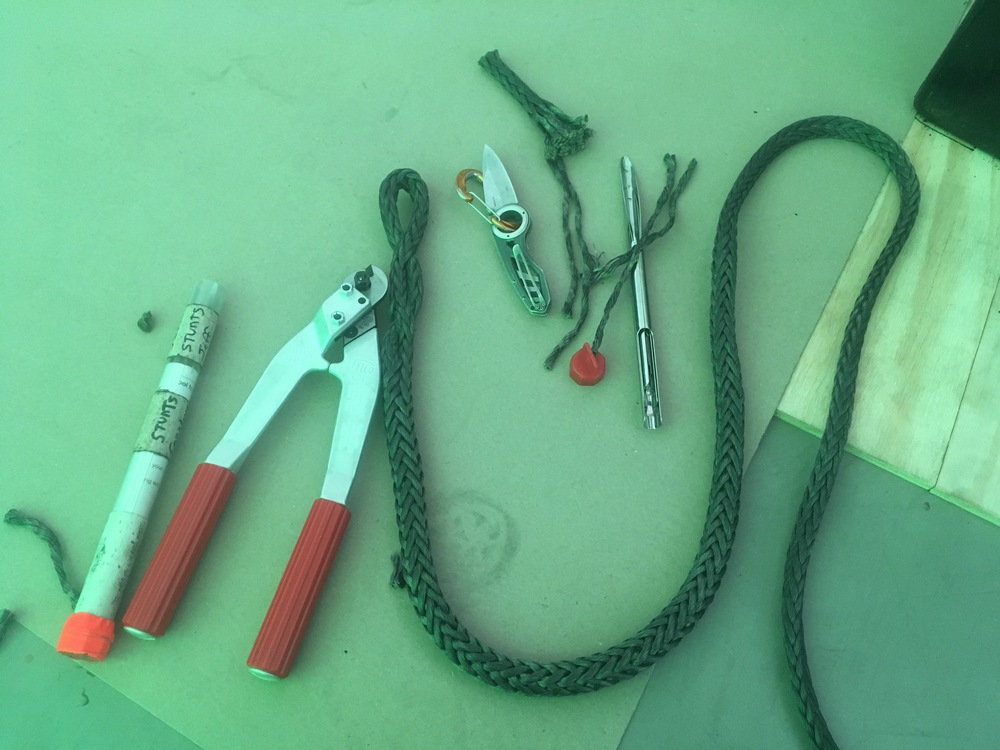 1/2 tech 12 good for for 29,000 pounds |
|
|
Hey Jeffrey, curious as to where it broke, it came close to Samson’s minimum break strength? |
|
|
Brocky wrote: Hey Jeffrey, curious as to where it broke, it came close to Samson’s minimum break strength? Never broke the line it was only cranked to 3500p high line for a TV commercial for Intel |
|
|
Joke or no joke they paid me very well lol |
|
|
I too have watched this video series made by Ortovox. I think you are referring to clips no. 17,18. It is very well made but two things I have trouble with. First, they are using simple overhand knot to join ends of dyneema cord and second, they are using two girth hitches to create a belay. Maybe cords acts differently than slings but girth hitch reduces strength of dyneema sling considerably. As for knots youtube.com/watch?v=9_sGyjr… |
|
|
BigM wrote: I too have watched this video series made by Ortovox. I think you are referring to clips no. 17,18. It is very well made but two things I have trouble with. First, they are using simple overhand knot to join ends of dyneema cord and second, they are using two girth hitches to create a belay. Maybe cords acts differently than slings but girth hitch reduces strength of dyneema sling considerably. As for knots youtube.com/watch?v=9_sGyjr… I've wondered about the use of the Flat Overhand in loops like this (you'll also is it for threads). Reasoning on threads is you can tie it one handed. In either case, I think the idea is that yes, you loose a lot of strength but still not enough to be of much concern. DAV testing on 5.5 Dyneema cord (with a different sheath) yielded 8.1kN. Not great but pretty much the same as a smaller cam or nut. I suspect they realize that that's still "fine" for a belay piece where loads are rare north of 5kN. One could tie a Packetknot as suggested by DAV and have plenty of strength. I've done a lot of digging on girth hitch testing and there's not much out there climbing related that I could find ON THIS PARTICULAR APPLICATION. There's a fair amount on girth hitching sling to sling or sling to nut etc but not a ton on a girth hitch around a larger, solid object (and nothing on loading a girth hitch on only one strand aka a cow's hitch I believe). There's a BD Post on the strength of PAS attachments and buried in there one on a girth hitch around a 10mm pin (so large biner). The BD Link was full strength on that one (27+kN). More digging will lead you into the rigging and crane realm where one learns that girth hitching objects and strength reduction is a function of the size of the object that's "wrapped" and the angle the hitch and it's "choke" form. The tighter the angle the lower the strengths. So in climbing, a biner provides a much better angle than two slings or a wire (DMM tests) never mind the cutting issues with those things. |


