
 Continue with onX Maps
 Sign in with Facebook






Stiff climbing rope
|
|
Recently got an Edelrid Eagle Light Climbing Rope and it is very stiff any ideas to solve this issue? |
|
|
Just climb on it. |
|
|
rub it forcefully |
|
|
alexd81 wrote: rub it forcefully no, no, no that's how these sorts of things get stiff in the first place. Think about your grandma |


|
Tanner David wrote: Recently got an Edelrid Eagle Light Climbing Rope and it is very stiff any ideas to solve this issue? There is no “solution” to your problem. It’s the most durable rope we’ve ever sold at the shop. Ken took a new one out to IC for the Fall season and probably put 400 pitches on it. Other than being a bit dirty it was basically brand new. It’s effectively a braided down 9.7 and that’s why it feels stiff. It will run like a dream through your pro but be sure to dress and snug your knots well. Climb Safe,Mal |
|
|
@malcolm daly so if I were to use this for ice and mixed routes I would be good or should I look more towards the Tendon Master 9.1 complete shield? And is it true that the Edelrid a dry rope because on the website im looking on it says that but i find alot just by searching it that its not any insight? |
|
|
|
|
|
Sleep with it |
|
|
Marc H wrote: Thankyou |
|
|
Tanner David wrote: @malcolm daly so if I were to use this for ice and mixed routes I would be good or should I look more towards the Tendon Master 9.1 complete shield? And is it true that the Edelrid a dry rope because on the website im looking on it says that but i find alot just by searching it that its not any insight? 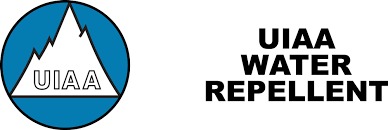 Here is the actual testing procedure If your rope is labeled with the UIAA Water Repellent standard it carries the highest verified standard of treatment. Any other “dry” treatments such as “DryCore”, “Dry Cover” or whatever are bogus. This stringent and verified standard guarantees less than 5% water absorption through the test. Without the UIAA label there is no way to tell if the rope is rated dry not. Ropes without the UIAA certification which are called “Dry” or “Waterproof” can absorb any amount of water and still claim dryness. It’s usually the marketing department which makes those claims. To further confuse things, most of the rope brands that we carry have decided to grace their UIAA Water Repellent ropes with some sort of unique name;
One final caveat: Don’t confuse the UIAA rating of the Tendon ropes, or any other ropes for that matter, with the UIAA Water Repellent rating. They are distinct and different ratings. Hope that helps, Mal |
|
|
that guy named seb wrote: He’s got a couple specials on Netflix. If you haven’t seen them, they’re must-see TV. |
|
|
Malcolm Daly wrote: It´s actually 5% water absorption and exactly how stringent and particularly "verified" the test is is debateable since it´s done in-house by the manufacturer. Tendon say that ropes with their Complete Shield conform to the UIAA Dry certification requirements. |
|
|
Jim Titt wrote: Jim, Thanks for the correction on the water absorbsion issue. I fixed it up thread.Nowhere on the Tendon site do I see any reference to meeting the UIAA Water Repellent standard. Did miss something?Mal |
|
|
Well Tendon seem to keep it a secret from you guys, perhaps their enthusiasm for the standard is on the same low level as mine! But in the German catalogue it says so; "Alle Seile mit COMPLETE SHIELD erfüllen den UIAA 101 Standard für den sog. “Water repellent Test”. UKC and others who have reviewed the ropes and asked Tendon are told this is the case. If you sniff around you can even find Tendons Complete Shield symbol with "Water Repellent UIAA" surrounding it like this;- 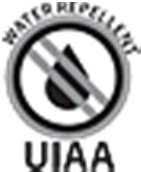 More worrying is that in a supposedly environmentally concerned sport is that the UIAA appears to be promoting the use of Teflon-based products along with their associated PFC´s which the rest of the world is trying to eliminate, we would have been better served in the long-term if the UIAA had prohibited the use of Teflon treatments (and nano-particles) when producing the standard. It may only take one grad student studying climbers effect on ecology to take a dirt sample from the bottom of a popular cliff at say Joshua Tree and you can kiss climbing goodbye. |
|
|
Huh...I didn’t see anything on their website about their UIAA Water Repellent. On the section where they talk about their Teflon technologies there is no mention about the UIAA standard and on the page where they show the meaning of all the symbols, the raindrop with the double slashes does not have UIAA letters. |
|
|
Jim Titt wrote: Well Tendon seem to keep it a secret from you guys, perhaps their enthusiasm for the standard is on the same low level as mine! But in the German catalogue it says so; "Alle Seile mit COMPLETE SHIELD erfüllen den UIAA 101 Standard für den sog. “Water repellent Test”. UKC and others who have reviewed the ropes and asked Tendon are told this is the case. If you sniff around you can even find Tendons Complete Shield symbol with "Water Repellent UIAA" surrounding it like this;- While obviously using teflon isn't ideal, it's byfar the best and most durable option to use on ropes, at least that is my understanding. Using any other option would likely be nigh useless as it would probably wear off so quickly with the amount of friction and bending that climbing ropes are subjected to. Just a guess but I'm betting it only contributes a miniscule fraction to the total amount of PTFE in the world. Perhaps some grad student will actually find a better solution that is just as durable and effective one day instead of sampling dirt in a desert where that amount of PTFE is likely to have very little impact. |
|
|
Christopher Smith wrote: "Nescessity is the mother of invention." The outdoor clothing industry has made huge strides towards eliminating PFC´s in the production of their clothing and there is no reason rope manufacturers could not be also doing so EXCEPT there is no pressure on them to do so, they will take the most cost-effective solution unless they are persuaded or forced to change. The UIAA who claim to represent 3 million climbers/mounaineers could have simply added the requirement to label ropes "PFC Free" or "Uses PFCs" which would have raised awareness and applied pressure on the manufacturers, as it is even the most basic ropes are treated to no benefit whatsoever but to the detriment of the environment. |


