|
|
John Barritt
·
Mar 31, 2019
·
The 405
· Joined Oct 2016
· Points: 1,083
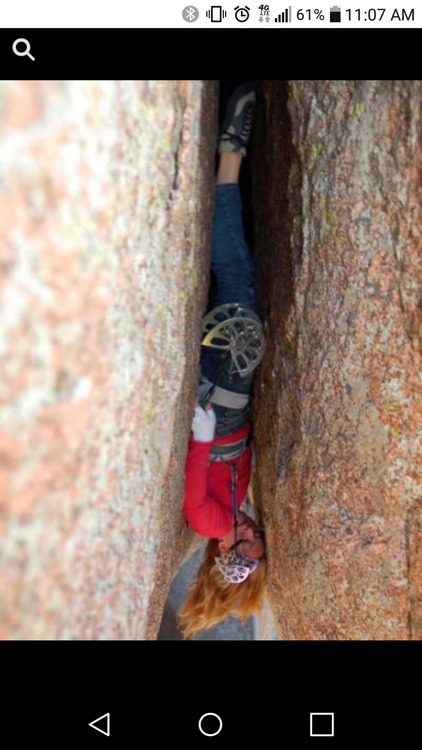
Lori Milas wrote: Meanwhile there's this. BTW... does anyone really believe that olive oil can extract you from a stuck foot/hand or body jam? Perhaps that's just an old wives tale. Frankly, this being up about 100 feet... how in HELL would you get pried out, if indeed you couldn't wiggle out?
I thought the whole point of OW climbing WAS getting stuck...... ;)
|
|
|
wendy weiss
·
Mar 31, 2019
·
boulder, co
· Joined Mar 2006
· Points: 10
ErikaNW wrote: but there have been a few climbs at harder grades that the pack was a real detriment to getting up stuff, especially steep roofs, even following. And chimneys. I recall a mini-epic seconding the first pitch of Osiris.
We were climbing pretty easy grades that trip so I wasn’t building mini-anchors the entire way up like I tend to do when I’m scared. Speaking of scared - if I am feeling sketched out, eating generally does wonders for me. Another reason to carry some food. I could never survive Susan’s single mint strategy.
"building mini-anchors" -- I like that description.
|
|
|
David K
·
Mar 31, 2019
·
The Road, Sometimes Chattan…
· Joined Jan 2017
· Points: 434
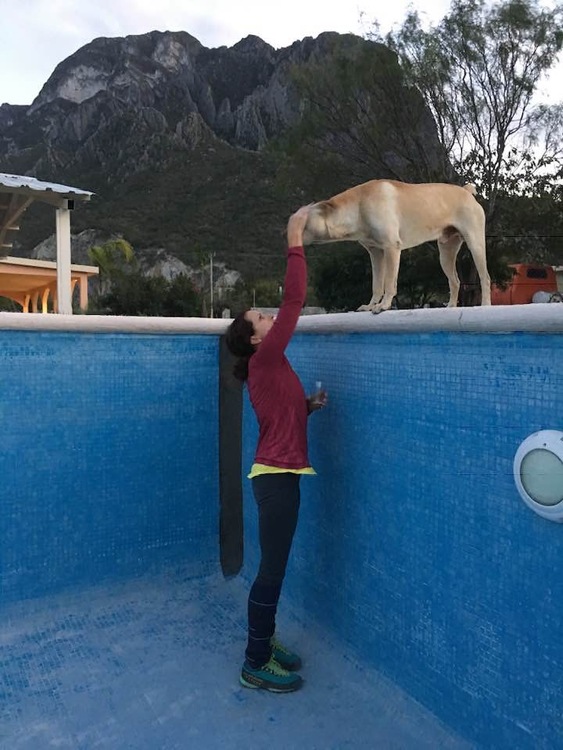
Russ Walling wrote: Friend of dogs.... The thumbnail for this picture makes it look like her hair is really long.
|
|
|
John Barritt
·
Mar 31, 2019
·
The 405
· Joined Oct 2016
· Points: 1,083
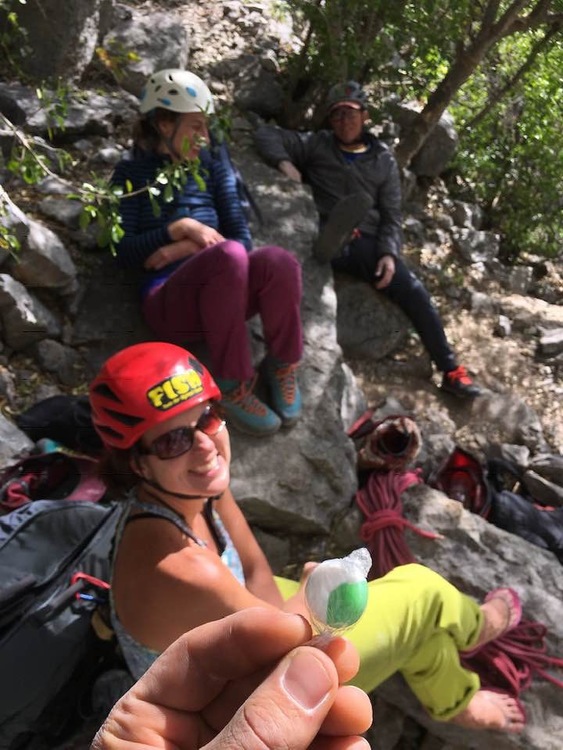
Russ Walling wrote: That's one of those lime mints......that wouldn't make it to the car in my possession..... let alone all day on a route....... ;)
|
|
|
Carl Schneider
·
Mar 31, 2019
·
Mount Torrens, South Australia
· Joined Dec 2017
· Points: 0
Lori Milas wrote: Carl, you do paint a picture. Very nice picture... you drunk, crying, broken, stumbling. You get yourself out of that mess, only to get right back at it again and find more trouble for yourself. This reminds me a bit of some of the spots we would find ourselves in in the '60's... only back then I didn't care where we wound up. Wherever it was it could only be fun. Things have changed...
There's really an Australian army? What all do you do? More of the above story?
Ha ha ha of COURSE we have an army. We've been active lately in supporting you peeps in the Middle East and Afghanistan. I'm not in the army now; I decided I was a pacifist so probs shouldn't really have a job killing peeps :-)
|
|
|
Lori Milas
·
Mar 31, 2019
·
Joshua Tree, CA
· Joined Apr 2017
· Points: 250
Carl Schneider wrote: Ha ha ha of COURSE we have an army. We've been active lately in supporting you peeps in the Middle East and Afghanistan. I'm not in the army now; I decided I was a pacifist so probs shouldn't really have a job killing peeps :-)
Carl, weren't you going to upload your song and poetry for us? What happened to that?!? Because now I REALLY want to hear it.
|
|
|
rgold
·
Mar 31, 2019
·
Poughkeepsie, NY
· Joined Feb 2008
· Points: 526
Russ Walling wrote: So true on the changeovers... when the leader says “on belay” I’m out of the station in about 8 seconds. When I get to the next belay I’m ready to by basically just climbing through.... half the time I never even load the anchor or clip in or anything. I just grab any extra gear needed and go... the stuff I cleaned on the way up is already racked and ready. It makes a huge time difference. Yup, that's the way its done. It is pretty easy too when sport climbing, since all there is to organize is draws.
|
|
|
Lori Milas
·
Mar 31, 2019
·
Joshua Tree, CA
· Joined Apr 2017
· Points: 250
John Barritt wrote:
I have a Gerber hydration pack I use for everything. It has a 3L bladder. On a summer day (50 miles of trail) I'll drink the whole thing.
On the bike it carries cell phone, wallet, keys and some tools. Spare plug and mustard packets.
Same for climbing, fishing canoeing, hiking etc. Sans tools add snacks or lunch as appropriate.
JOHN. The mustard packets again? Will we ever know whether these actually exist? You just slipped that right in there....
|
|
|
Carl Schneider
·
Mar 31, 2019
·
Mount Torrens, South Australia
· Joined Dec 2017
· Points: 0
Lori Milas wrote: Carl, weren't you going to upload your song and poetry for us? What happened to that?!? Because now I REALLY want to hear it. Ha ha yeah. I think I posted the lyrics but was going to record it? My "poetry" is normally fueled by warm $2.99 chardonnay or similar...
I don't actually climb drunk, but one day at Mount Arapiles I said to my mate "I don;t feel very strong today", He replied, " Well, you wouldn't, you have sixteen point five standard drinks last night".
Sometimes I wonder what I could maybe achieve if I didn't live life like a 80's rock star...
|
|
|
Lori Milas
·
Apr 1, 2019
·
Joshua Tree, CA
· Joined Apr 2017
· Points: 250
I'm thinking about falling this morning. Maybe I've played it too safe... you are all right, it's hard to 'fall' or get hurt on a top rope. (although I can think of a hundred ways to still get hurt, just maybe not die.)
The only time I've been in a serious fall was in the gym, where my fall led to a pendulum swing, and I whanked my shin hard on a jug going one way, and then whanked it again on the rebound... blood everywhere, and a swollen shin for months.
One of the people I climbed with last time at Josh (can't remember who) offered to give me so much slack that any fall would be a good one. Gaines thinks this is a terrible idea... and doesn't like Arno Ilgner's intentional falling. Gaines has taken plenty of hard falls... but doesn't recommend seeking them out. (Other than that, he likes Arno).
I sure do enough hanging lately. Since the plan is to do some leading... is it time to fall, too?
|
|
|
John Barritt
·
Apr 1, 2019
·
The 405
· Joined Oct 2016
· Points: 1,083
Lori Milas wrote: I'm thinking about falling this morning. Maybe I've played it too safe... you are all right, it's hard to 'fall' or get hurt on a top rope. (although I can think of a hundred ways to still get hurt, just maybe not die.)
The only time I've been in a serious fall was in the gym, where my fall led to a pendulum swing, and I whanked my shin hard on a jug going one way, and then whanked it again on the rebound... blood everywhere, and a swollen shin for months.
One of the people I climbed with last time at Josh (can't remember who) offered to give me so much slack that any fall would be a good one. Gaines thinks this is a terrible idea... and doesn't like Arno Ilgner's intentional falling. Gaines has taken plenty of hard falls... but doesn't recommend seeking them out. (Other than that, he likes Arno).
I sure do enough hanging lately. Since the plan is to do some leading... is it time to fall, too?
No, others will disagree. The more time you climb without falling the better you get at climbing. No reason to invite injury either.
Always top-rope with a little slack so you don't feel the rope. Lest it becomes a crutch......
|
|
|
rgold
·
Apr 1, 2019
·
Poughkeepsie, NY
· Joined Feb 2008
· Points: 526
Lori, banging your shin on projecting plastic isn't even remotely close to a "serious fall." You haven't had a serious fall and, if you go about things properly, won't have one for a long time or ever. At our age especially, a serious fall is probably a climbing career-ender, beyond that quite possibly a life-alterer in some way, and maybe fatal.
It is an unfortunate feature of climbing that tactics initially reserved for cutting-edge routes work their way down the scale and end up being used where those tactics are unnecessary and wrong-headed. The reality is you can't have one fixed idea about falling, your willingness has to be informed by the terrain, the location of pro, and the reliability of pro. Part of that reality is that falling on moderate trad climbs is a very bad idea from the injury perspective and is indicative of poor control stemming from inadequate skill and a shaky mental approach. Using various artificial exercises to desensitize your natural reluctance to fall is something you can revisit when you are trying to break into 5.12. The novice trad climber is right to be wary of falling and shouldn't be doing anything to diminish that avoidance.
What you should be working on is calmness, precision, skill with gear, and the essential ability to downclimb out of trouble rather than pushing on into it. Those of us who have been around for a while have extensive histories of retreating from routes for various reasons. Often, but not always, we returned wiser, better equipped, or stronger, and managed to get up. Sometimes there were multiple attempts and retreats. And every now and then we made the decision that the climb wasn't going to be for us. What we never did is decide that falling on the lead is no big deal and you aren't properly pushing your limits if you aren't falling off. That's a modern conceit for climbers operating in the paradoxically much safer context of high-end climbs and shouldn't be allowed to distort ones approach to moderate trad when you are just starting out.
|
|
|
Lori Milas
·
Apr 1, 2019
·
Joshua Tree, CA
· Joined Apr 2017
· Points: 250
rgold wrote: Lori, banging your shin on projecting plastic isn't even remotely close to a "serious fall." You haven't had a serious fall and, if you go about things properly, won't have one for a long time or ever. At our age especially, a serious fall is probably a climbing career-ender, beyond that quite possibly a life-alterer in some way, and maybe fatal.
What you should be working on is calmness, precision, skill with gear, and the essential ability to downclimb out of trouble...
Oh, man. This is why I’m here. Thank you so much. Reading your and other posts immediately recalls all the times I have been out with Gaines and his caution, coaching and conservatism when it comes to me. I could say the same thing with Ryan indoors. They seem to know how to coach and challenge me in climbing but also when to call the whole thing off. Slowly and in undramatic ways I inch up in grades and skill. Again... thank you for taking the time to share what you do. “On the shoulders of giants...”
|
|
|
Andrew Rice
·
Apr 1, 2019
·
Los Angeles, CA
· Joined Jan 2016
· Points: 11
rgold wrote: Lori, banging your shin on projecting plastic isn't even remotely close to a "serious fall." You haven't had a serious fall and, if you go about things properly, won't have one for a long time or ever. At our age especially, a serious fall is probably a climbing career-ender, beyond that quite possibly a life-alterer in some way, and maybe fatal.
Rich beat me to this. And I see that you already absorbed his response. But it's worth repeating.
I get cuts and bruises quite frequently from climbing. None of that is serious. I know you're dealing with a medical condition that makes even cuts and bruises harder to deal with, but none of that is a game changer.
But I also want to say that I have found value in getting comfortable falling in a safe CONTROLLED environment. An example of a controlled environment would be The Torch, at my gym, where you were marvelling at the steepness and height of that feature. I get up there quite frequently and "summit or plummet." Knowing what it feels like to push my ability to the failure point is actually valuable for me because it lets me know exactly what my failure point feels like and where it exists. It also makes me a stronger climber, physically and mentally. But I'd be an utter fool to do that same kind of exercise on trad gear at J-tree. I climb well within my known limits in those environments.
|
|
|
rgold
·
Apr 1, 2019
·
Poughkeepsie, NY
· Joined Feb 2008
· Points: 526
I was climbing a few days ago with a highly experienced and competent Scottish climber, He climbed up to the crux, placed good gear near the moves, climbed up and down a few times, and announced that today was not the day for him on this route. He then flawlessly downclimbed to the ground.
He certainly could have "gone for it," the gear was close and good enough. But his concept of what "doing the climb" meant didn't include falling off it, and once he had evaluated the probability of that, he opted for a significant and totally controlled down-climb.
Did he "fail?" Did "not reach his potential?" For me, this performance was all about competence, and far more of a "success" than falling off or hang-dogging to work out the moves, indicative of the kind of steadiness that would have kept everyone safe if the protection situation had been less ideal. This was a guy you could head into unknown territory with and know your chances of coming back in one piece would be as high as possible.
Success on a climb means you get to go out again tomorrow. That isn't the way we think in the gym or on a sport climb, but for trad climbing I think it is the preeminent criterion.
|
|
|
Andrew Rice
·
Apr 1, 2019
·
Los Angeles, CA
· Joined Jan 2016
· Points: 11
Yeah, I think that's definitely the most important measuring stick.
Also, downclimbing is such a vastly under-valued and under-practiced skill. I've gotten a lot better at it in the last couple years just by putting in the time to practice.
|
|
|
Lori Milas
·
Apr 1, 2019
·
Joshua Tree, CA
· Joined Apr 2017
· Points: 250
rgold wrote: I was climbing a few days ago with a highly experienced and competent Scottish climber, He climbed up to the crux, placed good gear near the moves, climbed up and down a few times, and announced that today was not the day for him on this route. He then flawlessly downclimbed to the ground.
He certainly could have "gone for it," the gear was close and good enough. But his concept of what "doing the climb" meant didn't include falling off it, and once he had evaluated the probability of that, he opted for a significant and totally controlled down-climb.
Did he "fail?" Did "not reach his potential?" For me, this performance was all about competence, and far more of a "success" than falling off or hang-dogging to work out the moves, indicative of the kind of steadiness that would have kept everyone safe if the protection situation had been less ideal. This was a guy you could head into unknown territory with and know your chances of coming back in one piece would be as high as possible.
Success on a climb means you get to go out again tomorrow. That isn't the way we think in the gym or on a sport climb, but for trad climbing I think it is the preeminent criterion. Reading your and Senor's responses gives me pause... I have so far thought there is no limit, and age is not a factor in climbing. Maybe I'm wrong. I have apologized--felt like I was going about this all wrong-- for all my reliance on guides and coaches over these last months/year... but that's because you all know that climbing is a lot more than just tying into a rope. I wanted the basics and then so much more.
As accelerated as this journey has been for me, it may just take a lot more time. I will say that Bob (and others) have focused entirely on 'not falling' and slowly building a breadth of skills. Maybe now I understand why. Breathwork, precise foot placement, not losing my focus... not stumbling in any way. In fact... did I mention that last time out Bob told me "If I slip even once on a climb, I think about it ALL DAY. I make a BIG deal about it. I want to know what happened, and why." He was saying this after I made a slight slip and adjustment on my way up a slab. It looked sloppy to him. He didn't want me to ignore that. Two slips and he probably would have called me down.
Did I pick this sport too late?
------------------
I really came back to this post only because I thought of later... the fact that after the first few initial climbs, I've never felt a top rope or asked for a tight belay. I've never fallen... unless intentionally on a few vertical climbs where I just asked for a rest. I might discover I relied far more heavily than I knew, if that rope was gone... but as a rule, it's a lose belay. I think I'm climbing under my own steam.
Senor, I hope I can meet up again with you at your gym. I so enjoyed it!
EDIT: Senor... is downclimbing a term used only for outdoor climbing? Not the same as in the gym?
|
|
|
Andrew Rice
·
Apr 1, 2019
·
Los Angeles, CA
· Joined Jan 2016
· Points: 11
Lori Milas wrote: As accelerated as this journey has been for me, it may just take a lot more time. I will say that Bob (and others) have focused entirely on 'not falling' and slowly building a breadth of skills. Maybe now I understand why. Breathwork, precise foot placement, not losing my focus... not stumbling in any way. In fact... did I mention that last time out Bob told me "If I slip even once on a climb, I think about it ALL DAY. I make a BIG deal about it. I want to know what happened, and why." He was saying this after I made a slight slip and adjustment on my way up a slab. It looked sloppy to him. He didn't want me to ignore that. Two slips and he probably would have called me down.
Did I pick this sport too late? I think you need to put Bob G's advice into proper context. He's a well-respected guide working primarily in a hard-core trad environment. A very unforgiving variety of one, too. A lot of people get injured and lost and killed in J-tree. It's just an unforgiving place. The rock is weathered and rough. Protecting your climb is hard. The weather can kill you. Bob is just trying to instill in you a respect for the seriousness of all that. And I suspect he was also getting you to focus on self-reliance and technique rather than always sitting back onto the toprope.
But there are a lot of other possible variations of what climbing means available to you. Not only the version where a single fall is something you must think about all day. In a well-bolted sport environment falling is totally expected. As they say, "if you ain't flying, you ain't trying."
Re. your downclimbing question. No, downclimbing is downclimbing, wherever you do it. Gym, Mt. Everest. Climbing down instead of up is downclimbing.
In terms of starting too late, do you have another option?
|
|
|
Buck Rio
·
Apr 1, 2019
·
MN
· Joined Jul 2015
· Points: 16
rgold wrote: It is an unfortunate feature of climbing that tactics initially reserved for cutting-edge routes work their way down the scale and end up being used where those tactics are unnecessary and wrong-headed. The reality is you can't have one fixed idea about falling, your willingness has to be informed by the terrain, the location of pro, and the reliability of pro. Part of that reality is that falling on moderate trad climbs is a very bad idea from the injury perspective and is indicative of poor control stemming from inadequate skill and a shaky mental approach. Using various artificial exercises to desensitize your natural reluctance to fall is something you can revisit when you are trying to break into 5.12. The novice trad climber is right to be wary of falling and shouldn't be doing anything to diminish that avoidance.
What you should be working on is calmness, precision, skill with gear, and the essential ability to downclimb out of trouble rather than pushing on into it. Those of us who have been around for a while have extensive histories of retreating from routes for various reasons. Often, but not always, we returned wiser, better equipped, or stronger, and managed to get up. Sometimes there were multiple attempts and retreats. And every now and then we made the decision that the climb wasn't going to be for us. What we never did is decide that falling on the lead is no big deal and you aren't properly pushing your limits if you aren't falling off. That's a modern conceit for climbers operating in the paradoxically much safer context of high-end climbs and shouldn't be allowed to distort ones approach to moderate trad when you are just starting out.
What Rich says +++ Lower grades usually mean a more featured route, at a lower angle = broken ankles and legs on slab or a ledge fall = muerte.
What that also means is that you need to place gear to protect yourself from the slab/ledge fall. Get good at down climbing...I have climbed up many times, placed gear and looked at what's ahead, and down climbed to gather my wits and get de-pumped before casting off. I think this approach saved my ass more than once.
I have watched many novices struggle trying to place gear, grabbing a cam that is the wrong size, trying to slot a nut in a flare, etc.
Many leader falls come from trying to place gear at the crux, getting panicked when they can't get anything in and then falling, sometimes on bad gear.
I think it is not emphasized enough to have a plan in your head, and to break the climb down into little chunks. Mine goes something like this:
1) I have a good nut/cam at my waist that will protect me from hitting that ledge 15 ft below.
2) There is about 10 feet of climbing until I can see there is a jug and good feet, there appears to be opportunities for pro there as well.
3) Visualize the moves I will have to make to get to that spot
4) Move confidently to that spot, speed is safety
5) Get some pro in to protect the next sequence of moves.
6) Rinse and repeat
If you know that there is no reprieve or rest spot to put in gear, stage the gear you are most confident will fit in front so you don't have to dig for it. Emphasis on cams. My gear sling has spots for this so I don't ever have to try and find it while in the middle of hard moves.
Important to note that I have practiced placing gear on the ground for MANY hours, so I almost never fumble getting a piece in.
Take your rack to a section no one climbs in and place your gear as many times as you need to, to KNOW that you can accurately gauge what will fit where the first time. Small nuts are hard to get first time, they all look the same, and there is little room for error.
|
|
|
rgold
·
Apr 1, 2019
·
Poughkeepsie, NY
· Joined Feb 2008
· Points: 526
Lori Milas wrote: Reading your and Senor's responses gives me pause... I have so far thought there is no limit, and age is not a factor in climbing. Maybe I'm wrong. Of course age is a factor! For one thing, you aren't half as dumb as you were years ago :). But also your perspectives have to be different. If you get an injury that takes you out of the game for a year---even ignoring the differences in healing rate---that year is a lot more consequential to you now than it would have been to your 25 year-old self. And no, your strength and flexibility potentials are lower now than they would have been. It is almost certain that if you took up the sport at 25 you would have progressed faster and ended up better.
But so what? There is really nothing useful to be gained by contemplating alternate universes. You are doing this now. Get everything you can from it; that's all anyone can aspire to at any stage of life.
As accelerated as this journey has been for me, it may just take a lot more time. I will say that Bob (and others) have focused entirely on 'not falling' and slowly building a breadth of skills. Maybe now I understand why. Breathwork, precise foot placement, not losing my focus... not stumbling in any way. In fact... did I mention that last time out Bob told me "If I slip even once on a climb, I think about it ALL DAY. I make a BIG deal about it. I want to know what happened, and why." He was saying this after I made a slight slip and adjustment on my way up a slab. It looked sloppy to him. He didn't want me to ignore that. Two slips and he probably would have called me down.
Did I pick this sport too late? Too late for what? You've totally blown your chances of becoming the next Alex Honnold or Adam Ondra. But then again those of us who have been at this for years seem to have missed out on that opportunity as well. It takes years to get competent at trad climbing, and you just began. With luck with your health, you have enough years to get there, but there is no royal road, you have to put in the time. The destination is far off, and life being what it is, there is always the chance that you'll never arrive. So the point is to embrace and enjoy the journey, because that's what you actually have.
After 62 years of climbing, there's a host of things I would like to have done that I think are now either unlikely or totally out of the question. This is evidence for another phenomenon: the destination continually recedes as you journey forward, at least because new skills and abilities open up vistas you either didn't know about or thought unreachable. The horizon expands with knowledge and ability. Summits attained reveal further range upon range. So keep on truckin', but don't worry too much about those distant goals. You might reach some of them, but others will glitter out of reach forever.
The only thing that would be worse would be having nothing left to aspire to. I'd say that by taking up climbing, you've gifted yourself with something only a very few people your age (and maybe any age) can enjoy: the adventure of trying, failing, learning, regrouping, and questing for something exciting. It is a blessing you can't possibly be too old for. Understand it a a process, not a destination.
|

 Continue with onX Maps
 Sign in with Facebook