|
|
patto
·
Aug 11, 2018
·
Unknown Hometown
· Joined Jul 2012
· Points: 25
NateGfunk wrote:
"A breakthrough for fast-and-light missions" is literally the first sentence of the marketing copy. Small cams are more susceptible to placement errors as small changes in crack width have a much greater effect on camming angle and loading condition, as compared to a fist sized cam. You have no idea how the cam was placed or loaded, clearly some edge case scenario caused this failure. It is highly unlikely the deformation would have occured on a similar sized cam without double axles. This is the entire point you seem to have ignored. mike again wrote:
I note an assertion by the OP that the cam which is stuck in a partially retracted position because it is held there by the deformed metal. In the pictures I don't see any contact between the deformed part of the lobe and the adjoining lobe.
I've had one of my .75 ultralights get 'stuck' with one cam partially retracted, but it was because of a sideways compression that had the effect of sliding the axles around such that the spring was pinched together on one side. Might that be a mechanism for the 'stickiness' of this cam lobe? That might be consistent with the forces described.
I haven't parsed this whole thread, so if this is off track or redundant, forgiveness please, but it seems potentially relevant. The lobe is stuck because it is deformed inwards so much that the axle inside can no longer track smoothly along the curve.
|
|
|
Healyje
·
Aug 11, 2018
·
PDX
· Joined Jan 2006
· Points: 422
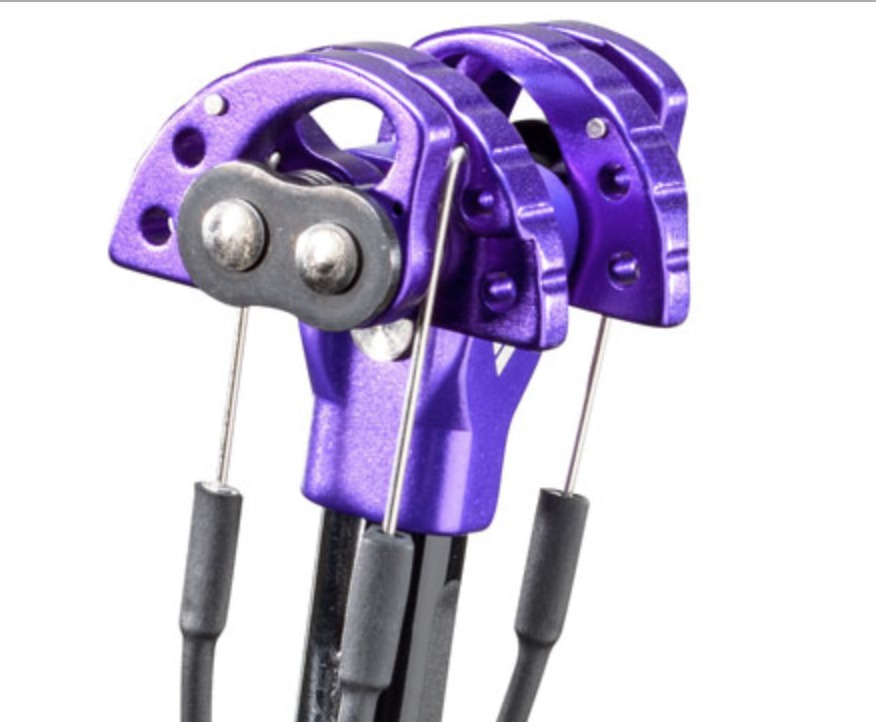
Rgold's conclusion is on target. Regardless of the quality of the placement and whether it ripped or not, there's no way to avoid the conclusion that the compression deformation the thinnest portion of the lobe was a result of an under-engineered design.
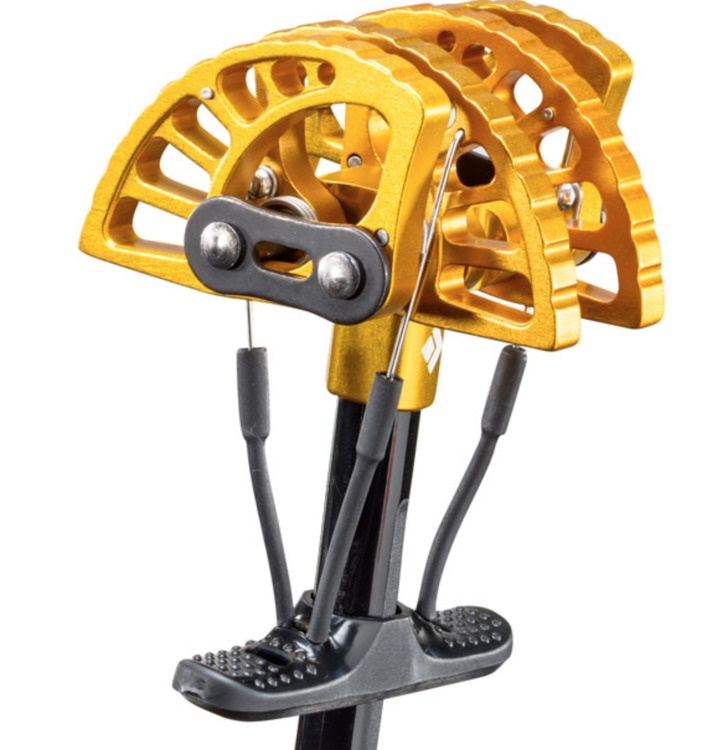
And sure, there are lots of ways to mangle a cam, but a compression deformation of the cam lobe outline isn't one of them and won't be found on a single-axle cam in the same size. Why? Because the only reason the cam lobe is that thin on the cam lobe in question is to accommodate the rotation of the second axle through the lobe. Here are the BD UL cam and Metolius UL cam of roughly the same size.
And you can see the far more conservative cutouts in the design of the larger Metolius UL cam lobes than comparable BD UL cam, but again, making room for that second axle to move through the cam lobe is an unavoidable design constraint...
|
|
|
Brian Braunstein
·
Aug 11, 2018
·
Zürich, CH
· Joined Oct 2016
· Points: 85
I've made some minor edits to the original post:
- Added information about the extension sling.
- Added the sentence explaining why there wasn't a large pendulum risk due to accidentally climb up instead of traversing left.
- Added climber and belayer weights and rope diameter/model.
|
|
|
Pavel Burov
·
Aug 12, 2018
·
Russia
· Joined May 2013
· Points: 50
@Healyje,
> the compression deformation the thinnest portion of the lobe was a result of an under-engineered design.
This proposition needs to be argumented. Any design is made to meet some goals. We could claim a design as under-engineered if it does not meet the goal. We have not been ensured the failed cam had been used properly. If not there is not that much difference whether it had been placed improperly or, e.g., hitten with a hammer.
Basically this is a conditional proposition. It is made under assumption the deformation is of compression type. The assumption needs some argumentation as well.
|
|
|
patto
·
Aug 12, 2018
·
Unknown Hometown
· Joined Jul 2012
· Points: 25
Pavel Burov wrote:
It is made under assumption the deformation is of compression type. The assumption needs some argumentation as well. The evidence is there right there in front of you.
Pavel Burov wrote:
This proposition needs to be argumented. Any design is made to meet some goals. We could claim a design as under-engineered if it does not meet the goal. We have not been ensured the failed cam had been used properly. If not there is not that much difference whether it had been placed improperly or, e.g., hitten with a hammer. Pretty much every other single axle cam on the market is made robustly enough that lobe failure through excess compression is not a concern. It is in this context that the claim of "under-engineered" is made.
The cam was used rock climbing in the real world, that sounds like being used properly. It is accepted that the placement might have been imperfect. However having to account for suffering lobe compression failure is not a normal requirement for sound cam placement.
Omega-link cams likewise will work as intended in a perfect crack. In the real work their design makes them particularly susceptible to loads that cause them to rotate.
|
|
|
slim
 ·
Aug 12, 2018
·
Unknown Hometown
· Joined Dec 2004
· Points: 1,083
·
Aug 12, 2018
·
Unknown Hometown
· Joined Dec 2004
· Points: 1,083
it's a finicky placement. there are numerous reports of various types of cams popping here. i think frank vee's guess is probably as likely as anything - cam started rotating, most of the lobes slipped pretty easily, and the last lobe held on for dear life.
i definitely don't agree with healyj's comment that "And sure, there are lots of ways to mangle a cam, but a compression deformation of the cam lobe outline isn't one of them and won't be found on a single-axle cam in the same size. Why? Because the only reason the cam lobe is that thin on the cam lobe in question is to accommodate the rotation of the second axle through the lobe." I have a had a bunch of single axle cams (aliens, tcu's, old friends) with mangled flat spots. I had an old #3 friend that the lobe looked just like the OP's, but a lot worse.
|
|
|
Pavel Burov
·
Aug 12, 2018
·
Russia
· Joined May 2013
· Points: 50
patto wrote: The evidence is there right there in front of you. Nope. The OP's photo seems more like an evidence the deformation is not of compression type. It is more like the lobe was pulled sideways and kinda filed. Sorry, my poor English is not sufficient to express the idea precisely.
|
|
|
Pavel Burov
·
Aug 12, 2018
·
Russia
· Joined May 2013
· Points: 50
patto wrote: The cam was used rock climbing in the real world, that sounds like being used properly. Oh wow. Kinda speechless.
|
|
|
Franck Vee
·
Aug 12, 2018
·
Unknown Hometown
· Joined Apr 2017
· Points: 260
Other than that - the compression on the lobe is significant, but I still fail to see how that alone would have caused the cam to pop. I also am not really convinced that this deformation would have happened under normal circumstances.
Oh no sorry - I forgot it was used by someone who looks like a climber in a place where rocks were present and it was bought in a shop that sells climbing equipment, so it was definitely used under normal circumstance....
|
|
|
David Bruneau
·
Aug 12, 2018
·
St. John
· Joined Feb 2012
· Points: 3,161
I have done this to a .4 X4, both the C4 and X4 share this issue. Mine was an aid climbing fall close to the belay, and the cam held despite deforming like in the OP's picture. This appears to be the weakest point in this cam size, seems they thinned the lobe out too much to fit the double axle.
|
|
|
Healyje
·
Aug 12, 2018
·
PDX
· Joined Jan 2006
· Points: 422
slim wrote: I have a had a bunch of single axle cams (aliens, tcu's, old friends) with mangled flat spots. I had an old #3 friend that the lobe looked just like the OP's, but a lot worse. I've destroyed cams in every conceivable way over my career and, yeah, have taken a significant amount of aluminum off of them on numerous occasions which flattened some part of the lobe, but that's distinctly different than what happened here.
|
|
|
patto
·
Aug 13, 2018
·
Unknown Hometown
· Joined Jul 2012
· Points: 25
Pavel Burov wrote:
Nope. The OP's photo seems more like an evidence the deformation is not of compression type. The lobe has been plastically deformed inwards. This is evident by the bulge on the inner circle where the opposite axle moves. The fact that it no longer opens is clear evidence of this. The only conceivable way this could have occured is from the compressive forces on the lobe.
Pavel Burov wrote:
It is more like the lobe was pulled sideways and kinda filed. Sorry, my poor English is not sufficient to express the idea precisely. Yes the cam also sheared (kinda files) sideways. This would occur if the cam slides while under load. While would normally only happen during a cam failure. The cam failure was certainly hastened by the deformation of the lobe which most likely happened prior to the shearing. Deformation or the lobe increases the camming angle and thus decreases the friction. If the friction decreases enough it will slide and cause the shearing (filing) that you have observed.
Now we can't say if another cam type would have held the fall or not. That would be counterfactual conjecture. But we can say is good certainty that the lobe deformation didn't help and it is not something you want to happen in ANY cam loading scenario.
Healyje wrote: I've destroyed cams in every conceivable way over my career and, yeah, have taken a significant amount of aluminum off of them on numerous occasions which flattened some part of the lobe, but that's distinctly different than what happened here. Exactly. (Though I am clearly behind you in destroying cams. The most I've done is break a spring stop on a 00MasterCam. The cam held.)
|
|
|
20 kN
·
Aug 14, 2018
·
Unknown Hometown
· Joined Feb 2009
· Points: 1,346
Eight pages and still the OP hasent asked the one source he should--the manufacturer.
|
|
|
Ted Pinson
·
Aug 14, 2018
·
Chicago, IL
· Joined Jul 2014
· Points: 252
You guys seem to wreck your gear a lot. You know you can just yell “take!”, right? ;)
|
|
|
Jeremy Bauman
·
Aug 14, 2018
·
Lakewood, CO
· Joined Feb 2009
· Points: 1,124
Just throwing it out there -- if anyone is looking to offload Ultralights -- I'm interested in buying.
|
|
|
Nathan
·
Aug 15, 2018
·
Tel Aviv
· Joined Mar 2015
· Points: 170
Allen Sanderson wrote: The lobes are different. From BD: With sculpted lobes that account for a portion of the weight savings. How much they differ at that size I do not know. The lobes are *now* identical. The 2019 c4s use the same lobe designs as the ultralights.
|
|
|
Franck Vee
·
Aug 15, 2018
·
Unknown Hometown
· Joined Apr 2017
· Points: 260
adeadhead wrote: The lobes are *now* identical. The 2019 c4s use the same lobe designs as the ultralights. I think it was more joke than announcement...
|
|
|
don'tchuffonme
·
Aug 15, 2018
·
Unknown Hometown
· Joined Jan 2014
· Points: 26
- This is definitely caused by compression of the lobe (deformation)- evidence of this is that the inside of the lobe on the "axle track" is also bent. If the flat part in the lobe was just sheared off from the friction of pulling out of the placement on rough rock, you wouldn't see the bend on the part of the lobe that wasn't in contact with the rock. This is significant and represents a structural failure of that part of the lobe. This is even more significant because most of us place small cams at the "small" end of their range because overall range is so limited. At the small end of their range on these double axle models is where the lobe material is the thinnest. To suggest that this isn't important or to dismiss this as pure user error is a mistake IMO. It may or may not have contributed to the failure of the cam to stay in its placement and arrest the fall (I'm leaning toward that it was a major contributor), but to dismiss the evidence is foolish.
- The lobes on the UL and the C4 of the .4 size are the same. Saying the lobes are *now* identical (I guess meaning that the new C4 iterations coming out and the UL lobes are the same) is irrelevant in this case. First, because we're talking, I assume, about the .4 size in this case. Nothing has changed on those lobes at all from C4 to UL to new C4. IMO this is only an issue with the smaller cams, because as mentioned, there is much more of a tendency to place these on the thinnest part of the lobes, because of the pretty sound practice to place smaller cams at the smaller end of their usable range so as to increase the margin of error should they expand a bit in their placement in the event of a fall. With the larger ones, at least as far as I'm concerned, I tend to place in the middle of the lobe and more in the middle of the range.
- Wrecking gear comes with the territory- especially with smaller gear. However, it's a reasonable expectation that a cam in good, solid rock that has good contact with all lobes will hold a fall. If one lobe is clearly bent and depressed not only on the outside of the lobe but the inside axle track, and can even partially be attributed to failure, then this is a design problem- particularly noting that experienced climbers place these cams at the end of their range- for good reason. Cams aren't designed to be "taken" on- they are designed to be fallen on. While it's true that a simple "take" probably wouldn't have ripped this one- that's a pretty silly philosophy- to "take" rather than to climb above it and fall, simply because you're worried about "wrecking" gear, which is likely seeing forces below its stated strength in a fall.
- Range from double axle units is overrated in my opinion. BD likes to say that one overlaps into the next size above and below. This may be true by a very slim margin, but it's largely not applicable in real scenarios. No one wants to risk getting expensive gear stuck, and no one wants to climb on shit that's tipped out. With this in mind, particularly in smaller units, the double axle benefit, IMO is all but nullified. Single axle cams seem better in every way. Most of this has already been stated and by the most knowledgeable among MPers, but I thought it was worth mentioning again.
|
|
|
Serge S
·
Aug 15, 2018
·
Seattle, WA
· Joined Oct 2015
· Points: 683
Even if one avoids using the bottom 10-15% of the range for placements, that extra range still makes it easier to clean.
|
|
|
don'tchuffonme
·
Aug 15, 2018
·
Unknown Hometown
· Joined Jan 2014
· Points: 26
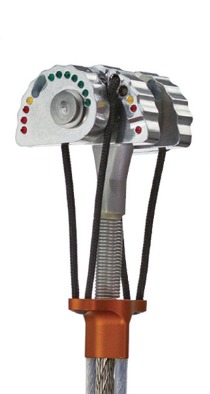
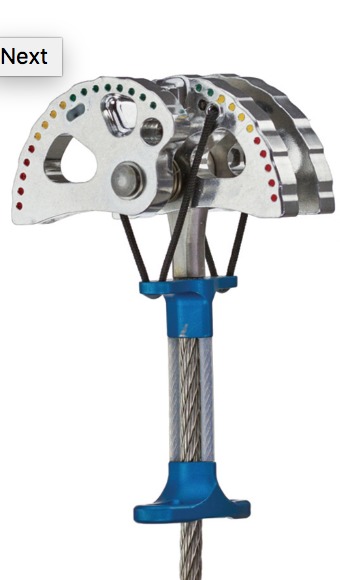
Serge Smirnov wrote: Even if one avoids using the bottom 10-15% of the range for placements, that extra range still makes it easier to clean. If by "bottom 10-15% of the range", you mean the smallest end of the range of a cam, then of course it's easier to clean. If you're avoiding using the smallest range of the cam, then the lobes can contract more from the placement making it easier to clean. But, let's look at the range of the yellow Mastercam vs. the .4 C4. ![]() ![]() If you are placing these cams in the middle of their range that's stated by the manufacturers- that is NOT in the smallest 10-15% of their range, for the BD .4 C4, that leaves about 5.6mm to contract the cam and clean it.
For the MasterCam, you have approximately 3.5 mm to contract and clean it.
That's roughly a mm to 1.5mm difference per side in terms of cleaning. So, you're right it does make it easier to clean- if you're not placing well into the bottom half of that usable range- which again, most people do for obvious reasons. I know personally that I'm aiming for about 75% constriction for .4 and below because I want those lobes to be able to expand some and still hold the placement.
Edit: Looking at these stated ranges, this tells me that only the usable range is different. Meaning that in the same crack that fits these cams, a BD .4 placed in the middle range of the lobes would render the yellow MasterCam closer to the wider end of it's range in that same placement in the rock. If the space that the cams have to fill is 20mm, and both cams are placed in that space, then they'll both have 4.5mm of range left with which to contract and clean. The only difference is that one will be close to being tipped out in that 20mm space, and the other will not because the smallest part of their range is exactly the same- if you go by what the manufacturers have published.
|

 Continue with onX Maps
 Sign in with Facebook