
 Continue with onX Maps
 Sign in with Facebook






I Hate Climbing With Extra Shoes for the Descent


|
|
I clip shoes to the back of my harness on the haul loop. I never notice them until I have to push them off to the side to sit down somewhere. I also recently learned from a partner the idea of stuffing extra snacks into my shoes, which is great since my climbing pants typically have teeny pockets. |


|
La Sportiva TX2's are very light, sticky rubber sole, and built-in bungies that sit in a heel groove when the shoe is worn and then can be deployed for binding the shoes together for harness carrying. 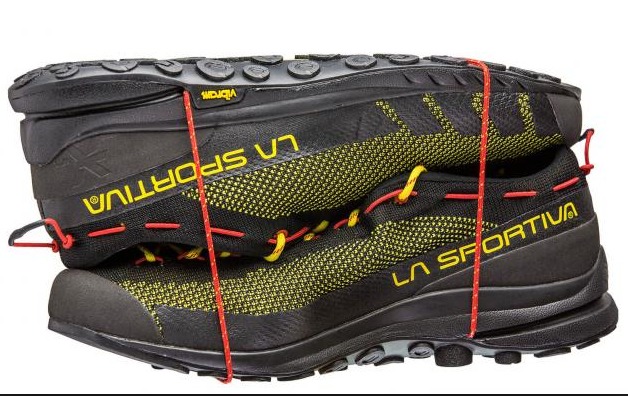 Even more minimal (haven't tried them but I know a few climbers who like older 5-finger models for descents) would be the new Vibram V-Alpha 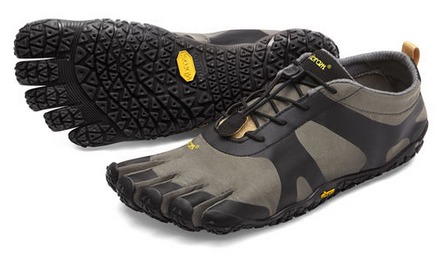 |
|
|
Foam flip flops |
|
|
your best bet is to just get over it. Different routes require different tactics. Sometimes both climbers clip their shoes to the their harness. Sometimes the follower has a bullet pack for the shoes. If the route is really that hard and long tag the pack. You’ll probably have a tagline anyway. I’ve never been held back from sending because my approach shoes were clipped to the back of my harness. Unless you’re working really high end routes I doubt having an extra 10 ounces clipped to the back of your harness is going to hold you back. |
|
|
I used to climb with a bullet pack (follower carried) with shoes, shells, water. But even following, it kind of sucks on steep stuff (for me anyway - I am weak). I got some great minimalist runners that are so lightweight I don’t even notice them clipped to my harness. For longer climbs I use the stuff sack my harness came in and it fits the shoes, a lightweight shell, snacks and a small soft sided water bladder comfortably. Still lightweight and I don’t mind leading with it - so much better than the pack. The shoes have vibram soles and are surprisingly secure even on descents that require some 4th/low 5th downclimbing. |
|
|
Bring a roll of tape and just tape your foot up... Outside of that buy lighter shoes or rap. |
|
|
Shove them down your pants for built-in knee or butt pads |
|
|
I have pushed the limits of walking down barefoot or in climbing shoes, you just need to develop troll's feet. Generally I find it to be worth it, but the worst was walking from the summit of Longs down to the base of Mills Glacier after climbing the Diamond. Both of my big toenails fell off a couple days later. |
|
|
Charles Vernon wroteIf carrying shoes on a long climb where we decide a pack is necessary, I like an intermediate strategy of the second carries a small pack w/food, water, & clothes, but each climber carries his/her approach shoes individually. That's what I usually do. |
|
|
Five fingers are so light you don't even know they are there. |
|
|
lou wrote: Yeah... if you're doing multi-pitch trad, have the follower carry the 'mini-pig". Walk off shoes, water, snack, etc. Leading trad is a full on, serious game already. No need to add to that with a camelback or whatever. All my partners have done it this way... switch leads and switch the bag and hang it at the belays. That way you can have a snack and a drink, while you're partner is gathering the gear and re-racking. Very effective Doesn't work so well if you are trying to climb a 15pitch route fast though. |
|
|
Total time consumed by taking pack off and putting it on at each belay stance might add up to 5 minutes on a fifteen pitch route, insignificant unless the party is chasing speed records. |
|
|
rgold wrote: Total time consumed by taking pack off and putting it on at each belay stance might add up to 5 minutes on a fifteen pitch route, insignificant unless the party is chasing speed records. I've never seen it, but I have see parties waste a ton of time at belay transitions. I've even had a partner do it to me when climbing Solar Slab. I just linked P3&4 and started pulling the rope up and had him on belay in under 10 seconds and then I hear " hang on, let me put my pack on". i guess if you're slow putting a second on belay it's probably mot noticeable.Also, my partners clean very efficiently so that when they reach the belay the cleaned gear is already organized on a sling so gear transitions are really quick and there isnt time to pull out a water bottle and food since they are transferring the rope and putting me on belay immediately. Eating and drinking can be done while belaying. Also, I'm 6ft tall and my partner is 5ft tall. Taking off, putting on and readjusting and clipping the buckles on a pack each pitch is a pain in the ass imho and I prefer to keep my rain gear, jacket, headlamp, food and water with me. |
|
|
rockklimber wrote: With or without the pack, the second should be ready to climb as soon as the rope is taken up. If not, that's a technique issue, not a problem caused by the pack. Also, my partners clean very efficiently so that when they reach the belay the cleaned gear is already organized on a sling so gear transitions are really quick and there isnt time to pull out a water bottle and food since they are transferring the rope and putting me on belay immediately. Eating and drinking can be done while belaying. Sure. But his has nothing to do with whether the second does or doesn't have a pack. And you are describing a situation in which you are apparently doing all the leading, so pack transfer isn't even a problem. Also, I'm 6ft tall and my partner is 5ft tall. Taking off, putting on and readjusting and clipping the buckles on a pack each pitch is a pain in the ass imho and I prefer to keep my rain gear, jacket, headlamp, food and water with me. Well are you swinging leads or aren't you? If you are, mark the shoulder straps with some kind of marker and the second can set them right in a few seconds and still be totally ready to go by the time the belay is on. (There are even quicker ways that allow the second to just tug on the shoulder strap and have it stop at the right adjustment.) But everyone has their own preferences and that isn't really the issue. My only point is that if the team knows how to be efficient, having the second carry a pack isn't going to add a significant amount of time to a long ascent. You do mention a significant drawback of the one-pack system. Arriving at the top of a pitch and having a storm blow in while all your insulation and protective gear is with the second can be a serious problem. I made this mistake once and paid for it with real hypothermia, so believe me I get it. In threatening conditions, the leader has to at least have their waterproof jacket with them. At some point, as in many alpine settings, the party is safer if leader and second both have packs with protective gear. But these are different issues from the notion that the one-pack method slows anything down. |
|
|
https://www.merrell.com/US/en/trail-glove-4/29191M.html?dwvar_29191M_color=J09669#start=1
These weigh 1 lb together. If that's too much weight, get on a treadmill. If crunching them up and clipping them to the back of your harness while leading is bothering you, get better at climbing. |
|
|
And maybe the climb is just too much for the team. Or the team just was not prepared enough. |
|
|
Matt Wetmore wrote: Works like a charm when rock shoes are disposable. |
|
|
rgold wrote: With or without the pack, the second should be ready to climb as soon as the rope is taken up.I agree. The second "should" be ready. I do a lot of the leading, but I also prefer to lead in blocks. I carry the rack on my harness so belay transitions are faster and the second doesnt have to lead the next pitch after cleaning the last pitch (ie. They get a rest). I usually dont swing leads. I have many climbing partners and often I am teaching a non-leader.Thats a great idea, but I find it easier and safer to just carry our own packs. The team knows how to be efficient once they are taught. You do mention a significant drawback of the one-pack system. Arriving at the top of a pitch and having a storm blow in while all your insulation and protective gear is with the second can be a serious problem. I made this mistake once and paid for it with real hypothermia, so believe me I get it. In threatening conditions, the leader has to at least have their waterproof jacket with them. At some point, as in many alpine settings, the party is safer if leader and second both have packs with protective gear. But these are different issues from the notion that the one-pack method slows anything down. I've run across freak storms too. One was im 85degree weather. My friends thought I was crazy for bringing rain gear. They were thankful once we got hammered by torrential rain just as I summitted first in the first team. Another time 6 of us were climbing in TM and my partner and I summitted 3hrs before the second team on an adjacent route. An ugly dark cloud system moved in and we hastened party 3 up and got out of there just in time to get back to the cars as the storm hit. A few minutes later we got a call on the radio from a team of friends we didnt know had followed us asking us how to get down. It was pouring down and after about an hour they finally made it down. One in the party thanked my partner for insisting they bring rain gear. I was the one who told them. I still insist on having my own gear with me whenever in the sierras. |
|
|
If you don't mind descending in "non-technical" shoes, Vans "lite" line of shoes are ridiculously lightweight and pretty malleable. 2 pairs stuffed in a small follower pack would probably weigh less than a water bottle |
|
|
Phil Lauffen wrote While true, that does not solve the problem if you pick a harder route over your improved fitness/climbing ability. Sometimes hauling a small pack is the way to go. And in an equal partnership and with a hard enough route, the second really wouldn't be able to carry too much more than the leader. |


