
 Continue with onX Maps
 Sign in with Facebook






Kids trad climbing?


|
|
Steve Marshall wrote: I've seen plenty of 9 year olds ski trees/glades at a pretty fast clip, something in my view that is equally committing and consequential as trad climbing. plenty of neck-snapping, leg-breaking, blunt-force-trauma-to-the-head potential there as well. Not sure I have a stance either way, just providing an observation. The post implies the kid will continue to lead trad on other routes. How fast do kids that age ski? They will be traveling more in line with the ground when they fall also. |


|
Steve Marshall wrote: I've seen plenty of 9 year olds ski trees/glades at a pretty fast clip, something in my view that is equally committing and consequential as trad climbing. plenty of neck-snapping, leg-breaking, blunt-force-trauma-to-the-head potential there as well. Not sure I have a stance either way, just providing an observation. I think the comparison between skiing and trad climbing is flawed to begin with. There's danger but the critical judgement levels are different. And, to circle around to the helmet issue, when was the last time you saw a kid (or many adults) skiing or boarding without helmets? |
|
|
Ryan Pfleger wrote: I think this is a flawed comparison; on the skiing side you are including the vast majority of skiiers who stick to the groomed resort trails. On the climbing side it probably includes mountaineering, but not, for example, gym climbers. At least, I'd like to know more about exactly what those numbers include before we just post up some numbers and unilaterally decide the answer to the question out of context. OK? ok. I definitely see kids bomb through glades all the time, although not really any in backcountry terrain (unless you count kids in Tucks with their family?). A 20-30mph impact with a tree is probably comparable in both severity and likelihood to a trad fall on a well-protected line, and both activities require skill, commitment and decision making. How is the "critical judgement" skill in skiing - picking a line through the terrain, deciding you're capable enough to do it, and then doing it while properly responding to unknowns (ice you didn't see etc), somehow simpler or safer than the similar skills required to do a move, place gear, and commit to the next move(s) above gear while climbing? |
|
|
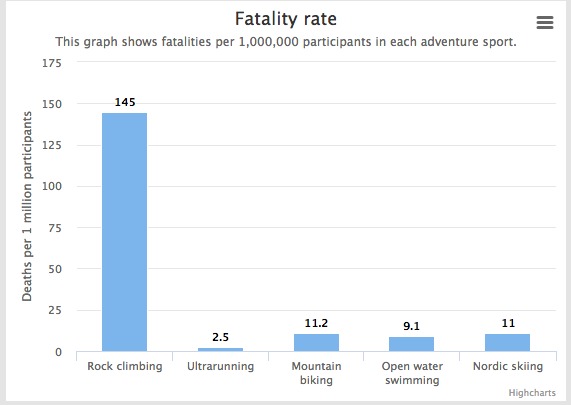 This is the graph from the Outside Online article. |
|
|
It's easier to control yourself skiing. In fact, controlling your body is the whole sport. Falling while leading a rock climb is a loss of control, and gravity is fully in charge. |
|
|
Yes, I read them and just explained why I think those numbers don't tell the whole story, and don't particularly address the specific comparison I'm making, of crack climbing to glade skiing. also, that graph is of nordic skiing, not downhill glade skiing. |
|
|
Hmmm - lots of people with needlessly harsh words! Though helmets are a thing, but everything's been said about that. |
|
|
Just going to leave this here...  |
|
|
JohnnyG wrote: Since the discussion has veered so much toward helmets...Why only helmets for trad leading? There is some truth in that, but a lot of the risk stems from the terrain and how predictable the climbing, protection, and falls are. Since a lot of terrain that you come across sport climbing is fairly similar to gym climbing, most people are going to have more practice taking those types of falls. On the other hand, trad climbing falls are a lot less predictable. From the ground it is much more difficult to tell exactly where you will get protection and how long a potential fall might be, unless it is an obvious crack system. But even then, falling out of a slabby or vertical crack is a lot different than falling on a steep sport route. Similarly, trad routes are much more likely to have awkward and physical climbing that requires more thrutching/flailing/chuffing/etc. that puts you at greater risk of smacking your head into a roof or chimney feature. Ultimately, the climbing makes all the difference in my decision. If I'm climbing a steep and sporty trad route that I know has safe and airy falls, I don't really feel the need to helmet up just because I am placing gear. I will also wear a helmet sport climbing if I think the falls are going to be dangerous or the climbing akward/insecure. In terms of rockfall, at most well developed single pitch crags I don't think rockfall is a massive risk for the climber* unless you have morons throwing shit off the top of the cliff (a phenomenon integral to the East Coast climbing experience). Even so, I have been to several areas that have obscure trad routes with plenty of mud, choss, and death blocks right next to well trafficked sport lines with completely bomber stone--so I don't necessarily think rockfall is an evenly distributed risk between sport and trad climbs. |
|
|
Spencer Perry wrote: In terms of rockfall, at most well developed single pitch crags I don't think rockfall is a massive risk for the climber* unless you have morons throwing shit off the top of the cliff (a phenomenon integral to the East Coast climbing experience). Even so, I have been to several areas that have obscure trad routes with plenty of mud, choss, and death blocks right next to well trafficked sport lines with completely bomber stone--so I don't necessarily think rockfall is an evenly distributed risk between sport and trad climbs. I'm not sure where you climb but here, out West, there are endless examples of sport crags with loose, dangerous rocky slopes above. You don't even need morons to throw the stuff off. For example, Owens Gorge near Bishop has a huge amount of loose rock above the clean faces of the climbing routes. 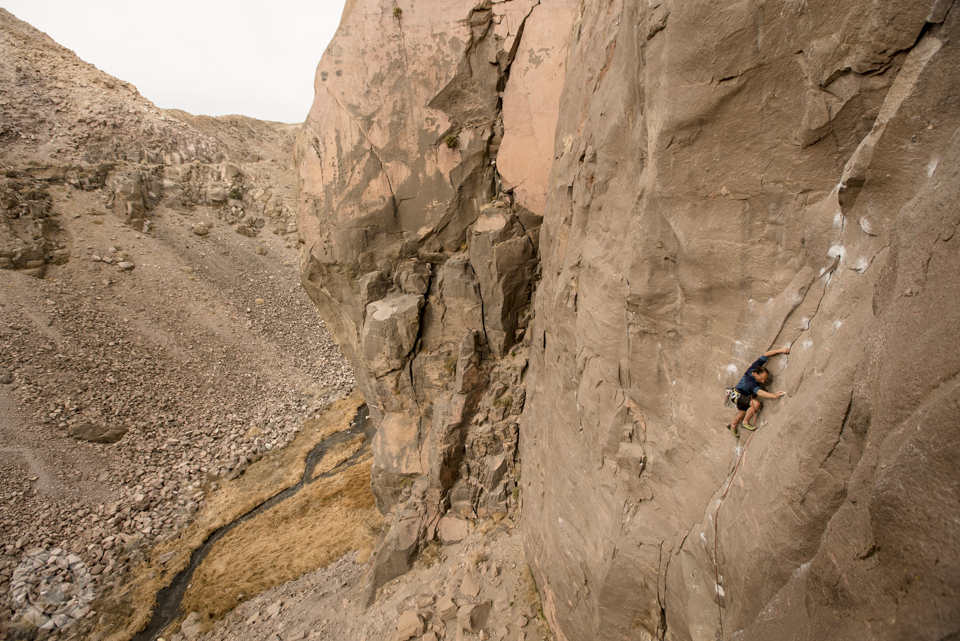 |
|
|
Señor Arroz wrote: I guess most of the single pitch crags I climb at, the routes end at the top of the cliff line or under a massive roof. So unless there is a serious erosion problem at the top, rockfall isn't all that common. If you are in a place where it is, then that changes things for sure. My point was more that well trafficked sport climbs are typically going to have less loose rock on or around them than less frequented trad climbs at the same crag. So, saying that rockfall is an equally likely occurrence at any two crags or on any two climbs is wrong. |
|
|
Spencer Perry wrote: Kind of a pointless argument really. The fact that it's a sport or trad (or toprope for that matter) crag has little to no relation as to how likely it is a rock will fall on your head. Sure you're less likely to flip & hit your head, but that's only part of the reason you'd wear a helmet - the point is to protect from stuff hitting your head. Which can be while belaying or while climbing, which can be coming from above or when you take a fall. The likelihood stuff will fall from above isn't that related to the height of the crag or to the type of climbing you're doing there. Much more related to how much activity there is above, how "clean" the rock is (and the face may be clean, but above not so much)... |
|
|
Don't forget gear falling. I had to take over the belay once for someone that got brained by a cam. The belayer was thankfully fine, but head wounds bleed like crazy, so we were all freaked out for a second. |
|
|
Glad.im not the only one letting my kid climb without a helmet --- so he's psyched about the idea or hellbent, or he's saying he feels better because someone else made the same decision? Fishy all around. I think the OP need to come and explain himself further. |
|
|
Franck Vee wrote: I was responding specifically to the points that I quoted. He asked if the risk of flipping upside down was the same for sport and trad...my response was that it depends, but if you are more comfortable and accustomed to taking falls on steep and sporty terrain, then you are less likely to flip upside down when you fall. But if you have never fallen out of a splitter hand crack, there is a higher chance you will clip your heel with the rope. Ultimately the specifics (climb, crag, rock type, etc.) matter most, but I think hitting your head while climbing because you flipped upside down or just fell weird is a more likely scenario than getting hit by a falling rock...so the risk of those kinds of falls is something I consider. The likelihood stuff will fall from above isn't that related to the height of the crag or to the type of climbing you're doing there. Much more related to how much activity there is above, how "clean" the rock is (and the face may be clean, but above not so much)... This obviously depends on the area, but the type of climbing you're doing and those other variables are often correlated. Steep walls that are much more conducive to sport climbing are typically going to have less loose rock overhead than vertical or slabby walls. There are plenty of crags at the New or the Red where the probability of getting hit by a rock from above is incredibly low, effectively zero. There are other places with steep climbing but shitty rock where it is wise to wear a helmet at all times...so, it depends. |
|
|
Franck Vee wrote: Hmmm - lots of people with needlessly harsh words! Though helmets are a thing, but everything's been said about that.True . No one really cares at what age you lead your first 5.10 on gear.... Genius |
|
|
Steve Marshall wrote: This is most certainly a flawed comparison, this lists Nordic skiing, not Alpine skiing. Throw in downhill skiers and backcountry skiers and I would be amazed if skiing did not top this list. Avalanches alone account for many deaths every year(much more so than in mountaineering) along with all the trauma deaths not incurred in avalanche, people falling in to tree wells and suffocating, etc. |
|
|
Jesse Coonce wrote: The article wasn't comparing danger. It was comparing overall "toughness." Death rates were only one data point. |
|
|
Re. downhill skiing. This Denver Post article has a great fact: "The average person who died on the slopes of U.S. ski resorts during the 2015-16 season was a 30-something experienced male skier wearing a helmet who hit a tree going too fast on an intermediate run, according to the National Ski Area Association’s annual report on safety." |
|
|
Señor Arroz wrote: Re. downhill skiing. This Denver Post article has a great fact: "The average person who died on the slopes of U.S. ski resorts during the 2015-16 season was a 30-something experienced male skier wearing a helmet who hit a tree going too fast on an intermediate run, according to the National Ski Area Association’s annual report on safety." Hubris |


