|
|
Aidan Raviv
·
Mar 20, 2018
·
Los Angeles, CA
· Joined Dec 2017
· Points: 95
Hello big brains, Question: I often hear people complaining about TRing through permanent hardware in one breath then advocating lowering in the next. I also hear people saying TRing is worse for permanent hardware than lowering. Is this true? If so, why? Seems the extra wear compared to only lowering would just be taking out slack and resting (unless it was a large party setting up a TR I guess) Is TRing just considered a worse thing because people are putting unnecessary wear on the hardware rather than the "necessary" wear of lowering? Answers appreciated.
|
|
|
Mike
·
Mar 20, 2018
·
Unknown Hometown
· Joined Dec 2013
· Points: 30
Most people seem to toprope with tension in the rope and seem more likely to be falling the whole way up. So if you don't add your own gear the first time up that first person lowers the second climbs then lowers so that's a bit more than double the wear for no increase in safety. Whereas lowering can be argued as a safety advantage.
|
|
|
Matt Z
·
Mar 20, 2018
·
Bozeman, MT
· Joined Mar 2012
· Points: 185
Each time you run a weighted rope through hardware it wears down the rope-bearing surface. The amount of wear shouldn't be different each time you lower off, but think about the frequency. Lowering off after cleaning is a single cycle. TR-ing through anchors means running through potentially dozens of cycles on each route depending on the size of the group. So the anchor will wear out that much faster and require replacement that much sooner.
|
|
|
Andrew Rice
·
Mar 20, 2018
·
Los Angeles, CA
· Joined Jan 2016
· Points: 11
Aidan, it's the difference between "necessary" vs. "unnecessary" wear. The anchors are there to make it possible to get back down to the ground from the top of a climb. That's the intended purpose. You can do that either via rap or by lower. But if someone wants to TR off the anchors they just need to put a couple of their own carabiners or QDs on the anchors to take all the wear and tear of a bunch of TRing.
|
|
|
Aidan Raviv
·
Mar 20, 2018
·
Los Angeles, CA
· Joined Dec 2017
· Points: 95
I guess as you all say it is "necessary" vs "unnecessary" wear. Agreed. I do wonder how much wear someone getting the "magic belay" on the way up causes compared to lowering once (though "zero" is obviously better than "some" in any case). Either way, lowering the leader then TRing up the second on permanent gear is 2x the wear plus however much happens on the second's way up and is thus at least twice as bad. Follow-up question: people complain about miscommunication being a danger re: rapping vs lowering. Why not self-lower when going through permanent hardware to save wear? Wouldn't that be 1mg Sorry if there are dumb questions--I've just been wondering and the "conventional wisdom" elsewhere on MP hasn't clarified this.
|
|
|
Aidan Raviv
·
Mar 20, 2018
·
Los Angeles, CA
· Joined Dec 2017
· Points: 95
I'm saying in the "lower once" scenario the climber just stays tied in, goes in direct, threads the anchor however they want, slaps their belay device on the belayer's side of the rope (then tests as they would test a rappel) and goes off direct and lowers him or herself as if they were lowering a climber on TR. Belayer could stay on as a backup if they wanted to and just keep some slack between their device and the climber's device to allow the climber to move.
|
|
|
Aidan Raviv
·
Mar 20, 2018
·
Los Angeles, CA
· Joined Dec 2017
· Points: 95
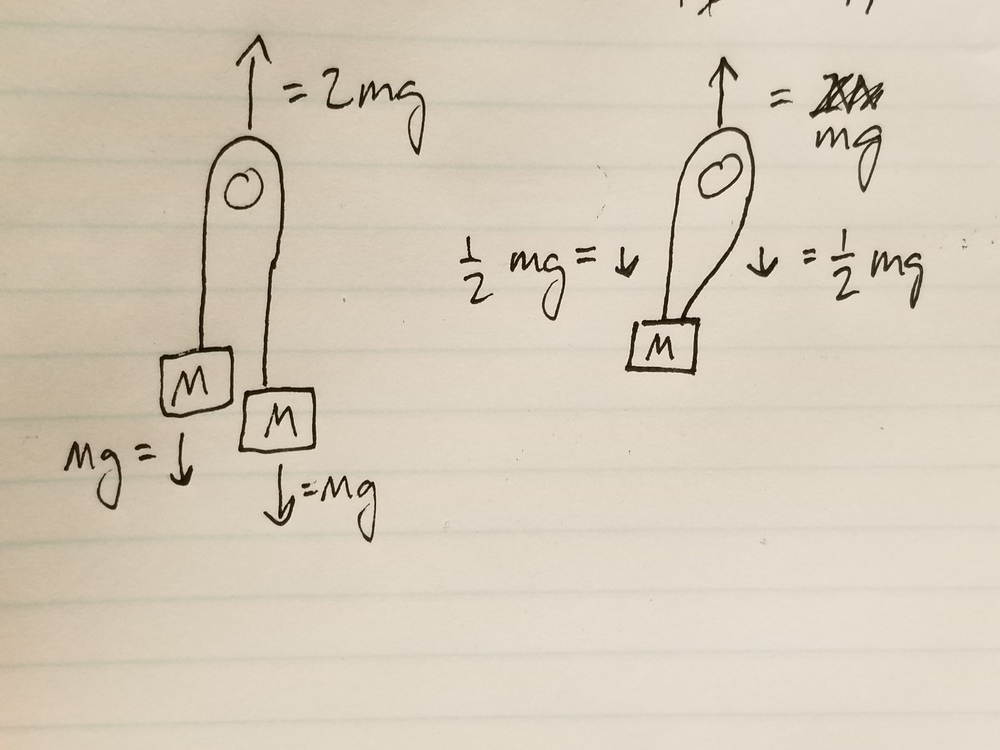
I think there is. In a normal lowering scenario the load on the hardware is mg (climber mass * gravity) on one side and mg - (climber side rope drag + friction through hardware). Like a pulley. Compare to lowering yourself with nothing else attached to the rope--you can't pull 2mg because the only force is your weight so you have about .5mg on one side and .5mg less rope drag and hardware friction on the other. Am I missing something? Seems like half the load on the permanent hardware while lowering.
|
|
|
Andrew Rice
·
Mar 20, 2018
·
Los Angeles, CA
· Joined Jan 2016
· Points: 11
Aidan Raviv wrote:I'm saying in the "lower once" scenario the climber just stays tied in, goes in direct, threads the anchor however they want, slaps their belay device on the belayer's side of the rope (then tests as they would test a rappel) and goes off direct and lowers him or herself as if they were lowering a climber on TR. Belayer could stay on as a backup if they wanted to and just keep some slack between their device and the climber's device to allow the climber to move. This doesn't achieve anything.
This is really simple in practice. Leader leads a climb. If you're going to set up a TR for more people, put your own gear on the anchors. Two opposed QDs carrying the weight of the rope are enough and the wear and tear goes on your draws rather than the anchors. Then the last person is done, that climber threads the chains or mussy hooks or whatever and is lowered. It's a small fraction of the wear and tear on the permanent gear.
|
|
|
Aidan Raviv
·
Mar 20, 2018
·
Los Angeles, CA
· Joined Dec 2017
· Points: 95
I agree the usual way is easy. It's what I've always done and I don't think it really needs fixing. What I don't agree with is that the lowering is a small percentage of wear. If people only ever use their gear to TR (hahaha) then lowering after cleaning is 100% of the wear (excluding corrosion I guess?). All other things being equal, wouldn't it make sense to halve the force on the anchor during the lower to reduce the wear on the permanent hardware? As I said, I'm not saying the normal way isn't just fine, I was just curious about why people don't do this.
|
|
|
Andrew Rice
·
Mar 20, 2018
·
Los Angeles, CA
· Joined Jan 2016
· Points: 11
Aidan Raviv wrote:I agree the usual way is easy. It's what I've always done and I don't think it really needs fixing. What I don't agree with is that the lowering is a small percentage of wear. If people only ever use their gear to TR (hahaha) then lowering after cleaning is 100% of the wear (excluding corrosion I guess?). All other things being equal, wouldn't it make sense to halve the force on the anchor during the lower to reduce the wear on the permanent hardware? As I said, I'm not saying the normal way isn't just fine, I was just curious about why people don't do this. I'm not sure what you mean by "halve the force"? The wear is from friction. It's abrasion from the length of weighted rope sliding against the metal. Not from the "pull" on the anchor.
The way to create essentially no wear on anchors is to rappel. But that opens up a whole other set of complications and also takes a lot of time at a crowded place like, say, Malibu Creek.
|
|
|
Nick Drake
·
Mar 20, 2018
·
Kent, WA
· Joined Jan 2015
· Points: 651
Aidan Raviv wrote:As I said, I'm not saying the normal way isn't just fine, I was just curious about why people don't do this. cleaning the route
|
|
|
Aidan Raviv
·
Mar 21, 2018
·
Los Angeles, CA
· Joined Dec 2017
· Points: 95
Stupid app wouldn't let me post. Wear on permanent hardware is caused by the rope being pushed against the rope-bearing surface of the hardware. This is a function of surface area contact between rope/hardware, force applied to that area and the coefficient of friction between the rope and the hardware (and also how long the lower is). Rope wear from pulling a rope is less than rope wear from lowering for the exact reason that there is less force (or really pressure). So if there is less force on the anchor as the rope runs over it then there will be less wear on the anchor for a given lower. Idk what's confusing about that. I'm just asking why people don't do it. @Nick if you're cleaning it's actually easier if the person cleaning is independent of the belayer on the ground because then they can tug the cleaner in or release them without having to be in charge of their safety.
|
|
|
Mark E Dixon
·
Mar 21, 2018
·
Possunt, nec posse videntur
· Joined Nov 2007
· Points: 984
Aidan Raviv wrote:@Nick if you're cleaning it's actually easier if the person cleaning is independent of the belayer on the ground because then they can tug the cleaner in or release them without having to be in charge of their safety. Not once climbs get steep
|
|
|
Andrew Rice
·
Mar 21, 2018
·
Los Angeles, CA
· Joined Jan 2016
· Points: 11
Aidan Raviv wrote:Rope wear from pulling a rope is less than rope wear from lowering for the exact reason that there is less force (or really pressure). So if there is less force on the anchor as the rope runs over it then there will be less wear on the anchor for a given lower. Idk what's confusing about that. I'm just asking why people don't do it. Aidan, I don't think you're thinking this through. The weight and, thus, friction on the anchor is the same whether the ATC belaying you is in the climber's control or the belayer on the ground's control. Self-lowering is absolutely NO different from being lowered in terms of the physics. It's a lot less safe, however.
If you want to create no wear on an anchor then rap. End of story.
|
|
|
Xam
·
Mar 21, 2018
·
Boulder, Co
· Joined Dec 2011
· Points: 76
AndrewArroz wrote:Aidan, I don't think you're thinking this through. The weight and, thus, friction on the anchor is the same whether the ATC belaying you is in the climber's control or the belayer on the ground's control. Self-lowering is absolutely NO different from being lowered in terms of the physics. It's a lot less safe, however.
If you want to create no wear on an anchor then rap. End of story. Regardless of this silly discussion, I would suggest you revisit this statement once you draw a FBD.
|
|
|
Aidan Raviv
·
Mar 21, 2018
·
Los Angeles, CA
· Joined Dec 2017
· Points: 95
@Mark it's like tramming into the belayer/quickdraw side with a QD on lower except with a belay device/backup so the belayer is no longer responsible for not dropping the climber because the climber is lowering her or himself. This allows the belayer to focus on helping the climber by pulling them into the wall and letting them move around independently when they want to. @caught and Andrew You aren't wrong about rapping but this isn't that. See pic below. This is a pretty simple concept "in terms of physics." Google (or do a MP search) of the 'pulley effect' and see what there is to see. A hanging mass (climber) cannot exert more than their weight on the rope. When there is a second mass involved (climber) then the load on the anchor is double the mass if the climber minus acceleration/friction. As a result, self-lowering would cause less wear as the abrasion is determined by the force with which the rope is pushing down on the hardware. My question is how much this affects the wear but given your previous responses it doesn't sound like you know. ![]() @Andrew I'd also genuinely like to know what makes you think this is less safe than being lowered. The only way I could see this being unsafe for the climber is if the climber is subject to rockfall or some other hazard that the belayer is not. Even then, the belayer can stay on as a backup, sort of like if another person simul-lowered on the same rope with another device on their harness while you were lowering. In my eyes, it seems twice as safe since the belayer can't drop the climber and if the climber drops him or herself then the belayer can catch them. @Xam tru
|
|
|
Jim Titt
·
Mar 21, 2018
·
Germany
· Joined Nov 2009
· Points: 490
AndrewArroz wrote:Aidan, I don't think you're thinking this through. The weight and, thus, friction on the anchor is the same whether the ATC belaying you is in the climber's control or the belayer on the ground's control. Self-lowering is absolutely NO different from being lowered in terms of the physics. It's a lot less safe, however.
If you want to create no wear on an anchor then rap. End of story. One can only nicely point out that that is absolute rubbish and would disgrace a 14 year old doing basic math at school If a climber weighs 100kg and the top anchor is frictionless then the load on the climbers strand is 100kg as that is their weight and the load on the belayers strand is also 100kg since they must be heavy enough to resist the force on the rope, thus the total on the top anchor is 200kg. If the climber is also the belayer then the load on each strand can only be 50kg since the total load can only possibly be 100kg. Adjust the numbers to suit the friction through the top anchor as you wish.
|
|
|
Aidan Raviv
·
Mar 21, 2018
·
Los Angeles, CA
· Joined Dec 2017
· Points: 95
@John I've done this in the Red where lower offs are common and it has worked well for cleaning steep routes. I mentioned this earlier but it's sort of like tramming in but instead of using a qd it's a belay device. This allows the belayer to walk around and not worry about dropping you as they pull the rope to pull you in. In this case the wear could be more comparable to regular lowering but would necessarily be less since the belayer is not pulling the whole time. As far as it going off belay, if you read above I mentioned that the belayer can actually stay on the whole time and just leave out a lot of slack. In this way a failure of the climber would not be catastrophic. I guess I should really call this 'redundant lowering.' I definitely agree that rapping causes less wear I'm just saying if you want to lower your impact while lowering your climber this could be an option unless there's a good reason not to do it.
|
|
|
Jim Titt
·
Mar 21, 2018
·
Germany
· Joined Nov 2009
· Points: 490
John Wilder wrote:Cleaning anything remotely steep would be impossible with this method. The thing is with lowering is that the system never changes from the time the climber leaves the ground until they return. They're on belay the entire time. This method is, more or less, the same as rappelling and has the same problems with cleaning. In other words, there's no advantage and probably a disadvantage when it comes to wear on the anchors when compared to rappelling. And you´ve got to carry a rap device and biner and the extra 200g is going to blow any chance of my onsight! Anyway I think wearing out top anchors is great, how else can I afford my second Ferrari?
|
|
|
Lena chita
·
Mar 21, 2018
·
OH
· Joined Mar 2011
· Points: 1,842
Matt Zia wrote:Each time you run a weighted rope through hardware it wears down the rope-bearing surface. The amount of wear shouldn't be different each time you lower off, but think about the frequency. Lowering off after cleaning is a single cycle. TR-ing through anchors means running through potentially dozens of cycles on each route depending on the size of the group. So the anchor will wear out that much faster and require replacement that much sooner. Agree about the frequency/common scenarios, but don't quite agree that lowering and TR-ing puts the same amount of wear on the anchors as lowering.
Think about it:
When you are lead up to the anchors, and then are lowering, you are only running the rope through the anchors on the way down. The amount of rope equal to the length of the pitch will run over the anchor surface.
When you are toproping through the anchors, the rope is running through the anchors on the way up AND on the way down. In the end, the amount of rope equal to twice the length of the pitch will run over the anchor surface.
|
|
|
Aidan Raviv
·
Mar 21, 2018
·
Los Angeles, CA
· Joined Dec 2017
· Points: 95
Lena chita wrote:The amount of rope equal to the length of the pitch will run over the anchor surface.
When you are toproping through the anchors, the rope is running through the anchors on the way up AND on the way down. In the end, the amount of rope equal to twice the length of the pitch will run over the anchor surface. It matters less how much rope runs through when it isn't as loaded and that will depend on how much tension the belayer puts on the rope.
|

 Continue with onX Maps
 Sign in with Facebook