|
|
Jim Titt
·
Mar 4, 2018
·
Germany
· Joined Nov 2009
· Points: 490
David Kerkeslager wrote:The design of the ClickUp+ seems to be intended to decrease the chance of accidentally locking the device. Accidental locking is the only problem I ever have with the ClickUp, and that usually only happens on gym ropes. ????????? The extra latch on the + (and the Smarter thing) is designed to decrease the chance of it failing to lock because the belayer is holding the strands parallel, if anything it will increase the chance of accidentally locking the device. Both are additions designed for incompetent noobs at climbing gyms.
|
|
|
Aidan Raviv
·
Mar 4, 2018
·
Los Angeles, CA
· Joined Dec 2017
· Points: 95
David Kerkeslager wrote:You must not be aware of the GriGri then: - Open GriGri.
- Thread rope.
- Close GriGri.
- Attach belay biner.
So no, the whole point of the device has nothing to do with your subjective ideal of simplicity. Opening and closing the grigri aren't extra steps in this sense. The grigri isn't really open or closed in any meaningful way while it's not on a biner. My point is there aren't any belay devices I'm aware of that don't function as advertised without an additional step to activate features. That would be like if you had a grigri plus but you had to turn on lead mode every time you wanted to lead belay with it--dumb. There are a lot of possibilities for belay devices if you open them up with additional steps to make them work but I think the reason manufacturers don't is to avoid misuse.
|
|
|
rgold
·
Mar 4, 2018
·
Poughkeepsie, NY
· Joined Feb 2008
· Points: 526
I agree with Jim; the extra gates on the new versions will make the devices slightly less effective for experienced belayers who want to pump slack fast for clips. I hope CT leaves the Alpine Up alone...
|
|
|
Anonymous
·
Mar 4, 2018
·
Unknown Hometown
· Joined unknown
· Points: 0
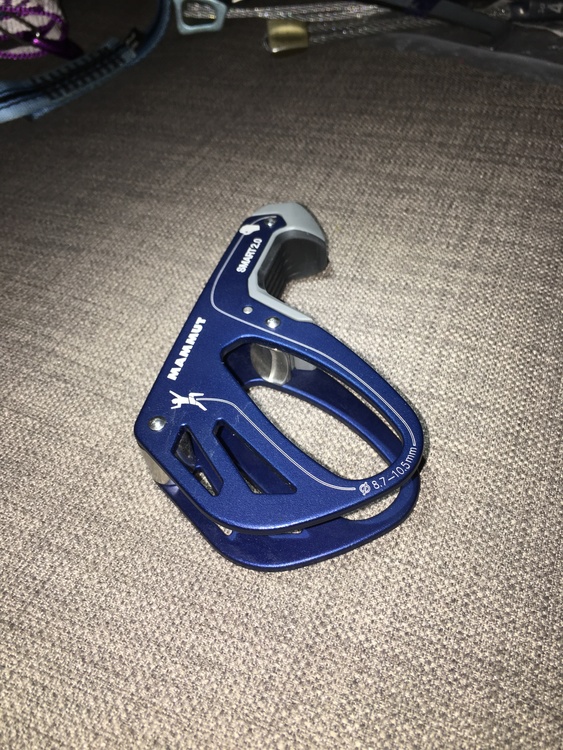
Aidan Raviv wrote:I can certainly try but I'm no rgold. In the first picture, is the lighter colored vertical line on the pinch plate a protruding ridge of metal? I ask because it looks just like a smooth plate which wouldn't be much different than the prior version Smart.
|
|
|
rgold
·
Mar 4, 2018
·
Poughkeepsie, NY
· Joined Feb 2008
· Points: 526
Looking at an enlargement, I'd say that vertical line is a highlight or reflection of an edge but is not a ridge in the plate. I sold my older Smart so have nothing to compare the newer one to.
|
|
|
Jim Titt
·
Mar 4, 2018
·
Germany
· Joined Nov 2009
· Points: 490
The reason the CT products braking performance is vastly better than the Smart etc is that their design allows the karabiner to nearly contact the pinch plate, on the Smart, MegaJul etc there is a considerable gap with the karabiner pulled completely forward. The Smart 2.0 has adressed this by copying CT and no longer using a simple bobbin but a shaped plate. The downside with allowing the karabiner to come further forward is the difficulty disengaging if it does lock, it is a difficult balance between the wedging angle of the karabiner, the "pinching" distance and the usability and somewhere along the line the manufacturer has to compromise on handling, braking power or allowable rope diameter. The ClickUp comes nearest to working well at the price of size, complexity, expense and handling, time will tell which compromise Mammut has chosen.
|
|
|
mattm
 ·
Mar 4, 2018
·
TX
· Joined Jun 2006
· Points: 1,885
·
Mar 4, 2018
·
TX
· Joined Jun 2006
· Points: 1,885
rgold wrote:The Click-Up has undergone another development from the version we announced after the summer OutDoor Trade show in June. In testing the interim device didn't perform as wanted, it seems, so CT have gone back to the drawing board and come up with something which looks to be even better while adding a few extra safety features too. The device has been slightly elongated and tapered at the end, fitting better in the hand and making it easier to lower with more control, since you have slightly better leverage. The one moving part - a small spring loaded lever - has been replaced with a new double spring loaded system in a slightly different position. The result is a device with an incredibly smooth and easy rope feed. We compared the new and previous verisons on the stand, and it really was quite striking how smooth the rope feed was from a device which, it has to be said, was always amongst the smoothest feeding devices on the market anyway. Climbing Technology have also added the V-Proof system. This consists of a small plate that flips between the two ropes where they exit the device, which acts to keep the ropes apart in the event of the bad belaying practice of holding both ropes upwards when trying to hold a fall. If you do this with the original device there is some slippage although the device does lock eventually. With the V-proof system the device locks straight away as normal, even when used incorrectly. Overall this looks to be a significant improvement to the already impressive original device that won the Best in Test award in our Assisted Braking Belay Devices comparison review of May 2017. ![]()
|
|
|
rgold
·
Mar 4, 2018
·
Poughkeepsie, NY
· Joined Feb 2008
· Points: 526
Along these lines, when the UP does catch, you release it by placing the heels of both hands at the base of the device and shoving the it away from you. You get get the power and acceleration of pushing with both hands rather than whatever force you can impart with your thumb on a thumb-catch, so presumably can counter a much more vigorous wedging action.
|
|
|
Aidan Raviv
·
Mar 4, 2018
·
Los Angeles, CA
· Joined Dec 2017
· Points: 95
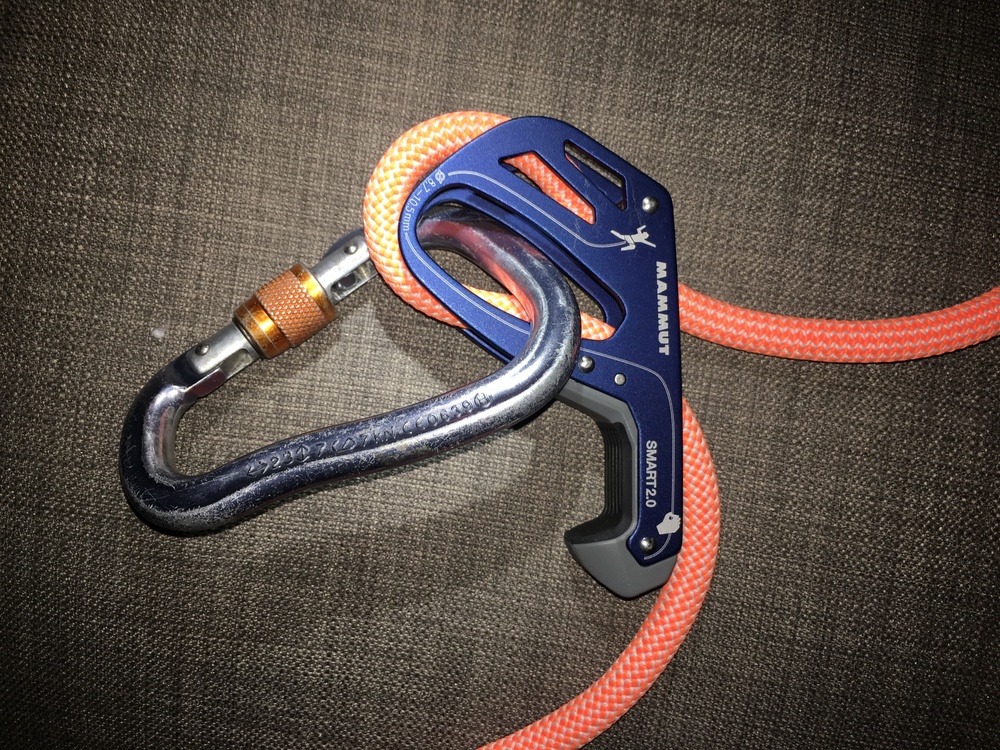
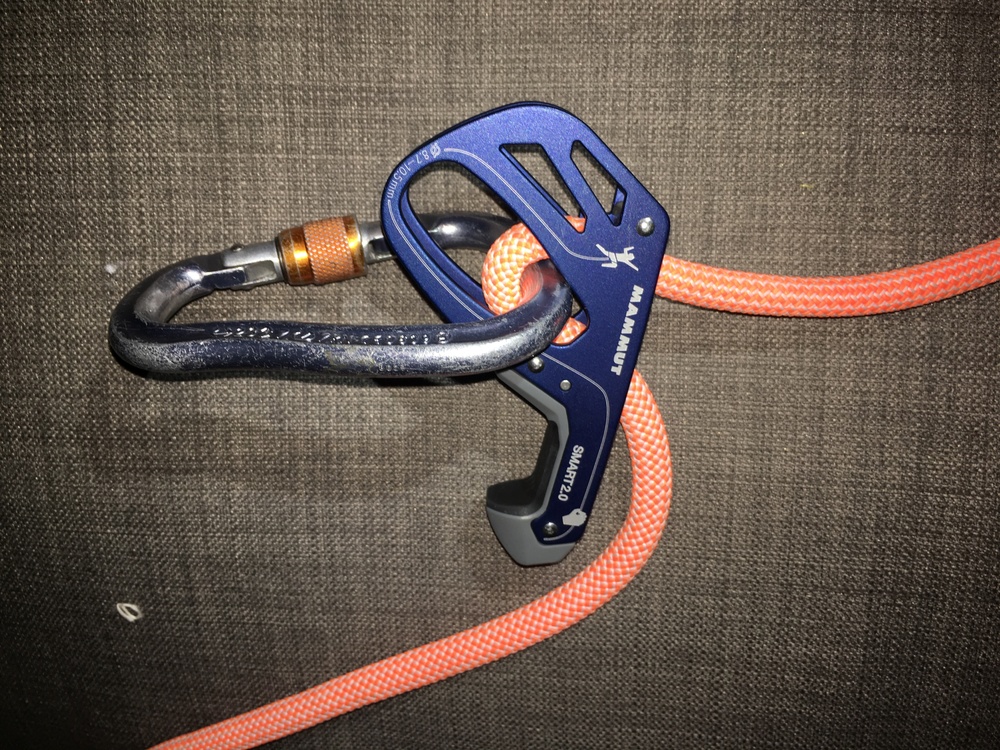
I'll add that after using the smart 2 last night it seems much better than the original. The way the slot angle/handle angle work at the same time to release the rope with a tug feels much better than the sloppy lever action of the alpine smart.
|
|
|
Jim Titt
·
Mar 4, 2018
·
Germany
· Joined Nov 2009
· Points: 490
rgold wrote:Along these lines, when the UP does catch, you release it by placing the heels of both hands at the base of the device and shoving the it away from you. You get get the power and acceleration of pushing with both hands rather than whatever force you can impart with your thumb on a thumb-catch, so presumably can counter a much more vigorous wedging action. It´s very easy to make a belay device that´s locks absolutely solidly, it´s amazingly difficult to make one that can be released with the weight of a climber on it, the tendency is to reduce the reduce the first to make the second possible or make the thing gigantic and add a handle to give enough leverage like theGriGri/Alpine Up etc. Or a really terrible solution like having to use a karabiner to lever the thing open.
|
|
|
rgold
·
Mar 4, 2018
·
Poughkeepsie, NY
· Joined Feb 2008
· Points: 526
Right, I was still thinking of the device locking when pumping slack. For obvious reasons, I've never tried to break loose the UP when hanging on rappel with it. But I do use the technique I mentioned when arriving on a ledge at the end of a rappel. What happens in this situation is that the ropes are still considerably stretched and so are pulling up on the device, making it hard to release. A good shove with the heels of the hands does the trick.
|
|
|
David K
·
Mar 4, 2018
·
The Road, Sometimes Chattan…
· Joined Jan 2017
· Points: 434
Jim Titt wrote:????????? The extra latch on the + (and the Smarter thing) is designed to decrease the chance of it failing to lock because the belayer is holding the strands parallel, if anything it will increase the chance of accidentally locking the device. Both are additions designed for incompetent noobs at climbing gyms. What I mean is that it allows them to widen the angle of the rope passing around the carabiner. The wider angle allows the rope to pass through with less friction, which means that the device will lock accidentally less often, but it also means that if the top of the device is open, it's possible for the user to take the rope entirely out of brake position. The tab prevents the user from taking the rope completely out of brake position, enabling them to widen the angle. I'm only guessing at the geometry here from the promotional descriptions and pictures, though, so I can't be sure. And in fact the picture that mattm posted actually looks different from the geometry I was looking at originally, so maybe CT has made more changes.
|
|
|
Anonymous
·
Mar 5, 2018
·
Unknown Hometown
· Joined unknown
· Points: 0
rgold wrote:
The Click-Up has undergone another development from the version we announced after the summer OutDoor Trade show in June. In testing the interim device didn't perform as wanted, it seems, so CT have gone back to the drawing board and come up with something which looks to be even better while adding a few extra safety features too. The device has been slightly elongated and tapered at the end, fitting better in the hand and making it easier to lower with more control, since you have slightly better leverage. The one moving part - a small spring loaded lever - has been replaced with a new double spring loaded system in a slightly different position. The result is a device with an incredibly smooth and easy rope feed. We compared the new and previous verisons on the stand, and it really was quite striking how smooth the rope feed was from a device which, it has to be said, was always amongst the smoothest feeding devices on the market anyway. Climbing Technology have also added the V-Proof system. This consists of a small plate that flips between the two ropes where they exit the device, which acts to keep the ropes apart in the event of the bad belaying practice of holding both ropes upwards when trying to hold a fall. If you do this with the original device there is some slippage although the device does lock eventually. With the V-proof system the device locks straight away as normal, even when used incorrectly. Overall this looks to be a significant improvement to the already impressive original device that won the Best in Test award in our Assisted Braking Belay Devices comparison review of May 2017. Thank you for posting this! That is cool information to read about the Clickup+. I think I'm going to want one of these for the gym. Along these lines, when the UP does catch, you release it by placing the heels of both hands at the base of the device and shoving the it away from you. You get get the power and acceleration of pushing with both hands rather than whatever force you can impart with your thumb on a thumb-catch, so presumably can counter a much more vigorous wedging action.
I do a slight variation of this by placing the heel of each hand on the back and front of the Alpine Up. It allows some leveraging to get it out of locked position without using brute force. Aidan Raviv wrote: I'll add that after using the smart 2 last night it seems much better than the original. The way the slot angle/handle angle work at the same time to release the rope with a tug feels much better than the sloppy lever action of the alpine smart.
Thank you for adding your experience of using the Smart 2.0 here. I'll be curious to hear more feedback about how it operates as it gets in more users hands. Jim Titt wrote: It´s very easy to make a belay device that´s locks absolutely solidly, it´s amazingly difficult to make one that can be released with the weight of a climber on it, the tendency is to reduce the reduce the first to make the second possible or make the thing gigantic and add a handle to give enough leverage like theGriGri/Alpine Up etc. Or a really terrible solution like having to use a karabiner to lever the thing open.
I know your pull testing doesn't agree with what I'm going to say. But this to me describes how the Megajul compares to the Alpine Smart Belay in use. It locks solidly, but is really challenging and requires a lot of strength to open up the brake.
|
|
|
Jim Titt
·
Mar 5, 2018
·
Germany
· Joined Nov 2009
· Points: 490
anotherclimber wrote:I know your pull testing doesn't agree with what I'm going to say. But this to me describes how the Megajul compares to the Alpine Smart Belay in use. It locks solidly, but is really challenging and requires a lot of strength to open up the brake. Or you can build a device which appears to lock solidly, has poor braking performance and is a pain to unlock
|
|
|
Isaac Wong
·
Mar 5, 2018
·
Unknown Hometown
· Joined Dec 2017
· Points: 0
This seems to be the only video I could find with the final version of Click Up Plus that will be released.
|
|
|
Jim Titt
·
Mar 6, 2018
·
Germany
· Joined Nov 2009
· Points: 490
David Kerkeslager wrote:What I mean is that it allows them to widen the angle of the rope passing around the carabiner. The wider angle allows the rope to pass through with less friction, which means that the device will lock accidentally less often, but it also means that if the top of the device is open, it's possible for the user to take the rope entirely out of brake position. The tab prevents the user from taking the rope completely out of brake position, enabling them to widen the angle. I'm only guessing at the geometry here from the promotional descriptions and pictures, though, so I can't be sure. And in fact the picture that mattm posted actually looks different from the geometry I was looking at originally, so maybe CT has made more changes. They made the new version bigger to cope with nasty hairy wall ropes. The extra tab means compared with the old version you have to be much more careful about your hand position when feeding rope to a lead climber so almost by definition it´s going to be more likely to unexpectedly lock up. The target market is top-ropers in gyms and the impression I got was the original will still be made but I´ll stick with a GriGri anyway
|
|
|
Isaac Wong
·
Mar 6, 2018
·
Unknown Hometown
· Joined Dec 2017
· Points: 0
Nate Tastic wrote:
Is that one different from this one? https://www.youtube.com/watch?v=B8ketJ76xd4 Yes. The latest one has a more elongated, "V" shape body. mattm wrote: I had that though as well. I have read that CT changed the internal geometry to improve rope handling, esp as ropes fuzz up more. This post from UKClimbing gives me hope for improvement, not steps backward:
The Click-Up has undergone another development from the version we announced after the summer OutDoor Trade show in June. In testing the interim device didn't perform as wanted, it seems, so CT have gone back to the drawing board and come up with something which looks to be even better while adding a few extra safety features too. The device has been slightly elongated and tapered at the end, fitting better in the hand and making it easier to lower with more control, since you have slightly better leverage. The one moving part - a small spring loaded lever - has been replaced with a new double spring loaded system in a slightly different position. The result is a device with an incredibly smooth and easy rope feed. We compared the new and previous verisons on the stand, and it really was quite striking how smooth the rope feed was from a device which, it has to be said, was always amongst the smoothest feeding devices on the market anyway. Climbing Technology have also added the V-Proof system. This consists of a small plate that flips between the two ropes where they exit the device, which acts to keep the ropes apart in the event of the bad belaying practice of holding both ropes upwards when trying to hold a fall. If you do this with the original device there is some slippage although the device does lock eventually. With the V-proof system the device locks straight away as normal, even when used incorrectly. Overall this looks to be a significant improvement to the already impressive original device that won the Best in Test award in our Assisted Braking Belay Devices comparison review of May 2017.
And these are probably the changes CT made on their final verison.
|
|
|
David K
·
Mar 6, 2018
·
The Road, Sometimes Chattan…
· Joined Jan 2017
· Points: 434
Jim Titt wrote:They made the new version bigger to cope with nasty hairy wall ropes. The extra tab means compared with the old version you have to be much more careful about your hand position when feeding rope to a lead climber so almost by definition it´s going to be more likely to unexpectedly lock up. The target market is top-ropers in gyms and the impression I got was the original will still be made but I´ll stick with a GriGri anyway That's interesting because they're claiming it feeds better, and in my opinion feeding slack to the leader is one of the areas where the original ClickUp really shines (the other being lowering) so it would be bad to break that. I'm not saying you're wrong--if they're gearing toward top ropers what you're saying makes sense. But I hope the new geometry balances out the effects of the tab to improve feeding. If worse comes to worst, I bet I could break the tab off with a wrench.
|
|
|
Jim Titt
·
Mar 6, 2018
·
Germany
· Joined Nov 2009
· Points: 490
The new model should feed smoother because on the old one the rope loop around the karabiner rubbed inside the "handle" bit of the body and that´s larger now. I´ll probably measure how well it feeds since that´s a normal parameter we check when testing devices, I also measure the "grabbiness" (how far from parallel strands you can go before the device starts to lock up) but since the ClickUp has the tab to prevent this it´s not so definitive as with a conventional plate. Feed is a very deceptive thing, you can read loads of people that say a GriGri 2 feeds better than a GriGri 1 but when you actually measure it you discover the "my new toy is better than my old one" syndrome has struck again. The benchmark for rope feed is still the ATC!
|
|
|
rgold
·
Mar 6, 2018
·
Poughkeepsie, NY
· Joined Feb 2008
· Points: 526
It appears that the "Noob Defense Gate" on the Click Up + can simply be left open by belayers who don't think they need to be protected from the horror of parallel strands, and this will not affect any of the other features of the device. Whether you get any real increase in hard-to-quantify handling is another matter. With the less-dumb Smart, you can simply not use the add-on deparallelizer. The quest seems to be on for a device you can hand to someone off the street who doesn't know the first thing about climbing and belaying but who will still be able to give an effective belay. Somehow, I don't think this will end well...
|

 Continue with onX Maps
 Sign in with Facebook